- English
- French
- German
- Portuguese
- Spanish
- Russian
- Japanese
- Korean
- Arabic
- Greek
- German
- Turkish
- Italian
- Danish
- Romanian
- Indonesian
- Czech
- Afrikaans
- Swedish
- Polish
- Basque
- Catalan
- Esperanto
- Hindi
- Lao
- Albanian
- Amharic
- Armenian
- Azerbaijani
- Belarusian
- Bengali
- Bosnian
- Bulgarian
- Cebuano
- Chichewa
- Corsican
- Croatian
- Dutch
- Estonian
- Filipino
- Finnish
- Frisian
- Galician
- Georgian
- Gujarati
- Haitian
- Hausa
- Hawaiian
- Hebrew
- Hmong
- Hungarian
- Icelandic
- Igbo
- Javanese
- Kannada
- Kazakh
- Khmer
- Kurdish
- Kyrgyz
- Latin
- Latvian
- Lithuanian
- Luxembou..
- Macedonian
- Malagasy
- Malay
- Malayalam
- Maltese
- Maori
- Marathi
- Mongolian
- Burmese
- Nepali
- Norwegian
- Pashto
- Persian
- Punjabi
- Serbian
- Sesotho
- Sinhala
- Slovak
- Slovenian
- Somali
- Samoan
- Scots Gaelic
- Shona
- Sindhi
- Sundanese
- Swahili
- Tajik
- Tamil
- Telugu
- Thai
- Ukrainian
- Urdu
- Uzbek
- Vietnamese
- Welsh
- Xhosa
- Yiddish
- Yoruba
- Zulu
How Do Titanium Grade 5 Plates Perform in Marine Environments?
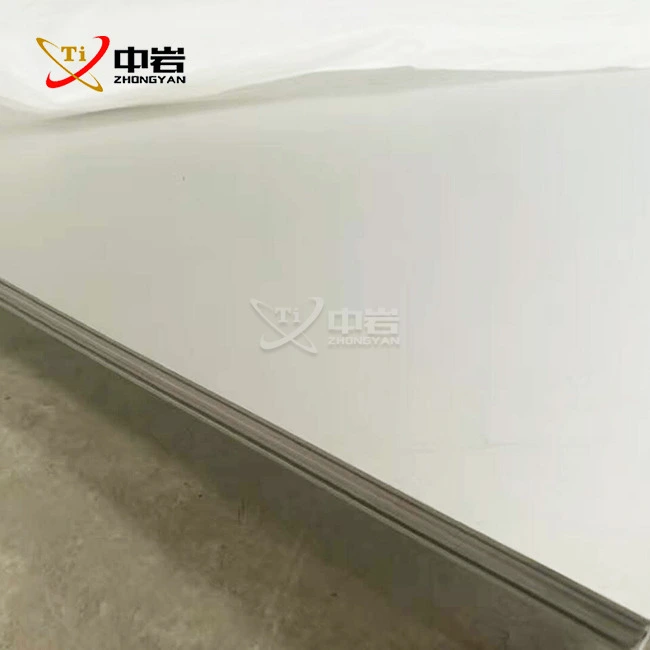
The self-forming passive oxide layer on the titanium grade 5 plate provides exceptional resistance in seawater applications. This layer protects against chloride-induced corrosion, which rapidly degrades conventional metals. When manufactured in accordance with ASTM B265 standards, these plates maintain structural integrity even after decades of continuous seawater exposure, while also resisting biofouling and cyclic wave-load fatigue. The alloy's density of 4.43 g/cm³ offers an outstanding strength-to-weight ratio, enabling marine engineers to fabricate durable components that reduce vessel weight and improve fuel efficiency without compromising the load-bearing capacity of critical underwater structures.
Understanding Titanium Grade 5 Plates and Their Composition
What Makes Ti-6Al-4V Unique for Marine Applications
The alpha-beta titanium alloy has a two-phase microstructure that matches flexibility with tensile strength of more than 895 MPa. It is made up of about 6% aluminum and 4% vanadium. Aluminum stabilizes the close-packed hexagonal alpha phase, which makes the metal stronger at room temperature and more resistant to oxidation. Vanadium, on the other hand, stabilizes the body-centered cubic beta phase, which makes the metal more resistant to heat treatment and tougher overall. The carefully measured composition fixes one of the main problems with commercially pure titanium grades: they aren't strong enough for high-stress naval parts like propeller shafts and offshore drilling equipment. Engineering teams frequently specify the titanium grade 5 plate for these demanding components.
The Protective Oxide Layer Mechanism
As soon as these plates come into contact with air or seawater, they make a strong titanium dioxide (TiO₂) film that is 1 to 10 nanometers thick. When this barrier is scratched, it heals itself and keeps growing new layers to stop chloride ions from getting through. This is how stainless steel rusts in coastal settings. This oxide layer is chemically linked to the base metal, so it stays in place even when the temperature changes and the metal is worn down. This is different from protective coats that are put on steel or aluminum. The film stays steady in pH ranges from 3 to 12. This makes the material very useful for both surface boats and deep-sea uses, where changes in pressure and temperature can make it hard for the material to work.
Mechanical Properties That Meet Marine Demands
Ti-6Al-4V is chosen by engineering teams for naval projects that need to be resistant to rust and strong at the same time. The metal has a yield strength of at least 828 MPa and a stretch value of about 10%. This means that it is flexible enough to handle impact loads without breaking into pieces. At 114 GPa, its modulus of elasticity makes it stiff like steel while keeping that important 60% weight edge. Stability at temperatures up to 400°C means it can be used in engine rooms and exhaust systems on high-performance naval boats. Because of these qualities, the material can be used in engineering projects where metal rusts too fast, steel is too heavy, or fiber composites don't resist impact well enough.
Performance Analysis of Titanium Grade 5 Plates in Marine Environments
Resistance to Saltwater Corrosion and Chloride Attack
About 35,000 parts per million of chloride ions are found in seawater. This is an extremely active electrolyte that starts pitting corrosion and crevice attack in most solid metals within months. Test results from 10-year plunge studies show that properly annealed Ti-6Al-4V has corrosion rates below 0.0025 mm/year in natural seawater. This is very low compared to how easily 316L stainless steel pits in the same conditions. The passive film stays stable even in coastal settings that are polluted by sulfides, organic acids from living things, and industrial pollutants close to ports. This means that offshore platforms utilizing the titanium grade 5 plate will need less upkeep, since getting to corroded parts requires expensive vessel movement and production downtime.
When the alloy is made into heat exchangers, valve bodies, or structural plates, it can handle both moving seawater and still water without getting the tuberculation that usually happens with copper-nickel alloys. Weld zones need to be properly shielded with inert gases during manufacturing to keep the air from getting contaminated, but welds that are done correctly keep the rust resistance of the base metal. Marine engineers who are planning for 25-year service lives are increasingly using these plates for important load paths. They are sure that material degradation won't mess up the estimates for the structure or mean that it needs to be replaced too soon.
Biofouling Resistance and Surface Integrity
Marine creatures like barnacles, mussels, and biofilm-forming bacteria live on surfaces that are underwater. They make the surfaces rough, which increases drag and allows corrosion to happen in certain areas. Ti-6Al-4V has a smooth, chemically neutral oxide surface that makes it less likely for living things to stick to it than steel or copper surfaces, which are harder. Even though the material isn't totally resistant to fouling, its non-porous surface makes cleaning easier and stops the microbial-induced corrosion that speeds up metal loss below clusters of living things. When antifouling coatings are put on titanium surfaces, they stick better and last longer because the oxide layer creates a stable, clean bonding surface.
Fatigue Performance Under Cyclic Loading
Every year, ocean waves put millions of stress cycles on marine buildings, which means they need materials that can last a very long time without wearing out. Ti-6Al-4V has a fatigue strength that is about half of its ultimate tensile strength after 10⁷ cycles. This is better than many marine-grade aluminum alloys that lose a lot of strength when they are loaded and unloaded many times. This quality is very important for parts like propeller shafts, rudder stocks, and structural joints that are constantly vibrating and bending because of waves. The alloy's resistance to crack spread makes it even more reliable. This means that engineers can make structures that are lighter and more durable, knowing that wear failures won't happen during the vessel's useful life.
In some situations, heat treatment methods, such as solution cleaning followed by aging, can improve the microstructure so that it is more resistant to wear. Plates that have been mill-annealed have balanced qualities that make them good for most marine uses. On the other hand, plates that have been solution-treated and aged get stronger but the maximum load capacity supports the extra processing cost. The standards for mechanical properties and heat treatment conditions should be made clear in the procurement specs so that the performance of the material matches the stresses of the application.
Comparing Titanium Grade 5 Plates to Alternative Materials for Marine Use
Ti-6Al-4V Versus Grade 2 Commercially Pure Titanium
Commercially pure Grade 2 titanium is very easy to shape and doesn't rust in settings with a lot of reducing agents. However, its tensile strength of about 345 MPa means it can only be used for non-structural parts like heat exchanger pipes and piping systems. The triple increase in strength that the Ti-6Al-4V metal gives is needed for marine projects that need to be able to hold weight, like hull reinforcements, lifting equipment, and structural frames. Material of grade 2 costs about 20–30% less per kilogram, which makes it a good choice for high-volume, low-stress jobs. To find a balance between these two factors, engineering teams choose Grade 2 for corrosion shields and flow systems and save the stronger titanium Grade 5 plate for mechanical parts where the risk of failure makes it worth the extra cost.
The way these grades join is very different from one another. The lower alloying content in Grade 2 makes the weld joints more flexible and doesn't need as strict shielding rules. On the other hand, Ti-6Al-4V needs careful gas backup and following shields to keep it from becoming weak. For this practical reason, repair welding on ships prefers Grade 2, but prefabricated Grade 5 parts are still better for important structural fixes where strength cannot be reduced.
Comparison with Marine-Grade Stainless Steels
Type 316L stainless steel is commonly used in naval building because it is cheaper and easier to work with. However, it can pit and corrode in crevices due to chloride, so it needs to be protected with coatings and inspected often. A straight comparison shows that 316L is only a tenth as expensive per kilogram as Ti-6Al-4V. However, titanium is often preferred for important parts because it lasts longer. Because chloride can't damage the titanium grade 5 plate, it doesn't need to be coated, inspected, or replaced before it's time. These are all routine costs that add up over many years of service. The lighter density of titanium can cut down on the need for ballast and increase the fuel efficiency of vessels, both of which are measurable benefits that more than make up for the higher starting material costs in uses that need to perform well.
Evaluating Aluminum Alloys and Specialty Titanium Grades
Marine-grade aluminum alloys, such as 5083 and 6061, don't rust when they're exposed to air, but they rust when they're connected to steel bolts or submerged in saltwater that contains heavy metal ions. Their lower strength compared to Ti-6Al-4V means that larger parts are needed to hold the same amount of weight, which often cancels out the weight savings. Aluminum is still a cheap option for superstructures and deck equipment that is above the level. However, titanium is the only material that can stand up to saltwater for long periods of time, so it must be used for underwater parts and splash zones that are constantly exposed to salt.
Grade 9 (Ti-3Al-2.5V), which is in the titanium family, has a slightly lower strength but better cold formability, making it good for naval tubular uses that need to be bent a lot. For cryogenic naval LNG carriers, Grade 23 (Ti-6Al-4V ELI, or "Extra Low Interstitial") gives better crack toughness and ductility. For most naval engineering uses, standard titanium grade 5 plate is still the best mix of strength, resistance to corrosion, and market availability. This is backed up by a lot of material property data and tried-and-true manufacturing methods.
Procurement Considerations for Titanium Grade 5 Plates Used in Marine Applications
Verifying Supplier Credentials and Material Certification
Marine projects need strict material tracking to make sure they meet the needs of classification societies from companies like DNV, ABS, and Lloyd's Register. Titanium providers you can trust give you mill test reports (MTRs) that list the chemical make-up, mechanical properties, and production lot number of each titanium grade 5 plate. These papers list specific testing standards, like ASTM B265 for plate specs, ASTM E8 for tensile testing, and ASTM E112 for grain size analysis. This lets procurement teams make sure that the material meets the design requirements before it is fabricated.
Customization Options for Marine-Specific Requirements
Standard titanium grade 5 plate comes in annealed form and comes in widths from 4.75 mm to over 100 mm. However, marine uses often need custom sizes to cut down on waste and fabrication work. Top sellers offer precise cutting services using waterjet, plasma, or lasers to create near-net-shape blanks that cut down on machining time and material output losses. Pickled, machined, or ground surfaces can be used for surface finishing, based on the next steps in the production process and the aesthetic needs of parts that will be seen.
Pricing Dynamics and Strategic Sourcing
Titanium prices change around the world because of changes in demand in aircraft, the supply of raw materials, and the cost of energy that affects production. Prices for titanium grade 5 plate usually run from 25 to 40 USD per kilogram, based on the size, thickness, and certification needs. Aerospace-grade AMS standards are more expensive than industrial ASTM grades. When marine projects need more than 500 kilograms of steel, buying mill-direct gets them better prices and guarantees delivery times. If you have smaller needs, distribution networks may be able to meet them more quickly, but the cost per unit will be higher.
Case Studies and Applications of Titanium Grade 5 Plates in Marine Environments
Offshore Platform Structural Components
A production platform in the North Sea used titanium grade 5 plates for important structural parts that were constantly being hit by waves and salt spray. After 8 to 12 years, standard steel parts started to crack at stress concentration points found by engineering analysis. These cracks had to be fixed with expensive underwater welding. By replacing them with parts made of titanium alloy, problems with cracks spreading were fixed, and inspection processes were pushed back from every two years to every five years. Over the next 15 years, the project showed that upkeep costs went down by 40%. This proved that titanium was a good business choice, even though it cost 300% more to buy at first. Platform managers said there were other benefits as well, such as easier upkeep for coatings and less damage to the environment from corrosion protection systems.
Pressure Hulls for Submersible Vehicles
When working at depths of 6,000 meters, deep-ocean research submersibles use titanium grade 5 plate to build their pressure hulls because they are very strong for their weight and don't rust in salt water. For science packages to stay afloat, these vehicles need materials that can keep their structure strong under high hydrostatic pressure while also limiting movement. Titanium has a high specific strength, which means that its hull parts can be thinner than those made of steel. This makes the ship's payload capacity 15-20% higher while keeping the same outward measurements. Over 30 years of working records show that there is no corrosion-related structural degradation. This is very different from steel hulls, which need to be inspected regularly and have their protective coatings replaced.
Marine Propulsion System Components
Ti-6Al-4V is being used more and more in propeller shafts, struts, and rudder stocks on high-performance military vessels and racing boats because it reduces weight, which directly improves speed and maneuverability. A competitive sailing program found that moving from stainless steel to titanium cut the weight of each rudder unit by 12 kilograms. This lowered the center of gravity of the boat and made it easier to steer. The parts didn't show any wear or rust after four years of hard racing, including being in warm water and being grounded a lot. Similar uses in marine propulsion systems report lower lifetime costs due to fewer coating systems and longer periods between overhauls. This supports titanium standards for ships that put operating readiness first.
Conclusion
Marine engineering keeps using titanium grade 5 plate because it is the best material for jobs that need to be strong, resistant to rust, and light. The metal has been used for decades on offshore platforms, submersibles, and propulsion systems, so buying teams can be sure that it will work well when they need to make important naval parts. The starting cost of the materials is higher than that of conventional metals, but lifecycle analysis constantly shows that they are cheaper in the long run because they don't need as much upkeep and can be serviced more often. They also work better because they are lighter. Successful implementation requires working with qualified providers who know what marine certification standards are and can send you properly processed materials that can be fully tracked.
FAQ
How does titanium's resistance to rust compare to that of marine-grade stainless steel?
When immersed in seawater, the titanium grade 5 plate is basically more resistant to pitting and crevice corrosion caused by chloride than 316L stainless steel. The titanium inactive film stays stable and heals itself in all types of seawater. Stainless steels, on the other hand, start to rust in places when the temperature rises above 60°C or when they are submerged in sulfide-filled saltwater. Long-term immersion tests show that titanium corrosion rates are less than 0.0025 mm/year, while stainless steel corrosion rates are higher than 0.0025 mm/year under the same conditions. This makes titanium the best material for constant exposure in seawater without protective coatings.
What standards guarantee the quality of materials used in marine settings?
For marine use, titanium grade 5 plate should meet ASTM B265 standards and come with mill test results that confirm its chemical make-up and mechanical qualities according to ASTM E8 testing guidelines. For projects to build boats, classification society approvals from DNV, ABS, or Lloyd's Register may be needed. The production facility's ISO 9001:2015 certification makes sure that the quality system is controlled, and proof by a third-party review adds to the buyer's trust when buying for important uses.
Can heat treatment make something work better after it's been made?
Solution treatment at 955°C and then aging at 540°C raises the strength values by about 10–15 percent above annealed conditions, which is good for parts that are under a lot of stress. Because dimensions change during heat treatment, this step must come before the final cutting. Post-weld heat treatment can be used to release residual stresses in welded assemblies, but marine uses usually use them as-welded because stress reduction doesn't help with corrosion protection much and can cause big fabrications to warp.
Partner with Zhongyan for Premium Marine-Grade Ti-6Al-4V Solutions
Zhongyan offers titanium grade 5 plate that meets ASTM B265 standards in a range of sizes and with precision cutting services designed to meet the needs of naval engineering problems. Our factory in Baoji, which is in China's Titanium Valley, uses ISO 9001:2015 quality systems and decades of experience processing alloys to make sure that every plate meets the strict material property requirements and traceability standards needed for offshore, naval, and commercial marine applications.
We can do a lot of OEM and ODM work, like waterjet cutting, CNC turning, and surface finishing, which cuts down on the time it takes to make something and makes sure the measurements are correct. Our expert team works directly with purchasing managers and engineering departments to find the best conditions, sizes, and certifications for materials that meet the needs of the classification society and stay within the project budget. From small prototypes to large production runs, our flexible manufacturing capacity and cost-effective pricing structures make all project sizes valuable.
Get in touch with our marine materials experts at sales@titaniumstudy.com to talk about your particular needs. As a reputable titanium grade 5 plate provider, we offer quick quotes, material data sheets, and expert advice to help engineering teams choose the right materials. Discover how Zhongyan's focus on quality and reliable service can improve the results of your marine project.
References
1. Boyer, R., Welsch, G., & Collings, E.W. (1994). Materials Properties Handbook: Titanium Alloys. ASM International, Materials Park, Ohio.
2. Schutz, R.W. & Watkins, H.B. (1998). "Recent Developments in Titanium Alloy Application in the Energy Industry." Materials Science and Engineering A, Volume 243, Issues 1-2, Pages 305-315.
3. Cotton, J.D., Briggs, R.D., Boyer, R.R., Tamirisakandala, S., Russo, P., Shchetnikov, N., & Fanning, J.C. (2015). "State of the Art in Beta Titanium Alloys for Airframe Applications." Journal of Materials, Minerals, Metals and Materials Society, Volume 67, Issue 6.
4. Donachie, M.J. (2000). Titanium: A Technical Guide, 2nd Edition. ASM International, Materials Park, Ohio.
5. American Society for Testing and Materials. (2019). ASTM B265-15: Standard Specification for Titanium and Titanium Alloy Strip, Sheet, and Plate. ASTM International, West Conshohocken, Pennsylvania.
6. Lutjering, G. & Williams, J.C. (2007). Titanium, 2nd Edition: Engineering Materials and Processes. Springer-Verlag, Berlin Heidelberg.
Learn about our latest products and discounts through SMS or email