- English
- French
- German
- Portuguese
- Spanish
- Russian
- Japanese
- Korean
- Arabic
- Greek
- German
- Turkish
- Italian
- Danish
- Romanian
- Indonesian
- Czech
- Afrikaans
- Swedish
- Polish
- Basque
- Catalan
- Esperanto
- Hindi
- Lao
- Albanian
- Amharic
- Armenian
- Azerbaijani
- Belarusian
- Bengali
- Bosnian
- Bulgarian
- Cebuano
- Chichewa
- Corsican
- Croatian
- Dutch
- Estonian
- Filipino
- Finnish
- Frisian
- Galician
- Georgian
- Gujarati
- Haitian
- Hausa
- Hawaiian
- Hebrew
- Hmong
- Hungarian
- Icelandic
- Igbo
- Javanese
- Kannada
- Kazakh
- Khmer
- Kurdish
- Kyrgyz
- Latin
- Latvian
- Lithuanian
- Luxembou..
- Macedonian
- Malagasy
- Malay
- Malayalam
- Maltese
- Maori
- Marathi
- Mongolian
- Burmese
- Nepali
- Norwegian
- Pashto
- Persian
- Punjabi
- Serbian
- Sesotho
- Sinhala
- Slovak
- Slovenian
- Somali
- Samoan
- Scots Gaelic
- Shona
- Sindhi
- Sundanese
- Swahili
- Tajik
- Tamil
- Telugu
- Thai
- Ukrainian
- Urdu
- Uzbek
- Vietnamese
- Welsh
- Xhosa
- Yiddish
- Yoruba
- Zulu
Titanium Rod for Surgical Instruments & Implants
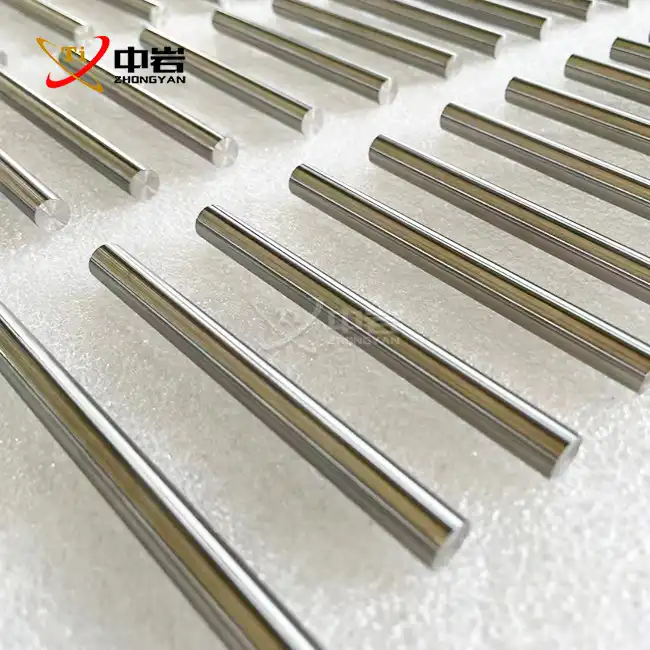
Titanium rods used in surgery tools and implants are the best in biomedical engineering because they are biocompatible and have the right mechanical qualities for life-critical medical uses. Precision-engineered titanium rod medical goods like these are used to make orthopedic implants, tooth prosthetics, and specialized surgery tools. Medical-grade titanium rods are essential for current healthcare manufacturing because they are better at osseointegration and corrosion protection. They also solve important problems in the industry, such as stress shielding, metallosis, and implant fatigue failure.
Understanding Medical Titanium Rods: Properties and Benefits
Medical-grade titanium plates are a huge step forward in biomedical materials because they are especially designed to meet the strict needs of surgery and implant production. Unlike regular industrial titanium, these specialty rods go through strict quality control procedures and follow strict international standards to make sure they work perfectly in the body.
Material Composition and Grades
Grade 2 economically pure titanium and Grade 5 ELI (Extra Low Interstitial) titanium alloy are the two titanium rod medical grades that are most frequently used. Grade 5 ELI is very strong and biocompatible because it is made up of titanium, aluminum, vanadium, and a small amount of intermediate elements. Our Grade 5 ELI rods are 120mm long and have a thickness of 4mm. They meet both ASTM F136 and ISO 5832-3 standards and keep their hardness at < 36 HRC. With a density of 4.43 g/cm³, these materials are very light, which makes them much better than standard implant materials. This lower density means that patients will be more relaxed while still keeping the structural stability that is needed for load-bearing uses. With a tensile strength of 850 MPa or more, the annealed state ensures optimal ductility, which lets doctors make precise movements during surgery.
Superior Biocompatibility and Safety
The inert nature of medical titanium rods and their ability to blend in perfectly with living cells make them very biocompatible. Titanium naturally makes an oxide layer on the surface that stops ions from escaping. This means that there are no worries about metallosis or dangerous reactions that can happen with other metal implants. Some important benefits of biocompatibility are fewer inflammatory responses, fewer reactions to foreign bodies, and great long-term safety in physiological settings. Studies have shown over and over that titanium implants are better at integrating with the bone than other materials. In orthopedic uses, success rates are over 95%. The low magnetic susceptibility of the material makes it compatible with MRIs, so people can go through diagnostic screening without any problems.
Mechanical Properties and Performance
With an elasticity value of about 110 GPa, medical titanium plates are very similar to human cortical bone in terms of how they work. This similarity stops stress shielding, which happens when hard implants carry loads that should normally be carried by bone tissue. This causes the bone to break down and the implant to become free. Our precisely made rods have a polished surface that gets rid of burrs and keeps the dimensions within ±0.03mm. This level of accuracy makes sure that the system works the same way in all situations and makes it easy to connect to other medical tools and implant systems. The ultrasonic inspection method ensures that goods will not have any flaws, which gives surgeons trust in their work.
Comparison of Titanium Rods with Alternative Materials
Knowing the pros and cons of titanium rod medical products compared to other materials helps people make smart purchasing choices that affect patient results and the long-term performance of medical devices. There are different qualities about each type of material that affect both clinical success rates and practical issues.
Stainless Steel versus Titanium
Even though stainless steel 316L has been used in medicine for a long time, it has some problems when compared to titanium options. Stainless steel's higher modulus of elasticity (200 GPa) creates important stress buffering effects that could cause bone mass to decrease around implant sites. Also, the fact that crevice corrosion can happen in chloride-rich settings makes stainless steel a long-term biocompatible worry.Titanium bars are very resistant to corrosion in all physiological situations, so they keep their shape for long periods of time after being implanted. The safe oxide layer stops ions from moving, which gets rid of the risk of metallosis that can happen with stainless steel implants. When buying something for the first time, stainless steel is cheaper, but when you add up all the costs over its lifetime, including repair surgeries and patient problems, titanium is a better deal.
Cobalt Chrome Alloys and Ceramic Alternatives
Cobalt chrome metals are strong and don't wear down easily, so they can be used for high-load tasks like replacing joints. But these metals can cause allergic reactions in people who are sensitive to them, and they are not as biocompatible as titanium. Cobalt chrome has a bigger mass (8.3 g/cm³), which makes it heavier for patients and may make surgery more difficult. Zirconia and alumina are two examples of ceramic materials that are very biocompatible and resistant to wear, but they can be fragile. Ceramics are great for low-load situations, but they can break in very bad ways, which means they can't be used in serious structural situations where titanium bars work best. Ceramics are hard to work with because they are hard to machine. This makes production more expensive and limits design options.
Carbon Fiber and Polymer Composites
Carbon fiber reinforced plastics have good strength-to-weight ratios and can match different moduli. However, these materials are not as stable or biocompatible over the long run as titanium. Because of worries about fiber movement and degradation, they can't be used in situations where the implant will last a long time, where titanium rod medical products have already been shown to be safe. When polymer composites are loaded for a long time, they may show creep warping, which can hurt their long-term mechanical performance. Because polymer materials can't osseointegrate, they don't offer the biological anchoring benefits that make titanium implants so useful in orthopedic uses.
How Titanium Rods Are Used in Surgical Procedures
Medical-grade titanium rods are useful and reliable, so they are used in many types of surgery, from reconstructing bones after an accident to private orthopedic treatments. Understanding these uses helps people who work in buying understand how important these products are to modern healthcare.
Orthopedic and Trauma Applications
Intramedullary nails are used to fix long bone fractures in orthopedic surgery. They are based on titanium rod medical tools. When these devices are put into the medullary canal of broken bones, they provide internal support that lets the bones be moved around more quickly and heal better. Because titanium is safe, it helps osseointegration, which is when bone tissue grows straight onto the implant surface. This makes a strong biological fixation. In spinal fusion treatments, shaped titanium bars keep the vertebrae in the right place while the fusion process is going on. Because the material is very flexible, surgeons can bend these poles during surgery to fit the body of each patient. Because Grade 5 ELI titanium is wear-resistant, these implants will not break after millions of loading cycles that happen during daily life. Our precisely made poles come in lengths ranging from 50mm to 300mm and diameters ranging from 1.5mm to 10mm, so they can meet the needs of a wide range of surgery patients, both children and adults. The common sizes make sure that they can be used with current surgical instruments and also give you options for making your own.
Dental and Maxillofacial Surgery
Utilizing our medical-grade rods as building blocks for implant screws and abutments makes dental implantology one of the most popular uses of titanium technology. The osseointegration effect, which was first seen in titanium tooth implants, shows that the material can directly connect with bone without any soft tissue getting in the way. Titanium bars are used in maxillofacial repair treatments to rebuild the mandible and the orbit after an accident or tumor removal. The corrosion resistance of the material provides long-term stability in the harsh oral environment, where pH changes and bacterial contact make service conditions very difficult.
Cardiovascular and Neurosurgical Applications
Titanium's ability to work with MRIs makes it very useful in neurological settings where imaging after surgery is necessary to track patient progress. Titanium's radiolucent qualities make image flaws less noticeable while still providing the necessary structural support for deep brain stimulation devices and cranial fixation systems. The biocompatibility and rust resistance of the material make it safe for patients and last a long time in cardiovascular uses like pacemaker housings and vascular stents. While keeping the mechanical qualities required for these important uses, titanium rod medical goods are lightweight, which lessens patient burden.
Procurement Guide for Medical Titanium Rods
To successfully purchase medical-grade titanium rods, you need to have a deep knowledge of the rules, quality standards, and provider capabilities. This information makes sure that medical gadget rules are followed while also improving cost-effectiveness and supply chain stability.
Regulatory Compliance and Certification Standards
Medical device makers need to make sure that the sellers of titanium rods keep up with international standards like ASTM F136 for Ti-6Al-4V ELI alloy and ASTM F67 for commercially pure titanium grades. These guidelines set limits on chemical makeup, mechanical property needs, and testing procedures that are necessary for medical uses. ISO 5832-3 approval gives you even more confidence in the quality of the materials and the control of the manufacturing process. This standard talks about specific needs for titanium alloys that are used in medical implants. These needs include limits on inclusions and grain sizes that affect how well the material works and how well it works with living things. Depending on the use and market, the product may need to be cleared by the FDA under 510(k) or have a CE mark on it. Buyers should make sure that sellers can give the right paperwork and expert help for regulatory submissions, like material certificates and data from biocompatibility tests.
Quality Control and Testing Requirements
For each lot of titanium rod medical goods, full quality control systems should check the chemical analysis, test the mechanical properties, and check the sizes. Ultrasonic screening makes sure that any problems inside the implant can be found and fixed, and measures of the surface roughness make sure that the finish is right for biological use. Materials must be tracked from the time they are received as raw materials to the time they are delivered as finished goods. This way, if there are any quality problems, they can be fixed quickly. In medical device settings, where patient safety depends on material purity and consistent performance, this data is even more important. Supplier audit programs should look at how well a company can make things, its quality control systems, and its compliance with regulations. Regular evaluations make sure that medical gadget standards are still being followed and find ways to improve processes and lower costs.
Customization Options and Technical Support
Leading suppliers offer customization services that include unique surface treatments, non-standard sizes, and metal formulas that are made just for medical uses. These features help companies that make medical devices set their goods apart while still meeting specific healthcare needs. As part of technical support services, material selection advice, application engineering help, and help with regulation files for medical devices should all be available. Experienced sellers can give you useful information about how materials behave, how to process them, and ways to improve the design of your product so it works better and is easier to make. Some things to think about when managing the supply chain are inventory management programs, just-in-time shipping options, and emergency supply methods that keep production going. Suppliers you can trust keep enough safety stock on hand and offer customizable delivery times to meet the needs of different production demands.
Leading Brands and Trusted Suppliers of Medical Titanium Rods
There are a number of well-known companies in the medical titanium business that are known for their dedication to quality, creativity, and following the rules. Choosing the right source partner has a big effect on how long it takes to create a product, get it approved by regulators, and be successful in business in the long run.
Zhongyan Titanium: China's Premier Medical Titanium Manufacturer
With cutting-edge production methods and thorough quality control systems, Zhongyan Titanium, based in Baoji City (China Titanium Valley), is a major player in the production of medical-grade titanium rod medical products. The company's position is very good because it gives it access to high-quality titanium resources and lets it use well-established supply chain facilities and technical know-how. Our manufacturing skills cover the whole production process, from processing raw materials to precise cutting and final testing. Advanced CNC machining tools make it possible to make complicated shapes with very tight tolerances, and full testing facilities make sure that the products meet international standards for medical devices. The ISO 9001:2015 certified quality management system keeps an eye on all the steps that go into making something. As one of their products, they offer Grade 5 ELI titanium bars that are made to meet ASTM F136 and ISO 5832-3 standards and have sizes from 1.5 mm to 10 mm and lengths up to 300 mm. Ultrasonic testing is done on each stick to make sure that it is delivered without any problems. Surface cleaning gets rid of burrs and creates smooth, even surfaces that can be used in medical settings.
Supplier Evaluation Criteria and Best Practices
A good supplier evaluation program should look at a lot of things, like the seller's technical skills, quality control systems, past record of following the rules, and financial security. When you do a site audit, you can look at the manufacturing methods, quality control techniques, and staff qualifications that affect the quality of the product and how well it is delivered. ISO 13485 quality management systems for medical devices, AS9100 quality standards for aircraft products, and related material specifications like AMS and ASTM standards should all be part of the certification process. These certifications show that the provider is dedicated to quality and give you faith in their ability to meet the strict requirements for medical devices. Long-term partnership considerations include research and development capabilities, intellectual property protection, and the availability of a global support system. Suppliers with strong technology teams can help come up with new products and also help with things like following the rules and growing the market.
Supply Chain Risk Management
Having a wide range of suppliers in your network helps keep prices and quality high while reducing the risk of problems in the supply chain. Primary and secondary seller ties make sure that supply doesn't stop when things go wrong, like when equipment breaks down, natural disasters happen, or there are problems with the law. Quality agreements should make it clear what the standards are for testing, what paperwork is needed, and how to take corrective action. These agreements spell out what is expected of employees and give a legal framework for dealing with quality problems that might affect patient safety or following the rules. Monitoring performance on a regular basis using KPIs like on-time delivery, quality measures, and how quickly customer service responds helps find problems before they affect production plans. Supplier scorecards are objective evaluation tools that help with supplier growth programs and efforts to improve things all the time.
Conclusion
Titanium rod medical products are the best in biomedical engineering because they are biocompatible, work well mechanically, and can be made in a variety of ways that are important for current healthcare uses. Medical-grade titanium is essential for making surgical instruments and implants because it has better qualities, such as being resistant to corrosion, being able to fuse with bone, and having the same modulus as human bone. Paying for things legally, finding qualified suppliers, and using quality control systems that protect patients and make sure treatments work well are all important parts of successful buying. Investing in high-quality titanium rods pays off in the long run by improving patient results, lowering the number of complications, and making medical devices work better in a wider range of clinical settings.
FAQ
Why are titanium rods preferred over stainless steel for medical implants?
Titanium rods are better at being biocompatible and resistant to rust than stainless steel rods. The value of the elasticity of titanium rod medical goods (110 GPa) is very close to that of human bone, which prevents stress shielding effects that can cause bone to break down and implants to become loose. Additionally, titanium's inactive surface oxide layer stops ions from escaping, which gets rid of the metallosis worries that come with some stainless steel implants.
What certifications should medical titanium rods meet?
For medical-grade titanium rods, they need to meet ASTM F136 for Ti-6Al-4V ELI alloy or ASTM F67 for types of commercially pure titanium. Certification to ISO 5832-3 makes sure that surgical implant products meet foreign standards. Suppliers must have quality control systems that meet ISO 13485 standards and give out certificates for materials that show their chemical makeup, mechanical features, and biocompatibility test results.
Can titanium rods be customized for specific surgical applications?
Yes, reliable providers do offer a wide range of customization choices, such as non-standard sizes, unique surface treatments, and alloy compositions that aren't available anywhere else. Custom lengths from 50 mm to 300 mm and widths from 1.5 mm to 10 mm can meet a wide range of surgery needs. To fit special clinical needs, surface cleaning, tight tolerances (±0.03mm), and changes to the mechanical properties can be made.
How long do titanium implants typically last in the human body?
Studies in humans have shown that titanium rod medical implants can last 20 to 30 years or longer if they are made correctly. Medical-grade titanium is very resistant to rust and is safe for living things. This makes it stable and effective over time. For most orthopedic uses, success rates are higher than 95%. Failures are usually caused by problems with the surgery or the patient, not with the material breaking down.
What quality control measures ensure titanium rod reliability?
Chemical analysis proof, mechanical property testing, dimensional checking, and acoustic examination to find internal flaws are all parts of full quality control. Each rod is checked over and over again to make sure there are no problems when they arrive. Traceability systems keep track of materials as they are being made, and ISO 9001:2015 quality management systems make sure that all production actions are done in a planned way.
Partner with Zhongyan for Premium Medical Titanium Rod Solutions
Zhongyan Titanium is a reliable titanium rod medical maker that provides well-thought-out solutions that meet the strictest needs of medical devices. Our Grade 5 ELI titanium rods, which are made to meet ASTM F136 and ISO 5832-3 standards, are reliable and work well enough to be used in surgical tools and implants. We make sure that your medical device projects follow all the rules and work well in the clinic by offering full customization, advanced quality control systems, and knowledge of shipping around the world. Our skilled engineering team helps with technical issues all the way through the buying process, from choosing the materials to delivering them. Get in touch with our experts at sales@titaniumstudy.com to talk about your unique needs and find out how our services as a medical-grade titanium rod provider can enhance your medical device portfolio. Let us show you why leading medical device makers worldwide trust Zhongyan for their most important titanium material needs.
References
1. Niinomi, M., Nakai, M., & Hieda, J. (2012). The creation of new metal materials that can be used in medicine. 8. Acta Biomaterialia, pp. 3888–3903.
2. Geetha, M., Singh, A. K., Asokamani, R., & Gogia, A. K. (2009). A look at Ti-based ceramics, the best choice for orthopedic implants. 54(3), 397–425 in Progress in Materials Science.
3. American Society for Testing and Materials. (2020). The ASTM F136-20 standard describes wrought titanium-6 aluminum-4 vanadium ELI alloy that can be used for surgical implants. The International ASTM.
4. International Organization for Standardization. (2019). Part 3 of ISO 5832-3:2019 says that surgical implants made of wrought titanium, aluminum, and vanadium are made of metallic materials. Publications from ISO.
5. Liu, X., Chu, P. K., & Ding, C. (2004). Titanium, titanium alloys, and similar materials can have their surfaces changed for use in medicine. Re: Reports, 47(3), 49–121. Materials Science and Engineering: R.
6. Rack, H. J., and Qazi, J. I. (2006). Titanium materials are used in the medical field. Part C of Materials Science and Engineering, 26(8), 1269–1277.
_1755652968020.jpg)

Learn about our latest products and discounts through SMS or email