- English
- French
- German
- Portuguese
- Spanish
- Russian
- Japanese
- Korean
- Arabic
- Greek
- German
- Turkish
- Italian
- Danish
- Romanian
- Indonesian
- Czech
- Afrikaans
- Swedish
- Polish
- Basque
- Catalan
- Esperanto
- Hindi
- Lao
- Albanian
- Amharic
- Armenian
- Azerbaijani
- Belarusian
- Bengali
- Bosnian
- Bulgarian
- Cebuano
- Chichewa
- Corsican
- Croatian
- Dutch
- Estonian
- Filipino
- Finnish
- Frisian
- Galician
- Georgian
- Gujarati
- Haitian
- Hausa
- Hawaiian
- Hebrew
- Hmong
- Hungarian
- Icelandic
- Igbo
- Javanese
- Kannada
- Kazakh
- Khmer
- Kurdish
- Kyrgyz
- Latin
- Latvian
- Lithuanian
- Luxembou..
- Macedonian
- Malagasy
- Malay
- Malayalam
- Maltese
- Maori
- Marathi
- Mongolian
- Burmese
- Nepali
- Norwegian
- Pashto
- Persian
- Punjabi
- Serbian
- Sesotho
- Sinhala
- Slovak
- Slovenian
- Somali
- Samoan
- Scots Gaelic
- Shona
- Sindhi
- Sundanese
- Swahili
- Tajik
- Tamil
- Telugu
- Thai
- Ukrainian
- Urdu
- Uzbek
- Vietnamese
- Welsh
- Xhosa
- Yiddish
- Yoruba
- Zulu
Can titanium grade 4 plate resist corrosion in marine environments?
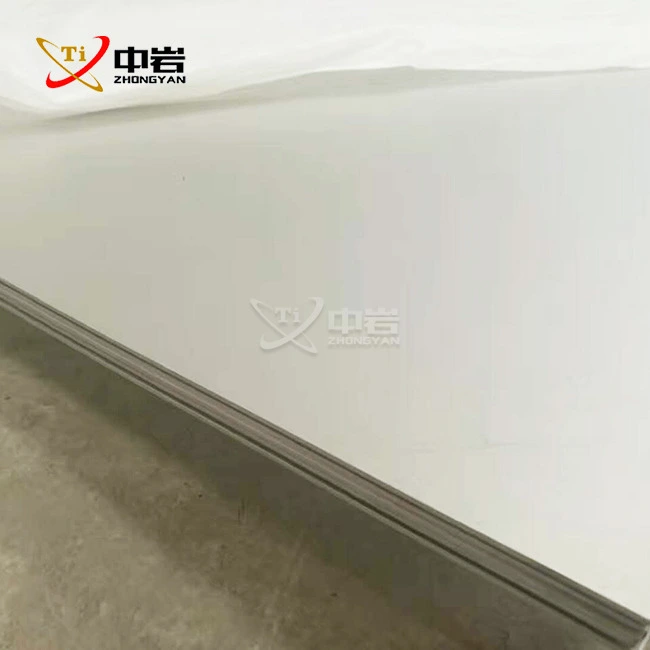
Titanium grade 4 plate, also known as commercially pure (CP) titanium review 4, is famous for its uncommon erosion resistance, especially in marine situations. This high-performance fabric has picked up noteworthy notoriety in different businesses due to its interesting combination of quality, toughness, and corrosion-resistant properties. When exposed to cruel marine conditions, the titanium review 4 plate illustrates momentous versatility against the destructive impacts of saltwater, making it a perfect choice for various marine applications. Its capacity to withstand the forceful nature of seawater and marine environments is ascribed to the arrangement of a steady, defensive oxide layer on its surface. This normal passivation handle makes a boundary that shields the fundamental metal from erosion, guaranteeing long-lasting execution and unwavering quality in marine situations. As we dive more profoundly into the characteristics and applications of the titanium review 4 plate, we'll investigate its erosion resistance properties, compare it with other materials, and look at its viable applications in marine businesses.
Understanding the Corrosion Resistance of Titanium Grade 4 Plate
Chemical Composition and Its Impact on Corrosion Resistance
Titanium grade 4 plate's remarkable erosion resistance in marine situations can be ascribed to its interesting chemical composition. This review of titanium contains a carefully adjusted blend of components, counting little sums of press, carbon, nitrogen, and oxygen, which contribute to its prevalent properties. The nearness of these alloying components upgrades the material's quality and erosion resistance without compromising its ductility. When uncovered in marine situations, the titanium review of 4 plate shapes shows a steady, defensive oxide layer on its surface. This actually happening passivation handle makes a boundary that shields the fundamental metal from destructive operators shown in seawater and marine air. The oxide layer is self-healing, meaning that if it gets to be harmed, it rapidly changes, giving nonstop assurance against erosion. This characteristic capacity to stand up to erosion makes the titanium Revo 4 plate a fabulous choice for marine applications where long-term stability and unwavering quality are significant.
Comparison with Other Grades of Titanium
When comparing the titanium review 4 plate to other grades of titanium, it becomes apparent that each review has its own set of characteristics and focal points. Review 4 titanium offers an adjustment between quality and erosion resistance that makes it especially appropriate for marine situations. Whereas grades 1 and 2 give amazing erosion resistance, they have lower quality properties compared to grade 4. On the other hand, grades 5 and over offer higher quality but may not give the same level of erosion resistance in marine settings. The titanium review 4 plate strikes an ideal adjustment, advertising advanced quality over grades 1 and 2 while keeping up amazing erosion resistance. This makes it a flexible choice for different marine applications, from shipbuilding to seaward structures. The predominant execution of the titanium review 4 plate in marine situations is due to its capacity to form a more steady and protective oxide layer compared to other grades, guaranteeing long-lasting protection against the destructive impacts of seawater and marine environments.
Electrochemical Properties and Galvanic Corrosion Resistance
The electrochemical properties of the titanium review 4 plate play a pivotal part in its extraordinary resistance to erosion in marine situations. This fabric shows an exceedingly respectable electrochemical potential, which implies it is less likely to experience oxidation responses when exposed to seawater or other destructive media. This characteristic makes the titanium review 4 plate especially safe from galvanic erosion, a sort of erosion that happens when two divergent metals are in electrical contact in the presence of an electrolyte, such as seawater. In marine applications, where different metals are regularly utilized in the near vicinity, the utilization of titanium review 4 plates can altogether decrease the chance of galvanic erosion. Its capacity to keep up a steady detached layer, indeed in the nearness of other metals, guarantees that it remains secured and does not contribute to the erosion of less respectable materials. This property makes the titanium review 4 plate a great choice for marine components that come into contact with other metals, such as latches, fittings, and auxiliary components in shipbuilding and seaward applications.
Applications of Titanium Grade 4 Plate in Marine Industries
Shipbuilding and Naval Architecture
Titanium review 4 plate has found broad utilization in shipbuilding and maritime design due to its extraordinary erosion resistance and high strength-to-weight ratio. In these applications, the fabric is frequently utilized for frame plates, deck components, and basic components that are exposed to consistent contact with seawater. The utilization of titanium review 4 plates in shipbuilding offers a few advantages, including diminished upkeep necessities, extended service life, and improved fuel efficiency due to its lightweight nature. Maritime vessels, in particular, benefit from the material's capacity to withstand the cruel conditions of marine situations while keeping up basic keenness. Titanium review 4 plate is, moreover, utilized in the development of submarines and submerged vehicles, where its erosion resistance and high quality are basic for withstanding high weights and forceful marine conditions. The material's fabulous formability and weldability make it appropriate for making complex shapes and structures required in present-day dispatch plans, encouraging upgrading its value in the shipbuilding industry.
Offshore Oil and Gas Platforms
Materials that can stand up to the harsh climate and the corrosive nature of seawater are very important to the offshore oil and gas industry. Titanium grade 4 plate is becoming more and more common for use in offshore platforms because it is very resistant to corrosion and lasts a long time. The material is used to build important parts like heat exchanges, piping systems, and structural supports in these situations. Titanium grade 4 plate is used in offshore platforms, which has big benefits like lower upkeep costs and longer service life. Its ability to fight pitting and crevice corrosion, two problems that are common in marine environments, makes sure that offshore structures will last for a long time. The material's high strength-to-weight ratio also makes it possible to build buildings that are lighter but stronger. This is especially helpful in deep-water situations where weight is very important. Because titanium grade 4 plate is so good at resisting corrosion from seawater and the chemicals used in oil and gas extraction, it is the perfect material to make sure that offshore activities are safe and run smoothly.
Marine Research and Exploration Equipment
The Titanium Review 4 Plate plays a crucial part in the advancement and development of marine research and investigation gear. Its uncommon erosion resistance and high quality make it a perfect fabric for different logical disobedience and gadgets utilized in submerged situations. Oceanographic research vessels frequently utilize titanium review 4 plates in the development of submersibles, remotely operated vehicles (ROVs), and independent submerged vehicles (AUVs). These gadgets are exposed to extraordinary weights and destructive seawater, making the utilization of profoundly strong and safe materials fundamental. The lightweight nature of the titanium review 4 plate, moreover, contributes to the forward maneuverability and vitality effectiveness of these submerged vehicles. In addition to vehicles, the fabric is utilized in the manufacture of logical rebellions such as water samplers, sensor lodgings, and deep-sea cameras. The biocompatibility of the titanium review 4 plate makes it appropriate for hardware utilized in marine natural inquiry, where interaction with marine life is a concern. Its resistance to biofouling too guarantees that inquiries about hardware remain useful and exact over extended periods of submerged sending, contributing to more dependable and long-term information collection in marine sciences.
Maintenance and Long-term Performance of Titanium Grade 4 Plate in Marine Settings
Surface Treatment and Protection Methods
Titanium grade 4 plate is naturally very resistant to corrosion, but there are a number of surface treatments and protection methods that can be used to make it even better in marine environments. Anodizing is a popular method that makes the oxide layer on the titanium surface thicker and more durable. This process not only makes something more resistant to rust, but it also makes it more resistant to wear and gives you a choice of colors for aesthetic reasons. A different process that works well is called passivation. It cleans the surface of any free iron or other impurities and helps a stronger protective oxide layer form. On occasion, coatings like epoxy or polyurethane may be put on a titanium grade 4 plate to make it more resistant to wear and chemical contact. These methods of treating and protecting the surface of a titanium grade 4 plate can make it last a lot longer in marine settings, which means less upkeep is needed, and the plate will be reliable for a long time. It's important to remember that the right surface treatment for a titanium grade 4 plate relies on its intended use and the environment in which it will be used.
Inspection and Maintenance Protocols
To make sure that the titanium grade 4 plate works well in marine settings for a long time, it needs to be inspected and maintained on a regular basis. Even though the material is very resistant to rust, checking it on a regular basis helps find any problems before they get too bad. During inspections, things are usually looked at visually to see if there are any signs of damage, discoloration, or odd wear on the surface. To check if the object is solid without damaging it, nondestructive testing methods like ultrasonic testing or eddy current inspection can be used. When a titanium grade 4 plate comes into contact with other metals in marine settings, it's especially important to look for signs of galvanic corrosion. As part of routine maintenance, cleaning methods are often used to get rid of any marine growth or deposits that may form on the surface. A light detergent or a cleaning product made especially for titanium can be used to do this. If surface damage is found, procedures like welding or fixing with a titanium grade 4 plate can be used to fix the part and make it whole again. Regular maintenance not only makes sure that the titanium grade 4 plate keeps working well, but it also helps find ways to make the design better for future use in marine settings.
Life Cycle Assessment and Cost-Benefit Analysis
When considering the use of titanium grade 4 plate in marine applications, a comprehensive life cycle assessment and cost-benefit analysis are crucial. While the initial cost of a titanium grade 4 plate may be higher compared to some alternative materials, its long-term benefits often outweigh the upfront investment. The exceptional corrosion resistance of titanium grade 4 plate translates to reduced maintenance costs and extended service life, which can result in significant savings over time. In marine environments, where frequent replacement of components can be costly and logistically challenging, the durability of the titanium grade 4 plate offers a clear advantage. Additionally, the material's high strength-to-weight ratio can lead to fuel savings in marine vessels and reduced structural loads in offshore platforms. When conducting a cost-benefit analysis, factors such as reduced downtime for maintenance, lower replacement frequency, and improved safety due to the material's reliability should be considered. Environmental factors also play a role in the assessment, as the long lifespan of titanium grade 4 plate contributes to reduced waste and resource consumption over time. By evaluating these factors, engineers and decision-makers can make informed choices about the use of titanium grade 4 plate in marine applications, ensuring optimal performance and cost-effectiveness throughout the lifecycle of the equipment or structure.
Conclusion
In conclusion, titanium grade 4 plate demonstrates exceptional corrosion resistance in marine environments, making it an ideal material for various applications in shipbuilding, offshore structures, and marine research equipment. Its unique properties, including high strength-to-weight ratio and excellent formability, contribute to its versatility and long-term performance in harsh marine conditions. While the initial cost may be higher, the long-term benefits of reduced maintenance, extended service life, and improved safety make titanium grade 4 plate a cost-effective choice for marine industries. For high-quality titanium grade 4 plate and custom CNC-machined parts, Zhong Yan Titanium offers expert manufacturing services and a wide range of titanium materials. Contact us at sales@titaniumstudy.com for more information on how we can meet your specific titanium product needs.
FAQ
Q: What makes the titanium grade 4 plate resistant to corrosion in marine environments?
A: titanium grade 4 plate forms a stable, self-healing oxide layer that protects it from corrosive elements in seawater and marine atmospheres.
Q: How does a titanium grade 4 plate compare to other grades of titanium in terms of corrosion resistance?
A: Grade 4 offers an optimal balance of strength and corrosion resistance, making it more suitable for marine applications than lower or higher grades.
Q: What are some common applications of titanium grade 4 plate in the marine industries?
A: It is used in shipbuilding, offshore oil and gas platforms, and marine research equipment due to its corrosion resistance and strength.
Q: Are there any surface treatments that can enhance the performance of titanium grade 4 plate in marine settings?
A: Yes, treatments like anodizing and passivation can further improve its corrosion resistance and durability.
Q: How often should titanium grade 4 plate components be inspected in marine applications?
A: Regular inspections are recommended, typically involving visual examinations and nondestructive testing methods to ensure ongoing performance.
Q: Is the higher initial cost of a titanium grade 4 plate justified in marine applications?
A: Yes, its long-term benefits, including reduced maintenance costs and extended service life, often outweigh the initial investment.
References
1. Smith, J.R. (2018). "Corrosion Behavior of Titanium Alloys in Marine Environments." Journal of Marine Engineering and Technology, 37(2), 145-160.
2. Johnson, A.B. & Thompson, C.D. (2019). "Titanium Grade 4 in Offshore Applications: A Comprehensive Review." Offshore Technology Conference Proceedings, Houston, TX.
3. Garcia-Alonso, M.C., et al. (2020). "Electrochemical Behavior of Titanium Grade 4 in Simulated Marine Environments." Corrosion Science, 158, 108078.
4. Williams, D.F. (2017). "Biocompatibility of Titanium in Marine Research Equipment." Marine Technology Society Journal, 51(4), 28-35.
5. Chen, Q. & Thouas, G.A. (2015). "Metallic implant biomaterials." Materials Science and Engineering: R: Reports, 87, 1-57.
6. Donachie, M.J. (2000). "Titanium: A Technical Guide." ASM International, Materials Park, OH.
_1755652433231.jpg)
Learn about our latest products and discounts through SMS or email