- English
- French
- German
- Portuguese
- Spanish
- Russian
- Japanese
- Korean
- Arabic
- Greek
- German
- Turkish
- Italian
- Danish
- Romanian
- Indonesian
- Czech
- Afrikaans
- Swedish
- Polish
- Basque
- Catalan
- Esperanto
- Hindi
- Lao
- Albanian
- Amharic
- Armenian
- Azerbaijani
- Belarusian
- Bengali
- Bosnian
- Bulgarian
- Cebuano
- Chichewa
- Corsican
- Croatian
- Dutch
- Estonian
- Filipino
- Finnish
- Frisian
- Galician
- Georgian
- Gujarati
- Haitian
- Hausa
- Hawaiian
- Hebrew
- Hmong
- Hungarian
- Icelandic
- Igbo
- Javanese
- Kannada
- Kazakh
- Khmer
- Kurdish
- Kyrgyz
- Latin
- Latvian
- Lithuanian
- Luxembou..
- Macedonian
- Malagasy
- Malay
- Malayalam
- Maltese
- Maori
- Marathi
- Mongolian
- Burmese
- Nepali
- Norwegian
- Pashto
- Persian
- Punjabi
- Serbian
- Sesotho
- Sinhala
- Slovak
- Slovenian
- Somali
- Samoan
- Scots Gaelic
- Shona
- Sindhi
- Sundanese
- Swahili
- Tajik
- Tamil
- Telugu
- Thai
- Ukrainian
- Urdu
- Uzbek
- Vietnamese
- Welsh
- Xhosa
- Yiddish
- Yoruba
- Zulu
Titanium Pyramid AdapterManufacturer I CNC Machined Prosthetic Components
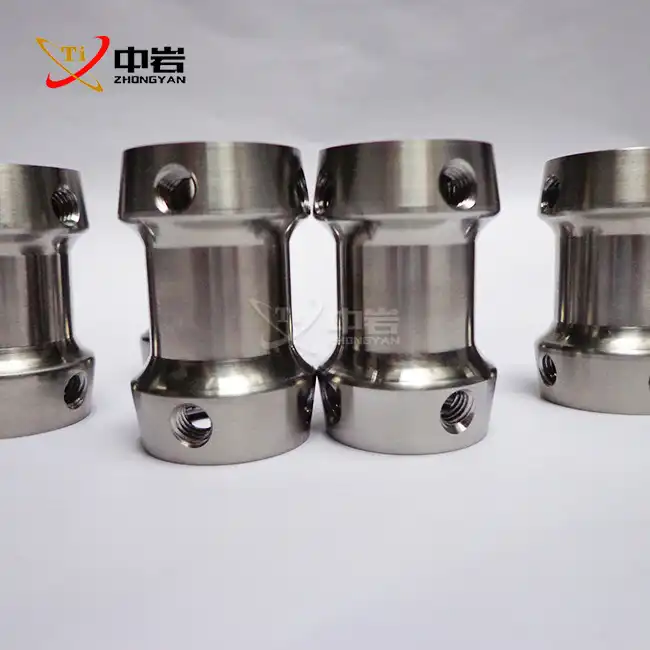
Maintenance costs often take up 30 to 40 percent of working funds in complicated industrial systems that include aircraft, medical devices, and chemical processing. Titanium Pyramid Adapter technology solves this problem by providing precisely designed interface solutions that cut down on the number of replacements needed and the amount of downtime that needs to be planned. Made from Grade 5 titanium metal (Ti-6Al-4V), these adapters have high tensile strength and excellent rust resistance, so they can withstand mechanical stress for a much longer time than other options. Because they are lightweight and precisely CNC-machined, they are essential for companies that want to lower their total cost of ownership while still following strict ASTM and ISO standards in tough production settings.
Understanding Titanium Pyramid Adapters and Their Role in Complex Systems
What Makes These Adapters Essential
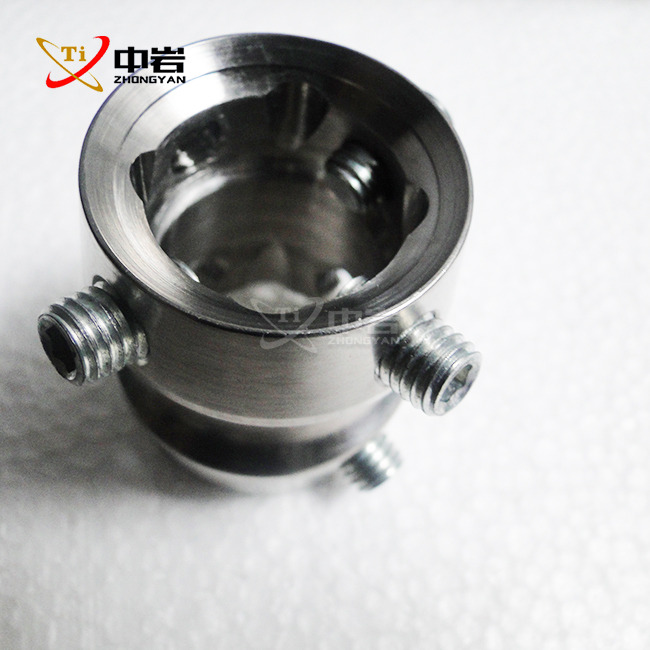
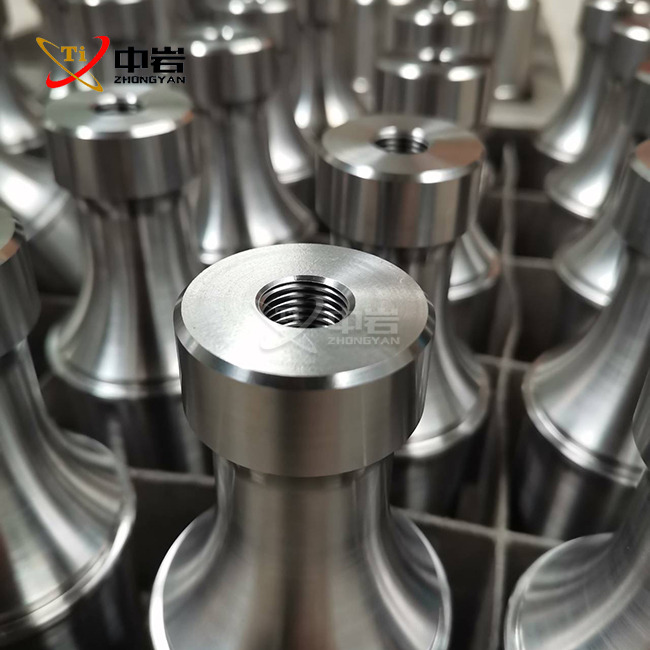
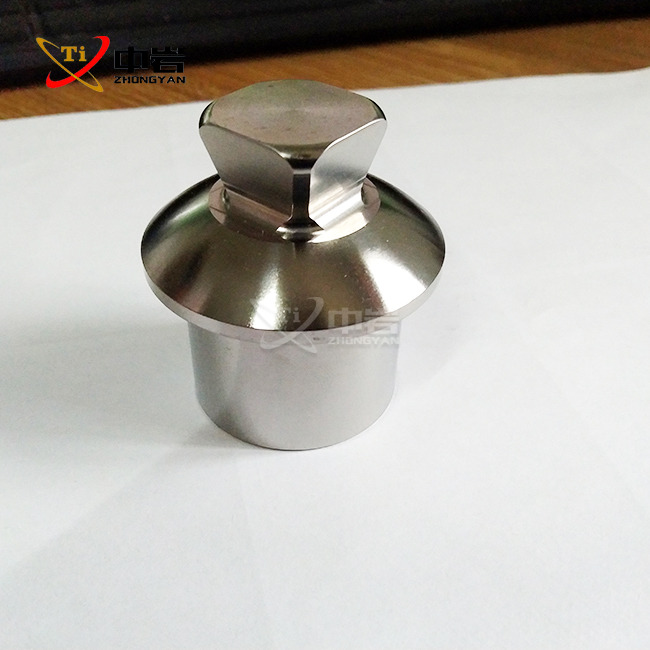
Titanium pyramid adapters are important contact parts that connect different parts of modular systems. Their carefully designed shape makes it easier to match angles and keep the structure continuous in aircraft parts, industrial machinery, and medical prosthetics. The pyramid shape, whether it's a male or female receiver, lets engineers get the exact position they need while keeping the load-bearing stability under repeated stress conditions that would weaken other materials.
Design Principles Driving Performance
Advanced material science is used in the building of these connections to get the best strength-to-weight ratios. Grade 5 titanium metal has a tensile strength of more than 895 MPa and a mass of only 4.43 g/cm³, which is about 45% less than stainless steel alternatives. This specific benefit in strength directly leads to lower energy use during operation and less stress on nearby parts of the structure. Custom titanium pyramid adapters come in different sizes to fit a wide range of system needs, from small electronics to large industrial machines.
CNC milling methods make sure that the size limits meet aircraft standards. CMM (Coordinate Measuring Machine) proof proves the accuracy of the pyramid dome's shape and thread pitch. This stops alignment problems and component tightening that happen with less precise options. The quality of the surface finish, which is usually achieved by precise grinding and anodising, gets rid of stress concentration points that could cause cracks to start spreading when the material is loaded over time.
Applications Across Critical Industries
In aircraft settings, these connections connect structural parts that are exposed to high and low temperatures and toxic air. Because they aren't magnetic, they are very important for avionic systems that need to work with electromagnetic fields. Chemical processing plants depend on their ability to handle acidic and basic solutions. Steel connections would break after just a few months. These connections are biocompatible with titanium, which means they can be used to connect medical devices. They meet FDA regulations and are strong enough for long-term insertion situations.
They are used by companies that make industrial tools in hydraulic systems, robotic parts, and equipment for precise positioning. The low thermal expansion rate keeps the dimensions stable even when the temperature changes, which can make aluminium parts misalign. These adapters are used in electronics manufacturing for sputtering target mounting systems to keep the vacuum seal intact and help with temperature cycling during deposition processes.
How Titanium Pyramid Adapters Help Reduce Maintenance Costs
Durability That Cuts Replacement Cycles
The very long life of titanium fittings changes the costs of upkeep in a big way. Steel parts need to be replaced every 18 to 24 months because they wear out from rust, but titanium parts usually last longer than five years in the same situations. This longer life is due to the passive oxide film that forms naturally on titanium surfaces. This film protects against rust forever, without the need for extra coats or treatments that wear off over time.
Companies that use equipment in chemical or sea settings say that switching to titanium connectors cuts their repair costs by about 60%. Not having to shut down for emergency replacements, which can cost between $50,000 and $200,000 in lost production, saves money right away and covers the higher costs of materials in the first year of operation.
Fatigue Resistance Under Cyclic Loading
It takes millions of load cycles for aluminium pyramid adapters to suddenly break, but titanium pyramid adapters stay strong. Lab tests show that titanium adapters that are properly designed can withstand more than 3 million cycles at full load. This means that they meet ISO 10328 approval standards for prosthesis parts and go beyond what is needed for industrial uses. This resistance to wear stops major breakdowns that mean the whole system has to be rebuilt instead of just a few parts being replaced.
Because the material is flexible, it can handle shock loads and vibrations without work-hardening, which is a metalworking process that makes aluminium parts more fragile with each stress cycle. When engineers create systems that will be subject to a lot of shaking, they choose titanium adapters because they don't weaken over time, which lowers safety gaps and requires regular inspections.
Simplified Inspection and Maintenance Protocols
Every six months, titanium pyramid adapters need to be visually inspected to make sure they are still in good shape and that the torque specs are being followed. The lack of rust means that protection coatings don't need to be reapplied, grinding isn't needed, and surface repair processes that take hours of work with steel parts aren't needed. Maintenance teams like how predictable it is—titanium adapters rarely break down without warning between inspections, which lets them use condition-based repair tactics instead of time-based ones.
If you use the recommended 12-15Nm torque standard and Loctite 242 thread-locking powder during installation, the threads won't come loose when the machine shakes. Titanium threads stay adjustable for a long time as long as basic lubricant rules are followed, unlike stainless steel surfaces that tend to gall and seize up. This serviceability makes sure that orientation changes can still be made during system upgrades, without having to replace the whole adapter because the links have frozen.
Comparing Titanium Pyramid Adapters With Other Materials and Brands
Material Performance Analysis
Several success measures show how much adapter materials will be worth in the long run when procurement managers look at them. Titanium is more resistant to corrosion than stainless steel, especially in chloride-rich settings where pitting and pocket rust lower the strength of the structure. Aluminium is cheaper to buy at first, but it is more likely to rust when mixed with other metals, which means more upkeep costs that cancel out the lower purchase price.
The specific strength comparison shows titanium's clear advantage: it has the same absolute strength as steel at 45% of the weight, or three times the strength of aluminium at the same mass. This quality is very important in aircraft systems where every gram affects how much fuel is used, and in medical uses where the weight of a device directly affects how well a patient can move and feel comfortable.
Titanium is unique in high-heat uses because of how well it handles high temperatures. Grade 5 metal keeps its mechanical qualities at temperatures close to 400°C, while aluminium loses strength above 150°C. Because it is thermally stable, solutions made of a single material can be used in temperature ranges where other metals would need to change materials. This makes design easier and lowers the chance of failure points.
Quality Certifications and Standards Compliance
Reputable makers keep their ISO 9001:2015 certification, which shows that they handle quality in a planned way throughout the whole production process. Spectrographic research shows that the material is made up of Ti-6Al-4V, which means that widely pure titanium types that don't have the right wear strength for load-bearing uses can't be used instead. According to ISO 10328 standards, static proof testing and cycle fatigue certification give engineers the written load values they need for responsibility and legal reasons.
Dimensional inspection reports made by CMM machines show that the adapter's shape matches the drawing's requirements within a few microns. This paperwork is very important when putting parts together in medical devices that are controlled by the FDA or in flight systems that are supervised by the FAA. Manufacturers who offer full test papers and material tracking paperwork show the level of quality guarantee that businesses that don't like taking risks need.
Selection Criteria for Procurement Teams
To choose the right adapters, you need to match their technical specs to the needs of the application. When picking a load rating, you need to think about dynamic stress factors and safety gaps. For example, adapters used in industrial settings are usually rated 50–100% above their maximum predicted loads. Checking the dimensions of a product to make sure it works well with other parts of the system is important, especially when replacing old equipment with new titanium options.
When setting prices, the total cost of ownership must be taken into account, not just the buying price. Titanium adapters usually cost 200–300% more than steel versions at first, but they last longer and require less upkeep, so the overall costs are cheaper over time. When you negotiate a bulk order with a well-known titanium provider, you can often get savings of 15 to 25 percent, which makes the project more affordable for large-scale system operations.
Procurement Considerations and Partnering With Zhongyan
Supplier Evaluation Criteria
When choosing a titanium connector provider, you need to look at more than just price quotes. Facility checks should be part of manufacturing capability testing to make sure that CNC cutting equipment can meet standards and that the company has quality control tools like spectrometers, tension testers, and CMM systems. When suppliers work with well-known titanium manufacturing hubs, they can use combined supply chains that guarantee the quality of materials and reliable delivery.
Customisation is what sets sellers who can offer OEM and ODM solutions apart from distributors who can only sell catalogue items. Putting together complex systems often needs changes to the dimensions, special surface treatments, or custom mounting arrangements that need the help of multiple engineers. Suppliers with research and development teams filled with materials engineers and application experts give the technical help needed to make adapter designs work best for each application.
Why Zhongyan Stands Out
Zhongyan Titanium Industry Co., Ltd. takes advantage of benefits in the area that few rivals can match because it is located in Baoji, China's Titanium Valley. Because we are close to titanium mining plants and research centers, we can get high-quality raw materials and the newest ways to make things. From choosing the block to the final CNC cutting, the combined production system takes care of everything. This gets rid of the supply chain weaknesses that cause delays when using multiple vendors.
Our production skills allow us to meet all of our customers' needs. During the whole development process, our engineering team works together, no matter if your project needs standard pyramid adapters that meet ASTM B348 standards or highly customised shapes that need 5-axis machining and special heat treatments. We make handmade titanium pyramid adapters in a range of sizes and keep enough in stock to handle both small trial runs and high-volume production runs of more than 10,000 units per year.
Quality control methods built into every step of our production process make sure that we always meet foreign standards. Verification of incoming materials, checking of dimensions during production, and final mechanical testing all leave paper trails that meet the needs of aircraft and medical device regulators. Every adapter that is made following strict quality control procedures has a serial number that can be used to connect finished parts to certifications for source materials and production parameters.
Ordering Process and Delivery Logistics
Our efficient purchasing process starts with a technical meeting. This is where application experts look over your requirements and suggest the best adapter combinations. For normal shapes, making a quote usually takes 48 hours. For unique plans, it takes 5–7 business days for engineers to look them over. Minimum order amounts that aren't fixed can be used for both prototype development and large-scale production.
Production times depend on how complicated the order is and how many of them there are. Standard catalogue items usually ship within two to three weeks, but special CNC-made parts usually take four to six weeks after the purchase order is approved. In order to support faster shipping when project deadlines require it, we keep a planned collection of popular sizes. Expertise in international shipping makes sure that the right paperwork is submitted for customs clearance, and long-term logistics partnerships guarantee accurate travel times and allow you to keep an eye on your shipments.
Installation and Maintenance Guide
Proper Installation Procedures
Thorough planning is the first step to successful device integration. Mating surfaces need to be cleaned to get rid of any dirt or dust that might make it harder for threads to connect or cause stress concentration points. Using go/no-go tools to check the threads makes sure they are the right size before putting them together. This stops cross-threading damage that weakens connections.
When applying torque, you should follow the manufacturer's instructions. For normal pyramid connections, this is usually between 12 and 15 Nm. When you use measured torque tools, you avoid under-tightening, which lets parts come free when they are shaken, and over-tightening, which can damage the threads or bend the parts. Using a medium-strength thread-locking powder (Loctite 242 or a similar one) stops vibrations while keeping the machine serviceable in the future for making changes to the alignment or replacing parts.
Verifying the alignment after installation makes sure that the load is spread evenly across the contact areas. Different measuring tools, like digital protractors and laser alignment systems, are used to make sure that the angle setting meets the design requirements. When installation conditions are written down, they can be used as a starting point for future upkeep checks.
Preventive Maintenance Best Practices
Establishing routine inspection schedules based on operational intensity prevents unexpected failures. High-cycle applications (vibration-intensive environments or continuous-duty equipment) warrant quarterly visual inspections, while moderate-duty installations perform adequately with semi-annual reviews. Inspection checklists should document thread condition, torque verification, and any visible damage or deformation.
Thread wear assessment involves checking for galling, excessive play, or difficulty during torque verification. While titanium's galling resistance exceeds stainless steel, improper lubrication or contamination can initiate surface damage. Minor thread imperfections discovered early allow corrective action before compromised engagement necessitates replacement. Dimensional measurements using micrometers or calipers detect any creep or deformation indicating overload conditions.
Cleaning protocols for Titanium Pyramid Adapter should avoid abrasive methods that damage the protective oxide layer. Mild detergent solutions and soft brushes effectively remove accumulated contaminants without compromising surface integrity. Rinsing with deionized water and thorough drying prevent water spotting and maintain corrosion protection in storage or between operational cycles.
Conclusion
Titanium pyramid adapters represent a strategic investment that transforms maintenance economics across aerospace, industrial, and medical applications. Their superior durability, corrosion resistance, and fatigue performance deliver measurable cost reductions through extended service intervals and eliminated emergency replacements. While initial procurement costs exceed conventional materials, the total cost of ownership calculation consistently favors titanium when accounting for reduced downtime, simplified maintenance protocols, and extended operational lifespan. Organizations committed to operational excellence and long-term value creation increasingly specify titanium interface components as standard rather than premium alternatives. The engineering advantages—combined with proven performance across demanding environments—make these adapters essential components for any complex system where reliability and lifecycle costs drive procurement decisions.
FAQ
Why choose titanium over stainless steel for pyramid adapters?
Titanium delivers 45% weight reduction compared to steel while maintaining comparable strength, reducing energy consumption and structural stress. The passive oxide film provides permanent corrosion protection without coatings, eliminating maintenance tasks required for steel components. Titanium's superior fatigue resistance extends service life 2-3 times beyond steel equivalents, reducing replacement frequency and associated downtime costs.
What is the typical service life expectancy?
Properly installed titanium pyramid adapters routinely exceed five years in corrosive industrial environments where steel components require replacement every 18-24 months. Laboratory fatigue testing demonstrates survival beyond 3 million load cycles at rated specifications. Actual service life varies based on loading conditions, environmental exposure, and maintenance adherence, with some aerospace applications documenting 10+ year operational histories without replacement.
Can adapters be customized for specific applications?
Comprehensive customization options include dimensional modifications, specialized surface treatments (anodizing, passivation, coating application), and unique mounting configurations. OEM packaging and customization capabilities support integration into proprietary systems requiring non-standard geometries or interface specifications. Collaborative engineering during design phases ensures optimal adapter configurations for specific operational requirements and performance objectives.
Partner With a Trusted Titanium Pyramid Adapter Manufacturer
Zhongyan invites procurement managers and engineering teams to experience the operational advantages our precision titanium components deliver. As an established titanium pyramid adapter supplier based in China's premier titanium manufacturing region, we combine advanced CNC machining capabilities with rigorous quality control procedures that meet ASTM, AMS, and ISO standards. Our custom solutions address the unique challenges facing aerospace assemblies, industrial systems, and medical device applications requiring uncompromising reliability. Contact our technical team at sales@titaniumstudy.com to discuss your specifications and receive detailed quotations. Discover how Zhongyan's engineering expertise and manufacturing excellence can optimize your maintenance costs while enhancing system performance across demanding operational environments.
References
1. Boyer, R., Welsch, G., & Collings, E.W. (2007). Materials Properties Handbook: Titanium Alloys. ASM International, Materials Park, Ohio.
2. Donachie, M.J. (2000). Titanium: A Technical Guide, 2nd Edition. ASM International, Materials Park, Ohio.
3. Peters, M., Kumpfert, J., Ward, C.H., & Leyens, C. (2003). "Titanium Alloys for Aerospace Applications." Advanced Engineering Materials, Volume 5, Issue 6, pages 419-427.
4. International Organization for Standardization (2016). ISO 10328:2016 Prosthetics — Structural testing of lower-limb prostheses. Geneva, Switzerland.
5. Lütjering, G. & Williams, J.C. (2007). Titanium, 2nd Edition. Springer-Verlag, Berlin Heidelberg.
6. ASTM International (2021). ASTM B348-21 Standard Specification for Titanium and Titanium Alloy Bars and Billets. West Conshohocken, Pennsylvania.
Learn about our latest products and discounts through SMS or email