- English
- French
- German
- Portuguese
- Spanish
- Russian
- Japanese
- Korean
- Arabic
- Greek
- German
- Turkish
- Italian
- Danish
- Romanian
- Indonesian
- Czech
- Afrikaans
- Swedish
- Polish
- Basque
- Catalan
- Esperanto
- Hindi
- Lao
- Albanian
- Amharic
- Armenian
- Azerbaijani
- Belarusian
- Bengali
- Bosnian
- Bulgarian
- Cebuano
- Chichewa
- Corsican
- Croatian
- Dutch
- Estonian
- Filipino
- Finnish
- Frisian
- Galician
- Georgian
- Gujarati
- Haitian
- Hausa
- Hawaiian
- Hebrew
- Hmong
- Hungarian
- Icelandic
- Igbo
- Javanese
- Kannada
- Kazakh
- Khmer
- Kurdish
- Kyrgyz
- Latin
- Latvian
- Lithuanian
- Luxembou..
- Macedonian
- Malagasy
- Malay
- Malayalam
- Maltese
- Maori
- Marathi
- Mongolian
- Burmese
- Nepali
- Norwegian
- Pashto
- Persian
- Punjabi
- Serbian
- Sesotho
- Sinhala
- Slovak
- Slovenian
- Somali
- Samoan
- Scots Gaelic
- Shona
- Sindhi
- Sundanese
- Swahili
- Tajik
- Tamil
- Telugu
- Thai
- Ukrainian
- Urdu
- Uzbek
- Vietnamese
- Welsh
- Xhosa
- Yiddish
- Yoruba
- Zulu
Titanium Grade 23 Plate: Why Is It Preferred in Aerospace Engineering?
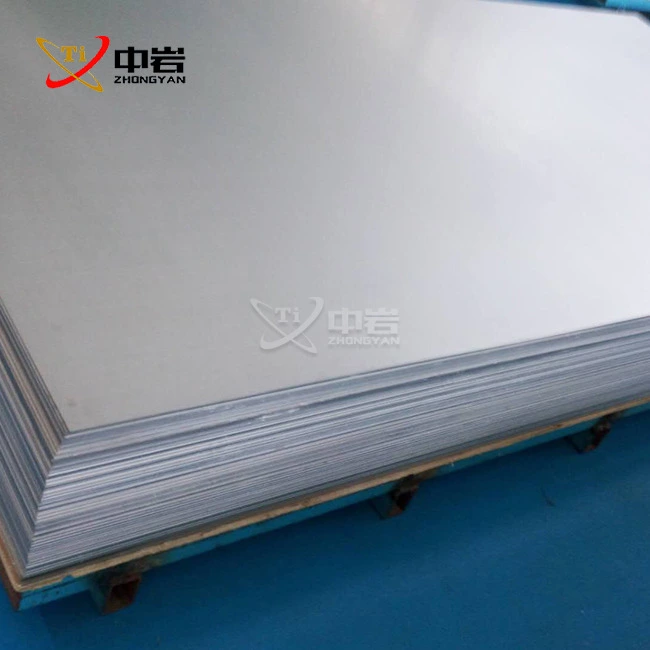
Titanium Grade 23 plate has become the material of choice in aerospace engineering due to its extraordinary combination of lightweight strength, exceptional corrosion resistance, and superior fatigue performance. This medical-grade titanium alloy, known as Ti-6Al-4V ELI (Extra Low Interstitial), provides the mechanical reliability that aerospace engineers need while also reducing the overall weight of the aircraft, which is crucial for fuel efficiency and saving on operational costs. Its biocompatibility and toughness make it indispensable not just for aerospace but also across medical implant manufacturing and high-performance industrial applications.
Understanding Titanium Grade 23 Plate and Its Unique Properties
What Makes Ti-6Al-4V ELI Different from Standard Titanium Alloys?
Titanium grade 23 plate differs from other titanium alloys in composition due to its rigorous control of interstitial elements. This ELI variation offers increased ductility and fracture toughness with an oxygen concentration limited to 0.13% maximum, which is lower than Grade 5's 0.20%. The titanium-balanced alloy has a density of 4.43 g/cm³, which is approximately half of steel's, and a tensile strength that exceeds 860 MPa. The alloy comprises 5.5-6.5% aluminium and 3.5-4.5% vanadium. It has been noted during production operations at Zhongyan that the material's performance in cryogenic environments and cyclical loading situations is significantly enhanced by reducing the interstitial content. When an aeroplane takes off, flies, and lands, its components undergo multiple stress cycles. Titanium Grade 23 plate can absorb these pressures without producing microcracks that could cause catastrophic failure, thanks to its better elongation capabilities (≥ 10 per cent).
Mechanical Performance That Aerospace Engineers Trust
With a yield strength of 795 MPa or more, titanium grade 23 plate offers structural integrity without the added weight associated with conventional aircraft materials. The enhanced performance of aeroplanes is directly proportional to this strength-to-weight advantage. Engineers can create lighter sections that are 40-50% thinner than their stainless steel equivalents without sacrificing load-bearing capacity. With a hardness value of 30-35 HRC, the material has just the right consistency for good machinability while remaining resistant to wear in high-friction settings. Using this machinability to its full potential, Zhongyan's precise CNC machining services manufacture aerospace components with micron-level tolerances. When titanium parts with composite structures are used, which are becoming more common in modern aircraft design, the alloy's low modulus of elasticity reduces the stress shielding effects.
Corrosion Resistance in Extreme Aerospace Environments
Aircraft encounter corrosive conditions ranging from high-altitude moisture and temperature extremes to salt-laden marine air during coastal operations. Titanium Grade 23 plate forms a stable, protective oxide layer that regenerates spontaneously when damaged, providing passive corrosion protection without coatings or maintenance. This oxide layer remains intact across temperature ranges from cryogenic fuel systems to engine compartments experiencing elevated thermal loads. The material demonstrates complete immunity to stress corrosion cracking in chloride environments—a failure mode that plagues aluminium and some stainless steel grades in aerospace service. We manufacture Ti-6Al-4V ELI plates with surface finishes ranging from mill finish to polished and brushed options, each maintaining this inherent corrosion resistance. The low thermal expansion coefficient further enhances dimensional stability during thermal cycling, preventing the fatigue failures that result from repeated expansion and contraction.
Titanium Grade 23 vs. Other Common Grades in Aerospace Applications
How Does Grade 23 Compare to Grade 5 Titanium?
Grade 23 and Grade 5 both have a Ti-6Al-4V base composition; however, Grade 23 has more benefits because to the lower interstitial elements. Grade 23 titanium has better ductility and notch toughness than Grade 5, which are qualities that are crucial in aircraft safety-critical applications where brittle failure is not acceptable. Grade 5 titanium has slightly higher ultimate tensile strength because it contains more oxygen.
Titanium Grade 23 plate's increased fracture toughness makes it an ideal material for use in hydraulic system housings, landing gear components, and pressurised fuselage sections. Materials undergo continuous stress and intermittent impact loads in these applications. Aerospace certification authorities are increasingly demanding Grade 23 due to its energy absorption capabilities, which gives an additional safety buffer.
Comparing Grade 23 with Grade 2 and Grade 9 Titanium
Grade 2 titanium has great formability and corrosion resistance, but it isn't strong enough for main aeronautical constructions. It is not suited for load-bearing applications, such as fairings and ducting, due to its tensile strength of around 345 MPa. Given that Titanium Grade 23 plate is more than twice as strong as Grade 2, engineers are able to utilise it in vital aeronautical components instead of having to employ impractically thick parts.
Grade 9 (Ti-3Al-2.5V) is a compromise between the two extremes, offering good cold formability and moderate strength. Nonetheless, Ti-6Al-4V ELI is the preferred choice of aerospace engineers due to its extensive material data and proven track record. Titanium Grade 23 plate material property databases offer the statistical certainty needed for aerospace certification programmes, spanning decades of testing and in-service performance. The development risk is mitigated and the regulatory approval processes are accelerated by this comprehensive documentation.
Why Does Titanium Outperform Aluminium and Stainless Steel?
Aluminium alloys have long served aerospace applications due to their light weight and lower cost. However, aluminium's strength degrades significantly at elevated temperatures, limiting its use near engines and in high-speed aircraft where aerodynamic heating occurs. Titanium Grade 23 plate maintains mechanical properties at temperatures up to 425°C, expanding design possibilities for thermally demanding locations.
Stainless steel offers high strength and moderate corrosion resistance but carries a weight penalty that directly impacts aircraft range and payload capacity. Replacing stainless steel fasteners, brackets, and structural fittings with Ti-6Al-4V ELI components can reduce aircraft weight by hundreds of kilograms. Over an aircraft's operational lifetime, this weight reduction translates to millions of dollars in fuel savings and increased revenue-generating payload capacity.
How is Titanium Grade 23 Plate Manufactured: From Raw Material to Final Product?
Vacuum Arc Remelting and Controlled Processing
Choosing the right alloying components and high-purity titanium sponge are the first steps in making titanium Grade 23 plate. In order to guarantee a homogeneous composition and remove impurities that could affect mechanical qualities, our facilities in Baoji City, China's Titanium Valley, utilise vacuum arc remelting (VAR) procedures. To avoid ambient contamination, which would raise the interstitial oxygen and nitrogen levels, the VAR process melts the titanium electrode in a vacuum within a copper crucible that has been cooled with water.
For the material to attain the extremely low interstitial levels required for the ELI designation, it is remelted several times after initial ingot creation. The microstructure is homogenised by repeatedly melting the ingot, which evenly distributes the aluminium and vanadium. Because the final product has uniform qualities in every direction, a quality known as "isotropic behaviour" in the aerospace industry, structural analysis and design become much easier.
Hot Rolling and Heat Treatment Protocols
In the next step, known as hot rolling, the homogenised ingot is transformed into a plate. The remarkable qualities of Ti-6Al-4V are maintained in the material even after plastic deformation, thanks to the carefully controlled rolling temperatures ranging from 900 to 950°C. Continuously adjusting speed and reduction ratios, our manufacturing staff monitors rolling parameters to eliminate surface flaws and maintain consistent thickness.
In order to enhance its mechanical qualities for use in aerospace applications, titanium Grade 23 plate undergoes specialised heat treatment after hot rolling. The ideal combination of strength and ductility is achieved through annealing cycles that normally take place between 730 and 760°C, followed by controlled cooling rates. The heat treatment smooths out the grain structure and gets rid of any remaining tensions from the forming process. The resulting microstructure meets the mechanical qualities required by aircraft manufacturers as outlined in ASTM F136 and AMS requirements.
Quality Control and Certification Compliance
Every titanium Grade 23 plate we produce undergoes rigorous testing to verify compliance with international aerospace standards. Ultrasonic inspection detects internal defects invisible to surface examination. Tensile testing confirms yield strength, ultimate tensile strength, and elongation meet specification minimums. Chemical analysis validates composition, with particular attention to oxygen, nitrogen, carbon, and hydrogen levels that define the ELI grade.
Our quality management system adheres to ISO 9001:2015 standards, providing traceability from raw material receipt through final product delivery. Each plate receives a material test report documenting all inspection results, heat treatment parameters, and chemical composition. This documentation satisfies aerospace quality requirements and supports customers' own certification efforts. We also offer custom services including precision cutting to customer specifications, surface finishing to specified roughness values, and edge preparation—delivering components ready for integration into aerospace assemblies.
Procurement Guide for Titanium Grade 23 Plate in the Aerospace Sector
Selecting a Qualified Supplier
Purchasing titanium Grade 23 plate presents aerospace procurement managers with important decisions. Qualifying suppliers involves more than just comparing prices; it also takes into account their manufacturing capacity, the maturity of their quality system, and the reliability of their supply chain. Establishment of titanium production centres provides manufacturers with several advantages, including closeness to suppliers of raw materials, specialised equipment, and concentrations of metallurgical expertise.
Zhongyan, based in Baoji City, takes advantage of the state-of-the-art titIn our region, an ecosystem of specialised service providers and research institutions has developed, accounting for more than 80% of China's titanium products.ore than 80% of China's titanium products. Our specialised knowledge enables us to offer affordable prices without sacrificing quality. Thicknesses ranging from 0.5 mm to 100 mm are within our production capabilities, and we can accommodate standard sizes up to 1500 mm x 3000 mm as well as custom dimensions to suit specific aeronautical needs.
Understanding Pricing Factors and Lead Times
Titanium Grade 23 plate commands premium pricing compared to Grade 5 due to the additional processing required to achieve ELI specifications. Pricing varies with thickness, quantity, and surface finish requirements. Volume orders benefit from economies of scale in melting and rolling operations. Aerospace buyers should anticipate lead times of 8-12 weeks for standard specifications, with custom orders requiring additional time for tooling and process validation.
We offer flexible minimum order quantities to support both prototype development and high-volume production. Our OEM and ODM capabilities extend beyond material supply to include complete component manufacturing. Aerospace customers can specify raw titanium Grade 23 plate or leverage our precision CNC machining services to receive finished components manufactured to their exact drawings. This integrated approach reduces your supply chain complexity and consolidates quality responsibility with a single supplier.
Certification Requirements for Aerospace Applications
Aerospace applications mandate strict adherence to specifications, including ASTM B265 for general titanium plate and ASTM F136 specifically for surgical implant-grade material used in aerospace, where enhanced properties justify the specification upgrade. AMS 4907 provides additional requirements specific to aerospace heat treatment and testing protocols. Procurement professionals should verify that suppliers maintain current certifications and can provide material test reports traceable to specific heat lots.
Our quality documentation supports aerospace customers through FAA, EASA, and other regulatory approval processes. We understand that material traceability represents more than paperwork—it provides the evidence base for safety analysis and certification. Each shipment includes complete material genealogy documenting the production history from raw material sources through all processing steps. This transparency builds the trust essential for long-term aerospace supply relationships.
Why Does Titanium Grade 23 Plate Remain the Preferred Choice in Aerospace Engineering?
Proven Performance in Critical Aerospace Components
Decades of in-service experience validate titanium Grade 23 plate as the reliable choice for aerospace applications. The material appears throughout modern aircraft, from structural bulkheads and wing-attach fittings to engine mounts and hydraulic system components. Commercial aircraft manufacturers specify Ti-6Al-4V ELI for components where failure could jeopardise safety, relying on the material's documented performance under millions of flight cycles.
Military aerospace applications push performance boundaries even further, with titanium Grade 23 plate serving in supersonic aircraft, rotorcraft rotor hubs, and missile airframes. The material's combination of strength, fatigue resistance, and corrosion immunity is essential for defence systems operating in harsh environments with minimal maintenance opportunities. This military heritage has generated extensive material property data across extreme conditions, benefiting commercial aerospace engineers seeking conservative design margins.
Weight Reduction Driving Next-Generation Aircraft Design
Modern aerospace engineering pursues aggressive weight reduction to improve fuel efficiency and reduce environmental impact. Titanium grade 23 plates enable designs that are impossible with conventional materials. Its high strength allows for optimised structures using topology optimisation and generative design techniques that minimise material volume while maintaining structural integrity. Aerospace engineers increasingly employ additive manufacturing for complex titanium components, but machined plate products remain essential for larger structures and applications requiring certified material properties.
The aerospace industry's transition toward more electric aircraft architecture creates new opportunities for titanium applications. Electric propulsion systems generate different vibration signatures and thermal environments compared to gas turbines. The vibration damping characteristics and thermal stability of Ti-6Al-4V ELI suit these emerging applications. We anticipate continued growth in titanium grade 23 plate demand as next-generation aircraft programmes mature from concept to production.
Long-Term Value and Total Cost of Ownership
Total cost of ownership research shows that titanium Grade 23 plate is worth it in the long run, even though the material cost is more than aluminium or steel equivalents. Due to the material's resistance to corrosion, protective coatings are no longer necessary, and inspection intervals are reduced. Titanium parts often last as long as the plane itself, or more, so there's no need to replace them halfway through the lifespan, which can be expensive.
Titanium grade 23 plate has a lower maintenance burden during an aircraft's operational life due to its superior fatigue performance. Over the course of a component's typical service life, fatigue failure is practically eliminated when it is designed with suitable safety considerations and manufactured to aerospace quality standards. The primary indicator of an airline's financial success is the availability of its aircraft, and this dependability immediately correlates to higher availability. There has been a recent uptick in the awareness among aerospace manufacturers of the fact that material choice affects both production cost and the value proposition of their products.
Conclusion
Titanium grade 23 plate continues its position as the aerospace material of choice through a compelling combination of properties that no alternative matches. Its lightweight strength reduces structural mass, improving aircraft performance and fuel efficiency. The exceptional corrosion resistance and fatigue life minimise maintenance requirements and maximise operational availability. Manufacturing advances continue to improve the cost-effectiveness of Ti-6Al-4V ELI while expanding application possibilities through innovative forming and joining technologies. Aerospace engineers specifying titanium Grade 23 plate access decades of proven performance data and a mature supply base capable of meeting demanding quality and delivery requirements. As aerospace technology advances toward more efficient and sustainable aircraft, this remarkable material will remain central to engineering solutions that define the industry's future.
FAQ
What distinguishes Grade 23 from Grade 5 titanium in aerospace applications?
The primary distinction lies in interstitial element content, particularly oxygen. Grade 23 maintains oxygen below 0.13% compared to 0.20% in Grade 5, delivering superior ductility and fracture toughness. This enhanced toughness proves critical in aerospace safety applications where crack propagation resistance matters more than absolute maximum strength.
Can a Grade 23 titanium plate be welded for aerospace structures?
Ti-6Al-4V ELI demonstrates excellent weldability using gas tungsten arc welding (GTAW) processes. Proper inert gas shielding with argon or helium protects both the weld pool and backside from atmospheric contamination. Aerospace welding procedures require qualification testing to verify that weld mechanical properties meet specification requirements, but the base material characteristics support reliable joining.
What surface treatments work with aerospace titanium components?
Titanium Grade 23 plate can undergo various surface treatments, such as anodising for colour coding and wear resistance, and shot peening to improve fatigue life by creating compressive surface stresses. Chemical milling removes material for weight reduction in aerospace structures. The material's inherent corrosion resistance means protective coatings generally serve functional rather than protective purposes, simplifying finishing operations compared to aluminium or steel components.
Partner with Zhongyan for Your Titanium Grade 23 Plate Requirements
Zhongyan stands as your reliable titanium grade 23 plate manufacturer, combining decades of metallurgical expertise with state-of-the-art production facilities in Baoji City—the heart of China's titanium industry. Our comprehensive capabilities encompass raw material production through precision CNC machining, delivering components that meet the most stringent aerospace specifications. We maintain certifications including ISO 9001:2015 and supply Ti-6Al-4V ELI plate compliant with ASTM F136, ASTM B265, and relevant AMS standards. Whether you require standard plate sizes or custom-machined aerospace components, our engineering team provides technical support throughout your development process. Contact our aerospace materials specialists at sales@titaniumstudy.com to discuss your titanium grade 23 plate requirements. As an experienced supplier serving global aerospace manufacturers, we understand that material quality and delivery reliability directly impact your production schedules and certification timelines—trust Zhongyan to deliver excellence in every shipment.
References
1. Boyer, R., Welsch, G., and Collings, E.W. (1994). Materials Properties Handbook: Titanium Alloys. ASM International, Materials Park, Ohio.
2. Lütjering, G. and Williams, J.C. (2007). Titanium: Engineering Materials and Processes. 2nd Edition, Springer-Verlag, Berlin.
3. Peters, M., Kumpfert, J., Ward, C.H., and Leyens, C. (2003). "Titanium Alloys for Aerospace Applications." Advanced Engineering Materials, Volume 5, Issue 6, pp. 419-427.
4. Donachie, M.J. (2000). Titanium: A Technical Guide. 2nd Edition, ASM International, Materials Park, Ohio.
5. ASTM International (2020). ASTM F136-13: Standard Specification for Wrought Titanium-6Aluminum-4Vanadium ELI Alloy for Surgical Implant Applications. ASTM International, West Conshohocken, Pennsylvania.
6. Froes, F.H., Qian, M., and Niinomi, M. (2019). Titanium for Aerospace and Defence Markets: Global Strategic Analysis. Journal of Materials Engineering and Performance, Volume 28, pp. 7757-7766.
(1)_1755588631994.jpg)
Learn about our latest products and discounts through SMS or email