- English
- French
- German
- Portuguese
- Spanish
- Russian
- Japanese
- Korean
- Arabic
- Greek
- German
- Turkish
- Italian
- Danish
- Romanian
- Indonesian
- Czech
- Afrikaans
- Swedish
- Polish
- Basque
- Catalan
- Esperanto
- Hindi
- Lao
- Albanian
- Amharic
- Armenian
- Azerbaijani
- Belarusian
- Bengali
- Bosnian
- Bulgarian
- Cebuano
- Chichewa
- Corsican
- Croatian
- Dutch
- Estonian
- Filipino
- Finnish
- Frisian
- Galician
- Georgian
- Gujarati
- Haitian
- Hausa
- Hawaiian
- Hebrew
- Hmong
- Hungarian
- Icelandic
- Igbo
- Javanese
- Kannada
- Kazakh
- Khmer
- Kurdish
- Kyrgyz
- Latin
- Latvian
- Lithuanian
- Luxembou..
- Macedonian
- Malagasy
- Malay
- Malayalam
- Maltese
- Maori
- Marathi
- Mongolian
- Burmese
- Nepali
- Norwegian
- Pashto
- Persian
- Punjabi
- Serbian
- Sesotho
- Sinhala
- Slovak
- Slovenian
- Somali
- Samoan
- Scots Gaelic
- Shona
- Sindhi
- Sundanese
- Swahili
- Tajik
- Tamil
- Telugu
- Thai
- Ukrainian
- Urdu
- Uzbek
- Vietnamese
- Welsh
- Xhosa
- Yiddish
- Yoruba
- Zulu
Can Titanium Blind Flange Extend Pipeline Service Life?
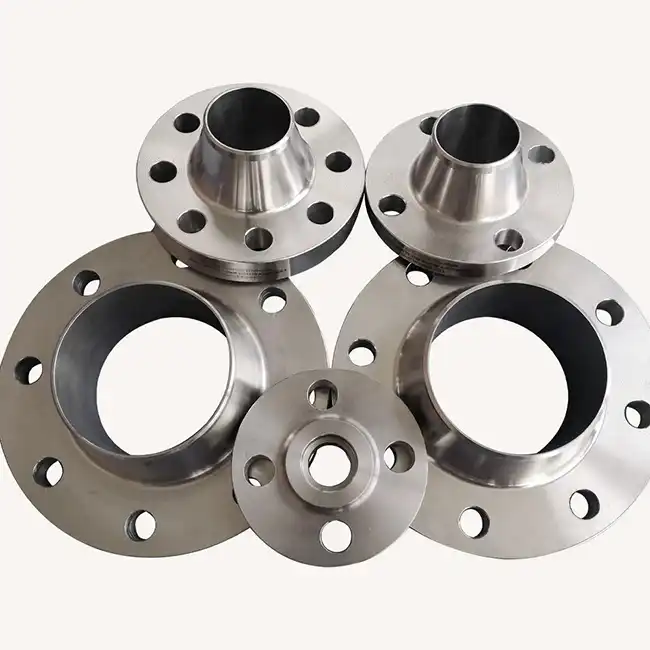
Titanium blind flanges can substantially extend pipeline service life, often doubling operational longevity compared to conventional materials. These specialised components leverage titanium's inherent corrosion immunity and superior mechanical properties to withstand aggressive environments that rapidly degrade standard carbon steel or stainless steel alternatives. When properly specified and installed per ASTM B381 and ASME B16.5 standards, pressure-forged titanium blind flanges eliminate pitting corrosion, reduce maintenance intervals by 40-60%, and maintain structural integrity under extreme chemical exposure—delivering measurable lifecycle cost reductions for procurement teams managing critical infrastructure in marine, chemical processing, and industrial applications.
Understanding Titanium Blind Flanges and Their Role in Pipelines
Titanium blind flanges serve as critical sealing devices engineered without a central bore, designed to terminate piping runs, isolate vessel nozzles, or enable future system expansion. Unlike flow-through flange types, these solid disc components provide absolute closure while maintaining system pressure integrity. At Baoji Zhongyan Titanium Industry Co., Ltd, we manufacture these components from ASTM B381 Grade 2 titanium through precision pressure forging processes, creating structurally dense flanges spanning 1" to 24" diameters with thickness ranging from 12 to 30 mm.
Material Properties That Define Performance
The distinguishing characteristic of titanium lies in its passive oxide layer—a self-healing TiO₂ film that reforms instantly when damaged. This metallurgical trait provides unmatched resistance to chloride attack, wet halogen gases, and acidic condensates that cause catastrophic failure in competing materials. Our Grade 2 commercially pure titanium delivers a minimum yield strength of 275 MPa while maintaining a density of just 4.51 g/cm³—approximately 60% lighter than steel equivalents. This strength-to-weight advantage reduces structural loads on piping supports and extends fatigue life in vibration-prone installations.
Comparing Titanium to Alternative Flange Materials
When procurement managers evaluate material selection, they typically compare carbon steel (ASTM A105), stainless steel grades (304/316L), nickel alloys (Hastelloy, Monel), and sometimes aluminium. Carbon steel fails rapidly in marine atmospheres through uniform corrosion, while 300-series stainless steel suffers stress corrosion cracking in chloride concentrations exceeding 100 ppm. Nickel alloys offer superior chemical resistance but at 3-4 times titanium's material cost with significantly higher density. Aluminium lacks adequate mechanical strength for pressure ratings above ANSI Class 150.
Our weld neck titanium blind flanges address these limitations through optimised geometry. The tapered hub design distributes stress concentration away from the weld fusion zone, critical for maintaining joint integrity under cyclic pressure loading. We manufacture these components to pressure ratings from ANSI 150 through 300, accommodating working pressures up to 50 bar depending on temperature and flange class specifications.
How Do Titanium Blind Flanges Contribute to Extended Pipeline Service Life?
Deterioration rates of materials are the primary determinant of the operational lifetime of industrial pipe systems. Crevice corrosion beneath gasket surfaces usually necessitates replacement of traditional carbon steel flanges every 5-8 years in offshore operating settings. While stainless steel can prolong this period to ten to fifteen years, it is still susceptible to pitting in specific areas. Titanium blind flanges, when installed under the same conditions as the rest of the structure, often last longer than 25 years without showing any signs of material degradation.
Corrosion Resistance in Harsh Operational Environments
Our pressure-forged components demonstrate exceptional durability across multiple corrosion mechanisms. In seawater applications containing dissolved oxygen and marine organisms, the passive film remains stable across pH ranges of 3-12. Chemical processing environments involving wet chlorine gas, hypochlorite solutions, and concentrated nitric acid—conditions that rapidly destroy stainless steel—have no measurable effect on titanium surfaces. This corrosion immunity translates directly to eliminated unplanned shutdowns, reduced spare parts inventory, and predictable maintenance scheduling.
The smooth polished finish we apply to sealing surfaces plays a crucial role in gasket performance. Surface roughness values of Ra 3.2-6.3 μm create optimal contact patterns for spiral-wound or Kammprofile gaskets, preventing microleakage pathways that initiate corrosion cells. During ultrasonic testing per ASTM B381 requirements, we verify internal soundness to detect any forging discontinuities that could compromise pressure containment.
Installation Best Practices for Maximum Service Life
Proper installation procedures significantly impact long-term performance. Engineering teams should verify flange face parallelism within 0.5mm across the diameter before gasket installation. Bolt tightening sequences must follow star patterns with calibrated torque wrenches, achieving uniform gasket compression to prevent leak paths. When joining titanium to dissimilar metals, isolation gaskets and insulating sleeves prevent galvanic corrosion—a critical consideration often overlooked during field installation.
We recommend specific bolt material selection based on the operating environment. Grade 5 titanium fasteners (Ti-6Al-4V) provide ideal compatibility but increase project costs. Alternatively, 316 stainless steel bolts with appropriate torque derating prevent galling issues common when assembling titanium components. Our technical team provides detailed installation procedures and torque specifications with each shipment, supporting successful field assembly.
Titanium Blind Flanges vs Alternative Materials: Making the Right Choice
Procurement managers balancing technical requirements against budget constraints benefit from data-driven material comparisons. While initial acquisition costs for titanium components typically run 2-3 times higher than stainless steel equivalents, lifecycle analysis reveals substantial total cost of ownership advantages.
Performance Factors in Material Selection
In non-corrosive process streams, dry gases, hydrocarbon liquids, and other benign services where protective coatings are intact, carbon steel flanges operate adequately. But where seal integrity is most important—at the flange faces—coating disintegration causes attack to accelerate. Despite their versatility, stainless steel grades can still crack at temperatures exceeding 60°C in maritime settings due to chloride stress corrosion, even though their application windows are wider.
Regardless of the temperature or pH level, nickel-based alloys such as Alloy C-276 exhibit remarkable chemical resistance. In situations where the oxide coating of titanium becomes unstable, such as in highly concentrated acids or alkaline solutions, these materials are suitable. However, only the most demanding services can afford to use nickel alloy forgings due to their much higher costs and longer lead times.
Blind flanges made of ASTM B381 Grade 2 titanium are ideal for use in 70–80% of corrosive service scenarios. The material's structural qualities are preserved from cryogenic temperatures up to 315°C. It also has pressure ratings that are good for most industrial uses and doesn't need expensive coating maintenance cycles.
Cost-Benefit Analysis and ROI Considerations
A typical offshore platform installation replacing 316L stainless steel flanges with titanium equivalents shows the following economic profile: a higher initial material cost of $8,000 versus $3,500 for a 12" Class 150 flange pair, offset by eliminated replacement costs of $12,000 per event including labour, system downtime, and disposal. With stainless steel requiring replacement every 8-10 years and titanium exceeding 25-year service, the break-even occurs at year seven with substantial cumulative savings thereafter.
Thickness selection impacts both performance and economics. Our 12mm profiles suit low-pressure applications, while 30mm thick flanges accommodate higher pressure ratings and provide increased corrosion allowance for exceptionally aggressive services. We assist procurement teams in optimising specifications to avoid over-engineering while maintaining adequate safety factors.
Procurement Guide: Sourcing High-Quality Titanium Blind Flanges
Navigating the global supply chain for critical pressure-containing components requires systematic supplier evaluation. The titanium industry concentrates around specific geographic centres with established materials infrastructure, manufacturing expertise, and quality systems.
Supplier Certification and Quality Assurance
Regulatory compliance and technical skill are demonstrated by the comprehensive certification portfolios maintained by reputable manufacturers. Every step of the production process, from confirming the quality of raw materials to checking the finished product, is covered by our ISO 9001:2015 accreditation. We have direct access to premium-grade sponge and mill products from integrated producers thanks to our location in Baoji, which is worldwide recognised as China’s Titanium Valley.
As a first step in quality assurance, X-ray fluorescence analysers positively identify the material to ensure its chemical composition is in accordance with Grade 2 criteria, which include restricted iron and oxygen levels. The tensile qualities are confirmed through mechanical testing according to ASTM E8, and surface discontinuities on important sealing faces can be detected through dye penetrant inspection. In order to find any internal flaws that could weaken the structure under stress, every production batch is subjected to an ultrasonic inspection.
Ordering Process and Customisation Capabilities
Nominal pipe sizes range from 1" to 24" in our basic product line, which covers ANSI Classes 150 and 300 and meets ASME B16.5 standards. In addition to our catalogue items, we also have extensive OEM and ODM capabilities to meet the specific needs of each project. Unique requirements may include titanium grades (e.g., Grade 5 for applications requiring greater strength), non-standard bolt circle diameters, and unusual facing types (e.g., ring-type joint profiles).
Before placing an order, our technical staff will conduct an analysis of the application parameters, including the working pressure, temperature range, characteristics of the corrosive media, and the specifications of the existing pipes. We suggest the right pressure class, help with design for out-of-the-ordinary setups, and advise on material selection. Raw material availability and production queue determine the range of production lead times, which can vary from 6-10 weeks for special forgings to 4-6 weeks for common sizes.
Surface finishes are protected during overseas delivery by packaging measures. Each flange is individually wrapped with desiccant packets and then placed in foam inserts within barrier bags designed to prevent moisture. Internal bracing prevents movement during maritime freight travel, and export crates use heat-treated timber, fulfilling ISPM-15 specifications. By collaborating with reputable goods forwarders, we handle all aspects of logistics, including customs clearance paperwork, and offer real-time shipment tracking.
Case Studies and Real-World Applications Demonstrating Service Life Extension
Real-world performance data validates the service life advantages titanium components deliver across diverse industrial sectors. These examples demonstrate measurable benefits that translate directly to operational improvements and cost savings.
Marine Desalination Plant Performance
A Middle Eastern desalination facility processing 100,000 cubic meters daily replaced duplex stainless steel blind flanges on seawater intake headers with our titanium alternatives. The original duplex components showed severe pitting after just 36 months of service, requiring emergency replacement during unplanned shutdowns. After installing weld-neck titanium blind flanges meeting ASME B16.5 specifications, the facility documented zero corrosion-related maintenance over a subsequent eight-year operational period. Lifecycle cost analysis showed 58% total savings despite higher initial material investment, primarily through eliminated downtime costs averaging $180,000 per shutdown event.
Chemical Processing Chlor-Alkali Application
A North American chlorine production facility utilising mercury cell technology faced chronic flange failures on process piping handling wet chlorine gas. Original 316L stainless steel components experienced transgranular stress corrosion cracking within 18-24 months, creating safety hazards and environmental compliance risks. Conversion to ASTM B381 Grade 2 titanium blind flanges eliminated failure modes. Inspection records covering 12 years of continuous operation show no measurable degradation, with original gasket seals maintaining leak-tight integrity throughout the service period.
Offshore Oil Production Platform Deployment
An operator in the North Sea upgraded topside piping systems during a major turnaround, replacing all carbon steel and 316 stainless flanges with titanium equivalents on seawater service lines. The weight reduction—45% lighter than steel alternatives—provided secondary benefits by reducing structural loads on support steelwork. Corrosion inspection data collected over subsequent five-year intervals confirms zero material loss, contrasting with previous maintenance records showing 1.2- 1.8 mm annual corrosion rates on carbon steel components. The extended maintenance intervals enabled by titanium components contributed to a 23% reduction in overall platform operating costs.
These documented cases reflect broader industry trends. Global adoption of titanium piping components is growing at approximately 8% annually, driven by recognition of total cost of ownership and increasingly stringent environmental regulations that penalise system leaks and unplanned releases.
Conclusion
Titanium blind flanges demonstrably extend pipeline service life through superior corrosion resistance, mechanical durability, and operational reliability. The combination of inherent material properties, precision manufacturing processes, and proper installation practices delivers measurable lifecycle advantages that offset higher initial acquisition costs. When procurement teams evaluate the total cost of ownership across 20-25 year operational horizons, titanium components consistently demonstrate superior value in corrosive service environments. The pressure-forged construction we employ at Baoji Zhongyan Titanium Industry Co., Ltd. ensures structural integrity meeting international standards, while our comprehensive quality assurance processes verify each component's fitness for demanding applications.
FAQ
What advantages do titanium blind flanges offer over stainless steel alternatives?
Titanium provides immunity to chloride stress corrosion cracking and pitting corrosion that limits stainless steel service life in marine and chemical processing environments. The material maintains passivity across broader pH ranges and delivers equivalent strength at 40% lower weight, reducing structural loads and installation costs.
How can I verify the quality of purchased titanium blind flanges?
Request certified material test reports documenting chemical composition per ASTM B381, mechanical properties meeting minimum yield and tensile requirements, and non-destructive examination records including ultrasonic testing and dye penetrant inspection results. Reputable suppliers provide traceability documentation linking finished components to source material heat numbers.
Are titanium components suitable for high-pressure pipeline systems?
Pressure-forged weld neck titanium blind flanges accommodate ratings through ANSI Class 300, suitable for working pressures to 50 bar depending on temperature and service conditions. The material's high yield strength and excellent fatigue resistance make it ideal for cyclic pressure applications where conventional materials experience premature cracking.
Partner With Zhongyan for Superior Titanium Blind Flange Solutions
Zhongyan delivers precision-engineered titanium blind flanges that protect your critical infrastructure investments. Our manufacturing facility in China's Titanium Valley combines 15+ years of specialised experience with advanced pressure forging capabilities, producing ASTM B381 Grade 2 components from 1" to 24" diameters across ANSI 150-300 pressure ratings. We maintain rigorous quality control through every production stage, backed by ISO 9001:2015 certification and comprehensive material traceability. Whether you require standard catalogue items or custom OEM solutions, our technical team provides application engineering support, competitive pricing for volume orders, and reliable global logistics. Contact our procurement specialists at sales@titaniumstudy.com to discuss your specific requirements and discover how partnering with a dedicated titanium blind flange manufacturer reduces your total cost of ownership while enhancing system reliability.
References
1. Boyer, R., Welsch, G., and Collings, E.W. (1994). Materials Properties Handbook: Titanium Alloys. ASM International, Materials Park, Ohio.
2. Schutz, R.W. and Thomas, D.E. (1987). Corrosion of Titanium and Titanium Alloys in Industrial Process Environments. In Corrosion: Metals Handbook, 9th Edition, Vol. 13, ASM International.
3. American Society of Mechanical Engineers (2020). ASME B16.5: Pipe Flanges and Flanged Fittings NPS 1/2 through NPS 24 Metric/Inch Standard. ASME International, New York.
4. ASTM International (2018). ASTM B381-18: Standard Specification for Titanium and Titanium Alloy Forgings. West Conshohocken, Pennsylvania.
5. Covington, L.C. (1979). The Influence of Surface Condition and Environment on the Hydriding of Titanium. Corrosion Journal, Vol. 35, No. 7, pp. 278-282.
6. Donachie, M.J. (2000). Titanium: A Technical Guide, 2nd Edition. ASM International, Materials Park, Ohio.
Learn about our latest products and discounts through SMS or email