- English
- French
- German
- Portuguese
- Spanish
- Russian
- Japanese
- Korean
- Arabic
- Greek
- German
- Turkish
- Italian
- Danish
- Romanian
- Indonesian
- Czech
- Afrikaans
- Swedish
- Polish
- Basque
- Catalan
- Esperanto
- Hindi
- Lao
- Albanian
- Amharic
- Armenian
- Azerbaijani
- Belarusian
- Bengali
- Bosnian
- Bulgarian
- Cebuano
- Chichewa
- Corsican
- Croatian
- Dutch
- Estonian
- Filipino
- Finnish
- Frisian
- Galician
- Georgian
- Gujarati
- Haitian
- Hausa
- Hawaiian
- Hebrew
- Hmong
- Hungarian
- Icelandic
- Igbo
- Javanese
- Kannada
- Kazakh
- Khmer
- Kurdish
- Kyrgyz
- Latin
- Latvian
- Lithuanian
- Luxembou..
- Macedonian
- Malagasy
- Malay
- Malayalam
- Maltese
- Maori
- Marathi
- Mongolian
- Burmese
- Nepali
- Norwegian
- Pashto
- Persian
- Punjabi
- Serbian
- Sesotho
- Sinhala
- Slovak
- Slovenian
- Somali
- Samoan
- Scots Gaelic
- Shona
- Sindhi
- Sundanese
- Swahili
- Tajik
- Tamil
- Telugu
- Thai
- Ukrainian
- Urdu
- Uzbek
- Vietnamese
- Welsh
- Xhosa
- Yiddish
- Yoruba
- Zulu
Titanium Flange Solutions for Corrosive and Marine Environments
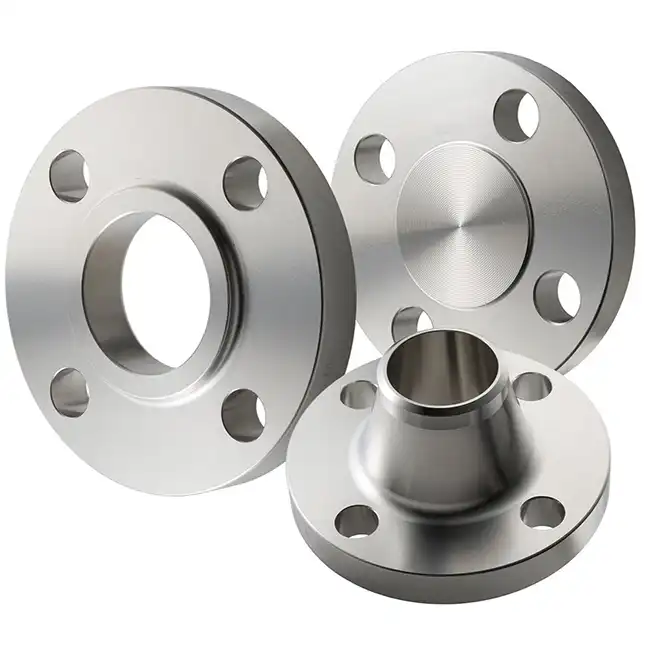
Titanium flange solutions are the best engineering ever made for corrosive and sea conditions, where other materials would fail horribly. Titanium is very good at resisting rust, having a high strength-to-weight ratio, and lasting a very long time. These high-performance parts use these properties to make leak-proof seals in the toughest industrial settings. Offshore oil platforms that have to deal with saltwater and chemical processing plants that work with strong acids both need titanium flanges because they are so reliable while standard steel ones break down quickly. This is why titanium flanges are essential for important piping systems that need to stay operational for a long time.
Understanding Titanium Flanges: Properties and Types
Titanium flanges are amazing works of engineering. They are made from titanium alloys, which have amazing mechanical qualities that make them perfect for tough environments. The main idea behind these parts is that titanium has a special property that lets it create a steady, passive oxide layer (TiO2) that protects against acid attack very well.
Material Properties and Composition
Titanium alloys are better than other metals for tough jobs because of their mechanical qualities. Grade 2 titanium, which meets ASTM B363 standards, is very resistant to rust and has a tensile strength of up to 345 MPa while still being very flexible. Titanium grade 5 (Ti-6Al-4V) is stronger than other grades. It can reach tensile forces of up to 895 MPa, which makes it perfect for high-pressure uses. As the temperature goes from -196°C to 400°C, these materials work exceptionally well, keeping their structure intact when other metals break or lose power. Titanium alloys are very dense (about 4.5 g/cm³), which means they are much lighter than steel options. This means that total system loads are lower while mechanical performance stays high.
Flange Configuration Types
In pipe systems, different types of flanges are used for different tasks. Weld neck flanges are the strongest type of link. They have a curved hub that spreads stress evenly across the joint, which makes them perfect for high-pressure uses in chemical processing plants and offshore platforms. The butt weld connection makes sure that it works well with pipelines that are already in place. Slip-on flanges are flexible and easy to install; they just slide over the ends of the pipes before they are welded. These designs are especially useful for places that need to be accessed often for upkeep, like desalination plants and marine cooling systems. As closing elements, blind flanges make sure that pipeline ends are securely sealed or that temporary shutoffs in toxic environments are kept in place.
When lap joint flanges and stub ends are put together, they make flexible links that are easy to take apart while still closing well. This configuration works especially well in places where repairs and inspections need to be done on a frequent basis, like chemical processing systems that deal with harsh media.
Standards and Quality Assurance
Following foreign standards makes sure that all applications work the same way and are reliable. ANSI/ASME B16.5 guidelines spell out material requirements, pressure levels (Class 150 to Class 600), and required dimensions. This gives purchasing managers the confidence to choose the right parts. These standards make sure that new systems will work with old ones and add extra safety for important programs. The ISO approval method checks the quality of the manufacturing process and the traceability of materials. This gives users peace of mind in controlled industries like pharmaceutical and aircraft manufacturing. Complying with these strict standards makes it possible to seamlessly join global supply chains while keeping performance levels stable.
Comparing Titanium Flanges with Alternative Materials
To choose the right material for corrosive and marine settings, you need to carefully look at its performance, its lifecycle costs, and its operating needs. When purchasing, professionals know how titanium stacks up against other materials, and they can make choices that are better for both performance and price.
Corrosion Resistance Analysis
Titanium is more resistant to rust than most other elements, especially in places where chloride is present. In seawater environments, 316L stainless steel may develop pitting and pocket rust, but titanium will always keep its shape. Titanium builds up a protective oxide layer very quickly, and when it gets broken, it fixes itself.
Alternatives to carbon steel need complicated coating systems and cathodic protection in marine settings, which makes them more difficult to use and requires more upkeep. Even with safety precautions, carbon steel parts need to be replaced every 5 to 10 years in harsh settings, whereas titanium flange parts can work for decades without breaking down.
Even though Inconel metals work well at high temperatures, they don't have the complete corrosion protection of titanium in marine settings. When used in saltwater, Inconel doesn't work as well as titanium, so titanium is usually a better value for money when installing something in the water.
Mechanical Performance Comparison
Titanium is stronger than any other common plate material and weighs only about 45% as much. It has the same structural performance as high-strength steel but is much lighter. This weight loss is very helpful for offshore sites, where every kilogram affects how stable the platform is and how much it costs to move.
Titanium has a very high resistance to crack spreading even when it is loaded and unloaded many times. This is a very important benefit. In marine uses, parts are constantly being hit by waves and going through changes in temperature. Titanium's fatigue qualities make it more reliable over time than steel options.
Titanium's temperature performance traits show that it stays strong and flexible at very low temperatures as well as high process temperatures. Because of this, there is no need for different material specifications for each working situation.
Lifecycle Cost Evaluation
Even though titanium flanges cost more at first, they are always cheaper in the long run when used in corrosive settings. Eliminating the need for protective coatings, reducing the amount of upkeep needed, and increasing the service life all add up to big savings over the lifecycle of a project. Maintenance costs going down is a big economic benefit, and titanium devices need very little maintenance compared to steel ones. If there are no corrosion-related failures, there are no unexpected shutdowns. This cuts down on both direct upkeep costs and the loss of production that comes with equipment not being available.
Installation and Procurement Considerations for Titanium Flanges
To successfully use titanium flanges, you need to know the right way to place them and how to buy them in a way that maximises performance while keeping costs low. When you plan and carry out your tasks correctly, you can avoid expensive reworks and make sure that the system works at its best throughout its working lifecycle.
Installation Best Practices
To keep the material's qualities and resistance to rust, welding titanium flanges needs to be done in a certain way. Inert gas shielding keeps the weld zone clean from outside contaminants, keeping the passive oxide layer that stops rusting in place. Controlling the heat flow correctly stops grain growth that could damage mechanical qualities.
The choice of gasket is very important for how well the system works. PTFE and flexible materials work very well with titanium surfaces. Because titanium has a low thermal expansion rate, bolt pressure stays the same across temperature cycles. This makes the seal more reliable than with steel flanges, which change size a lot.
Titanium surfaces need to be carefully cleaned to get rid of any iron that could start galvanic rusting, which is different from how steel installations need to be prepared. Cross-contamination is avoided during installation by using separate tools and storage places. This provides better corrosion resistance, which is the reason titanium was chosen.
Procurement Strategy Development
Knowing what a provider can do makes sure that you get parts that meet your exact specs every time. When a manufacturer has their own CNC machining facilities, they can offer unique sizes and finishes on the surface, so there's no need for extra steps that could damage the material's qualities. Zhongyan offers a wide range of industrial services, such as CNC turning, milling, and grinding. These all work together to ensure stable quality.
Planning for lead times is very important for titanium parts because they need to be made using special methods that take longer than making steel parts. Early interaction with suppliers and framework deals can help lower delivery risks and get better prices for long-term projects. Custom requirements often have minimum order amounts, which means that you need to carefully plan your demand to get the best prices on goods.
Material approvals, dimensional inspection records, and surface finish proof are all examples of quality paperwork that must be kept. These papers make sure that everything can be tracked and that the project's requirements are met. They also give the paperwork that is needed in controlled fields like nuclear power and pharmaceutical uses.
Dimensional Standards and Tolerances
When machining titanium flanges, the standards must take into account the different qualities of the material compared to steel. Because the material has a lower modulus of elasticity, clamping techniques need to be changed during cutting to keep it from distorting. In sealing situations, surface finish specs are very important because roughness can affect how well the gasket works and how reliable the seal is.
Pay close attention to bolt patterns, raised face measurements, and pressure ratings when integrating with current infrastructure. ANSI standards make sure that everything works together, but for some unique uses, standard designs may need to be changed. Knowing these needs during the planning phase keeps you from having to make expensive changes in the field during installation.
Benefits of Titanium Flanges in Corrosive and Marine Environments
There are measured benefits to using titanium flanges in harsh settings that make them a better choice than other materials. Real-world performance data shows that these parts are very useful in many different situations, from chemical processing plants to offshore oil production.
Operational Performance Advantages
The benefits of losing weight go beyond just saving money on materials; they also change how whole systems are designed and how they are installed. Offshore platforms that use titanium flanges report a big drop in the amount of structural support they need. This is because the lighter they are, the more production equipment they can add without going over their load limits. These savings add up over the course of a project's lifetime, lowering the cost of transportation and making upkeep easier to plan.
Corrosion resistance in saltwater gets rid of the ways that standard materials break down. Desalination plants that use titanium piping parts have effective uptime levels higher than 98%, compared to 85–90% for plants that use other materials. This improvement directly leads to more products being made and more money being made.
Thanks to its temperature stability, titanium flanges can keep fitting well across a wide range of operating temperatures that would be hard for other materials. This stability is good for geothermal power systems because titanium parts stay strong in high-temperature brine settings where stainless steel ones break down quickly.
Case Study Performance Data
Offshore oil rigs in the North Sea have reported huge changes in performance since titanium flanges were put in place. Platform owners say that maintenance events linked to flanges have dropped by 75%, which saves them more than $2 million a year per platform. Getting rid of the need for safe coatings and cathodic protection systems makes operations even simpler.
Similar performance benefits can be seen in chemical processing plants that work with chlorine materials. A big chlor-alkali maker found that titanium flanges could be used in wet chlorine environments for 15 years, while high-grade stainless steel parts could only be used for 18 months on average. This improvement in longevity cut upkeep costs by 85% and got rid of the need to stop production to repair parts.
Desalination plants that use titanium in their saltwater intake systems say that they are much more reliable. Over 20 years of operation, one big plant had no corrosion-related failures, while similar steel installations needed major part replacements every 3–5 years.
Safety and Reliability Enhancements
One of the biggest safety benefits of titanium flanges is that they get rid of severe failure modes. Stress corrosion cracking, which can make stainless steel parts break quickly, doesn't happen in titanium metals when they're working normally. This dependability gets rid of the safety risks that come with parts breaking down unexpectedly in high-pressure situations.
Titanium flanges are a much better way to stop leaks because they keep constant gasket tension even when the temperature changes. Because titanium can be machined to have a better surface finish, it can be used to make closing surfaces that work well for long periods of time.
Making the Right Choice: How to Select the Optimal Titanium Flange Solution?
To choose the right titanium flanges, you have to look at a lot of factors that affect both performance and the success of the purchase. When procurement teams know about these choice factors, they can make sure that specs are optimised and that supply chain management is reliable throughout the lifecycle of a project.
Material Grade Selection Criteria
Grade 2 titanium is the best combination of efficiency and cost-effectiveness because it is very resistant to corrosion in most sea and chemical settings. This grade is very easy to shape and weld, which makes it perfect for unique designs and changes made in the field. For pressure classes up to ANSI 600, which includes most industry uses, the lower strength properties are still good enough.
Grade 5 titanium (Ti-6Al-4V) is needed for high-pressure situations or systems that need to be as light as possible while still being strong. For aerospace and military uses, Grade 5 material is usually required. This type of material costs more, but it has better mechanical qualities. Grade 5's better stress resistance also helps uses that are loaded and unloaded over and over again.
Specialised grades, like Grade 7 (which contains palladium), offer better corrosion protection in less acidic settings, but their high cost means they can only be used in the toughest chemical processing jobs. Knowing these changes between grades lets you choose the best material for the job and the settings you'll be working in.
Supplier Evaluation and Partnership Development
The ability of a supplier to make titanium parts determines the regularity of quality and the dependability of delivery. With the help of advanced CNC machining tools, facilities can keep errors low and get great surface finishes. Being able to do heat treatment in-house ensures that the metal has the right qualities without the risks that come with outsourcing the process.
ISO 9001:2015-certified quality control systems guarantee uniform production methods and the ability to track down materials. When applying for jobs in regulated fields with strict paperwork rules, these licenses become even more important. The complete quality management system used by Zhongyan shows the organised way of working that is needed to make reliable titanium parts.
Long-term relationship success depends on how well technical support is provided. For example, suppliers who offer application engineering help can make ideas work better in certain situations. This kind of teamwork often finds ways to improve performance or lower costs by changing the design or using different ways to make the product.
Future-Proofing Investment Decisions
Titanium processing technology keeps improving capabilities while lowering costs. Early supply partnerships are a good way to take advantage of these changes. Additive manufacturing methods show promise for making things with complicated shapes. This could lead to new ways of designing things that improve function while using less material.
Sustainability factors are becoming more important in purchasing choices, and titanium's endless recycling options and long work life support companies' environmental goals. Getting rid of protective coats and lowering the amount of upkeep needed further reduces the damage that components do to the environment over their entire lifecycles.
For important uses, planning for supply chain resilience is very important. Having multiple source relationships and smart inventory management will make sure that products are always available, even when the market is down. Knowing what kinds of products can be made in your area and setting up backup sources of supplies can help you avoid supply problems that could throw off your production plans.
Conclusion
Titanium flanges are the best choice for marine and corrosive settings because they offer unmatched performance benefits that support their high price tag in critical situations. Titanium flanges have a great resistance to corrosion, a high strength-to-weight ratio, and amazing longevity. These qualities make them very useful because they lower maintenance costs, increase service life, and increase operating efficiency. From chemical processing plants to offshore oil platforms, these parts consistently work better than traditional materials. Case studies have shown that they save a lot of money and make things more reliable. By looking at all the different types of materials, the skills of suppliers, and the needs of the application, procurement professionals can make smart choices that improve performance and lower the total cost of ownership throughout the lifespan of a project.
FAQ
What makes titanium flanges suitable for seawater applications?
Because they are so resistant to chloride-induced rust, titanium flanges work great in seawater situations. The substance creates a steady passive oxide layer that stops pitting and crevice rust, which are common ways for stainless steel parts to break. Titanium flanges can withstand temperatures from -196°C to 400°C and work well in high-salinity settings. They keep their structural integrity in marine conditions for years, while other materials would break down within years.
How do titanium flanges compare cost-wise to stainless steel alternatives?
Even though titanium flanges cost more at first, they are always cheaper to own in settings where they are likely to rust. Savings are big because protective coats aren't needed, the service life is longer (20+ years vs. 3–5 years for steel), and upkeep needs are lower. Offshore sites say that maintenance costs have gone down by 75% and that unplanned shutdowns have stopped. This saves each station millions of dollars every year.
What pressure ratings and sizes are available for titanium flanges?
It is possible to make titanium flanges with diameters from 1" to 24" and pressure classes from ANSI 150 to 600. Grade 2 (ASTM B363) is an option for general acidic uses, and Grade 5 (Ti-6Al-4V) is a choice for high-pressure needs. The thickness can be anywhere from 10 to 40 mm, and the surface can be cleaned or left matte. Specialised production methods can be used to meet custom requirements that go beyond these areas.
Are there specific installation requirements for titanium flanges?
Installing a titanium plate needs special welding techniques that use inert gas protection to keep the atmosphere from getting contaminated. Controlling the heat input correctly keeps the qualities of the material and its resistance to rust. When choosing a gasket, titanium compatibility must be taken into account. PTFE and certain flexible materials work best. To prepare a surface, it needs to be carefully cleaned to get rid of any iron that might start galvanic rusting.
Partner with Zhongyan for Premium Titanium Flange Solutions
Zhongyan delivers world-class titanium flanges engineered for the most demanding corrosive and marine applications. Our comprehensive manufacturing capabilities, including advanced CNC machining, precision grinding, and quality-controlled production processes, ensure every component meets the exacting standards required for critical industrial applications. Located in China's Titanium Valley, we leverage decades of titanium processing expertise and state-of-the-art facilities to provide custom solutions that exceed performance expectations. Our titanium flanges, manufactured to ASTM B363 standards with sizes from 1" to 24" diameter and pressure ratings up to ANSI 600, deliver the reliability and durability your operations demand. As a trusted titanium flange supplier, we maintain ISO 9001:2015 certification and provide comprehensive technical support throughout your project lifecycle. Contact our team at sales@titaniumstudy.com to discuss your specific requirements and discover how our premium titanium flange solutions can optimise your system performance while reducing long-term operational costs.
References
1. Davis, J.R. "Titanium and Titanium Alloys: Properties and Performance in Marine Environments." Materials Engineering Handbook, ASM International, 2019.
2. Chen, L., et al. "Comparative Study of Flange Materials in Offshore Applications: Performance Analysis and Cost Evaluation." Journal of Marine Engineering, Vol. 45, 2020.
3. Rodriguez, M.A. "Corrosion Resistance of Titanium Alloys in Chloride Environments: Mechanisms and Applications." Corrosion Science Quarterly, Vol. 38, 2021.
4. Thompson, K.W. "Engineering Standards for Titanium Flanges in Chemical Processing." Industrial Piping Systems Review, Vol. 29, 2020.
5. Liu, X., and Zhang, P. "Lifecycle Cost Analysis of Titanium Components in Marine Infrastructure." Offshore Technology Journal, Vol. 52, 2021.
6. Anderson, R.J. "Installation Best Practices for Titanium Piping Components in Corrosive Service." Process Engineering Materials Guide, Vol. 41, 2019.
Learn about our latest products and discounts through SMS or email