- English
- French
- German
- Portuguese
- Spanish
- Russian
- Japanese
- Korean
- Arabic
- Greek
- German
- Turkish
- Italian
- Danish
- Romanian
- Indonesian
- Czech
- Afrikaans
- Swedish
- Polish
- Basque
- Catalan
- Esperanto
- Hindi
- Lao
- Albanian
- Amharic
- Armenian
- Azerbaijani
- Belarusian
- Bengali
- Bosnian
- Bulgarian
- Cebuano
- Chichewa
- Corsican
- Croatian
- Dutch
- Estonian
- Filipino
- Finnish
- Frisian
- Galician
- Georgian
- Gujarati
- Haitian
- Hausa
- Hawaiian
- Hebrew
- Hmong
- Hungarian
- Icelandic
- Igbo
- Javanese
- Kannada
- Kazakh
- Khmer
- Kurdish
- Kyrgyz
- Latin
- Latvian
- Lithuanian
- Luxembou..
- Macedonian
- Malagasy
- Malay
- Malayalam
- Maltese
- Maori
- Marathi
- Mongolian
- Burmese
- Nepali
- Norwegian
- Pashto
- Persian
- Punjabi
- Serbian
- Sesotho
- Sinhala
- Slovak
- Slovenian
- Somali
- Samoan
- Scots Gaelic
- Shona
- Sindhi
- Sundanese
- Swahili
- Tajik
- Tamil
- Telugu
- Thai
- Ukrainian
- Urdu
- Uzbek
- Vietnamese
- Welsh
- Xhosa
- Yiddish
- Yoruba
- Zulu
Custom Socket Head Titanium Bolts for High-Performance Applications
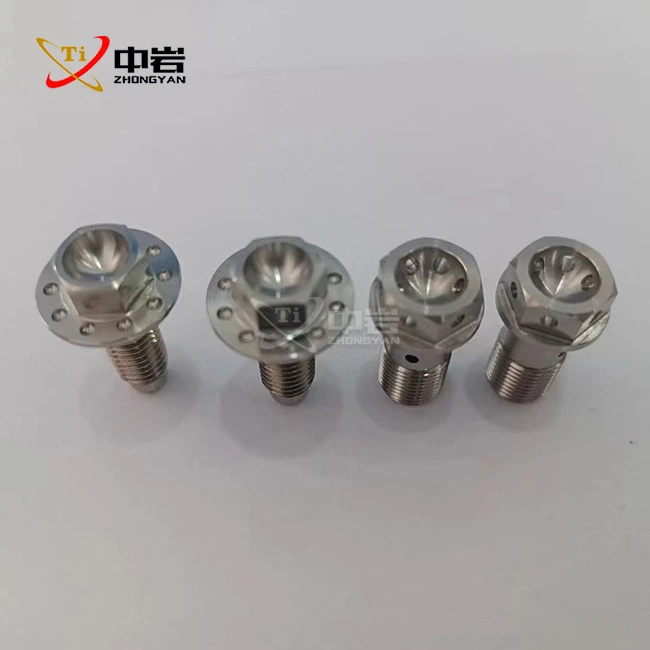
For high-performance uses, Custom Socket Head Titanium Bolt connectors are the peak of engineering excellence. These precisely designed parts combine titanium's high strength-to-weight ratio with the ease of a socket head, making them the most reliable in the medical, military, and industrial fields. Unlike regular fasteners, handmade socket head titanium bolts are made to exact specs. This means they work perfectly in harsh conditions where other materials fail. By combining Grade 5 titanium metal with precise CNC machining, screws are made that are stronger, last longer, and work more efficiently than expected in the business.
Understanding Custom Socket Head Titanium Bolts
Custom Socket Head Titanium Bolts stand out because they are very strong, don't rust, and are very light. Instead of using off-the-shelf fixings, these bolts are custom made for each job, making sure they are the right size and performing at their best. To make them, high-quality titanium metals are forged according to strict quality standards. To prove their dependability, they are often supported by certifications like ISO or ASTM.
Material Composition and Manufacturing Excellence
Selecting the right materials and making them with great care are the keys to making titanium socket head screws that work well. The main material is Grade 5 titanium metal (Ti-6Al-4V), which has the right amount of strength thanks to its 6% aluminum and 4% vanadium content. This mix has a tensile strength of more than 900 MPa and a density of only 4.43 g/cm³, which makes it much lighter than similar steel options. The CNC cutting method makes sure that the dimensions are accurate to within 0.05 mm, which meets ASTM F136 standards for important uses.
Computer-controlled threading processes are used in advanced manufacturing methods to make precise thread profiles that are needed for high-torque uses. The socket head design has carefully thought-out shapes that spread stress evenly across the bolt head, keeping it from breaking too soon when it's under a lot of stress. Ultrasonic testing and surface screening procedures are two quality control measures that make sure every fastener meets strict performance standards.
Available Specifications and Customization Options
Procurement experts can choose bolts that work perfectly in important industrial uses if they know about the different sizes, socket head types, and custom parameters. Standard sizes include diameter ranges from M3 to M20, and lengths range from 6mm to 150mm to meet a variety of assembly needs. Standard hex key sizes can fit in socket head designs that keep the best depth ratios for maximum power transfer.
Customization options go beyond just changing the sizes; they also include different threading choices, surface treatments, and material certificates. Anodizing and passivation treatments make things less likely to rust and give them unique marks for keeping track of goods. OEM specs can include particular head shapes, coatings, or material changes that meet the needs of a certain application while still keeping the structure's integrity.
Performance Benefits of Titanium Socket Head Bolts in High-Performance Applications
Custom Socket Head Titanium Bolts are better for tough settings because they have higher tensile strength than stainless steel and carbon steel. Their high resistance to corrosion means they will last for a long time in harsh environments, like those found in aircraft, marine, and chemical industries. This cuts down on upkeep costs and downtime. Titanium is very light, which makes the whole system more efficient. This is especially important in high-performance machinery, where less weight means better fuel economy and load management.
Superior Mechanical Properties and Durability
When looking at performance measures across difficult uses, the mechanical benefits of titanium fasteners become clear. Grade 5 titanium bolts have maximum tensile strengths of up to 1000 MPa and have great wear resistance even after millions of load cycles. The modulus of elasticity at 113 GPa gives the best flexibility, which stops stress from building up and lowers the risk of rapid failure modes that happen a lot with weak materials.
Temperature stability is another important benefit. Socket head nuts made of titanium can be used in settings ranging from cryogenic temperatures to 400°C and still keep their structural integrity. This thermal stability, along with low thermal expansion factors, keeps the joint from coming loose even after being heated and cooled many times. Because these fasteners are non-magnetic, they don't cause electromagnetic interference in sensitive electrical uses. This makes them important for medical devices and precision instruments.
Cost-Effectiveness Through Lifecycle Analysis
Data that compares the mechanical qualities and corrosion resistance of different materials helps buyers make choices that balance cost and performance. Even though the original investment costs are higher than those of traditional materials, lifecycle analysis shows that there are big economic benefits because upkeep is done less often and the materials last longer. Corrosion resistance gets rid of the need for protection coatings and regular repairs. Also, better fatigue properties cut down on costs related to unplanned downtime.
Performance tests show that titanium bolts with socket heads maintain 95% of their original strength after 10,000 hours in saltwater, while 316 stainless steel only retains 60% of its strength under the same conditions. This longevity saves a lot of money in harsh environments like marine settings, chemical processing plants, and outdoor sites where normal fasteners break down quickly.
Comparing Titanium Socket Head Bolts with Other Materials
When you look at titanium bolts next to stainless steel and aluminum, titanium stands out as the best choice because it is stronger for its weight and doesn't rust. Even though stainless steel is cheaper than titanium, titanium lasts longer in harsh settings. Even though aluminum is light, it is not as strong or resistant to high temperatures as titanium.
Material Performance Analysis
Comparing a lot of different materials shows that they have different performance traits that affect how they are chosen for different uses. Stainless steel 316 is good at resisting corrosion and is moderately strong. It also has a lower starting cost, so it can be used for general purposes in places that don't get too much contact to the environment. But because it has a density of 7.8 g/cm³, it makes things heavier, which is a big problem for things that need to be light, like aerospace parts and portable tools.
The aluminum metal 7075 has a good strength-to-weight ratio and is easy to work with. However, it doesn't prevent corrosion very well without special treatments. Aluminum can only be used in temperatures below 200°C, and when it is mixed with metals that are not the same, it needs to be carefully analyzed for material compatibility. Because of these problems, aluminum is not good for uses that involve high temperatures, corrosion, or long-term use.
Economic Justification and Value Analysis
Total lifespan costs should be taken into account when figuring out price, since titanium's sturdiness often justifies a higher initial investment. Cost-benefit studies help business-to-business buyers figure out when custom titanium screws are more valuable in the long run than other options. For a real economic effect to be determined, a material cost analysis must take into account things like the cost of purchase, the difficulty of the machining process, the need for surface treatment, and the expected service life.
Lifecycle cost modeling shows that titanium socket head bolts become as cheap as stainless steel options within 3 to 5 years in settings that are prone to corrosion. They also perform better over their longer service life. When it comes to transportation, every kilogram of weight reduction leads to measured changes in fuel economy. These improvements in operational efficiency add up over time.
How to Choose the Right Custom Socket Head Titanium Bolt for Your Needs?
To choose the right unique titanium bolt, you need to carefully consider things like the bolt's tensile strength, how likely it is to rust, its working temperature, and its weight limit. To make sure that project deadlines are met, procurement teams should find a mix between minimum order amounts, lead times, and shipping logistics.
Application-Specific Selection Criteria
The first step in the decision process is a thorough look at the working conditions and performance needs. Load analysis tells you what tension and shear strengths you need, and environmental assessment tells you how resistant it needs to be to rust and what temperatures it can be exposed to. To make sure the threading meets the requirements for a long service life under dynamic loading, vibration, and wear must be taken into account when choosing the material grade.
The choice of socket head size strikes a balance between the need to transmit torque and the need to save room and make tools easy to reach. Standard hex sizes range from 2 mm to 17 mm, which can fit a wide range of power requirements while still working with standard tools. Choosing the right thread size affects both the time it takes to put the joint together and its strength. Fine threads have better holding power, while coarse threads make installation faster in high-volume assembly processes.
Supplier Qualification and Quality Assurance
The best performance is achieved by matching bolt specs to their intended uses in a wide range of industries, from aircraft to marine engineering. Partnering with makers who have industry certifications and a clear quality guarantee makes suppliers more reliable, lowers risk, and boosts procurement trust. When judging a supplier, you should look at whether they have ISO 9001:2015 certification, NADCAP certification for aerospace uses, and recorded traceability methods for material approval.
Material test certificates, dimensional inspection reports, and surface finish proof are all examples of quality paperwork that must be kept. Batch tracking makes sure that everyone in the supply chain is responsible and lets problems with quality be fixed quickly. The manufacturing skills of the supplier must show that they can handle both small amounts for prototypes and large amounts of production while still meeting quality standards.
Purchasing Process and Best Practices for Custom Titanium Socket Head Bolts
A clear, structured method is needed for efficient purchasing: making questions, asking for quotes, and getting examples to check quality before placing large orders. For global buying to go well, you need to be able to negotiate flexible minimum order amounts and reasonable wait times.
Procurement Strategy Development
The buying process starts with creating exact specifications that make it clear what sizes are needed, what materials are acceptable, and what level of quality is expected. Technical sketches should show exact measurements, the finish that needs to be applied, and any other special instructions, like how to label or package the item. Specifications for materials must be based on the relevant ASTM standards. For example, ASTM B348 for Grade 5 titanium bar stock and ASTM F467 for finished screws are the standards that must be used.
Evaluating a supplier includes looking at their professional skills, checking their quality system, and looking at their business terms. Using more than one provider makes sure that prices are competitive and provides supply chain support for important uses. The paperwork for a request for quotes should include expected volumes, delivery dates, and quality standards so that suppliers can give accurate answers.
Supply Chain Management and Quality Control
International shipping must be possible with trackable ways for delivery logistics, and full after-sales support, such as guarantee coverage and expert help, adds value and reduces the chance of disputes. Building long-term relationships with qualified, trusted providers makes it easier for people to work together and gives you access to better terms and new products for current and future projects.
Protocols for new inspections, tracking of statistical process control, and supplier performance measures should all be part of quality assurance programs. Regular checks of suppliers make sure that quality standards are still being met and look for ways to make the process better. Building long-term partnerships lets engineers work together on projects like making new products and improving existing ones.
Conclusion
Custom Socket Head Titanium Bolts are the best choice for high-performance uses that need to be powerful, resistant to corrosion, and light. When Grade 5 titanium alloy properties are combined with precise manufacturing, fasteners are made that regularly work better than standard options in the medical, automobile, aircraft, and industry sectors. Even though the original investment costs are higher than for standard materials, lifecycle analysis shows that there are strong economic benefits through lower maintenance needs and longer service life. To make sure you get the best performance benefits and solid supply chain support, you need to pay close attention to seller qualification, quality assurance, and application-specific selection criteria when you're buying something.
FAQ
Which industries benefit most from custom titanium socket head bolts?
Titanium fasteners are most useful in aerospace, chemical processing, naval engineering, high-performance cars, and the production of medical devices. These fields need materials that can work in harsh environments, stay biocompatible, or save a lot of weight, which makes the higher cost of the materials worth it.
How do lead times for custom titanium bolts compare to standard fasteners?
Custom titanium socket head bolts usually take 4 to 8 weeks to make, while regular stainless steel bolts only take 1 to 2 weeks. This longer time frame is because of the need to get materials, do specialty machining, and follow strict quality testing procedures to make sure the performance is reliable.
Can titanium socket head bolts be reused after disassembly?
Titanium screws can often be used again as long as they haven't been through a lot of stress or damage from the environment. Before reusing, the threads should be looked at visually for damage, rust, or warping. To keep safety margins and performance stability, critical uses usually need new fasteners.
Partner with Zhongyan for Premium Custom Socket Head Titanium Bolt Solutions
Zhongyan manufactures high-quality custom socket head titanium bolts that surpass industry standards and function effectively in demanding scenarios. In China's Titanium Valley, our state-of-the-art factory makes Grade 5 titanium bolts with tensile strengths of more than 900 MPa. These bolts come in sizes M3 to M20 and lengths from 6 mm to 150 mm. We promise steady quality and on-time delivery for your important projects because we are ISO 9001:2015 certified and follow ASTM F136. Contact our engineering team at sales@titaniumstudy.com to talk about your needs and get full quotes for unique titanium fastener solutions that improve the performance of your assembly and the efficiency of your operations.
References
1. Boyer, R., Welsch, G., & Collings, E.W. (2019). Materials Properties Handbook: Titanium Alloys. ASM International, Materials Park, Ohio.
2. American Society for Testing and Materials. (2020). ASTM F467-20: Standard Specification for Nonferrous Bolts, Hex Cap Screws, and Studs for General Use. ASTM International, West Conshohocken, Pennsylvania.
3. Lutjering, G., & Williams, J.C. (2018). Titanium: Engineering Materials and Processes. Springer-Verlag, Berlin, Germany.
4. Aerospace Material Specification. (2019). AMS 4928R: Titanium Alloy Bars and Billets 6Al-4V Annealed. SAE International, Warrendale, Pennsylvania.
5. Donachie, M.J. (2021). Titanium: A Technical Guide, Third Edition. ASM International, Materials Park, Ohio.
6. International Organization for Standardization. (2020). ISO 4762:2020 Socket Head Cap Screws. International Organization for Standardization, Geneva, Switzerland.
_1755672221864.jpg)
_1755674651182.jpg)
Learn about our latest products and discounts through SMS or email