- English
- French
- German
- Portuguese
- Spanish
- Russian
- Japanese
- Korean
- Arabic
- Greek
- German
- Turkish
- Italian
- Danish
- Romanian
- Indonesian
- Czech
- Afrikaans
- Swedish
- Polish
- Basque
- Catalan
- Esperanto
- Hindi
- Lao
- Albanian
- Amharic
- Armenian
- Azerbaijani
- Belarusian
- Bengali
- Bosnian
- Bulgarian
- Cebuano
- Chichewa
- Corsican
- Croatian
- Dutch
- Estonian
- Filipino
- Finnish
- Frisian
- Galician
- Georgian
- Gujarati
- Haitian
- Hausa
- Hawaiian
- Hebrew
- Hmong
- Hungarian
- Icelandic
- Igbo
- Javanese
- Kannada
- Kazakh
- Khmer
- Kurdish
- Kyrgyz
- Latin
- Latvian
- Lithuanian
- Luxembou..
- Macedonian
- Malagasy
- Malay
- Malayalam
- Maltese
- Maori
- Marathi
- Mongolian
- Burmese
- Nepali
- Norwegian
- Pashto
- Persian
- Punjabi
- Serbian
- Sesotho
- Sinhala
- Slovak
- Slovenian
- Somali
- Samoan
- Scots Gaelic
- Shona
- Sindhi
- Sundanese
- Swahili
- Tajik
- Tamil
- Telugu
- Thai
- Ukrainian
- Urdu
- Uzbek
- Vietnamese
- Welsh
- Xhosa
- Yiddish
- Yoruba
- Zulu
Premium Titanium Pipe Flange for Long-Term Durability
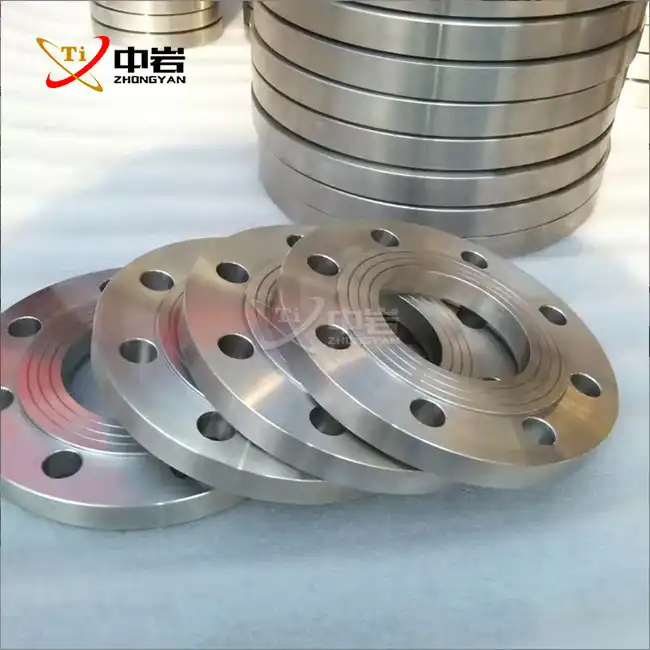
Premium titanium pipe flange components are the peak of engineering excellence when industrial uses need unwavering dependability and long service life. These high-performance connecting elements have great resistance to corrosion, great strength-to-weight ratios, and amazing reliability in a wide range of working situations. Because they are made from ASTM B363 Grade 2 titanium, these flanges can survive temperatures from -196°C to 400°C and still keep their shape in the harshest industrial settings.
Understanding Titanium Pipe Flanges: Properties and Specifications
Core Material Properties and Performance Characteristics
When made from ASTM B363 Grade 2 material, titanium flanges have unique dynamic qualities that set them apart from other options. The material's density of 4.51 g/cm³ makes it about 45% lighter than stainless steel parts of the same size and shape, but it still has a tensile strength that is higher than 345 MPa. When a solid titanium dioxide (TiO₂) passive layer forms on its own, it makes the material very resistant to corrosion, especially in chloride-rich settings where other materials break down quickly.Temperature resistance is another important benefit. Titanium flanges keep their structural integrity from -196°C (used in cold applications) to 400°C (used in high-temperature applications). This thermal stability, along with a low rate of thermal expansion (8.6 × 10⁻⁶/°C), makes sure that the dimensions stay the same and the covering works well even when the temperature changes, which is common in process industries.
International Standards and Grade Classifications
The rules for making high-quality titanium flanges are in line with a number of international standards, such as ASTM B363, ASME B16.5 and ISO 7005 guidelines. Grade 2 titanium is the most commonly used material in business settings because it has the best mix of functional qualities, protection to corrosion, and low cost. There are six different pressure classes, ranging from ANSI 150 to 600. These classes can handle system pressures of up to 10.3 MPa while still meeting the safety standards needed for important uses.You can choose from diameters ranging from 1" to 24" and thicknesses ranging from 10mm to 40mm, based on the pressure needs and the purpose. You can choose between matte and polished finishes for the surface. Polished finishes are better for safe uses in pharmacy and food processing areas where keeping surfaces clean is very important.
Advantages of Titanium Pipe Flanges Over Other Materials
Superior Corrosion Resistance in Aggressive Environments
The main benefit of titanium flanges is that they are very resistant to rust, which breaks down most materials very quickly. In ocean environments with chloride levels higher than 19,000 ppm, stainless steel types like 316L start to pit and rust within months of being exposed. Titanium plates are almost completely resistant to rust caused by chloride, and their structure stays intact even after decades of being exposed to seawater nonstop.The settings used for chemical processing are also very difficult because they contain strong acids, reactive agents, and high temperatures that make the conditions very hostile. Titanium is resistant to acids like nitric, phosphoric, and organic acids. This makes it useful in situations where Hastelloy or Inconel metals would need to be replaced often. Because the material doesn't crack under stress, it doesn't fail in the ways that high-strength stainless steels often do when they are pulled apart in acidic media.
Weight Reduction and Structural Benefits
The substantial weight advantage of titanium flanges creates significant benefits in weight-sensitive applications including offshore platforms, aircraft systems, and portable processing equipment. A 12-inch ANSI 300 titanium pipe flange weighs about 56% less than a stainless steel version. This means that the structure doesn't have to support as much weight and installation goes more quickly. This lighter weight means less money spent on shipping, less space needed for cranes, and more safety during installation and preservation work.
Lifecycle Cost Analysis and Return on Investment
Titanium flanges have a higher starting cost, but they have a lower total cost of ownership because they last longer and need less upkeep. A study of offshore uses shows that titanium flanges last three to five times longer than super duplex stainless steel alternatives. This means that repair intervals are increased from seven to fifteen years. Getting rid of failures caused by corrosion cuts down on unexpected downtime, emergency repair costs, and production loses that often go beyond the difference in the cost of the materials at first.Real-world performance data from North Sea offshore platforms shows that titanium flange installations have been used constantly for more than 25 years without needing to be replaced. During the same time period, similar stainless steel components had to be replaced several times. This difference in performance is especially important in remote sites where the prices of replacement parts and downtime have a big effect on the economy.
Selecting the Right Titanium Pipe Flange for Your Application
Environmental Assessment and Material Grade Selection
Before choosing the right flange, you should carefully consider the temperature ranges, pressure needs, and chemical exposure patterns that will be encountered. Grade 2 titanium works best in most industrial settings because it doesn't rust and has good mechanical qualities that work at temperatures up to 400°C and pressures that meet ANSI 600 standards. For uses that involve higher temperatures or specific chemical conditions, Grade 5 (Ti-6Al-4V) titanium alloys may be needed because they are stronger.When evaluating, it is important to think about cycle loads, thermal shock exposure, and the chance of galvanic corrosion happening when titanium parts touch other metals that are not the same. Using the right shielding methods and choosing gaskets that work well together will ensure the best performance and stop any electrochemical reactions that could damage the system.
Flange Type Selection and Connection Methods
Different flange configurations are used in industrial settings to meet unique installation and operating needs. Weld neck flanges offer the best structural stability for high-pressure situations. Their gradual thickness changes reduce stress concentrations and make welding processes reliable. When the pressure is low, slip-on flanges make installation easier and save money. On the other hand, blind flanges are very important for pressure testing and temporary separation.Titanium flanges can be welded, but only with special techniques and trained staff. They allow for stable connections with the same level of strength as the base material of the pipe. Controlling the heat input correctly and using inert gas protection stops contamination that could weaken corrosion resistance. This makes sure that weld zones keep the great qualities of wrought titanium material.
Manufacturer Certification and Quality Assurance
Working with certified makers makes sure that the products are of good quality, can be tracked, and meet foreign standards, which are important for important uses. Getting ISO 9001:2015 approval shows that you have put in place complete quality control systems that cover buying materials, making things, and inspecting them at the end. Third-party testing that shows ASTM compliance proves the material's composition, mechanical qualities, and the accuracy of its dimensions that are needed for reliable performance.When making a purchase, you need to think about minimum order amounts, lead times, and the ability to customize so that they work with project plans and inventory management needs. Well-known companies give professional support, help with application building, and documentation packages that make installation easier and meet regulatory requirements.
Maintaining Titanium Pipe Flanges for Prolonged Service Life
Inspection Protocols and Preventive Maintenance
Maintenance plans that work for titanium pipe flange systems focus on keeping the passive oxide layer that protects against rust and making sure that the bolts are properly loaded to keep the seal's integrity. During visual inspection, look for surface pollution, mechanical damage, or signs of galvanic rusting where two different metals meet. Titanium is naturally resistant to rust, so it doesn't need the usual upkeep that comes with protective coatings or corrosion limits.Periodic inspection plans should match up with general system repair intervals, which can be anywhere from once a year for visual checks to three to five years for more in-depth checks, based on how hard the system is used. For long-term leak-proof performance, inspection methods must check the torque values of the bolts, the state of the gaskets, and the condition of the flange faces.
Installation Best Practices and Torque Specifications
The right way to put titanium flange systems has a big effect on how well they work and how long they last. Bolt torque requirements must take into account that aluminum flanges have a lower amount of elasticity than steel flanges. This means that extra care must be taken to make sure that the gasket is compressed evenly without putting too much stress on the flange material. When you use measured torque tools and tighten in a certain order, you make sure that the stress is spread out evenly and that the gasket doesn't come out or get damaged.When choosing a gasket, it's important to think about how well it works with titanium surfaces and the conditions it will be used in. PTFE, graphite, and certain elastomers work best in a wide range of situations. Titanium flanges have a smooth surface finish that makes gasket binding work better while lowering the risk of galvanic rusting that can happen with some gasket materials that contain metal parts.
Procurement Insights: Buying Premium Titanium Pipe Flanges
Vendor Evaluation and Supply Chain Management
To successfully buy high-quality titanium flanges, you need to carefully look at the supplier's skills, quality systems, and shipping performance. Manufacturers that have been around for a while and have facilities just for handling titanium can offer benefits like being able to track down materials, using specialized tools for production, and having technical know-how that guarantees consistent product quality. There aren't many skilled titanium processors, and wait times can change depending on when raw materials are available. These are things that need to be thought about in the supply chain.When choosing a vendor, you should check that they meet ASTM standards, have ISO certification, and have customer examples from similar projects. The technical ability to offer custom sizes, unique pressure grades, or different surface processes can have a big effect on the success of a project and its long-term performance. Long-term supply deals can save you money and make sure that you get the goods you need when the market is busy.
Cost Optimization and Total Ownership Analysis
When comparing prices for titanium pipe flange procurement, you need to look at more than just the original purchase price. You also need to think about the total costs of ownership, such as installation, upkeep, and replacement. Bulk buying can help you save a lot of money per unit while still making sure you have enough on hand for planned repairs and emergency replacements. But the costs of keeping goods and the risk of items becoming obsolete must be weighed against the chances to save money by buying in bulk.Lifecycle cost models should include less frequent upkeep, longer service life, and no more breakdowns caused by corrosion, which are all features of titanium flange performance. Titanium materials often have higher prices than other materials because of the costs of downtime, logistics for replacement, and lost output. This is especially true in important applications where failure has effects that go beyond the cost of replacing parts.
Quality Verification and Documentation Requirements
Full paperwork packages make sure that things can be tracked and that regulations are followed, which is very important for important uses in the medical, military, and chemical processing industries. Material test records must include details about the material's chemical make-up, its mechanical qualities, and the results of any non-destructive tests that show it is sound inside and out. Dimensional inspection records check that important measurements, surface finish, and geometric standards are met so that pipes can fit and work properly.Third-party inspection services can add to the quality assurance for important or high-value uses by checking the performance and compliance of the manufacturing process. Digital documentation systems make it easy to keep records and make it easier for governmental checks or warranty claims that may come up during long service times.
Conclusion
For challenging industrial uses, investing in high-quality titanium pipe flanges is a smart way to improve operating efficiency and long-term cost management. Grade 2 titanium flanges have a long service life, are very resistant to rust, and are stronger than other materials. This makes them a clear choice over other materials in situations where a broken part could have big practical and financial effects. These high-quality parts will last for decades if you choose, install, and maintain them correctly. They also have a low total cost of ownership. When deciding what to buy, the original cost of the materials should be taken into account, but so should the significant benefits of less frequent upkeep, no corrosion failures, and higher system reliability that are typical of titanium flange performance in a wide range of industrial settings.
FAQ
What makes titanium pipe flanges superior to stainless steel alternatives?
Titanium pipe flange parts are very resistant to corrosion because they form a solid titanium dioxide passive layer on their own. This layer stops the metal from breaking down in salt environments, which is where stainless steel quickly pits and corrodes. The 45% lighter weight compared to stainless steel is also very helpful in offshore and aircraft uses, and the mechanical qualities are still better.
How can I verify the quality and certification of titanium flanges?
For quality assurance, you need detailed material test results that show the product meets ASTM B363 Grade 2 standards, dimensional inspection certificates that show the product meets geometric tolerances, and ISO 9001:2015 factory approval. For important uses, third-party tests can provide independent confirmation of the chemical make-up, mechanical qualities, and surface integrity.
What are typical lead times for custom titanium flange orders?
Custom titanium flange production takes between 8 and 12 weeks, based on the size, number, and complexity of the specifications. Standard versions may be offered with faster delivery times, but special pressure ratings or custom measurements take longer to make because more materials need to be sourced and processed.
Partner with Zhongyan for Premium Titanium Flange Solutions
Precision-engineered titanium pipe flange systems that meet the strict needs of aircraft, chemical processing, and offshore uses are what Zhongyan does best. Our full range of production services includes CNC machining, unique dimensional requirements, and full quality assurance programs that make sure ASTM B363 Grade 2 compliance. Our advanced production facilities are in Baoji City, which is known as China's "titanium valley." We use the city's many raw material sources and processing experts to offer low lead times and high-quality products. Our research team helps with choosing the right materials, making sure they meet your unique needs, and making sure that your application works as well as it can for the lowest cost. Email our expert titanium pipe flange supplier team at sales@titaniumstudy.com to talk about your specific requirements and get quotes for your next project.
References
1. American Society for Testing and Materials. "Standard Specification for Titanium and Titanium Alloy Seamless and Welded Pipes for General Service and Heat Exchanger Application." ASTM B363-18.
2. Donachie, Matthew J. "Titanium: A Technical Guide, Second Edition." ASM International Materials Park, Ohio, 2000.
3. American Society of Mechanical Engineers. "Pipe Flanges and Flanged Fittings: NPS 1/2 through NPS 24 Metric/Inch Standard." ASME B16.5-2017.
4. Boyer, Rodney R. "Titanium for Aerospace Applications: Present and Future." Journal of the Minerals, Metals and Materials Society, Volume 52, Issue 5, 2019.
5. International Organization for Standardization. "Metallic Materials - Tensile Testing - Part 1: Method of Test at Room Temperature." ISO 6892-1:2019.
6. Lutjering, Gerd and James C. Williams. "Titanium: Engineering Materials and Processes, Second Edition." Springer-Verlag Berlin Heidelberg, 2007.
(1)_1755652858819.jpg)
Learn about our latest products and discounts through SMS or email