- English
- French
- German
- Portuguese
- Spanish
- Russian
- Japanese
- Korean
- Arabic
- Greek
- German
- Turkish
- Italian
- Danish
- Romanian
- Indonesian
- Czech
- Afrikaans
- Swedish
- Polish
- Basque
- Catalan
- Esperanto
- Hindi
- Lao
- Albanian
- Amharic
- Armenian
- Azerbaijani
- Belarusian
- Bengali
- Bosnian
- Bulgarian
- Cebuano
- Chichewa
- Corsican
- Croatian
- Dutch
- Estonian
- Filipino
- Finnish
- Frisian
- Galician
- Georgian
- Gujarati
- Haitian
- Hausa
- Hawaiian
- Hebrew
- Hmong
- Hungarian
- Icelandic
- Igbo
- Javanese
- Kannada
- Kazakh
- Khmer
- Kurdish
- Kyrgyz
- Latin
- Latvian
- Lithuanian
- Luxembou..
- Macedonian
- Malagasy
- Malay
- Malayalam
- Maltese
- Maori
- Marathi
- Mongolian
- Burmese
- Nepali
- Norwegian
- Pashto
- Persian
- Punjabi
- Serbian
- Sesotho
- Sinhala
- Slovak
- Slovenian
- Somali
- Samoan
- Scots Gaelic
- Shona
- Sindhi
- Sundanese
- Swahili
- Tajik
- Tamil
- Telugu
- Thai
- Ukrainian
- Urdu
- Uzbek
- Vietnamese
- Welsh
- Xhosa
- Yiddish
- Yoruba
- Zulu
Titanium Block vs Billet: What’s the Difference?
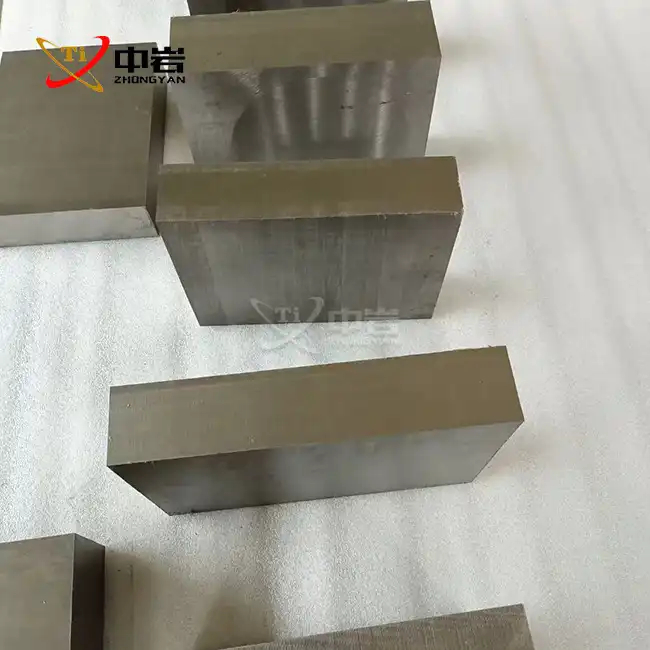
The main difference between a titanium block and a titanium billet is how they are made and what they are used for. A titanium block is usually a thick, square, rectangular, or cube-shaped piece that is made by forging or casting from Vacuum Arc Remelted ingots in more than one direction. It is the best raw material for CNC cutting. A titanium billet, on the other hand, is usually a half-finished product with a round or square cross-section that is made through hot working and is meant to be further processed into rods, tubes, or complex forms.It is very important for buying and engineering teams to understand these differences when they are making decisions that have a direct effect on how well a product works, how much it costs, and how reliable the supply chain is. Choosing the right titanium form is a big part of industrial manufacturing because it helps with buying and manufacturing. Buying managers, engineers, dealers, and OEM clients who do business-to-business (B2B) must know how choosing the right material form affects machining time, reducing waste, and the quality of the end component in medical, military, and industrial settings.
Understanding Titanium Blocks and Billets
Physical Characteristics and Dimensions
Titanium blocks and billets have different physical properties that affect how they are used in making. Blocks usually have square or rectangular shapes and normal sizes range from 50x50x50mm to bigger industrial sizes that are more than 500mm in every direction. Grade 5 titanium metal always has a density of about 4.43 g/cm³, but the weight changes a lot depending on the size of the block.Billets, on the other hand, have cross-sections that are round or square, and their lengths are usually several meters. They are great for circular cutting because their diameters are usually between 25 mm and 300 mm. The weight distribution is very different. For example, billets make better use of material for shaft-type parts, while blocks make better use of stock for complex geometric parts.
Mechanical Properties Comparison
Because they are made in different ways, blocks and billets have slightly different but important mechanical qualities. Tensile strengths of grade 5 titanium blocks are higher than 950 MPa, and yield strengths are between 828 and 862 MPa. These strengths are higher when the blocks are heated or treated with a solution. When blocks are formed, the grains tend to be spread out more evenly, which makes them more resistant to wear.Billets have similar basic mechanical properties, but they may have linear qualities that are in line with their main working axis. This directional strength is useful for situations where special load-bearing skills are needed. When heated up to 400°C, both types keep their good resistance to heat and rust better than aluminum, steel, and copper.
Surface Quality and Finishing
Standards for surface finish are different for blocks and billets based on how they will be processed. Pickled surfaces and chamfered edges are common on titanium block goods, which makes them perfect for CNC cutting. The surface roughness is usually at least 3.2μm, which cuts down on the time it takes to machine and the wear on the tools.The sides of billets are often ground or turned so they can be used for more hot working or precise cutting. Some billets get special treatments for uses like aircraft forgings or medical device making, and the way the surface is prepared shows how the processing will go.
Manufacturing Processes of Titanium Blocks vs Billets
Raw Material Sourcing and Primary Processing
The process of making something starts with either high-purity titanium sponge or recycled titanium scrap that has been melted down using vacuum arc remelting or electron beam cold hearth melting. These methods make ingots with controlled chemistry and low amounts of contamination, which are needed in medical and military uses.Quality of the raw materials has a direct effect on how well the finished product works. To get the right mechanical features, grade 5 titanium needs to have just the right amount of aluminum (5.5–6.75%) and vanadium (3.5–4.5%). The melting process gets rid of segregation and makes sure that the chemicals are spread out evenly throughout the ingot.
Block Manufacturing Methods
Titanium blocks are forged in multiple directions, which breaks down the structure of the cast ingot and makes the grains smaller. When open-die forging, compression forces are applied in more than one direction. This makes the block's mechanical traits the same all the way through its volume. Forging is followed by heat treatment, and cooling or solution treatment can be used to make the grain better for certain uses.Ultrasonic testing for internal flaws is part of quality control methods that make sure the structure meets ASTM B381 standards. The forging process gets rid of the holes and other flaws that are common in cast materials. This makes the material more reliable and able to handle wear in demanding situations.
Billet Production Techniques
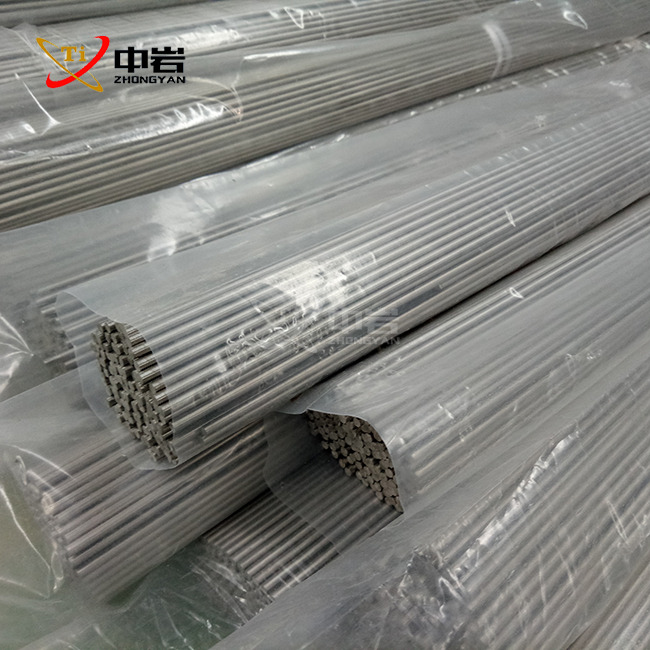
Hot rolling or extrusion are the main methods used to make billets, which give them their round or square cross-sections. The hot working temperature is between 900°C and 1050°C, which lets the material bend a lot while still keeping its shape. The final measurements are reached by passing the metal through rolling mills or extruder dies more than once.During the production process, it is important to keep the cross-sectional qualities of the block the same along its whole length. Heat treatment processes improve the microstructure, and surface conditioning gets the material ready for the next steps in the finishing process.
Comparative Analysis: Titanium Block vs Billet for Industrial Use
Mechanical Strength and Performance
In industrial settings, certain performance traits are needed, which favor either blocks or billets based on the part's needs. Titanium block materials work really well in situations where you need complicated shapes with the same features all the way through. Isotropic strength is created by the multidirectional casting process, which makes it perfect for use in medical implants and structural parts for spacecraft.Billets work better for rotating parts where aligning the grain flow makes them more resistant to wear. The directional strength qualities of billet production are good for making shafts, pins, and cylinder-shaped parts. The shape of the longitudinal grains is very good at withstanding the cyclic stress that happens a lot in spinning machinery.
Application-Specific Advantages
Blocks for wing box parts, landing gear fittings, and engine structural parts that need to be machined from solid stock are often needed in aerospace uses. Because they have a regular grain structure and no join lines, blocks are necessary for safety-critical parts that can't fail and would be very bad if they did.For custom implant production, medical device manufacturing counts on blocks a lot, particularly in CAD/CAM dental uses and orthopedic surgery. Because Grade 23 titanium blocks are biocompatible and osseointegrate well with bone, they can be used to make solutions that are just right for each patient and work well for a long time.
Economic Considerations and Cost Analysis
Cost research shows that blocks and billets are very different from each other, which affects choices about what to buy. Blocks typically fetch higher prices per kilogram for the intensive forging processes and multiple heat treatment steps that are needed. However, the higher cost of raw materials is often made up for by less trash during the manufacturing process.When making a lot of them, billets are useful because they save money because each one costs less and the material used is used more efficiently for cylinder parts. Minimum order numbers (MOQs) vary a lot. Because they are used for specific things, blocks often have lower MOQs.Lead times are very different. Standard billet shapes are ready to ship, but special blocks may take 8 to 12 weeks to make. When making production plans, supply chain reliability is very important. This makes ties with suppliers and managing inventory very important for success.
Choosing Between Titanium Blocks and Billets for Procurement
Performance Metrics and Selection Criteria
When choosing between blocks and billets, procurement workers have to look at a number of success metrics. The main thing that determines which part to use is its geometry. Parts with complicated shapes work best with blocks, while parts with a cylinder form work best with billets. By comparing the amount of raw materials needed with the amount of waste from the machine, material utilization estimates help find the most cost-effective choice.When machining, things to think about are tool access, setup difficulty, and cycle times. Blocks are better for multi-axis cutting because they make it easier to reach tools, while billets are better for turning and drilling. To get the most out of production, the planned cutting processes should match the shape of the material.
Supplier Evaluation and Global Sourcing
Some of the biggest companies in the world, like TIMET, VSMPO-AVISMA, and producers in Baoji, make certified titanium goods that meet international standards. Quality assurance guidelines for material selection are given by ASTM B381, AMS requirements, and ISO certifications. Chinese suppliers, particularly those located in Baoji's "Titanium Valley," leverage local raw material access and advanced processing capabilities to deliver competitive solutions.As part of the standards for supplier approval, companies must have ISO 9001 quality management systems, AS9100 aerospace certifications, and FDA registrations for medical uses. The quality is uniform and can be tracked all the way through the supply chain thanks to these approvals.
Quotation Evaluation and Contract Negotiation
Material specs, shipping terms, and quality certifications are all important parts of a good quotation evaluation. To make sure the provider can do what they say they can do, sample testing methods should include checking the mechanical properties, doing chemical analyses, and non-destructive tests. When negotiating a price, the total cost of ownership must be taken into account. This includes things like wasted materials, cutting time, and quality control tasks.Long-term relationships with qualified providers can help you in a number of ways, such as by giving you better prices, faster scheduling, and expert support. A lot of the time, commitments to buy in bulk can save you a lot of money and make sure that your supply chain works well for important output projects.
Future Trends and Innovations in Titanium Material Supply
Advanced Manufacturing Technologies
Through targeted laser melting and electron beam melting, additive manufacturing technologies are changing how titanium parts are made. With these technologies, near-net-shape parts can be made straight from titanium powder, which could mean less need for block and billet shapes. However, cast titanium forms are still useful because of the post-processing needs and material properties that need to be thought about.Modern precise forging methods make better use of materials and lower the cost of production. Isothermal forging and superplastic forming make it possible to make complicated shapes with little or no cutting. They connect the shapes of raw materials to finished parts.
Market Dynamics and Demand Trends
As more spacecraft are made, there is more demand for verified titanium parts. For commercial airplane production plans to work, supply lines must be stable and able to meet strict delivery requirements. Large-scale titanium block are finding new uses in the green energy sector, especially in wind power applications.After global disasters, supply chain robustness has become more important. Diversified buying strategies and building up regional suppliers help lower risks and make sure that materials will always be available.
Strategic Sourcing Recommendations
Long-term ties with suppliers, technical cooperation, and openness in the supply chain are all important parts of successful titanium buying plans. When suppliers are involved in the development of a product early on, they can help choose the best materials and processes. Quality standards are always being met because suppliers are audited and their work is monitored on a regular basis.Putting money into programs that help suppliers grow, especially in developing markets, gives companies a competitive edge by lowering costs and making sure the supply chain is safe. Technical partnerships help people come up with new ways to process materials and make new applications.
Conclusion
When choosing between titanium block and billet types, you need to think carefully about the needs of the parts, the ways they will be made, and the cost. Blocks are better for uses with complicated shapes that need qualities that are all the same, while billets are better for making cylinder-shaped parts in large quantities. Knowing how the product is made, its mechanical qualities, and its benefits for a certain application helps you make smart purchasing choices that improve cost, quality, and delivery. As the military, medical, and industrial markets continue to grow, choosing the right titanium forms strategically becomes more important for staying ahead of the competition and making sure products work well.
FAQ
What are the main differences between titanium blocks and billets?
Titanium block goods come in either rectangular or cubic shapes and are made by forging in more than one way, so their properties are the same in all directions. The cross-sections of billets can be round or square, and they are made by hot rolling or extrusion. This gives them linear strength properties. Blocks are best for making complicated parts, while billets are best for making rotating parts and large quantities.
Which form is more cost-effective for small production runs?
Blocks typically prove more cost-effective for small production runs due to lower minimum order quantities and reduced setup costs. The higher material cost often gets offset by improved material utilization and reduced machining complexity for complex geometries.
How do mechanical properties differ between blocks and billets?
The basic mechanical qualities of both types are about the same. Grade 5 titanium can reach tensile forces of more than 950 MPa. When it comes to features, blocks are isotropic, while billets are better for linear strength. The way the product is made affects the structure of the grains and how well it holds up under stress.
What quality certifications should I require from suppliers?
Some important certifications are ISO 9001 quality control systems, ASTM B381 for forgings, and AMS specifications for aircraft uses. Medical apps need to be FDA-compliant and have ISO 13485 approvals. All packages should have material test papers with them.
What are typical lead times for custom titanium blocks?
You might be able to get standard sizes right away, but unique blocks usually take 8 to 12 weeks to make. Time frames for leads vary on the size, complexity, amount, and supplier's availability. For projects to be successful, buying plans must be planned around these dates.
Partner with Zhongyan for Premium Titanium Block Solutions
Zhongyan stands as your trusted titanium block manufacturer, leveraging our strategic location in Baoji's "Titanium Valley" to deliver exceptional quality and value. Our Grade 5 titanium blocks, featuring 50×50×50mm dimensions with 4.43 g/cm³ density and tensile strength exceeding 950 MPa, meet the most demanding aerospace and medical applications. With ASTM B381 certification, ISO 9001 compliance, and ultrasonic testing for internal defects, we ensure superior quality for your critical projects. Contact our expert team at sales@titaniumstudy.com to discuss your specific requirements and discover how our custom CNC machining capabilities and comprehensive titanium materials can optimize your manufacturing processes while reducing costs and lead times.
References
1. Boyer, R.R. Materials Science and Engineering A, Volume 213, 1996, has an article called "An Overview on the Use of Titanium in the Aerospace Industry."
2. Lütjering, G. Williams, J.C. "Titanium: Engineering Materials and Processes." Manchester University Press, 2007.
3. Donachie, Matthew J. "Titanium: A Technical Guide." 2000. Materials Park, OH: ASM International.
4. Peters, M. and Leyens, C. "Aerospace and Space Applications of Titanium Alloys." Wiley-VCH, 2003.
5. Rack, H.J. and Qazi, J.I. In Materials Science and Engineering C, Volume 26, 2006, they wrote about "Titanium Alloys for Biomedical Applications."
6. Froes, F.H. "Titanium: Physical Metallurgy, Processing, and Applications." ASM International Pub., 2015, Materials Park, OH.

Learn about our latest products and discounts through SMS or email