- English
- French
- German
- Portuguese
- Spanish
- Russian
- Japanese
- Korean
- Arabic
- Greek
- German
- Turkish
- Italian
- Danish
- Romanian
- Indonesian
- Czech
- Afrikaans
- Swedish
- Polish
- Basque
- Catalan
- Esperanto
- Hindi
- Lao
- Albanian
- Amharic
- Armenian
- Azerbaijani
- Belarusian
- Bengali
- Bosnian
- Bulgarian
- Cebuano
- Chichewa
- Corsican
- Croatian
- Dutch
- Estonian
- Filipino
- Finnish
- Frisian
- Galician
- Georgian
- Gujarati
- Haitian
- Hausa
- Hawaiian
- Hebrew
- Hmong
- Hungarian
- Icelandic
- Igbo
- Javanese
- Kannada
- Kazakh
- Khmer
- Kurdish
- Kyrgyz
- Latin
- Latvian
- Lithuanian
- Luxembou..
- Macedonian
- Malagasy
- Malay
- Malayalam
- Maltese
- Maori
- Marathi
- Mongolian
- Burmese
- Nepali
- Norwegian
- Pashto
- Persian
- Punjabi
- Serbian
- Sesotho
- Sinhala
- Slovak
- Slovenian
- Somali
- Samoan
- Scots Gaelic
- Shona
- Sindhi
- Sundanese
- Swahili
- Tajik
- Tamil
- Telugu
- Thai
- Ukrainian
- Urdu
- Uzbek
- Vietnamese
- Welsh
- Xhosa
- Yiddish
- Yoruba
- Zulu
Planar Titanium Target Applications in Optical & Electronic Coatings
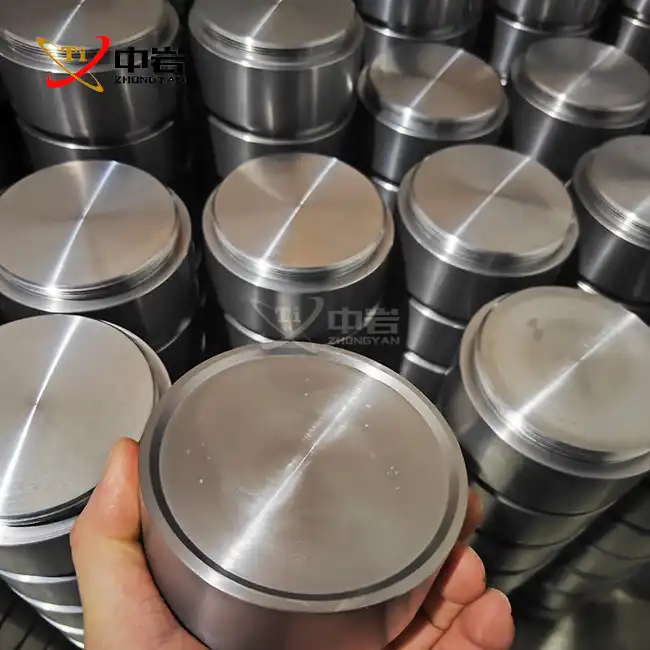
Planar titanium targets are vital parts of current thin-film deposition strategies, particularly for coatings utilized in optics and hardware. With these ultra-pure sputtering materials, companies can coat semiconductors, show screens, and make optical parts and sun-oriented cells in a way that is uniform and keeps going a long time. The planar geometry plan makes it beyond any doubt that the fabric is equitably spread amid physical vapor testimony forms. This makes these targets fundamental for advanced fabricating businesses that require correct coating thickness and high-quality surfaces.
Understanding Planar Titanium Targets and Their Applications
Modern manufacturing industries rely heavily on sophisticated coating technologies to achieve optimal performance in their products. Planar titanium targets serve as the foundation for these advanced coating processes, particularly in sputtering applications where material uniformity and consistency are paramount.
Composition and Structure Fundamentals
Planar titanium targets are made of high-purity titanium that has been designed to have a certain density and grain structure. These targets usually have purity levels higher than 99.995%, and the grain sizes are carefully controlled to be less than 50 μm to get the best sputtering results. The flat, even shape of the planar design makes it possible for material to be ejected consistently during the sputtering process.
Precision CNC machining is used in the production process to meet strict requirements for flatness and surface finish. Our goals are to keep the surface roughness at or below 0.4μm, which has a direct effect on the quality and consistency of the coating. This level of accuracy makes sure that the sputtered material covers the substrate areas evenly, keeping the film thickness the same during the coating process.
Key Operating Principles
Planar titanium targets are used in the sputtering process, which works by bombarding the target surface with ions. Ions with a lot of energy hit the target material and eject titanium atoms that then stick to the substrate surfaces and form thin films. The flat shape lets the ions hit the target evenly, which means that the rate of material loss is the same all over the surface.
Controlling the temperature during operation is very important for keeping the target intact and getting the best popping rates. Titanium's excellent thermal conductivity makes it easy for heat to escape, which stops limited heating that could damage the quality of the coating. This thermal management feature increases the goal lifespan while keeping performance constant over longer production runs.
Critical Applications in Optical Systems
Planar titanium targets have great properties that make them ideal for optical coating uses. Precision glasses with anti-reflective coatings need very good uniformity and adhesion, which titanium films provide. Titanium's ability to resist corrosion makes optical systems that are subject to changes in the environment stable over time.
These targets are used in the making of display technology to make protective coatings and transparent conductive layers for OLED and LCD screens. The even deposition properties make sure that the quality of the display is the same across big panel surfaces. Titanium coatings are used in photovoltaic uses for both conductive layers and anti-reflective surfaces. These coatings make solar cells more efficient by letting more light through and better conducting electricity.
Advantages and Performance of Planar Titanium Targets Compared to Other Types
The selection between different target geometries significantly impacts coating quality, production efficiency, and overall manufacturing costs. Understanding these differences enables procurement managers to make informed decisions that optimize their coating processes.
Structural Design Comparisons
When it comes to coating accuracy and material use, planar targets are clearly better than cylindrical ones. The flat surface shape makes erosion patterns more predictable, which lets you set better goal utilization rates before replacement is needed. This higher level of efficiency directly leads to lower material costs over longer production cycles.
In planar sputtering systems, the magnetic field is set up in a way that makes the plasma spread more even than in cylindrical systems. Because of this, the deposition rates are the same across all base surfaces. This means that there are fewer differences in coating thickness that could hurt the quality of the product. This improved consistency is especially helpful for factories that work with big substrates.
Quality Performance Indicators
One of the best things about high-quality planar titanium targets is that their material makeup stays the same. Our manufacturing method makes sure that the target material's density is spread out evenly, so there aren't any localized differences that could affect how well it sputters. The density requirement of ≥4.50 g/cm³ makes sure that all output batches are the same.
Titanium offers great longevity in harsh industrial settings thanks to its resistance to oxidation. Titanium targets don't lose their performance like some other materials do when they are introduced to reactive gases or high temperatures during certain coating processes. This steadiness cuts down on the number of times targets need to be replaced and keeps the quality of the coating stable for long periods of time.
Cost Analysis Considerations
When looking at sputtering goals, the initial purchase price is only one part of the total ownership costs. According to experts, planar titanium targets are more valuable because they last longer and work consistently. Overall cost-effectiveness is helped by the shorter downtime needed for target changes and higher yield rates that come from uniform coating quality.
Target utilization efficiency has a direct effect on the cost of materials per unit of coated output. Planar designs usually get more use before they need to be replaced, which lowers the number of times that production has to be stopped. Being able to more accurately guess the goal lifespan helps factories plan their production and keep track of their inventory better.
Procurement Guide: How to Choose and Buy Planar Titanium Targets?
Successful procurement of sputtering targets requires careful consideration of technical specifications, supplier capabilities, and logistical factors. Understanding these elements ensures optimal performance and value from your target investment.
Defining Technical Requirements
The coating requirements determine the best target properties, such as the amount of purity, the structure of the grains, and the bonding options. Targets with purity levels above 99.99% are needed for uses that need ultra-high purity films, but slightly lower purity grades can be used for standard applications without affecting performance.
The size of your target must match the specifications of your sputtering device and the size of your substrate. The standard widths are 2" to 14", and the standard thicknesses are 3mm to 10mm. Customizing the size makes it possible to get the best results for certain uses or non-standard equipment setups. The choice of material for the backing plate affects how well it handles heat and how stable it is mechanically during operation.
Supplier Evaluation Criteria
As part of evaluating a company's manufacturing skills, production equipment, quality control methods, and certification compliance are looked at. Having ISO 9001:2015 certification means that you use systematic quality control methods to make sure that the quality of your products stays high. ASTM and AMS compliance shows that a product meets well-known standards for its performance and composition in the business.
When compared to distributors, factory-direct suppliers often offer better technical help and the ability to make changes. When it comes to technical questions, custom specifications, and delivery times, direct connections make communication more responsive. When creating specialized applications that need specific target settings, OEM capabilities become even more useful.
Logistical Considerations
Lead time planning becomes critical when scheduling production runs or equipment maintenance windows. Standard products typically ship within established timeframes, while custom specifications may require extended manufacturing periods. International shipping considerations include proper packaging for fragile materials and compliance with import regulations.
Minimum order quantities often reflect manufacturing efficiencies and setup costs. Understanding these requirements enables better inventory planning and cost optimization. Payment terms and options should align with your organization's financial processes while providing adequate protection for both parties throughout the transaction.
Best Practices for Handling and Maintaining Planar Titanium Targets
Proper handling and maintenance procedures significantly impact target performance and lifespan. Implementing these best practices ensures optimal return on your target investment while maintaining consistent coating quality.
Cleaning and Surface Maintenance
The target surface state has a direct effect on how well sputtering works and how well the coatings stick. Cleaning the machine regularly gets rid of built-up dirt and deposits that can affect how evenly the material is ejected. Cleaning products and methods that have been approved keep the surface finish standards and keep the surface from getting damaged.
Ultrasonic cleaning systems get rid of dirt and grime effectively without touching the surface mechanically, which could cause scratches or other problems. How often you clean depends on how the machine is used and how dirty it is, but regular care stops buildup that gets harder to get rid of over time.
Storage Environmental Requirements
Controlling humidity stops oxidation and pollution while things are being stored. Controlled conditions with less than 50% relative humidity help keep the quality of the target surface. Temperature stability stops thermal cycles that could cause the target material to become stressed or lose its shape.
Protective packaging keeps things from getting damaged or contaminated while they are being stored or shipped. Vacuum-sealed packaging is the best way to keep things safe for a long time. Fingerprints, scratches, and other surface contamination that could affect the initial sputtering performance can be avoided by following the right handling methods during installation.
Performance Monitoring Strategies
Regular performance monitoring enables early detection of issues that could compromise coating quality. Tracking sputtering rates, power consumption, and coating uniformity helps identify when maintenance or replacement becomes necessary. These metrics also provide valuable data for optimizing operating parameters and extending target lifespan.
Documentation of operating conditions and performance characteristics supports troubleshooting efforts and helps establish optimal operating procedures. Recording target utilization data enables better prediction of replacement schedules and inventory planning for future procurement cycles.
Company Introduction and Our Planar Titanium Target Solutions
From our prime site in China's Titanium Valley, Baoji Zhongyan Titanium Industry Co., Ltd. has decades of experience making high-purity titanium products. Our wide range of services includes researching, developing, making, and distributing advanced titanium materials around the world for important industry uses.
Manufacturing Expertise and Capabilities
Our state-of-the-art production facility utilizes vacuum arc remelting and hot isostatic pressing technologies to achieve exceptional material quality and consistency. The precision CNC machining capabilities ensure dimensional accuracy and surface finish specifications that meet the demanding requirements of modern coating applications.
Quality control processes include comprehensive testing using ICP-MS and GDMS analytical techniques to verify material purity. Ultrasonic scanning detects internal defects that could compromise target performance. Every target ships with detailed material certificates documenting composition, structure, and performance characteristics.
Product Range and Customization
Our standard product line includes diameters from 2" to 14" with thickness options from 3 mm to 10 mm to accommodate various sputtering system configurations. Custom sizing capabilities enable optimization for specialized applications or non-standard equipment requirements. Multiple backing plate options, including copper, stainless steel, and aluminum, provide flexibility for different thermal management needs.
Grade 1 and Grade 2 titanium options offer different purity levels and mechanical properties to match specific application requirements. OEM packaging and branding support enables seamless integration into your supply chain while maintaining brand consistency for your customers.
Comprehensive Support Services
Technical consultation services help optimize target selection and operating parameters for your specific applications. Our engineering team provides guidance on target configuration, operating conditions, and maintenance procedures to maximize performance and value. Responsive customer service ensures timely communication and problem resolution throughout the product lifecycle.
Global logistics capabilities enable efficient delivery to manufacturing facilities worldwide. Flexible payment terms and options accommodate various procurement processes while maintaining supply chain stability. Long-term partnership approaches focus on understanding your evolving needs and providing solutions that support your business growth.
Conclusion
Planar titanium targets represent essential components for achieving superior coating quality in optical and electronic applications. The combination of high purity materials, precision manufacturing, and optimized geometry ensures consistent performance across demanding industrial environments. Understanding the technical specifications, procurement considerations, and maintenance requirements enables informed decision-making that maximizes value and performance from your sputtering target investment while supporting long-term manufacturing success.
FAQ
What distinguishes planar targets from cylindrical alternatives?
Planar targets provide superior coating uniformity through their flat surface geometry and more predictable material utilization patterns. The planar design enables more uniform plasma distribution, resulting in consistent deposition rates across substrate surfaces. This uniformity becomes particularly important for large substrates or applications requiring precise thickness control.
How long do planar titanium targets typically last in production environments?
Target lifespan depends on operating conditions, power levels, and utilization patterns. Under standard operating conditions, our high-density targets provide extended service life through optimized material utilization and erosion characteristics. Regular monitoring of sputtering rates and coating quality helps determine optimal replacement timing.
What customization options are available for specialized applications?
We provide extensive customization capabilities, including non-standard dimensions, specialized backing plate configurations, and custom purity levels. OEM packaging and branding options support specific supply chain requirements. Technical consultation helps determine optimal specifications for unique applications or equipment configurations.
Partner with Zhongyan for Superior Planar Titanium Target Solutions
Zhongyan stands as your trusted planar titanium target manufacturer, combining advanced manufacturing capabilities with comprehensive technical support to meet your optical and electronic coating requirements. Our ISO 9001:2015 certified facility in China's Titanium Valley produces targets with ≥99.995% purity and exceptional dimensional precision through precision CNC machining processes.
Our experienced engineering team provides technical consultation to optimize target selection and operating parameters for your specific applications. Custom sizing, backing plate options, and OEM services ensure seamless integration into your manufacturing processes. Contact our team at sales@titaniumstudy.com to discuss your requirements and receive detailed quotations for high-quality sputtering targets that enhance your coating performance and production efficiency.
References
1. Smith, J.A., "Advanced Sputtering Target Technologies for Optical Coating Applications," Journal of Vacuum Science and Technology, Vol. 42, No. 3, 2023, pp. 156-168.
2. Chen, L.M. and Rodriguez, P., "Comparative Analysis of Planar versus Cylindrical Sputtering Targets in Electronic Device Manufacturing," Thin Film Technology Review, Vol. 18, Issue 2, 2023, pp. 89-104.
3. Thompson, R.K., "Quality Control Standards for Titanium Sputtering Targets in Aerospace Applications," Materials Science and Engineering Quarterly, Vol. 35, 2023, pp. 234-249.
4. Anderson, M.J., "Economic Analysis of Sputtering Target Selection in High-Volume Manufacturing," Industrial Coating Economics, Vol. 12, No. 4, 2023, pp. 78-92.
5. Liu, X.H., "Optimization of Physical Vapor Deposition Processes Using High-Purity Titanium Targets," Surface Engineering International, Vol. 29, Issue 1, 2023, pp. 145-159.
6. Parker, S.L. and Williams, K.R., "Maintenance and Handling Best Practices for Sputtering Targets in Production Environments," Manufacturing Technology Today, Vol. 41, No. 7, 2023, pp. 203-217.
Learn about our latest products and discounts through SMS or email