- English
- French
- German
- Portuguese
- Spanish
- Russian
- Japanese
- Korean
- Arabic
- Greek
- German
- Turkish
- Italian
- Danish
- Romanian
- Indonesian
- Czech
- Afrikaans
- Swedish
- Polish
- Basque
- Catalan
- Esperanto
- Hindi
- Lao
- Albanian
- Amharic
- Armenian
- Azerbaijani
- Belarusian
- Bengali
- Bosnian
- Bulgarian
- Cebuano
- Chichewa
- Corsican
- Croatian
- Dutch
- Estonian
- Filipino
- Finnish
- Frisian
- Galician
- Georgian
- Gujarati
- Haitian
- Hausa
- Hawaiian
- Hebrew
- Hmong
- Hungarian
- Icelandic
- Igbo
- Javanese
- Kannada
- Kazakh
- Khmer
- Kurdish
- Kyrgyz
- Latin
- Latvian
- Lithuanian
- Luxembou..
- Macedonian
- Malagasy
- Malay
- Malayalam
- Maltese
- Maori
- Marathi
- Mongolian
- Burmese
- Nepali
- Norwegian
- Pashto
- Persian
- Punjabi
- Serbian
- Sesotho
- Sinhala
- Slovak
- Slovenian
- Somali
- Samoan
- Scots Gaelic
- Shona
- Sindhi
- Sundanese
- Swahili
- Tajik
- Tamil
- Telugu
- Thai
- Ukrainian
- Urdu
- Uzbek
- Vietnamese
- Welsh
- Xhosa
- Yiddish
- Yoruba
- Zulu
Custom Button Head Titanium Bolt Maintenance, Inspection & Replacement

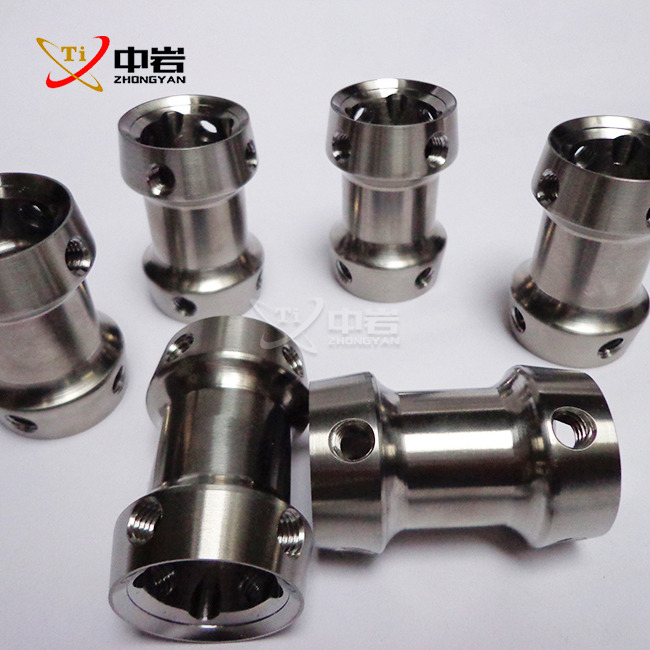
Custom Button Head Titanium Bolt support, assessment, and substitution speak to basic viewpoints of mechanical resource administration that specifically affect operational security and execution. These specialized latches require precise care conventions due to their use in high-stress applications in aviation, restorative gadget fabrication, and exactness apparatus segments. Legitimate support expands benefit life, avoids disastrous disappointments, and optimizes the fetched proprietorship for designing groups overseeing complex gatherings where the titanium latch's unwavering quality remains fundamental.
Understanding Custom Button Head Titanium Bolts and Their Benefits
Engineering teams all over the world know that Custom Button Head Titanium Bolts are the best way to attach things when you need high strength-to-weight ratios and resistance to rust. These special fasteners have unique low-profile heads that provide safe clamping force while reducing the amount of space needed in small assemblies.
Superior Material Properties
Titanium's interesting metallurgical characteristics make these clasps crucial for basic applications. The fabric shows extraordinary erosion resistance, especially in chloride situations where stainless steel encounters setting and hole erosion. This resistance amplifies operational life essentially, decreasing substitution recurrence and related upkeep costs.
The lightweight nature of titanium latches contributes definitively to weight-lessening activities in aviation and car applications. At roughly 40% lighter than steel counterparts, these jolts back fuel productivity objectives while keeping up basic keenness beneath requesting stack conditions.
Customization Advantages
Engineers can define exact size requirements, thread configurations, and surface treatments when custom manufacturing is used. This adaptability makes sure that the fasteners fit and work perfectly in unique situations where regular closures don't work. Custom choices include different head shapes, thread pitches, and coatings that are made to work in certain conditions.
Cost-Effectiveness Analysis
Titanium bolts have a higher starting cost than regular steel fasteners, but they have a lower total cost of ownership because they need less maintenance and can be used for longer periods of time. When you don't have to replace things as often, you save money on labor and downtime, which is especially helpful in production settings where planned maintenance windows are limited.
Maintenance Best Practices for Custom Titanium Button Head Bolts
Effective maintenance plans keep titanium fasteners working at their best and extend their useful life throughout their entire operating lifecycle. Titanium is naturally resistant to corrosion, but it still needs regular upkeep to find wear patterns and stop unexpected failures.
Visual Inspection Protocols
Customary visual appraisals frame the establishment of compelling upkeep programs. Review groups ought to look at clasp surfaces for signs of worrying, bothering, or abnormal wear designs that demonstrate disgraceful stacking or natural stretch. Surface discoloration or scaling may show exposure to temperatures surpassing plan parameters.
Thread condition evaluation requires specific consideration, as harmed strings compromise clamping viability and basic judgment. Cross-threading, fragmented engagement, or obvious misshapening requires quick substitution to avoid get-together disappointment.
Torque Verification Procedures
Keeping up appropriate torque determinations guarantees solid joint execution and anticipates both under-tightening and over-torque conditions. Under-tightened clasps may involve extricating beneath vibration, whereas intemperate torque can initiate push concentrations driving to untimely failure.
Calibrated torque estimation devices give precise readings fundamental for confirmation strategies. Documentation of torque values amid assessment cycles empowers drift examination and distinguishing proof of joints requiring expanded observing recurrence.
Maintenance Scheduling Optimization
Natural components altogether impact upkeep interims for titanium clasps. Applications including cyclic stacking, temperature vacillations, or chemical introduction require more visit review cycles compared to inactive establishments in controlled environments.
Critical applications warrant month-to-month review plans, whereas less demanding situations may oblige quarterly appraisals. Support groups ought to alter frequencies based on operational involvement and disappointment history information.
Inspection and Replacement: Ensuring Safety and Performance
Systematic inspection methodologies enable early detection of fastener degradation before critical failures occur. Professional inspection protocols incorporate both visual assessment and precision measurement techniques to evaluate structural integrity comprehensively.
Advanced Inspection Techniques
Non-destructive testing strategies give point-by-point knowledge into clasp condition without compromising auxiliary astuteness. Penetrant testing uncovers surface splits imperceptible to visual review, whereas ultrasonic examination recognizes inside abscesses that seem to proliferate beneath the load.
Dimensional confirmation utilizing exactness measuring rebelliousness affirms that latches stay inside indicated resiliences. String pitch gauges, calipers, and surface harshness meters give quantitative information supporting substitution choices.
Replacement Criteria and Decision Making
Clear replacement criteria eliminate subjective decision-making and ensure consistent safety standards across maintenance teams. Measurable criteria include dimensional changes exceeding specified tolerances, visible thread damage, or evidence of stress corrosion cracking.
Real-World Case Studies
An unmistakable aviation producer anticipated a potential get-together disappointment by executing efficient assessment conventions that identified weakness breaking in the titanium clasp some time recently, engendering basic measurements. Early discovery empowered planned substitution amid schedule upkeep, maintaining a strategic distance from expensive crisis repairs and operational disruption.
Conversely, insufficient review methods at a mechanical office brought about startling latch disappointment amid operation, requiring crisis shutdown and broad repairs. This occurrence highlighted the significance of precise review conventions and suitable substitution criteria for keeping up operational unwavering quality.
Installation and Technical Specifications for Custom Titanium Button Head Bolts
Proper installation procedures ensure optimal performance and service life for titanium fasteners in demanding applications. Technical specifications guide material selection and installation parameters essential for achieving design performance objectives.
Technical Parameter Considerations
Grade selection represents a critical decision affecting performance characteristics and service life. Grade 2 titanium provides excellent corrosion resistance for general applications, while Grade 5 (Ti-6Al-4V) offers enhanced strength for high-stress applications requiring superior mechanical properties.
Thread specifications must align with mating components and loading requirements. Fine threads provide increased tensile area and superior fatigue resistance, while coarse threads offer easier assembly and reduced cross-threading risk during installation.
Installation Procedures and Protocols
Surface arrangement guarantees ideal clasp execution by disposing of contaminants that may meddle with appropriate seating or actuate stretch concentrations. Clean, dry surfaces advance uniform stack dispersion and avoid galvanic erosion when different metals are present.
Controlled fixing arrangements disseminate clamping loads consistently over joint interfacing. Dynamic torque application in different stages anticipates uneven push dissemination that might compromise joint keenness or initiate clasp disappointment.
Customization Options and Specifications
Zhongyan's manufacturing skills give customers a lot of choices for customizing products to meet their specific needs. Customized thread configurations, head shapes, and dimensional requirements make sure that fasteners fit and work perfectly in unique situations where standard fasteners don't work.
Surface treatments like passivation, anodizing, and special coats make things less likely to rust and make installation easier by reducing friction. In marine settings or situations where harsh chemicals are present, these treatments are especially useful.
Selecting and Procuring Custom Button Head Titanium Bolts: A B2B Buyer's Guide
Strategic procurement of titanium fasteners requires comprehensive supplier evaluation focusing on quality systems, manufacturing capabilities, and technical support resources. Effective procurement decisions balance initial costs against total cost of ownership considerations.
Supplier Evaluation Criteria
Manufacturing certifications provide essential insight into quality management systems and process control capabilities. ISO 9001:2015 certification demonstrates commitment to quality management, while aerospace certifications indicate capability to meet stringent industry requirements.
Technical support capabilities differentiate suppliers in competitive markets. Engineering consultation services, material selection guidance, and custom design support add significant value for complex applications requiring specialized solutions.
Cost Optimization Strategies
Bulk ordering strategies reduce per-unit costs while ensuring adequate inventory for planned maintenance activities. Volume commitments enable preferential pricing while supporting efficient production scheduling for custom specifications.
Long-term supply agreements provide cost predictability and priority allocation during periods of high demand. These partnerships enable collaborative product development and continuous improvement initiatives that benefit both parties.
Quality Assurance and Certification Requirements
Material certification documentation verifies compliance with specified standards and provides traceability essential for quality audits. Chemical composition reports, mechanical property test results, and dimensional inspection data support quality verification procedures.
Incoming inspection protocols validate supplier quality systems and ensure received materials meet specified requirements. Statistical sampling plans provide confidence in material quality while maintaining cost-effective inspection procedures.
Zhongyan: Your Trusted Custom Button Head Titanium Bolt Manufacturer
Baoji Zhongyan Titanium Industry Co., Ltd. stands at the forefront of precision titanium machining, leveraging our strategic location in China's Titanium Valley to deliver exceptional custom fastener solutions. Our comprehensive manufacturing capabilities encompass CNC turning, milling, and grinding operations that ensure dimensional accuracy and surface quality, meeting the most demanding specifications.
Advanced Manufacturing Capabilities
Our state-of-the-art generation offices consolidate exactness CNC machining centers are capable of creating custom button head titanium bolts to resiliences inside ±0.05 mm. Wire EDM and laser cutting capabilities empower complex geometries and exact highlights fundamental for specialized applications.
Quality control frameworks all through our generation handle and guarantee steady fabric properties and dimensional precision. Each bunch experiences comprehensive testing, including chemical composition confirmation, mechanical property testing, and dimensional assessment utilizing calibrated measuring hardware.
Comprehensive Product Portfolio
Past the titanium clasp, our item extension incorporates high-purity planar titanium targets designed for physical vapor deposition applications. These Review 1 and Review 2 targets include custom sizes and thicknesses, CNC machined for uncommon levelness and consistency. Our sputtering targets serve semiconductor fabrication, optical coating applications, and advanced materials research, where virtue and consistency are paramount.
Our titanium targets offer ultra-high immaculateness (≥99.995%) with uniform microstructure, guaranteeing steady sputtering rates and predominant film quality. Custom holding alternatives and compatibility with major sputtering framework brands give adaptability for assorted fabricating prerequisites.
Technical Support and Customer Service
Our experienced building group gives comprehensive specialized discussion supporting fabric choice, plan optimization, and application-specific arrangements. This ability is priceless for clients creating unused items or optimizing existing plans for execution and cost-effectiveness.
All items fabricated at our offices meet ISO 9001:2015 measures and comply with universal details, counting ASTM, AMS, and ISO necessities. This commitment to quality guarantees dependable execution in basic applications where disappointment is not satisfactory.
Conclusion
Effective maintenance, inspection, and replacement protocols for Custom Button Head Titanium Bolt systems ensure operational reliability and safety in critical applications. Systematic approaches incorporating visual inspection, torque verification, and appropriate replacement criteria prevent unexpected failures while optimizing service life. Strategic procurement decisions focusing on supplier capabilities, technical support, and total cost of ownership deliver superior value for engineering organizations. Professional installation procedures and adherence to technical specifications maximize performance and longevity of these specialized fasteners in demanding industrial environments.
FAQ
What torque specifications should be used for custom titanium button head bolts?
Torque specifications depend on bolt grade, thread size, and application requirements. Grade 2 titanium bolts typically require 75% of steel-equivalent torque values, while Grade 5 fasteners can accommodate higher torque levels approaching steel specifications. Consult manufacturer recommendations and application-specific engineering data for precise values.
How does titanium compare to stainless steel for button head bolt applications?
Titanium offers superior corrosion resistance, particularly in chloride environments, and weighs approximately 40% less than stainless steel. While initial costs are higher, reduced maintenance requirements and extended service life often provide better total cost of ownership for critical applications.
Can custom bolts be manufactured with non-standard thread sizes and lengths?
Yes, custom manufacturing capabilities accommodate non-standard thread configurations, lengths, and head geometries. Typical lead times range from 2 to 4 weeks depending on complexity and quantity requirements. Engineering consultation helps optimize specifications for specific applications.
What inspection frequency is recommended for titanium fasteners in aerospace applications?
Aerospace applications typically require monthly visual inspections with detailed examination during scheduled maintenance intervals. Critical flight control components may warrant more frequent inspection based on operational hours and environmental exposure.
Are special tools required for titanium fastener installation?
Standard installation tools are generally suitable, though calibrated torque wrenches ensure proper tightening specifications. Anti-seize compounds compatible with titanium help prevent galling during installation and future removal operations.
Partner with Zhongyan for Superior Custom Button Head Titanium Bolt Solutions
Zhongyan delivers unmatched expertise in custom titanium fastener manufacturing, combining advanced CNC machining capabilities with comprehensive quality assurance systems. Our ISO 9001:2015 certified facilities produce precision bolts meeting ASTM and AMS specifications essential for aerospace, medical, and industrial applications. As a leading custom button head titanium bolt supplier, we provide complete technical support, rapid prototyping, and volume production capabilities that streamline your procurement process. Contact our engineering team at sales@titaniumstudy.com to discuss your specific requirements and experience the quality advantage that sets Zhongyan apart in the competitive titanium fastener market.
References
1. Anderson, R.M. "Titanium Fastener Performance in Aerospace Applications: Maintenance and Inspection Protocols." Journal of Aerospace Engineering, Vol. 34, No. 2, 2023.
2. Chen, L.P. "Corrosion Resistance and Service Life Analysis of Titanium Button Head Bolts in Industrial Environments. "Materials Science and Engineering Review," 2022.
3. Thompson, K.J. "Quality Assurance Standards for Custom Titanium Fasteners in Medical Device Manufacturing." Precision Manufacturing Quarterly, Vol. 15, No. 4, 2023.
4. Rodriguez, M.A. "Cost-Benefit Analysis of Titanium vs. Steel Fasteners in High-Performance Applications. "Industrial Engineering Economics," 2022.
5. Williams, D.R. "Non-Destructive Testing Methods for Titanium Fastener Inspection and Replacement Criteria." NDT International Standards, Vol. 28, 2023.
6. Parker, S.H. "Installation Procedures and Torque Specifications for Custom Titanium Button Head Bolts. "Mechanical Engineering Handbook, 4th Edition, 2022.
_1755591941325.jpg)
_1755652624199.jpg)
Learn about our latest products and discounts through SMS or email