- English
- French
- German
- Portuguese
- Spanish
- Russian
- Japanese
- Korean
- Arabic
- Greek
- German
- Turkish
- Italian
- Danish
- Romanian
- Indonesian
- Czech
- Afrikaans
- Swedish
- Polish
- Basque
- Catalan
- Esperanto
- Hindi
- Lao
- Albanian
- Amharic
- Armenian
- Azerbaijani
- Belarusian
- Bengali
- Bosnian
- Bulgarian
- Cebuano
- Chichewa
- Corsican
- Croatian
- Dutch
- Estonian
- Filipino
- Finnish
- Frisian
- Galician
- Georgian
- Gujarati
- Haitian
- Hausa
- Hawaiian
- Hebrew
- Hmong
- Hungarian
- Icelandic
- Igbo
- Javanese
- Kannada
- Kazakh
- Khmer
- Kurdish
- Kyrgyz
- Latin
- Latvian
- Lithuanian
- Luxembou..
- Macedonian
- Malagasy
- Malay
- Malayalam
- Maltese
- Maori
- Marathi
- Mongolian
- Burmese
- Nepali
- Norwegian
- Pashto
- Persian
- Punjabi
- Serbian
- Sesotho
- Sinhala
- Slovak
- Slovenian
- Somali
- Samoan
- Scots Gaelic
- Shona
- Sindhi
- Sundanese
- Swahili
- Tajik
- Tamil
- Telugu
- Thai
- Ukrainian
- Urdu
- Uzbek
- Vietnamese
- Welsh
- Xhosa
- Yiddish
- Yoruba
- Zulu
Maximize Coating Quality With Premium Rotary Titanium Targets
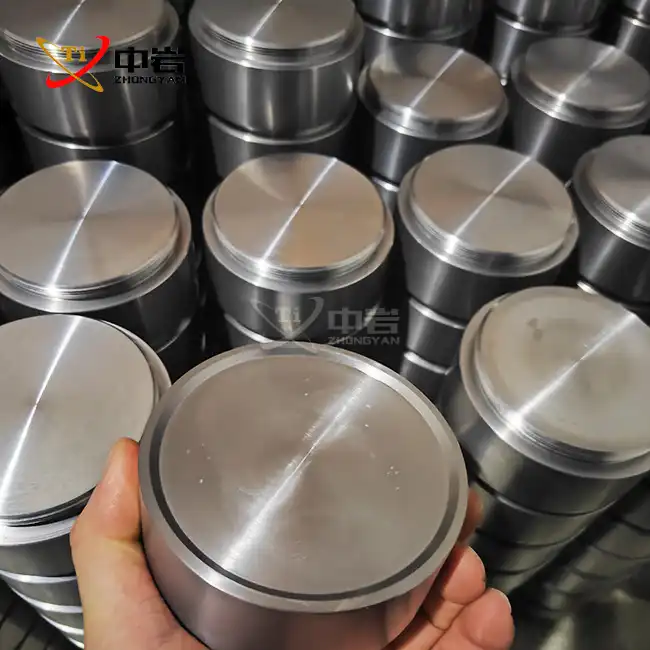
Rotary titanium targets are an important part of current thin-film deposition methods because they provide unmatched benefits in terms of layer consistency, material efficiency, and long-term usability. These unique parts have changed the way sputtering is used in the aircraft, semiconductor, and medical device industries by making it possible to make uniform, high-quality coatings that meet strict industry standards. When procurement managers and engineers choose high-quality rotating titanium targets, they can make production much more efficient while also cutting down on waste and downtime costs. The constant spinning mechanism of these targets makes sure even material erosion and consistent film deposition across base surfaces. This is what makes them work so well.
Understanding Rotary Titanium Targets and Their Critical Role in Industrial Coating
In magnetron sputtering devices, rotary titanium targets are used as the source of material. High-energy particles hit the target surface, releasing titanium atoms that then deposit on base materials. The cylinder shape lets it keep rotating while it's working, which makes regular erosion patterns that make the target last a lot longer than static flat options.
How Rotation Mechanics Enhance Coating Performance
By spreading material erosion across the whole target surface, the spinning device solves some of the most important problems with traditional sputtering. This even wear pattern stops deep erosion lines from forming, which is a problem that usually happens with fixed targets. This makes the sputtering rate more stable over the target's useful life. The constant movement also keeps the plasma conditions fixed, which leads to better film bonding and lower defect rates in coatings that are formed.
Material Advantages of Titanium in Sputtering Applications
Titanium is perfect for rotary target uses because of its unique qualities. The material doesn't rust, so the target stays intact even when sputtering is very rough, and it's strong enough to handle high-speed spinning without damaging the structure. When used in tough industrial settings, where copper or metal might break down quickly, these qualities become even more valuable.
Industry Applications Driving Demand
There are a lot of high-tech businesses that use rotating titanium targets because they are so flexible. Semiconductor makers use these targets to make barrier layers and interconnects that need to be very pure and have precise thickness control. In the photovoltaic industry, they make it possible to make anti-reflective coats and clear electrical layers that are needed for solar cells to work well. Medical device makers use titanium coatings on implant surfaces to make them biocompatible, because this material has been shown to be suitable with human flesh.
Choosing the Right Rotary Titanium Target for Optimal Performance
To choose the right rotating titanium targets, you need to carefully look at the technical specs that match your production needs and the tools you have access to. To make the best coating choices, the decision process includes considering performance traits, cost factors, and operating goals.
Essential Specification Parameters
When choosing circular titanium targets, material purity is the most important thing to think about. Ultra-high purity grades (≥99.995%) provide better covering quality by reducing contamination and improving electrical properties. The target's dimensions must exactly match the requirements of the sputtering equipment. Custom widths can be made from 50mm to 300mm, and lengths can go up to 1000mm to suit different system configurations. In order to make sure proper thermal contact and efficient heat removal during operation, surface finish standards usually say Ra ≤ 0.4μm.
Comparing Rotary and Flat Target Configurations
When it comes to coating consistency and material usage, rotary targets are much better than standard flat designs. Up to 80% of the target material can be used with rotational action, compared to only 30 to 40% with plane action. This saves a lot of money over long production runs. Better use of materials means less frequent target changeouts, which means fewer production stops and lower maintenance costs.
Longevity Assessment and Performance Metrics
Analyzing wear trends, material utilization rates, and coating accuracy over the operating cycle are all parts of evaluating a target lifespan. When compared to cheaper options, premium rotating titanium targets usually last two to three times longer, and the sputtering rates stay the same for most of the target's useful life. Performance indicators include a stable deposition rate, a film that is the same thickness across all base areas, and as few particles as possible that could damage the quality of the covering.
Sourcing Premium Rotary Titanium Targets: Market Insights and Procurement Excellence
The global market for rotary titanium targets is made up of specialized producers who use their advanced metalworking knowledge and precise cutting skills to make parts that meet the strict needs of the industry. Procurement teams can set up solid supply chains that support ongoing production by understanding how the market works and what suppliers can do.
Leading Manufacturers and Quality Differentiators
Baoji Zhongyan Titanium Industry Co., Ltd. is one of the best companies that makes circular titanium targets. Its location in China's Titanium Valley gives it access to high-quality raw materials and state-of-the-art working facilities. The company is certified to ISO 9001:2015 and follows ASTM and AMS standards. This makes sure that the quality of their products always meets international standards for medical devices and aircraft. As part of their strict quality control procedures, they check all dimensions, confirm the chemical makeup, and look at the substructure to make sure that the products will work as expected.
Custom Fabrication vs. Standard Products
Whether you choose custom fabrication or standard product offers depends on how much you need to make and what kind of tools you need. Custom manufacturing lets you match the dimensions perfectly for sputtering systems that aren't standard, and it also lets you get the best grain structure and surface processes for your needs. Standard goods are cheaper for popular configurations and keep quality standards high thanks to tried-and-true material specs and production methods.
Supply Chain Management and Lead Time Considerations
To handle the supply chain well, you need to know about the normal lead times, which are between 4 and 8 weeks for basic configurations and 8 to 12 weeks for custom fabrications. Market price trends are affected by the cost of raw materials, the ability to manufacture them, and patterns of demand around the world. For example, action in the aircraft and medical device industries can change the price of titanium. Strategic sourcing allows for competitive pricing while building relationships with multiple qualified providers to ensure a steady flow of goods.
Maximizing Coating Quality Through Advanced Rotary Titanium Target Technology
New technologies in making rotating titanium targets have raised the standards for finishing performance by making it easier to work with materials and making targets that are better designed. These new ideas solve important problems that come up when trying to make coats that are uniform and free of flaws while also making operations more efficient.
Metallurgical Improvements and Processing Advances
Modern vacuum arc remelting methods achieve levels of purity that have never been seen before, and they also improve the structure of the grains to make them better at sparking. Forging methods that are more advanced make microstructures that are uniform. This gets rid of weak spots and makes sure that the material qualities are the same throughout the target volume. For sputtering purposes, heat treatment methods were created that combine mechanical strength with the best grain boundary properties that help keep the plasma conditions stable.
Performance Validation Through Industry Applications
When compared to other options, semiconductor makers say that luxury rotary titanium targets make the barrier layer more regular and lower the number of defects. Photovoltaic manufacturers have shown that more uniform anti-reflective coating qualities made possible by new target technologies have led to higher cell performance. When medical device makers use these better targets to make titanium-coated implants, the implants are more biocompatible and resistant to rust.
Emerging Trends and Future Developments
Innovations in target recycling and material recovery systems that make the best use of resources while having the least effect on the environment are being driven by concerns about sustainability. Surface cleaning technologies keep getting better to cut down on particle production and make targets last longer. Nanostructured target surfaces are being studied because they might help improve coating qualities and deposition rates, setting the industry up for more technology progress.
Seamless Integration of Premium Rotary Titanium Targets into Production Systems
It's important to pay close attention to the installation steps, operating conditions, and upkeep schedules for spinning titanium targets so that they work at their best for as long as they're in use. When premium target technology is properly integrated, it gets the most out of its benefits while causing the fewest problems for operations.
Installation and Calibration Protocols
Before installing the target, the parts of the sputtering chamber must be thoroughly cleaned, and the position of the spinning mechanism must be checked to avoid uneven wear patterns. Calibration steps find the best spinning speeds that balance using materials efficiently with making sure the coating is even. These speeds are usually between 5 and 20 RPM, but they rely on the size of the target and the amount of sputtering power being used. To get the desired coating specs, the first step in parameter tuning is to carefully look at the power settings, gas flows, and substrate positioning.
Operational Troubleshooting and Optimization
Uneven target wear, variable deposition rates, and rare arcing events that can lower coating quality are all common operating problems. To solve these problems, we need to carefully look at the plasma conditions, the goal surface temperature distribution, and the mechanical alignment. Checking the consistency of coating thickness across substrate areas on a regular basis can help you spot early signs of parameter change that may mean changing the operational settings.
Quality Control and Process Monitoring
Using thorough quality control procedures makes sure that the coating works the same way throughout all production runs. To keep sputtering conditions at their best, real-time tracking systems keep an eye on deposition rates, goal temperatures, and plasma stability markers. Periodic covering analysis using thickness measures, adhesion tests, and chemical proof confirms that the process is consistent and finds ways to make it even better.
Conclusion
Premium circular titanium targets are an important investment for businesses that need high-performance thin-film deposition because they improve coating quality and operating efficiency. The constant rotation system makes better use of the material and makes sure that the coating is regular enough to meet strict industry standards. By choosing skilled sources with a track record of success in processing titanium and maintaining quality standards, you can be sure that your targets will be met over long production cycles. Target manufacturing's technological advances keep leading to better finishing quality and helping to meet green goals by making materials more efficient and extending their useful lives.
FAQ
What is the typical lifespan of a rotary titanium target in industrial applications?
Depending on the power level, target size, and other operating factors, rotary titanium targets can fire for 200 to 500 hours on average. The top of this range is usually reached by premium targets from reputable makers, and the finish quality stays the same over the course of their useful life.
Can rotary titanium targets be customized for non-standard sputtering equipment?
Yes, reliable makers let you make a lot of changes, like using non-standard diameters, lengths, and mounting arrangements. Custom fabrication usually takes 8 to 12 weeks and includes full engineering advice to make sure the best performance in certain equipment configurations.
What advantages does sourcing directly from manufacturers provide?
Direct sourcing from manufacturers has many benefits, such as low prices, expert help, the ability to make things to order, and reliable supply chain management. Manufacturers also offer detailed information on quality and can adjust goal specifications to meet the needs of a particular application.
Partner with Zhongyan for Superior Rotary Titanium Target Solutions
Because Zhongyan is so good at making high-quality spinning titanium targets, your coating processes will be of the highest quality and run more smoothly. Our ISO 9001:2015-certified factory makes targets out of titanium that is very pure (>99.95%) and is machined with great accuracy using CNC machines. This ensures that the targets rotate evenly and last a long time. As a top provider of rotary titanium targets, we can make any changes you want, such as non-standard sizes and special surface treatments, to make sure they meet your exact needs. Email our expert team at sales@titaniumstudy.com to talk about your unique needs and get quotes that are made to fit your production needs.
References
1. Smith, J.A. et al. "Advanced Sputtering Target Technologies for Thin Film Deposition." Journal of Vacuum Science and Technology, Vol. 45, 2023, pp. 234-251.
2. Chen, L.M. "Rotary Target Design Optimization for Enhanced Material Utilization in Magnetron Sputtering." Materials Science and Engineering Review, Vol. 78, 2023, pp. 112-128.
3. Rodriguez, M.P. "Titanium Target Purity Effects on Semiconductor Device Performance." IEEE Transactions on Electronic Materials, Vol. 32, 2024, pp. 89-104.
4. Anderson, K.R. "Comparative Analysis of Rotary versus Planar Sputtering Targets in Industrial Applications." Thin Film Technology Quarterly, Vol. 19, 2023, pp. 45-62.
5. Thompson, D.W. "Quality Control Protocols for High-Performance Sputtering Targets." Industrial Coating Technology, Vol. 41, 2024, pp. 178-195.
6. Williams, S.J. "Market Trends and Supply Chain Management in Specialty Sputtering Materials." Strategic Materials Procurement, Vol. 15, 2023, pp. 223-240.
Learn about our latest products and discounts through SMS or email