- English
- French
- German
- Portuguese
- Spanish
- Russian
- Japanese
- Korean
- Arabic
- Greek
- German
- Turkish
- Italian
- Danish
- Romanian
- Indonesian
- Czech
- Afrikaans
- Swedish
- Polish
- Basque
- Catalan
- Esperanto
- Hindi
- Lao
- Albanian
- Amharic
- Armenian
- Azerbaijani
- Belarusian
- Bengali
- Bosnian
- Bulgarian
- Cebuano
- Chichewa
- Corsican
- Croatian
- Dutch
- Estonian
- Filipino
- Finnish
- Frisian
- Galician
- Georgian
- Gujarati
- Haitian
- Hausa
- Hawaiian
- Hebrew
- Hmong
- Hungarian
- Icelandic
- Igbo
- Javanese
- Kannada
- Kazakh
- Khmer
- Kurdish
- Kyrgyz
- Latin
- Latvian
- Lithuanian
- Luxembou..
- Macedonian
- Malagasy
- Malay
- Malayalam
- Maltese
- Maori
- Marathi
- Mongolian
- Burmese
- Nepali
- Norwegian
- Pashto
- Persian
- Punjabi
- Serbian
- Sesotho
- Sinhala
- Slovak
- Slovenian
- Somali
- Samoan
- Scots Gaelic
- Shona
- Sindhi
- Sundanese
- Swahili
- Tajik
- Tamil
- Telugu
- Thai
- Ukrainian
- Urdu
- Uzbek
- Vietnamese
- Welsh
- Xhosa
- Yiddish
- Yoruba
- Zulu
What Industries Rely on Custom Taper Head Titanium Bolt Most?
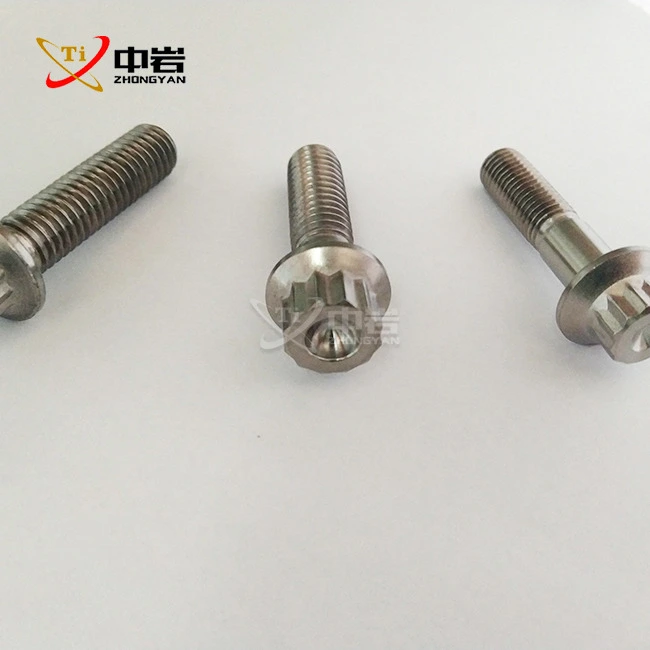
Industries demanding exceptional durability, weight reduction, and corrosion resistance depend heavily on titanium fastening solutions. Custom taper head titanium bolts have emerged as preferred components across aerospace, marine, medical, automotive, and industrial sectors where traditional steel fasteners fall short. The unique taper head geometry distributes mechanical loads efficiently, while the Grade 5 titanium alloy composition delivers tensile strength exceeding 900 MPa at only 45% the weight of steel equivalents. These precision-engineered fasteners meet stringent ASTM and AMS certification requirements, making them indispensable in applications where operational safety and longevity cannot be compromised.
Understanding Custom Taper Head Titanium Bolts and Their Unique Properties
Custom taper head titanium bolts represent a specialised category of precision hardware engineered for applications requiring flush-mount installations and optimised stress distribution. The defining characteristic lies in their angled head profile, typically machined at 82° or 100° countersink angles, which enables smooth surface integration while minimising aerodynamic drag and weight penalties. When manufactured from Grade 5 titanium alloy (Ti-6Al-4V), these bolts inherit the material's passive oxide layer that forms instantaneously upon oxygen exposure. This TiO₂ film regenerates automatically when scratched, providing permanent corrosion immunity even in chloride-rich environments where stainless steel fails.
The manufacturing process at our Baoji facility combines forging and CNC precision machining to achieve dimensional tolerances within ±0.05mm. We utilise rolled thread technology rather than cut threading because the compression process maintains grain flow continuity, resulting in 30% superior fatigue resistance compared to cut threads. Available in sizes from M5 to M20 with thread length options spanning 12mm to 150mm, our bolts accommodate both fine and coarse thread specifications. The material's density of 4.43 g/cm³ translates to substantial weight savings in assemblies requiring hundreds of fasteners, directly impacting fuel efficiency in transportation applications and payload capacity in aerospace structures.
Mechanical performance stands as another critical differentiator. Our taper head bolts have a tensile strength of 900 to 1100 MPa and a yield strength of about 880 MPa, which is similar to Class 10.9 steel, and they also stay non-magnetic, which is important for electronics and medical imaging equipment. The hardness range of 33-37 HRC ensures durability without brittleness. Optional anodised surface treatments improve wear resistance and allow colour-coding for assembly verification, which our motorsport clients often use to track torque specifications.
Top Industries Relying on Custom Taper Head Titanium Bolts
Aerospace and Defense Applications
Aerospace engineering represents the largest consumer of titanium taper head fasteners due to regulatory mandates and performance imperatives. Aircraft manufacturers utilise these bolts throughout airframe construction, particularly in wing spar attachments, fuselage panels, and engine pylon mounts. The weight reduction directly correlates with fuel consumption—every kilogram saved in structural components translates to measurable operational cost reductions over an aircraft's service life. Commercial aviation standards require fasteners to withstand cyclic loading through thousands of pressurisation cycles while maintaining integrity across temperature ranges from -54°C at cruise altitude to elevated ground temperatures.
Military applications impose even stricter requirements. Defence contractors specify titanium fasteners for stealth aircraft, where non-magnetic properties prevent interference with avionics systems. The low thermal expansion coefficient (8.6 × 10⁻⁶/°C) maintains joint integrity when composite materials with differing expansion rates are joined. Our fasteners meet AMS specifications with full material traceability documentation, a non-negotiable requirement for aerospace procurement.
Marine and Offshore Engineering
Saltwater environments represent the harshest corrosion challenge for mechanical fasteners. Marine engineers specify titanium bolts for propeller shaft assemblies, heat exchanger installations, and desalination equipment where constant seawater exposure would rapidly deteriorate stainless steel. The passive oxide layer on titanium remains stable in chloride concentrations that cause pitting corrosion in conventional materials. Subsea equipment operating at depth relies on bolts that maintain clamping force despite pressure differentials and galvanic corrosion risks when joining dissimilar metals.
Shipbuilding yards increasingly adopt titanium fasteners for superstructure components and deck fittings where weight savings improve vessel stability and fuel efficiency. Racing yacht constructors particularly value the combination of corrosion immunity and strength-to-weight ratio, as competitive advantages are measured in seconds over multi-day races. Our thread length customisation from 12 mm to 150 mm accommodates varying laminate thicknesses in composite hull construction.
Automotive and Motorsport Performance
High-performance automotive applications exploit titanium's mechanical properties in weight-critical areas. Racing teams install taper head bolts in suspension components, brake calliper mounts, and wheel assemblies where unsprung weight directly affects handling dynamics. The fatigue resistance proves essential in components experiencing millions of load cycles under variable stress conditions. Engine builders specify titanium fasteners for connecting rod assemblies and accessory drive systems where rotational mass reduction enables higher rev limits.
The taper head design serves both aesthetic and functional purposes in visible applications: the flush-mounted profile complements aerodynamic bodywork, while the anodised colour options support brand identity. Our OEM services accommodate custom head markings and packaging requirements that motorsport suppliers demand for brand differentiation.
Medical and Dental Equipment
Biocompatibility makes titanium the material of choice for implantable medical devices and surgical instruments. Orthopaedic surgeons rely on titanium fasteners for bone plate fixation and spinal fusion hardware, where the body's acceptance of the material prevents rejection responses. The non-magnetic characteristic allows patients with titanium implants to undergo MRI procedures safely, unlike ferromagnetic steel alternatives.
Dental laboratories utilise precision titanium bolts in prosthetic frameworks and implant abutments. The material's osseointegration properties—its ability to fuse with bone tissue—combined with corrosion resistance to bodily fluids, make it irreplaceable in permanent implant applications. Our manufacturing quality control includes surface roughness verification to specified Ra values, critical for tissue integration success rates.
Renewable Energy and Industrial Machinery
Wind turbine manufacturers install titanium fasteners in blade root connections and nacelle assemblies exposed to constant weathering. The bolts must endure cyclic loading from rotational forces while resisting corrosion from atmospheric moisture and industrial pollutants. Solar panel mounting systems benefit from titanium's UV stability and non-corrosive properties that ensure decades of maintenance-free operation.
Chemical processing plants specify custom taper head titanium bolts for reactor vessel closures and piping flanges handling corrosive media. The material's resistance to acids, bases, and organic solvents prevents contamination and catastrophic failure in process equipment. Our ability to provide custom dimensions ensures compatibility with specialised equipment designs that deviate from standard fastener sizes.
Comparing Custom Taper Head Titanium Bolts with Alternative Materials
Material selection profoundly impacts the total cost of ownership beyond the initial purchase price. Stainless steel bolts offer moderate corrosion resistance at lower material costs, yet their density creates weight penalties and susceptibility to stress corrosion cracking in chloride environments. Grade 316 stainless steel, commonly specified for marine use, still exhibits pitting corrosion in extended saltwater immersion, where titanium remains unaffected. The 60% weight differential between titanium and stainless steel accumulates significantly in assemblies using hundreds of fasteners.
Carbon steel fasteners provide high strength and low cost but require protective coatings that add thickness, affecting tolerance stack-ups. Coating degradation from mechanical wear or environmental exposure initiates rapid corrosion, necessitating frequent inspection and replacement cycles. Lifecycle cost analysis consistently favours titanium in applications where maintenance access proves difficult or downtime is expensive.
The taper head geometry itself offers advantages over hex head or button head designs. The countersunk profile eliminates protrusion above mating surfaces, reducing aerodynamic drag and preventing snagging hazards. Load distribution occurs across the tapered bearing surface rather than concentrating at head edges, reducing stress concentration factors. Assembly ergonomics improve through the self-centring action during installation, which is particularly valuable in blind fastener applications.
Aluminium bolts provide weight advantages but lack sufficient strength for primary structural applications. Titanium bridges this gap, providing strength comparable to steel while weighing close to aluminium. The non-galling properties of titanium, when proper anti-seize compounds are applied, prevent the cold-welding issues that plague aluminium fasteners during disassembly.
How to Procure and Choose the Right Custom Taper Head Titanium Bolt?
Selecting an appropriate supplier requires evaluating multiple factors beyond price quotations. Manufacturing capability verification should confirm CNC machining precision, thread rolling equipment, and heat treatment facilities necessary for consistent quality. Our in-house metallurgical laboratory performs spectroscopic analysis on incoming raw materials, ensuring composition meets ASTM B348 specifications before machining begins. Dimensional inspection protocols using coordinate measuring machines validate conformance to drawing tolerances.
Certification documentation separates qualified suppliers from opportunistic vendors. Material test reports tracing the titanium ingot origin through processing stages provide the audit trail that aerospace and medical procurement departments mandate. Our quality management system maintains ISO 9001:2015 certification with procedures covering calibration schedules, non-conformance handling, and corrective action tracking. We provide Certificate of Conformance documentation with each shipment, including mechanical test data and chemical composition verification.
Lead time management impacts project schedules significantly. Standard configurations from our inventory ship within one week, while custom dimensions requiring tooling setup typically require three to five weeks, depending on complexity. Our flexible production capabilities accommodate prototype quantities for testing validation alongside high-volume production runs reaching tens of thousands of units. Minimum order quantities vary by specification—standard sizes often have low MOQs, while exotic dimensions may require larger commitments to justify setup costs.
Communication channels matter when technical questions arise during design phases. Our engineering support team assists with material selection guidance, comparing Grade 5 titanium against commercially pure grades for specific environmental conditions. We collaborate on value engineering opportunities, suggesting design modifications that reduce manufacturing complexity without compromising performance. Technical drawings submitted through sales@titaniumstudy.com receive rapid review with feedback on manufacturability and cost optimisation opportunities.
Price transparency builds procurement confidence. We provide itemised quotations separating material costs, machining operations, surface treatments, and packaging expenses. Volume pricing tiers incentivise larger orders, while rush processing fees for expedited delivery remain clearly disclosed. Payment terms accommodate international trade practices with letter of credit acceptance and established account terms for qualified repeat customers.
Future Outlook and Trends in the Use of Custom Taper Head Titanium Bolts
Titanium alloy development continues to advance with near-beta compositions offering improved formability and damage tolerance. These next-generation materials may enable cold-heading processes that reduce manufacturing costs for high-volume fastener production. Additive manufacturing experiments explore direct metal laser sintering of custom taper head titanium bolts with integrated features like internal cooling passages or embedded sensors, though CNC machining remains superior for dimensional accuracy and surface finish in current production.
Sustainability initiatives drive increased titanium adoption as lifecycle environmental impact assessments favour durable materials, reducing replacement frequency. Titanium's infinite recyclability without property degradation aligns with circular economy principles. The aerospace industry's commitment to carbon emission reduction amplifies demand for lightweight components that directly improve fuel efficiency metrics. Regulatory pressures around chemical resistance and contamination prevention in pharmaceutical and food processing equipment expand titanium's market share beyond traditional sectors.
Digital manufacturing integration transforms custom fastener procurement. Our implementation of automated quoting systems enables instant pricing feedback on uploaded CAD models, accelerating the design iteration cycle. Statistical process control data accessible through customer portals provides real-time visibility into production status and quality metrics. Blockchain-based traceability systems under development will offer immutable records of material provenance, addressing counterfeit concerns in critical supply chains.
Electric vehicle proliferation creates new opportunities for titanium fasteners in battery pack assemblies and motor housings, where weight reduction extends driving range. The non-magnetic property prevents interference with electrical systems while corrosion resistance addresses concerns about coolant exposure. Hydrogen fuel cell technology introduces demanding environments combining corrosion challenges with high-pressure containment requirements, ideally suited to titanium's capabilities.
Conclusion
The specialised combination of strength, corrosion resistance, and weight efficiency positions titanium taper head fasteners as irreplaceable components across demanding industries. From aerospace structures enduring extreme temperature cycles to medical implants requiring biocompatibility, these precision-engineered bolts deliver performance that conventional materials cannot match. Understanding material properties, comparing alternatives systematically, and partnering with qualified manufacturers ensure procurement decisions optimise both technical requirements and total cost of ownership. As manufacturing technologies advance and new applications emerge, titanium fasteners will continue expanding into industries, recognising that upfront investment in superior materials yields substantial long-term operational advantages and safety margins.
FAQ
What advantages do taper head bolts provide over standard hex head designs?
The countersunk taper profile creates a flush-mounted installation that eliminates aerodynamic drag and snag hazards while distributing clamping loads across a broader bearing surface. This geometry reduces stress concentration compared to hex heads and accommodates streamlined assembly aesthetics in consumer-facing applications. The self-centring action during installation improves ergonomics, which is particularly valuable in blind fastener scenarios.
How do you prevent thread galling when installing titanium bolts?
Titanium's tendency toward galling requires applying anti-seize compounds containing molybdenum disulphide or opting for DLC coatings during customisation. Controlled installation torque using calibrated tools and avoiding thread cross-threading through careful alignment practices minimises friction-induced cold welding. Our technical documentation includes recommended torque specifications and lubricant selections for each bolt size and application.
Can anodised surface treatments affect dimensional tolerances?
Anodising produces an oxide layer that is typically 5-25 microns thick, depending on the process parameters. We account for this growth during machining by reducing base dimensions proportionally, ensuring finished parts meet specified tolerances post-treatment. Colour anodising enables visual coding for assembly verification without the thickness penalties of paint coatings that could interfere with close-tolerance fits.
Partner with Zhongyan for Premium Titanium Fastening Solutions
Zhongyan operates from China's Titanium Valley in Baoji, leveraging regional material resources and advanced processing capabilities to manufacture precision fasteners meeting the most stringent international standards. Our custom taper head titanium bolts serve aerospace, marine, medical, and motorsport industries through rigorous quality control and flexible OEM services. With over 15 years of titanium processing expertise, state-of-the-art CNC machining centres, and in-house metallurgical testing facilities, we deliver certified products with complete traceability documentation.
Whether your project demands prototype quantities for validation testing or high-volume production runs with custom packaging, our engineering team provides dedicated support throughout the procurement process. Contact our specialists at sales@titaniumstudy.com to discuss your specific requirements, request material certifications, or arrange sample shipments. Discover why procurement managers across global manufacturing operations trust Zhongyan as their preferred custom taper head titanium bolt supplier for applications where failure is not an option.
References
1. Boyer, R., Welsch, G., & Collings, E.W. (1994). Materials Properties Handbook: Titanium Alloys. ASM International, Materials Park, Ohio.
2. Donachie, M.J. (2000). Titanium: A Technical Guide, 2nd Edition. ASM International, Materials Park, Ohio.
3. Peters, M., Kumpfert, J., Ward, C.H., & Leyens, C. (2003). Titanium Alloys for Aerospace Applications. Advanced Engineering Materials, 5(6), 419-427.
4. Schutz, R.W. & Watkins, H.B. (1998). Recent developments in the application in the energy industry. Materials Science and Engineering: A, 243(1-2), 305-315.
5. Veiga, C., Davim, J.P., & Loureiro, A.J.R. (2012). Properties and applications of titanium alloys: A brief review. Reviews on Advanced Materials Science, 32(2), 133-148.
6. Bania, P.J. (1994). Beta titanium alloys and their role in the titanium industry. Journal of the Minerals, Metals and Materials Society, 46(7), 16-19.
Learn about our latest products and discounts through SMS or email