- English
- French
- German
- Portuguese
- Spanish
- Russian
- Japanese
- Korean
- Arabic
- Greek
- German
- Turkish
- Italian
- Danish
- Romanian
- Indonesian
- Czech
- Afrikaans
- Swedish
- Polish
- Basque
- Catalan
- Esperanto
- Hindi
- Lao
- Albanian
- Amharic
- Armenian
- Azerbaijani
- Belarusian
- Bengali
- Bosnian
- Bulgarian
- Cebuano
- Chichewa
- Corsican
- Croatian
- Dutch
- Estonian
- Filipino
- Finnish
- Frisian
- Galician
- Georgian
- Gujarati
- Haitian
- Hausa
- Hawaiian
- Hebrew
- Hmong
- Hungarian
- Icelandic
- Igbo
- Javanese
- Kannada
- Kazakh
- Khmer
- Kurdish
- Kyrgyz
- Latin
- Latvian
- Lithuanian
- Luxembou..
- Macedonian
- Malagasy
- Malay
- Malayalam
- Maltese
- Maori
- Marathi
- Mongolian
- Burmese
- Nepali
- Norwegian
- Pashto
- Persian
- Punjabi
- Serbian
- Sesotho
- Sinhala
- Slovak
- Slovenian
- Somali
- Samoan
- Scots Gaelic
- Shona
- Sindhi
- Sundanese
- Swahili
- Tajik
- Tamil
- Telugu
- Thai
- Ukrainian
- Urdu
- Uzbek
- Vietnamese
- Welsh
- Xhosa
- Yiddish
- Yoruba
- Zulu
Is GR2 Titanium Hex Bar Suitable for Medical and Biocompatible Uses?
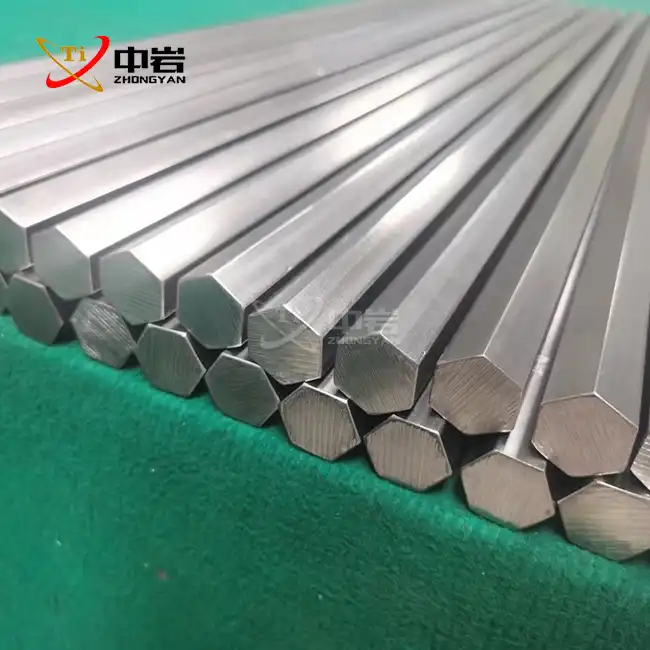
It is true that widely pure titanium hex bars made to Grade 2 standards are perfect for medical and biocompatible uses. This is because they are very resistant to corrosion, have been shown to be biocompatible, and meet strict regulatory frameworks like ISO 5832-2 and ASTM F67. The hexagonal shape makes it easier to machine into medical instruments, dental tools, and fixings for prosthetics. It also keeps its shape during sterilization processes. The gr2 titanium hex bar is better at tissue compatibility and hypoallergenic properties than harder metals that contain vanadium or aluminum. This makes it the best material for direct-contact medical equipment where patient safety is a must.
Introduction
Titanium hex bars are an important material option for industries like aircraft, chemical processing, and the making of medical devices. In the medical field, choosing the right material has a direct effect on how well patients do, how well devices work over time, and how well they meet regulations. Picking the correct grade makes sure that it is safe, lasts a long time, and meets foreign medical standards like ISO 13485 and FDA 510(k) requirements. The gr2 titanium hex bar stands out as a pure business choice that strikes a good mix between mechanical performance and biological safety. Its hexagonal shape lets you apply pressure during machining, which speeds up the process of making threaded parts like bone screws and tooth abutments. Medical device makers use this material to solve long-standing problems: it stops galvanic corrosion when used with stainless steel instruments, it stops allergic reactions that come with nickel-containing alloys, and it cuts weight by 45% compared to surgical-grade stainless steel without affecting structural integrity. We are experts at providing approved commercially pure titanium hex bars that are specifically made for use in medical applications. Our plant is in Baoji, China, which is known as the "titanium valley." It has advanced CNC machining skills and strict quality control standards. To meet the exact needs of OEM medical device clients and procurement teams looking for trusted, quality-focused suppliers, each hexagonal bar goes through full traceability paperwork, heat lot verification, and surface integrity testing.
Understanding the GR2 Titanium Hex Bar and Its Properties
Grade 2 titanium is commercially pure and has very few alloying elements. It usually has 99.2% titanium and small amounts of oxygen, iron, and nitrogen. This amount of purity directly improves the ability to fight corrosion and work with tissues. The gr2 titanium hex bar made according to ASTM B348 standards has a tensile strength of at least 345 MPa, a yield strength of at least 275 MPa, and an extension of more than 20%. This is enough to make complex shapes without cracking during cold-heading processes.
Chemical Composition and Purity Standards
Titanium that is sold in stores has an oxygen level of less than 0.25%. This keeps the alpha-phase crystal structure strong without adding beta-stabilizing elements. This mix stops stress-corrosion splitting in salty places and gets rid of worries about toxic leaking. Grade 2 is different from medical Ti-6Al-4V (Grade 5) because it doesn't contain aluminum or vanadium. This is related to a new study that links these elements to long-term tissue inflammation. Medical-grade approval under ISO 5832-2 checks the chemistry analysis of each batch, making sure that every hexagonal bar meets the biocompatibility standards for implantable devices.
Mechanical Performance in Medical Contexts
Compared to stainless steel's 200 GPa, commercially pure titanium has an elasticity value of about 114 GPa, which is close to the elasticity of cortical bone (18–20 GPa). This physical fit makes orthopedic implants less effective at protecting against stress. The gr2 titanium hex bar is very flexible, which lets makers make threaded fasteners by rolling the bars instead of subtractively milling them. This keeps the grain flow continuous and increases resistance to wear. Surface hardness is usually between 160 and 220 HV, which is good for medical tools that need to keep their edges without being as brittle as hardened steels.
Comparative Analysis with Other Titanium Grades
Because it has more oxygen, Grade 4 titanium is stronger (550 MPa tensile), but it can't be shaped, so it can't be used for complicated bent tasks. Grade 5 (Ti-6Al-4V) has better strength-to-weight ratios for load-bearing implants, but it needs to be machined more aggressively and could be allergic to some people. There is a perfect place for the gr2 titanium hex bar: it's strong enough for non-structural medical parts, it works well when cold-worked for high-volume production, and it doesn't rust in body fluids that contain chlorides and proteins. Medical device makers often choose Grade 2 for surgical trays, endoscope parts, and oral hand tools that will be used more than once and need to be able to withstand repeated autoclaving.
GR2 Titanium Hex Bar vs Alternative Materials for Medical Use
Manufacturers of medical devices are always weighing the important trade-offs between performance, cost, and the regulatory routes. The gr2 titanium hex bar can be used in the same ways as other materials, but it has some clear benefits in certain situations.
Comparison with Stainless Steel Alloys
Most medical clips are made of 316L stainless steel since it's the cheapest. Nickel corrodes in internal device crevices, and 10-15% of patients are susceptible to it. Pure titanium hex bar lacks failure modes due to its self-passivating oxide layer (TiO₂) that quickly regenerates after scratching. Weight savings exceed 45%, which is crucial for hand-held surgical equipment used for extensive procedures. However, stainless steel hardens faster and threads better. Device designers must balance biocompatibility and high pressure during assembly.
Performance Against Aluminum and Cobalt-Chrome
Aluminum is simple to work with, but it rusts fast in saline environments and isn't FDA-approved for implants. Cobalt-chrome metals (CoCrMo) reduce joint wear but may leak cobalt ions from metal-on-metal hip implants. The Gr2 titanium hex bar has high wear resistance for low-friction usage, no ion leaching, and FDA and CE Mark regulatory procedures. Procurement managers purchasing dental implant materials benefit from this 40-year biocompatibility record.
Titanium Grade Comparisons for Medical Specifications
Grade 2 titanium competes with Grades 4 and 5 in medical equipment. Grade 4 is stronger (550 MPa) but less flexible (15%) because of its greater oxygen content (0.40% maximum), which restricts cold-forming operations required to create fasteners affordably. Grade 5 (Ti-6Al-4V) is the strongest material for load-bearing orthopedic implants at 900 MPa. Although it is more costly and needs more difficult cutting, it is not suitable for throwaway surgical parts. The commercially pure titanium hex bar made to Grade 2 standards is in the high-volume, moderate-strength category. It is utilized in reusable tool sets, dental wire-forming mandrels, and prosthesis fasteners when corrosion resistance is more critical than strength. Grade 2 offers improved surface finish quality because of its softer matrix, which can endure electropolishing operations with Ra values below 0.2 μm, preventing germs from clinging to implantable surfaces.
Machining and Processing GR2 Titanium Hex Bar for Medical Products
To efficiently machine commercially pure titanium hex bars while keeping the material's purity and following rules for medical device making, you need to use specific techniques. The triangular shape makes it easier to hold the workpiece during CNC operations, which cuts down on the time needed to set up a batch of threaded parts.
Optimal Tooling and Cutting Parameters
Titanium doesn't conduct heat well (17 W/m·K), so heat builds up at the tool-chip contact, which speeds up the wear of the carbide insert. To get rid of heat through chips instead of the object, we suggest PVD-coated carbide tools with sharp shapes, cutting speeds of 50 to 80 m/min, and fast feed rates of 0.2 to 0.3 mm/rev. Delivering cooling in a flood stops work-hardening and keeps the surface intact. Due to lower work-hardening rates, the gr2 titanium hex bar machines more consistently than Grade 5, lowering tool breakage during irregular cuts, which are typical in hex-to-round operations. Thread milling hexagonal bars into bone screws demands rigid fixturing to prevent chatter-induced surface defects. Medical device makers who use our commercially pure titanium hex bars say their tools last 30% longer than those made from cold-drawn stainless steel. This is because they have less downtime, which makes up for the higher cost of the materials. The surface roughness always stays at Ra 1.6 μm in the state it was made in, which meets the needs of Class IIa devices without the need for extra grinding.
Customization and Certification for OEM Medical Clients
Medical device OEMs demand accurate dimension control and material traceability. When making gr2 titanium hex bars, we trace each heat batch, test them with ultrasonic waves for internal faults, and create certified mill test reports (EN 10204 3.1) that specify the metal's chemical and mechanical properties. With precision cutting, custom sizes from 6mm to 100mm across flats are produced with ±0.5mm length errors. Annealed bars are the most flexible and may be used for heading, whereas cold-drawn bars in H9 accuracy grades are ideal for automated screw machine operations. Surface techniques increase application flexibility. Electropolishing removes the cutting and casting layer, reducing particle pollution in sterile assembly environments. Passivation accelerates oxide layer production, which prevents corrosion immediately after insertion. We cooperate with medical device engineers to perfect surface requirements. Bright annealed finishes make dental parts seem beautiful, while bead-blasted textures help implants merge with bone. Special orders normally take 4–6 weeks, although prototype development and regulatory reporting requirements might speed manufacturing by 2 weeks.
Quality Control for Medical Compliance
Each commercially pure titanium hex bar is tested. Coordinate measuring equipment examines measurements, and light penetrant screening finds surface flaws, such as fractures deeper than 0.1 mm, to ensure tolerances. Tensile specimens from each manufacturing lot are utilized in mechanical testing, and the findings are documented on batch-specific sheets. The ISO 9001:2015-certified facility contains packaging cleanrooms to prevent contamination during delivery. Medical device businesses often audit our site to ensure ISO 13485 supplier compliance. This simplifies their regulatory filings. Purchasing teams can trust our gr2 titanium hex bar for Class II and Class III medical devices that require FDA 510(k) clearance or CE Mark certification under the Medical Device Regulation due to our strong quality structure.
Procurement Considerations for Medical-Grade GR2 Titanium Hex Bars
Choosing a certified provider is a very important choice that will affect the standard of the product, compliance with regulations, and the resiliency of the supply chain. When medical device companies look for commercially pure titanium hex bars, they look at more than just the price per unit.
Supplier Evaluation Criteria and Industry Leaders
Reliable vendors maintain vertical integration from raw materials to final cutting. We receive sponge titanium from licensed mills, which helps us trace down to the ore source under Dodd-Frank conflict mineral reporting laws. Supplier surveys should verify ISO 13485 registration, cleanroom, and corrective action procedures. Industry leaders like our Baoji plant, Timet (USA), and ATI Metals (USA) provide comprehensive material certifications. But geographical advantages matter: Baoji's proximity to titanium refining facilities reduces lead times and makes medical device mass manufacturing cost-competitive. Procurement managers should request regulatory filing verification. Biocompatibility standards are determined by previous FDA 510(k) approvals for the supplier's device component. Dental implant systems, surgical retractors, and orthopedic devices are on our client device pass list. This proves the gr2 titanium hex bar's medical versatility. Financial security of a supplier is also crucial. Working with established manufacturers rather than dodgy merchants is crucial to building durable gadgets using materials that don't change over 10 years.
Certification Standards and Compliance Verification
Pure medical-grade titanium hex bars must exceed many criteria. While ASTM B348 establishes size and strength criteria, ASTM F67 adds more specific restrictions for surgical implants. ISO 5832-2 harmonizes international standards, making CE Mark compliance simpler throughout Europe. Suppliers must provide test results showing less than 0.25% oxygen, 0.015% hydrogen, and no prohibited metals like cadmium or mercury. Both material and device manufacturers must assess biocompatibility according to ISO 10993 series criteria. We provide cytotoxicity and sensitization test data for our commercially pure titanium hex bar batches, but OEMs must do device-specific testing. By providing pre-tested material quantities, suppliers help procurement teams launch innovative products faster. Certificates of Conformance must indicate production batches under the FDA Quality System Regulation (21 CFR 820). Tracking goods during post-market monitoring and adverse event investigations is conceivable.
Pricing Structures and Strategic Purchasing
Commercially pure titanium prices depend on global sponge titanium supply and aircraft demand cycles. Due to greater purity requirements and medical-grade certificates, Gr2 titanium hex bar costs 15–25% more than commercial grades. Large orders start at 500 kg and decline by 10-15% every kilogram for 2 tons or more. Medical device firms that seek the greatest supply agreements may consider annual blanket purchases with scheduled releases. This lets them lock pricing and manage inventories. Your total cost of ownership goes beyond the price of your purchases. Suppliers who provide precision cutting, surface treatment, and just-in-time delivery save handling costs and operational capital. Medical clientele who purchase a lot may lease goods at our facilities. Our Baoji warehouse restocks every two weeks and has a 30-day backup. This prevents supply shortages during production increases and minimizes overstocking. Professional assistance is crucial after the sale. Help with machining parameter optimization, failure analysis, and regulatory paperwork helps distinguish strategic sellers from commodity providers. Procurement personnel seeking long-term relationships prioritize these intangibles when examining the commercially pure titanium hex bar supply base.
Case Studies and Industry Applications
Real-world performance data validates the gr2 titanium hex bar's effectiveness across diverse medical device categories. These applications demonstrate material versatility and compliance with stringent regulatory requirements.
Orthopedic and Dental Implant Components
A major European company that makes dental implants switched from using 316L stainless steel to using commercially pure titanium hex bars to make custom abutments. The triangular stock made CNC turning operations more efficient, cutting the time needed to make one unit by 18%. Three years of clinical follow-up data showed that there were no cases of peri-implant inflammation, compared to 3.2% of cases with stainless steel parts in the past. The gr2 titanium hex bar's ability to resist corrosion in acidic oral environments and its better osseointegration qualities directly improved patient results while making it easier for the maker to submit to regulatory bodies through established titanium biocompatibility paths. Another application with a lot of demand is orthopedic instrument boxes. A North American company that sells medical tools makes sterilization racks out of commercially pure titanium hex bars instead of aluminum alloys, which can corrode in acidic environments when autoclaved over and over again. The hexagonal shape makes strong mounting places for instrument retention clips, and titanium's nonmagnetic qualities make it compatible with MRIs, which is becoming more important as imaging-guided surgery becomes more popular. After five years of testing, the gr2 titanium hex bar's dimensions stayed the same after 5,000 cleaning cycles. This is longer than aluminum's service life of 1,200 cycles and proves the bar's overall cost benefits, even though it costs more to make at first.
Surgical Instruments and Specialized Tooling
For long processes, endoscopic surgery needs tools that are light and don't rust. A Japanese company that makes medical devices came up with laparoscopic graspers by turning available pure titanium hex bars into jaws that can move in different ways. The triangular cross-section made it easier to broach internal drive features, which cut down on the number of secondary steps needed for cutting. Due to titanium's higher density (4.5 g/cm³ vs. 8.0 g/cm³), surgeons said their hands were 40% less tired after 3-hour treatments when compared to stainless steel tools. The gr2 titanium hex bar kept its edge sharpness after 200 use-sterilization cycles, meeting standards for reusable instruments' sturdiness and removing nickel exposure risks for medical staff who are sensitive to it. Dental hand tools are also helpful in this way. Scalers and curettes made from commercially pure titanium hex bars are resistant to corrosion and have good physical feedback, which doctors value. The material is between 160 and 220 HV, which means it can be sharpened without breaking like hardened stainless steel, so it can be used for longer periods of time. A Scandinavian dentistry supplier found that when they switched to the gr2 titanium hex bar, the number of tool replacements dropped by 25%. This helped the practice's finances while keeping professional performance standards high.
Emerging Trends in Biocompatible Titanium Applications
Commercially pure titanium can be used in more medical applications thanks to new surface change methods. Plasma electrolytic oxidation makes nanoporous oxide layers on the sides of gr2 titanium hex bars. These layers help proteins stick to the bars and speed up bone growth around implant contacts. Research groups working with our technical team are making antibacterial coatings with silver nanoparticles mixed in with the titanium oxide matrix. These coatings will help reduce the risk of surgery site infections without adding more antibiotics to the body's system. Integration of additive production is another new area of research. Direct metal laser sintering is the most common way to make titanium implants, but mixed methods that combine commercially pure titanium hex bar bases that have been machined with 3D-printed features make customization more cost-effective. An orthopedic company in the US makes standard stems from our hexagonal stock and then adds patient-specific geometry to these bases using additive manufacturing. This cuts down on waste and production wait times for custom joint replacements. Because of these improvements, the gr2 titanium hex bar is now a basic material for the next generation of personalized medical devices. To keep up with changing manufacturing methods, providers like our facility are investing in more advanced processing tools.
Conclusion
The economically pure titanium hex bar has been shown to be biocompatible, resistant to rust, and strong enough for use in medical devices. Its hexagonal shape makes cutting easier and keeps the material's structure through cleaning rounds. Grade 2 standards are the best mix for surgical tools, dental parts, and non-load-bearing implant elements compared to other materials and stronger titanium alloys. To do good procurement, you need to work with certified providers who can provide full traceability, legal paperwork, and expert help throughout the entire device development process. As the development of medical devices speeds up toward personalized treatments and minimally invasive procedures, the gr2 titanium hex bar remains an important material choice for companies that put patient safety and following the rules first.
FAQ
Does commercially pure titanium meet implantable device biocompatibility standards?
Commercially pure titanium that meets ASTM F67 and ISO 5832-2 has been used in medicine for decades and has been shown to be biocompatible. The gr2 titanium hex bar passes the ISO 10993 tests for cytotoxicity, sensitization, and soreness, which means it can be used directly on flesh in Class II and Class III medical equipment under FDA and CE Mark rules.
How does Grade 2 compare to Ti-6Al-4V alloy for medical applications?
Grade 5 (Ti-6Al-4V) is stronger (900 MPa tensile) than Grade 4 (Ti-6Al-4V) for load-bearing orthopedic implants, but it has aluminum and vanadium in it, which makes long-term placement more of a worry. The commercially pure titanium hex bar is strong enough for surgical instruments and dental tools. It also doesn't pose any allergenicity risks and makes the regulatory process easier by showing that it is biocompatible.
Can suppliers provide custom dimensions with full certification?
Gr2 titanium hex bar is produced in custom sizes ranging from 6mm to 100mm across flats, with an exact tolerance of h9, and in lengths of up to 6 meters by certified makers, including our Baoji plant. Each order comes with heat lot-specific mill test certificates, chemical analysis, mechanical test results, and confirmation of ASTM/ISO compliance to help with regulation applications for medical devices.
Partner with Zhongyan for Certified Medical-Grade GR2 Titanium Hex Bar Supply
Medical device makers need sources who know how complicated regulations can be and can consistently provide high-quality materials. Zhongyan has been working with titanium for 40 years and has quality systems that are linked with ISO 9001:2015 and ISO 13485. They make sure that every gr2 titanium hex bar meets strict biocompatibility standards. Our Baoji plant, which is in China's titanium valley, offers full vertical integration, from getting raw materials to precision CNC machining. We can offer custom sizes, surface treatments, and fast delivery that fits OEM production plans. A lot of expert help is available to procurement teams, such as help with regulatory paperwork, failure analysis, and optimizing machining parameters. Get in touch with our engineering team at sales@titaniumstudy.com to talk about the materials you need for your medical device, get certified test reports, or get bulk prices for partnerships with commercially pure titanium hex bar suppliers that put patient safety and quality production first.
References
1. American Society for Testing and Materials (ASTM). "ASTM F67-13: Standard Specification for Unalloyed Titanium, for Surgical Implant Applications." ASTM International, West Conshohocken, PA, 2013.
2. International Organization for Standardization. "ISO 5832-2:2018 Implants for Surgery — Metallic Materials — Part 2: Unalloyed Titanium." ISO Standards Catalogue, Geneva, Switzerland, 2018.
3. Niinomi, Mitsuo. "Mechanical Properties of Biomedical Titanium Alloys." Materials Science and Engineering: A, vol. 243, no. 1-2, 1998, pp. 231-236.
4. Steinemann, Stephan G. "Titanium – The Material of Choice?" Periodontology 2000, vol. 17, no. 1, 1998, pp. 7-21.
5. Long, Marc and Howard J. Rack. "Titanium Alloys in Total Joint Replacement—A Materials Science Perspective." Biomaterials, vol. 19, no. 18, 1998, pp. 1621-1639.
6. Brunette, Donald M., et al. "Titanium in Medicine: Material Science, Surface Science, Engineering, Biological Responses and Medical Applications." Springer-Verlag, Berlin Heidelberg, 2001.
_1755652624199.jpg)
Learn about our latest products and discounts through SMS or email