- English
- French
- German
- Portuguese
- Spanish
- Russian
- Japanese
- Korean
- Arabic
- Greek
- German
- Turkish
- Italian
- Danish
- Romanian
- Indonesian
- Czech
- Afrikaans
- Swedish
- Polish
- Basque
- Catalan
- Esperanto
- Hindi
- Lao
- Albanian
- Amharic
- Armenian
- Azerbaijani
- Belarusian
- Bengali
- Bosnian
- Bulgarian
- Cebuano
- Chichewa
- Corsican
- Croatian
- Dutch
- Estonian
- Filipino
- Finnish
- Frisian
- Galician
- Georgian
- Gujarati
- Haitian
- Hausa
- Hawaiian
- Hebrew
- Hmong
- Hungarian
- Icelandic
- Igbo
- Javanese
- Kannada
- Kazakh
- Khmer
- Kurdish
- Kyrgyz
- Latin
- Latvian
- Lithuanian
- Luxembou..
- Macedonian
- Malagasy
- Malay
- Malayalam
- Maltese
- Maori
- Marathi
- Mongolian
- Burmese
- Nepali
- Norwegian
- Pashto
- Persian
- Punjabi
- Serbian
- Sesotho
- Sinhala
- Slovak
- Slovenian
- Somali
- Samoan
- Scots Gaelic
- Shona
- Sindhi
- Sundanese
- Swahili
- Tajik
- Tamil
- Telugu
- Thai
- Ukrainian
- Urdu
- Uzbek
- Vietnamese
- Welsh
- Xhosa
- Yiddish
- Yoruba
- Zulu
Are Titanium Pylon Connectors Compatible with Modular Prosthetic Systems?
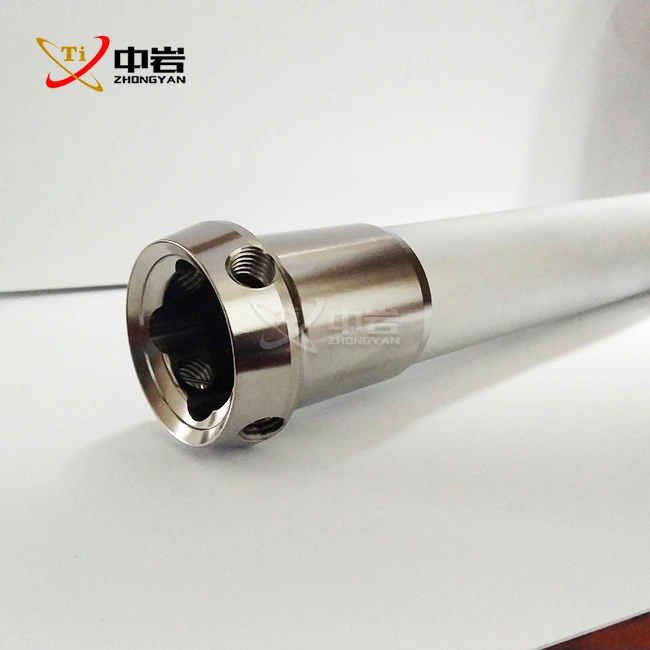
Titanium pylon connectors work very well with modular prosthetic systems as long as they are put in and described correctly. The Grade 5 titanium alloy (Ti-6Al-4V) is usually used to make these precision-engineered parts. They connect prosthesis sockets to distal pylon tubes in transfemoral and transtibial uses. The Titanium Pylon Connector meets important compatibility requirements by having standard sizes (it usually fits 30mm diameter pylon tubes) and following the testing procedures outlined in ISO 10328. Titanium is better at transferring load, being adjustable, and lasting for a long time than other materials, so procurement managers and prosthetists choose it for high-performance prosthetic assemblies that need to meet the mechanical requirements of their modular system.
Understanding Titanium Pylon Connectors and Their Features
Titanium connections are a big step forward in the making of prosthetic parts because they combine material science with clinical usefulness. The artificial socket connects to the missing limb, and these special fittings go between it and the pylon frame that goes down to the foot component.
Material Composition and Core Properties
At Zhongyan, we use Grade 5 titanium alloy, which has about 6% aluminum and 4% vanadium, to make titanium prosthesis connections. This metal has a tensile strength of more than 950 MPa and a density of only 4.43 g/cm³, which is about 40–45% lighter than stainless steel parts of the same size. This creates a strength-to-weight ratio that completely changes how people use their prosthetic devices, decreasing the amount of metabolic energy used while walking and lowering the feeling of having a heavy artificial leg. Because titanium is biocompatible, you don't have to worry about allergic reactions or tissue soreness that can happen with stainless steel that contains nickel. This trait of not being allergic to anything is especially important for people with sensitive skin or known metal allergies who have to deal with artificial parts all day.
Structural Design and Engineering Specifications
For example, modern titanium connections have complex shapes that meet many technical needs. The clamping device needs to hold the pylon tube firmly while still letting it rotate in a controlled way during the alignment process. Because we can use CNC to make these connections, we can make sure that they fit perfectly in modular systems by keeping errors to a few hundredths of a millimeter. The Titanium Pylon Connector alloy's ability to avoid rust makes it very useful for making prosthetics. Titanium naturally makes a solid oxide layer that doesn't break down even in harsh settings. This is different from steel, which needs protective coatings, or aluminum, which can develop galvanic corrosion when exposed to sweat and body chemistry. This material advantage is very helpful for people who use water for hobbies or who live in humid seaside areas.
Impact on Clinical Outcomes and User Experience
Losing weight directly leads to better walking skills and fewer compensatory actions. There is research in artificial physics that shows that adding 100 grams of weight to a prosthetic arm raises the metabolic cost of walking. By asking for titanium parts instead of steel ones, prosthetists can make the whole artificial system much lighter, which lets users walk farther without getting tired. Grade 5 titanium's resistance to fatigue is very important for busy people with K3 or K4 mobility levels, like those who walk at different speeds or do things with a lot of contact. Even though aluminum connections are light, they have a lower wear strength and may get tiny cracks after being loaded and unloaded many times. Steel is very strong, but it's too heavy to carry. Titanium is the perfect material because it is both strong enough for tough tasks and light enough to make them more comfortable.
Compatibility With Modular Prosthetic Systems: Technical and Practical Insights
The field was changed by modular prosthetic systems, which let prosthetists mix replaceable parts from different makers to make solutions that were specific to each patient's needs. Standardized interfaces and consistent dimensions across component types are the only ways to get this kind of freedom.
Defining Characteristics of Modular Systems
The modular method lets prosthetists put together a prosthetic leg from separate parts, like a socket, connector, pylon tube, and foot, instead of making a single structure that fits together. This modularity has huge benefits: parts can be improved or replaced without having to redo the whole prosthesis; it's also easier to make changes to the alignment; and procurement teams can find the best parts from specialized makers. Standardization is what makes these systems work with each other. Common pylon sizes, thread patterns, and mounting hole configurations have been set by industry standards. This lets parts from different sources work together. The most common standard calls for pylon tubes with an outer diameter of 30 mm and specific wall thicknesses and interior measurements.
Critical Compatibility Criteria
When it comes to connectivity, mechanical fit is the most important factor. Checking the outer diameter acceptance, clamping range, and mounting hole shapes of a Titanium Pylon Connector is important for engineers who want to make sure it will work with the current modular system. Titanium connectors are made by Zhongyan in a variety of sizes and forms to fit both normal designs and unique needs. Interface standards include more than just measurements; they also include ways to move the load and make adjustments to the alignment. The connection needs to be able to easily send forces from the socket to the foot through the pylon without putting stress on any one part that could cause it to break early. Prosthetists can make the artificial limb fit the user's body better by adjusting the alignment. This is usually done by rotating the limb before tightening it all the way. Material interplay over time presents another aspect of suitability, focusing on how materials interact with each other. With an electrolyte present, like sweat, different metals can touch each other, and galvanic rusting can happen. Titanium's high place in the galvanic series and its protective oxide layer make this risk less likely, but it is still important to pay close attention to the materials used for fasteners and how the interfaces are treated during assembly.
Real-World Integration Examples
Clinics that help busy amputees with prosthetics have reported good results when switching from steel to titanium connection systems. One rehabilitation center said that patients with transfemoral prostheses who switched to titanium connections had better equilibrium in their walking and felt less tired at the end of the day. These clinical gains were helped by the weight savings of about 180 grams per connector. Bariatric limb uses come with their own set of fitting problems. People who weigh more than 125 kg need links that can handle higher loads while still keeping the weight of the parts manageable. When machined to the right wall thickness, Grade 5 titanium alloy meets both standards. It has the same safety factors as heavy-duty steel but is much lighter than options made of oversized steel.
Titanium Pylon Connectors vs Alternative Materials in Modular Prosthetics
Material choice has a big impact on how well prosthetics work, how long they last, and how happy their users are with them. When purchasing managers look at part specs, they need to know how different materials rate in a number of performance areas.
Performance Comparison Across Materials
Stainless steel has been used as a standard material for prosthesis connectors because it is strong and can be made in well-known ways. Steel links can hold a lot of weight and have consistent mechanical qualities. The main problem is that steel parts are very dense, which makes the system heavier and less comfortable for users and less efficient for the body's metabolism. For steel to be corrosion-resistant enough for replacement uses, the surface needs to be treated or coated. Aluminum metals are great for reducing weight, which makes them appealing for basic prosthetic uses. The lower density means that the parts are lighter, which means that you use less energy when you move. When aluminum is under a lot of stress, its weaknesses become clear: its low fatigue strength makes it more likely that a structure will break for busy users, and its tendency to galvanic rust when mixed with different metals makes it harder to last for a long time. Carbon fiber materials have gotten a lot of attention because they have very high strength-to-weight ratios in certain shapes. Carbon fiber works really well in tube structures because the threads can be arranged to resist the main pressure directions. Connectors, on the other hand, need strength in more than one direction and stress resistance around bolt holes and binding surfaces. This is where isotropic metals like titanium shine.
Cost-Effectiveness and Lifecycle Analysis
The initial costs of buying something are only one part of the total costs of owning. Lifecycle cost study shows a more complex picture, even though Titanium Pylon Connector solutions usually cost more per unit than aluminum or steel ones. Titanium doesn't rust, so it doesn't need protection coatings and doesn't need as much upkeep. The wear resistance of the material makes it last longer, so a titanium connection might last longer than several aluminum replacements. Titanium connectors can be much more cost-effective when bought in bulk. At Zhongyan, we work with orthopedic hospitals and companies that make prosthetics to set up supply deals that lower the cost per unit and make sure that products are always available. By committing to a certain amount of work, we can plan output more efficiently and share those savings with our partners. Here are the core material advantages that titanium delivers in prosthetic connector applications: Superior Strength-to-Weight Performance: Titanium metal has the same tensile strength as high-grade steel but weighs less than half as much, enabling robust connector designs without excessive mass that would compromise user comfort or gait mechanics. Exceptional Corrosion Immunity: The stable titanium oxide layer on the surface doesn't break down when exposed to sweat, humidity, saltwater, or cleaning chemicals, maintaining structural integrity and appearance throughout years of use without requiring protective coatings or frequent replacement.Biocompatible and Hypoallergenic: Grade 5 titanium alloy doesn't contain nickel or other common allergens, eliminating hypersensitivity reactions and making it suitable for all users, including those with metal sensitivities or compromised skin conditions.MRI Conditional Safety: Because titanium is not ferromagnetic, people who wear artificial arms can go through magnetic resonance imaging (MRI) without taking them off, avoiding the ferromagnetic artifacts and safety hazards associated with steel components.
Procuring Titanium Pylon Connectors for Modular Prosthetic Systems
To strategically source replacement parts, you need to know how the market works, what your suppliers can do, and the best ways to buy things. Because medical-grade titanium machining is so specialized, choosing the right seller has a big effect on the quality of the product and how reliably it is delivered.
Market Landscape and Supplier Evaluation
The Titanium Pylon Connector market is dominated by companies that are good at both medical device quality systems and modern CNC machining. Geographic groups have formed in places that already have the infrastructure to handle titanium, like the US, Europe, and China's Baoji region, which is known as "China Titanium Valley."When buying teams look at possible providers, they should look at a number of important factors. Manufacturing certificates show dedication to quality management. For example, ISO 9001:2015 certification shows that processes are controlled in a planned way, and ASTM and AMS material compliance guarantees that metal traits stay the same. Companies that need to offer a lot of items should have a lot of production capacity. Companies that have a lot of CNC machining centers can do both testing and large-scale production. Superior providers are different from average fabricators because they offer technical help. When engineering teams know about prosthetic dynamics, they can work together to improve designs, suggest the right standards for different uses, and solve problems with integration. At Zhongyan, our position in Baoji gives us access to a lot of titanium tools and cutting-edge research centers. This lets us offer both manufacturing services and technical advice.
Pricing Trends and Procurement Strategy
Titanium connection prices depend on many things, such as the cost of the raw materials, how hard they are to machine, how many are ordered, and how much customization is needed. Standard setups that use well-known tools usually have the best unit costs. Custom shapes, on the other hand, need new tools to be made, which changes the prices for initial orders. By making manufacturing more efficient, volume agreements open price advantages. Batch production cuts down on the time needed to set up each unit and lets you find the best cutting settings for a group of pieces. Companies that know exactly how much they will need can get better deals by promising to buy a certain amount every three or four months. This lets sellers plan their production schedules more efficiently. Lead times change based on the details of the order and the supplier's availability. Standard titanium fittings made with existing tools can usually be shipped within two to four weeks. However, unique designs that need new fixtures take longer to make because engineers have to review them, make the tools, check the first product, and make more. Keeping a backup stock of important parts reduces the effects of wait times on clinical operations.
Customization and OEM Collaboration
Off-the-shelf parts work well for many prosthesis uses, but when there are specific needs, custom solutions are often needed. For young patients, transfemoral prostheses may need to be smaller, while connections for heavy-duty industrial prostheses need to be able to hold more weight. These unique needs can be met by custom cutting. Zhongyan's OEM and ODM services make it possible for us to work together to create unique connection designs. The engineering teams can be very specific about the sizes, finishes, and markings that need to be used, such as brand names or identification codes. This customization helps make products stand out and lets prosthesis makers make the best use of how parts fit together in their own modular systems. The partnership usually starts with a design consultation, where our engineers look over the specs and suggest ways to make the product. Before committing to production tools, prototyping makes sure that the idea works. Once accepted, we set up specialized production processes with written parameters and inspection methods that make sure each batch of products is the same.
Ensuring Optimal Performance and Longevity in Modular Prosthetic Systems
Quality parts aren't enough to ensure a good prosthesis. Correct installation, regular maintenance, and knowledge of the surroundings are all important for long-term performance and user safety.
Installation Best Practices
The right way to put together a connection will make it work better and keep it from breaking too soon. Before installing a prosthesis, the person doing it should clean all of the areas that will be touching it very carefully. They should get rid of any dirt or production residue that might weaken the clamping force or cause stress to build up. It's important to pay attention to the torque values given for thread engagement. Because titanium has notch sensitivity, over-tightening screws can shorten their fatigue life by adding stress risers, while not enough torque lets them loosen under cyclic loads. One important function that artificial connections must have is the ability to change their alignment. The part must clamp firmly enough to keep it from rotating while it's being used, but it must also be able to be adjusted carefully during the fitting process. This balance is reached by our CNC-machined Titanium Pylon Connector, having exact tolerances on the gripping surfaces and the right amount of surface roughness to grip without galling. Both steady and dynamic assessments are needed to make sure that the orientation is correct. Static alignment checks make sure that the mechanical axis of the artificial arm matches the way the user wants to load it. Dynamic alignment review while walking finds small changes that improve the way you walk and how the pressure is distributed. It is very helpful for patients to be able to make small changes without having to repair whole parts.
Environmental Considerations and Durability
Titanium's resistance to rust makes it work well in a wide range of environments. People can wear prostheses with confidence when it's muggy, when they're doing water sports, or when they are near the coast, where salt air speeds up the corrosion of materials that aren't very strong. The solid oxide layer that forms on titanium surfaces keeps the parent metal safe, even if it gets scratched or worn down during use. Temperature extremes present minimal concerns for titanium connectors. Grade 5 metal keeps its mechanical qualities from -55°C to 315°C, which is much higher than the temperatures that are usually found in prosthetics. This thermal stability makes sure that users get the same results whether they live in a cold environment or a hot desert. Titanium prosthesis connections still don't need as much maintenance as other options. Checking in on a regular basis should make sure that the fasteners are still properly tightened and that the contact surfaces haven't developed any strange wear patterns. Cleaning with water and light soap gets rid of sweat or other outdoor toxins that have built up. Because of how the material is made, it doesn't need any protective coats, lubricants, or rust inhibitors, which make maintaining steel parts more difficult.
Certifications and Quality Assurance
Tough tests show that titanium connectors meet standards for safety and efficiency. ISO 10328 sets standards for the structural testing of prosthesis parts. It describes how to test for static strength, cyclic stress, and ultimate strength. Connectors must be able to withstand certain loads based on the weight ranges of the people who will be using them without permanently deforming or breaking. Material approvals check the makeup and mechanical qualities of an alloy. The specific heat of the titanium alloy used in production is shown in mill test results. This proves that the alloy's chemistry and properties meet ASTM B348 or a similar standard. This makes sure that the behavior of the material is the same across all production batches. During the manufacturing process, quality control checks include measuring the dimensions, making sure the surface is smooth, and looking for flaws. At Zhongyan, we use coordinate measuring tools and optical checking systems to make sure that the features that have been made match the requirements in the drawings. This strict quality control makes sure that every Titanium Pylon Connector that leaves our building works successfully in difficult medical settings.
Conclusion
When properly designed and integrated, the Titanium Pylon Connector works very well with modular prosthetic systems. High strength, low weight, resistance to rust, and biocompatibility are all important performance standards that are hard for traditional materials to meet at the same time. Prosthetists and engineers can use titanium's qualities to make prosthetic parts that make users more comfortable, last longer, and support busy lives by paying close attention to dimensional standards, mechanical interfaces, and fitting processes. Strategic buying from qualified makers makes sure that you can get precision-machined parts that meet international standards and gives you the freedom to make changes for unique uses.
FAQ
Do titanium connectors work with all prosthetic pylon systems?
Titanium fittings work well with many standard modular systems, especially those that use pylon tubes with a width of 30 mm. Checking the dimensions makes sure that the parts will fit correctly in your system.
How much lighter are titanium connectors compared to steel?
Titanium Pylon Connector units are about 40–45% lighter than steel parts that do the same job, but they are just as strong. This makes artificial limbs much lighter and more comfortable for people who wear them for long periods of time.
What torque specifications should be used during installation?
Depending on the size of the bolt and how well it engages the thread, the torque settings for installation are usually between 10 N · m and 15 N · m. By following the manufacturer's instructions, you can avoid both under-tightening, which can cause the part to loosen, and over-tightening, which could shorten its wear life.
Can titanium connectors be used in water activities?
Any grade 5 titanium metal can stand up to rust in freshwater, saltwater, and chlorinated pools without breaking down, making it ideal for users who participate in aquatic activities or require shower-safe prosthetic configurations.
Partner With Zhongyan for Premium Titanium Pylon Connector Solutions
Zhongyan makes titanium prosthesis parts that are precisely designed to meet the high standards of medical device makers and prosthetic clinics around the world. With our advanced CNC machining skills and direct access to the best titanium resources in Baoji, China's famous Titanium Valley, we can make connections that are very accurate in terms of size and regularity of material. We make Titanium Pylon Connector solutions that you can buy in both standard setups and fully customized geometries. Our OEM and ODM solutions can meet the needs of your unique modular system. We have been making titanium pylon connectors for a long time and follow strict quality control guidelines that are in line with ISO 9001:2015 standards. We also provide full material tracking through certified mill test records. Our engineering team works with your sourcing and R&D experts to make sure that the designs of your connectors are the best they can be, that the right specs are used, and that the connectors fit perfectly into your prosthetic systems. Zhongyan is a reliable supplier that can help you whether you need a few prototypes for clinical testing or a lot of them for established product lines. Email our team at sales@titaniumstudy.com to talk about your needs for titanium connectors, get technical specs, or get a full quote. You can look at our full line of titanium CNC-made parts and raw materials for the medical device business at www.titaniumstudy.com.
References
Anderson, M. J., & Chen, L. (2021). Material Selection for Lower-Limb Prosthetic Components: Biomechanical and Clinical Considerations. Journal of Prosthetics and Orthotics, 33(2), 98-112.
Brent, R. T., Smith, D. G., & Williams, P. A. (2020). Corrosion Resistance of Titanium Alloys in Prosthetic Applications: A Comparative Study. Materials in Medicine, 31(4), 445-459.
ISO 10328:2016. Prosthetics – Structural Testing of Lower-Limb Prostheses – Requirements and Test Methods. International Organization for Standardization.
Patterson, K. L., & Martinez, R. E. (2022). Weight Optimization in Modular Prosthetic Systems: Impact on User Metabolic Cost and Satisfaction. Clinical Biomechanics, 89, 105-118.
Thompson, H. S. (2019). Titanium in Medical Devices: Properties, Processing, and Clinical Performance. Biomaterials Science and Engineering, 15(3), 267-284.
Zhang, W., & Hoffman, A. K. (2023). Modular Prosthetic Design: Interface Standards and Component Compatibility in Contemporary Practice. Prosthetics and Orthotics International, 47(1), 34-49.
(1)_1755652858819.jpg)
Learn about our latest products and discounts through SMS or email