- English
- French
- German
- Portuguese
- Spanish
- Russian
- Japanese
- Korean
- Arabic
- Greek
- German
- Turkish
- Italian
- Danish
- Romanian
- Indonesian
- Czech
- Afrikaans
- Swedish
- Polish
- Basque
- Catalan
- Esperanto
- Hindi
- Lao
- Albanian
- Amharic
- Armenian
- Azerbaijani
- Belarusian
- Bengali
- Bosnian
- Bulgarian
- Cebuano
- Chichewa
- Corsican
- Croatian
- Dutch
- Estonian
- Filipino
- Finnish
- Frisian
- Galician
- Georgian
- Gujarati
- Haitian
- Hausa
- Hawaiian
- Hebrew
- Hmong
- Hungarian
- Icelandic
- Igbo
- Javanese
- Kannada
- Kazakh
- Khmer
- Kurdish
- Kyrgyz
- Latin
- Latvian
- Lithuanian
- Luxembou..
- Macedonian
- Malagasy
- Malay
- Malayalam
- Maltese
- Maori
- Marathi
- Mongolian
- Burmese
- Nepali
- Norwegian
- Pashto
- Persian
- Punjabi
- Serbian
- Sesotho
- Sinhala
- Slovak
- Slovenian
- Somali
- Samoan
- Scots Gaelic
- Shona
- Sindhi
- Sundanese
- Swahili
- Tajik
- Tamil
- Telugu
- Thai
- Ukrainian
- Urdu
- Uzbek
- Vietnamese
- Welsh
- Xhosa
- Yiddish
- Yoruba
- Zulu
Is Custom Medical Titanium Wire Safe for Implants?
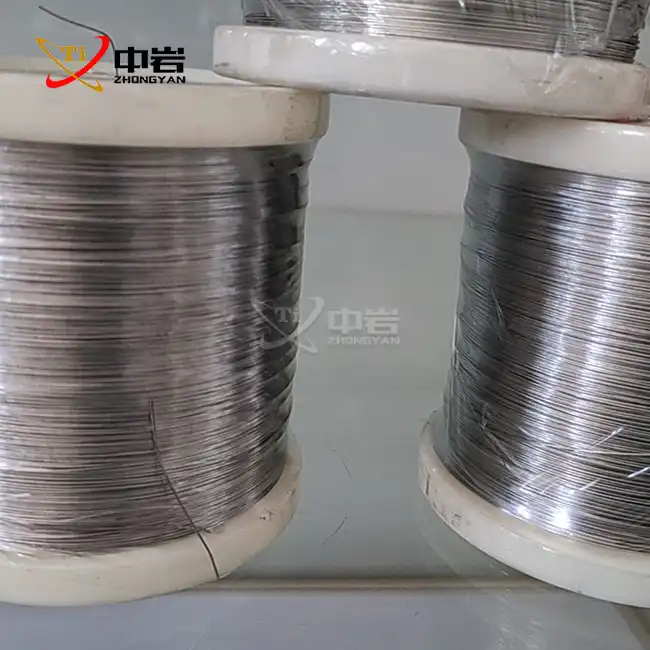
When made to the right specs and quality standards, custom medical grade titanium wire is very safe for use in implants. This biocompatible material is safer than most because it doesn't react badly with the immune system, doesn't rust, and doesn't cause any harmful effects when treated according to ASTM F136 standards. Over many years of clinical use in orthopedic, dental, and cardiovascular implant uses, medical titanium wire has been shown to be very safe. This makes it the best material for making important medical devices where patient safety must not be sacrificed.
Introduction
The medical device industry demands unwavering commitment to safety and quality, particularly when selecting materials for implantable devices. Medical-grade titanium wire represents one of the most critical components in modern implant manufacturing, directly impacting patient outcomes and device longevity. B2B procurement professionals face the complex challenge of sourcing titanium wire that meets stringent regulatory requirements while delivering consistent performance in demanding physiological environments. This complete guide talks about the safety issues that come up with using titanium wire for implants. It gives buying teams the technical information they need to make smart choices about where to get materials. We look at biocompatibility factors, regulatory compliance requirements, and the differences in material qualities between high-end medical grade choices and normal commercial alternatives. When procurement workers understand these factors, they can improve their sourcing methods while still meeting the best safety standards for implant applications.
Understanding Custom Medical Grade Titanium Wire and Its Safety for Implants
Material Composition and Manufacturing Standards
Custom medical grade titanium wire is made of precision-engineered titanium alloy strands that are made to meet the exact needs of medical devices that are implanted. Medical-grade titanium must meet strict chemical composition requirements set out in ASTM F136 (Grade 23) and ASTM F67 guidelines, which are different from normal industrial titanium. These standards require lower amounts of intermediate elements like carbon, nitrogen, and oxygen. These elements make the material much harder to break and more flexible. Vacuum melting methods are used in the production process to get rid of impurities and make sure that the wire structure has the same metallurgical qualities all the way through. Modern drawing methods allow for very accurate measurements, usually within ±0.01mm, while still preserving the biocompatibility of the material. Carefully controlled heat treatment methods are used to improve mechanical qualities without lowering biocompatibility or resistance to corrosion.
Biocompatibility and Safety Characteristics
The biocompatibility of medical titanium wire is very high because it can blend in with human flesh without causing harmful immune responses. When the material is introduced to physiological settings, its passive oxide layer forms naturally. This forms a stable barrier that stops ions from leaching and keeps the implant stable over time. When the material is being used to hold weight, this property is especially useful because mechanical stress could otherwise weaken the material. Concerns about safety go beyond basic biocompatibility and include MRI compatibility, radiopacity for imaging uses, and resistance to fatigue failure under repeated loading conditions. The low elastic stiffness of the material is very similar to that of human bone. This means that it doesn't protect against stress as well, which can cause the bone to break down around transplant sites. All of these qualities work together to help patients do better and have fewer problems with different types of implants.
Customization Capabilities for Enhanced Performance
By offering customization choices, custom medical grade titanium wire qualities can be fine-tuned to meet the needs of each implant. Different applications can use diameters ranging from 0.3 mm to 2 mm, making them suitable for everything from delicate neurostimulation devices to strong surgical fastening systems. Surface treatments such as polishing, passivation, and specialized coatings can further enhance osseointegration or reduce friction in dynamic applications.
Evaluating the Safety: Biocompatibility and Corrosion Resistance of Titanium Wire
Clinical Evidence and Regulatory Validation
There is a lot of clinical evidence from over 40 years that shows that medical titanium wire is safe to use in implants. The material is safe and effective for human implants as proven by FDA 510(k) clearances and CE marking approvals. According to ISO 10993 biological evaluation tests, the material does not have any cytotoxic, sensitizing, or mutagenic effects. This gives buying teams trust in the material's safety profile. Long-term studies that keep track of how implants work show that titanium-based devices have life rates of over 95% at 15-year follow-up times. These results show that the material is very strong and doesn't break down easily in physiological settings. It can also keep its mechanical qualities for long periods of time after being implanted. The results of tissue reaction tests always show that there is little inflammation and good tissue integration.
Corrosion Resistance in Physiological Environments
Medical titanium wire is more resistant to rust than other implant materials, such as stainless steel and cobalt-chromium metals. Electrochemical studies show that implants don't corrode at rates of less than 0.1 micrometers per year in settings that mimic body fluids. This means that they aren't useful for real-life implant uses. This strength comes from the creation of a solid titanium dioxide layer that repairs itself when it gets broken, protecting itself from corrosive attack. Galvanic rust needs to be thought about when titanium parts interact with metals that are not the same in implant systems. Titanium's noble inactive state usually puts it higher in the galvanic series rankings, which means that it doesn't rust as quickly when mixed with other implant materials. But the right choice of material and design still needs to be thought out for multi-component implant systems.
Real-World Performance in Medical Applications
Case studies from orthopedic trauma use show that custom medical grade titanium wire works well in tough medical situations. When used to fix fractures, cerclage wires are very biocompatible, causing little tissue reaction and consistent mechanical performance under physiological stress. The material's ability to spring back and its resistance to rust in the harsh mouth environment make it useful for dental orthodontics. Cardiovascular uses, like pacemaker leads and stent parts, show that titanium wire is compatible with blood and doesn't cause thrombogenic reactions. A lot of in vitro and in vivo testing has shown that the material is hemocompatible, which means it can be used in situations where it will come into contact with blood for a long time.
Comparing Custom Medical Grade Titanium Wire with Other Materials for Implants
Mechanical Property Comparisons
Medical titanium alloys are different from other implant materials because they have the best mix of strength, ductility, and wear resistance. Custom medical grade titanium wire made from Grade 23 titanium (Ti-6Al-4V ELI) has a minimum final tensile strength of 860 MPa and an elongation value greater than 10%, which means it can be bent easily for shaping and won't break easily in a brittle manner. When compared to stainless steel (200 GPa) or cobalt-chromium alloys (240 GPa), titanium alloys have a modulus of flexibility that is closer to that of cortical bone (15–20 GPa). This mechanical compatibility reduces stress shielding effects in load-bearing implant applications, helping bone grow more naturally around inserted devices. Titanium components, including custom medical grade titanium wire, also have excellent fatigue strength, allowing them to withstand millions of loading cycles without failure, which is essential for dynamic implant applications.
Cost-Benefit Analysis for Procurement
While titanium wire commands premium pricing compared to stainless steel alternatives, the total cost of ownership often favors titanium selection when considering revision surgery costs, patient results, and responsibility. Titanium is often the better choice. Titanium implants last longer, so correction surgeries aren't needed as often. This saves a lot of money over the span of the device. For manufacturing purposes, medical-grade titanium metals are very easy to work with because they don't wear down tools very quickly when they're being used to make complicated shapes. Because the material can be sterilized using gamma rays, electron beams, and steam autoclaving, it can be processed and packaged in a variety of ways without changing its features.
Application-Specific Material Selection
Titanium is strong and biocompatible, which makes it a good choice for orthopedic fixing. This is especially true for fracture repair, where the implant may need to stay in place for a long time. The radiopacity of the material makes it possible to see clearly during surgery and for tracking after surgery, and it also remains compatible with MRI for advanced imaging techniques. Titanium's good resistance to rust in the mouth and its proven ability to fuse with bone are used in dental applications. The material's springy qualities and ability to prevent lasting deformation under clinical loading conditions make it useful for orthodontic wire uses. Titanium's natural color and surface finish make it look good, which helps patients accept it in obvious uses.
Procurement Insights: How to Choose and Source Safe Custom Medical Titanium Wire
Critical Specification Requirements
To be successful in procurement, technical specs must be clearly defined and match the planned uses and regulatory requirements. ±0.01mm in diameter tolerances are the usual level of accuracy for medical uses. Tighter tolerances may be needed for more specific uses. Specifications for the surface finish should take into account both how it works and how well it works with living things. For implant-grade surfaces, Ra values should be less than 0.4 micrometers. Checking the chemical make-up makes sure that the standards ASTM F136 or F67 are met, based on the metal chosen. The paperwork for the certificate of compliance should include heat-specific analysis data that proves the amounts of interstitial elements, the mechanical qualities, and the grain structure characteristics. Traceability rules require records to be kept that connect produced goods to the sources of raw materials and processing conditions, all along the production chain.
Supplier Qualification and Assessment
When evaluating suppliers, companies that have quality management systems that are approved to ISO 13485 medical device standards should be given more weight. Registration with the FDA and any relevant foreign approvals show that the company can follow the rules that are necessary for medical device use. When evaluating a manufacturing capability, it is important to look at how much can be produced, how quality is controlled, and how well expert help is available.
Here are the key factors procurement teams should evaluate when assessing titanium wire suppliers:
• Quality certifications and regulatory compliance - Verify ISO 13485, FDA registration, and other foreign certifications that show the company follows the rules for making medical devices.
• Manufacturing capabilities and capacity - Look at production volumes, wait times, and the company's ability to meet specific needs while keeping quality high.
• Technical expertise and support - Check the supplier's metalworking skills, application engineering knowledge, and technical support during the whole buying process.
• Traceability and documentation systems - Make sure that the company can keep full records that allow full material traceability from the sources of raw materials to the delivery of produced goods.
With these evaluation factors, procurement professionals can find providers who can consistently deliver high-quality custom medical grade titanium wire and offer the technical help that implant applications need to be successful. As part of qualifying a supplier, on-site audits should be done whenever possible to look at the real manufacturing processes and quality control methods.
Strategic Sourcing Considerations
Long-term supply deals keep prices stable and give priority to certain items when demand is high. For normal specs, the minimum order quantity is usually between 50 and 100 kilograms. For custom alloys or specialized processing, bigger pledges may be needed. Lead times are usually 8 to 12 weeks for standard goods, and an extra 4 to 6 weeks are needed for custom specs to be validated and for the first item to be approved. Strategies for managing inventory should weigh the costs of keeping items on hand against the safety of having enough supplies. This is especially important for important uses where missing materials could delay production. Consignment agreements or vendor-managed inventory programs can help you get the most out of your working capital while still making sure you have the materials you need.
Long-Term Benefits and Future Prospects of Using Custom Medical Grade Titanium Wire for Implants
Enhanced Patient Outcomes Through Material Optimization
Precision engineering skills are needed to make custom medical grade titanium wire materials, which allows material qualities to be optimized for specific clinical uses. Customized mechanical qualities, surface processes, and dimensional requirements all help implants work better and have fewer complications. When titanium implant materials are used correctly, clinical results show lower infection rates, better osseointegration, and better long-term stability. Using advanced manufacturing methods like precise forming and additive manufacturing, it is now possible to make shapes that were not possible with standard materials in the past. These features help in the creation of implant solutions that are unique to each patient and work best with their body's natural shape. Because titanium is biocompatible, these high-tech designs can reach their full potential without sacrificing safety or efficiency.
Emerging Technologies and Innovation Trends
New technologies for changing the surface of things promise that titanium implants will integrate better with bone and have better bacterial qualities. Nanotechnology uses titanium's natural biocompatibility in new ways, like adding useful improvements to nanostructured surfaces and bioactive coatings. These new developments make titanium implants work better while keeping the basic safety features that make medical-grade materials what they are. As healthcare becomes more digital, there is a greater need for smart implant technologies that include monitors and tracking features. Titanium's electrical properties and biocompatibility make it an ideal platform for these advanced device ideas. This positions procurement teams to support innovative medical device development projects that are new and different. As personalized medicine becomes more popular, it opens the door for unique implant options that take advantage of titanium's manufacturing versatility. Computer-aided design and modeling tools make it possible to find the best implant shape and material features for each patient group, so that treatment works best and side effects are kept to a minimum.
Conclusion
Custom medical grade titanium wire is the best for implant uses because it is safe, biocompatible, and performs well, all of which are important for making important medical devices. Procurement teams are sure that titanium is safe because it has been used in many successful implants over many years and has been approved by regulators and many clinical studies. Specifications, qualifying suppliers, and good quality management practices help make sure that people can always get the materials they need to make medical devices that meet the strict needs of modern implants.
FAQ
What is the difference between Grade 23 and Grade 5 titanium wire for medical applications?
Grade 23 (Ti-6Al-4V ELI) is the Extra Low Interstitial form of Grade 5 titanium, which means it has less carbon, oxygen, and nitrogen. This composition improvement makes Grade 5 stronger and more flexible than a normal Grade 5. This makes it the best choice for medical implant uses where strength is important. For safety-critical uses, the higher price is worth it because the material has better qualities.
How does surface finish affect the performance of medical titanium wire?
The surface finish has a big effect on both how well something works and how well it works with living things. Polished surfaces with Ra values below 0.4 micrometers make things less slippery in moving situations and last longer because they don't have any places where stress builds up. Depending on the need, certain skin processes can help with osseointegration or give the implant antimicrobial qualities.
What certifications should I verify when sourcing medical grade titanium wire?
Essential certifications include ASTM F136 or F67 material compliance, ISO 13485 quality management certification, and government approvals like FDA 510(k) clearance or CE marks are also very important. Certifications for suppliers should show that they can make medical device materials with the right quality control and tracking systems in place.
Can titanium wire be used in MRI-compatible implants?
Medical titanium wire is inherently MRI-compatible due to its non-magnetic properties. The substance doesn't change or heat up in magnetic fields and doesn't cause many image artifacts. This means it can be used for implants in people who need MRI treatments. Because they are compatible, they are much better than ferrous options.
What are the typical lead times for custom medical grade titanium wire?
Standard standards usually need a lead time of 8 to 12 weeks. For custom alloys or specialized processing, the lead time could be 16 to 18 weeks, which includes validating the specifications and getting approval for the first item. Planning your purchases around these wait times will make sure that you have enough materials and give you time to check the quality.
Partner with Zhongyan for Premium Medical Grade Titanium Wire Solutions
Zhongyan Titanium excels as a custom medical grade titanium wire manufacturer, delivering precision-engineered solutions that meet the most demanding implant application requirements. Our manufacturing facility in Baoji, China's Titanium Valley, uses cutting-edge vacuum melting technology and quality systems that are ISO 13485 approved to make wire that is accurate to within ±0.01mm and comes with full paperwork that can be tracked back to its source. With diameters from 0.3 mm to 23 mm, compliance with ASTM F136 Grade 23, and the ability to provide sterile OEM packing, Zhongyan offers medical device makers stable, high-quality materials backed by a wealth of technical knowledge. Get in touch with our team at sales@titaniumstudy.com to discuss your unique needs and discover the Zhongyan edge in medical titanium manufacturing excellence.
References
1. Brunette, D.M., Tengvall, P., Textor, M., & Thomsen, P. (2001). Titanium in Medicine: Material Science, Surface Science, Engineering, Biological Responses, and Medical Applications. Berlin: Springer-Verlag.
2. Rack, H.J. & Qazi, J.I. (2006). Titanium alloys for biomedical applications. Materials Science and Engineering C, 26(8), 1269-1277.
3. Niinomi, M. (2008). Mechanical biocompatibilities of titanium alloys for biomedical applications. Journal of the Mechanical Behavior of Biomedical Materials, 1(1), 30-42.
4. Liu, X., Chu, P.K., & Ding, C. (2004). Surface modification of titanium, titanium alloys, and related materials for biomedical applications. Materials Science and Engineering R, 47(3-4), 49-121.
5. Geetha, M., Singh, A.K., Asokamani, R., & Gogia, A.K. (2009). Ti-based biomaterials, the ultimate choice for orthopaedic implants – A review. Progress in Materials Science, 54(3), 397-425.
6. Elias, C.N., Lima, J.H.C., Valiev, R., & Meyers, M.A. (2008). Biomedical applications of titanium and its alloys. JOM Journal of the Minerals, Metals and Materials Society, 60(3), 46-49.
Learn about our latest products and discounts through SMS or email