- English
- French
- German
- Portuguese
- Spanish
- Russian
- Japanese
- Korean
- Arabic
- Greek
- German
- Turkish
- Italian
- Danish
- Romanian
- Indonesian
- Czech
- Afrikaans
- Swedish
- Polish
- Basque
- Catalan
- Esperanto
- Hindi
- Lao
- Albanian
- Amharic
- Armenian
- Azerbaijani
- Belarusian
- Bengali
- Bosnian
- Bulgarian
- Cebuano
- Chichewa
- Corsican
- Croatian
- Dutch
- Estonian
- Filipino
- Finnish
- Frisian
- Galician
- Georgian
- Gujarati
- Haitian
- Hausa
- Hawaiian
- Hebrew
- Hmong
- Hungarian
- Icelandic
- Igbo
- Javanese
- Kannada
- Kazakh
- Khmer
- Kurdish
- Kyrgyz
- Latin
- Latvian
- Lithuanian
- Luxembou..
- Macedonian
- Malagasy
- Malay
- Malayalam
- Maltese
- Maori
- Marathi
- Mongolian
- Burmese
- Nepali
- Norwegian
- Pashto
- Persian
- Punjabi
- Serbian
- Sesotho
- Sinhala
- Slovak
- Slovenian
- Somali
- Samoan
- Scots Gaelic
- Shona
- Sindhi
- Sundanese
- Swahili
- Tajik
- Tamil
- Telugu
- Thai
- Ukrainian
- Urdu
- Uzbek
- Vietnamese
- Welsh
- Xhosa
- Yiddish
- Yoruba
- Zulu
How to find titanium blocks suitable for aerospace manufacturing?
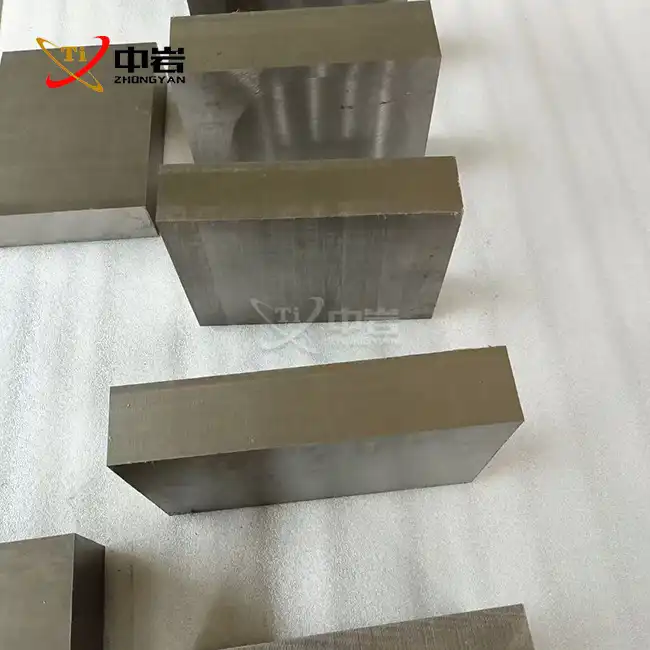
Finding the right titanium block for aerospace manufacturing requires evaluating critical factors, including material grade, mechanical properties, supplier certifications, and dimensional precision. Grade 5 titanium blocks with ASTM B381 compliance offer optimal strength-to-weight ratios for aerospace applications, while proper sourcing from certified suppliers ensures quality consistency and regulatory adherence. This comprehensive approach balances technical requirements with procurement efficiency, enabling manufacturers to select materials that meet stringent aerospace standards while maintaining cost-effectiveness.
Understanding Titanium Blocks and Their Aerospace Applications
When making airplanes, titanium blocks are used as building blocks because they are very strong physically. For example, they have a low density of 4.43 g/cm³, a high melting point above 1,600°C, and they don't rust easily. Thick, square pieces of titanium metal are better than thin sheets and bars because they can be used for more tasks. This is especially important when making complicated airplane parts that need to have a lot of different shapes.
Properties That Make Titanium Essential for Aerospace
In order to do their jobs, flight companies need materials that will always work in difficult conditions. This setting works well with titanium cast blocks because they have a fine-grained structure that is made possible by carefully stretching the metal while it is being made. This method gets rid of the tiny holes inside cast materials and makes them more resistant to wear, which is very important for airplane parts that are loaded and unloaded a lot. Most airplane metal is Grade 5 titanium (Ti-6Al-4V), which is made up of 3.5 to 4.5% vanadium and 5.5 to 6.75% aluminum. Things are stronger and less likely to rust because of these elements. The material can be pulled apart more than 950 MPa and then pulled back together 828 to 862 MPa. Because of this, it is great for structural uses where saving weight doesn't mean putting safety at risk.
Common Aerospace Applications
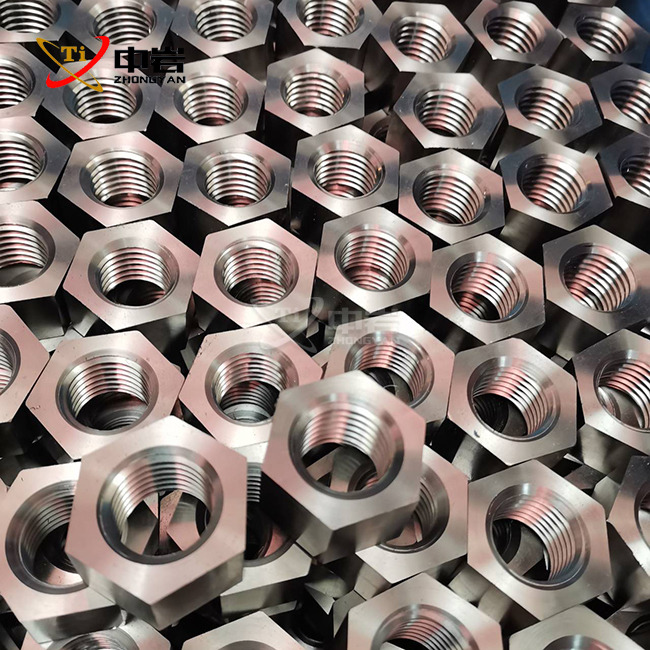
Aerospace companies use titanium for many things, such as making engine parts and airframes. Titanium is strong for its weight, which makes it useful for landing gear systems. It is useful for engine parts because it doesn't expand or contract much at high temperatures. Fasteners made from titanium stock are a safe way to connect things, and they won't break from stress rust even in rough work conditions. Modern planes use titanium more and more in places where other materials would add too much weight or break too quickly, like in the wing boxes, bulkheads, and connecting rods. Since the material isn't magnetic, it can also be used in sensitive airplanes where electromagnetic interference needs to be kept to a minimum.
Criteria for Selecting Titanium Blocks for Aerospace Manufacturing
When picking the right titanium cut blocks, you need to pay close attention to their mechanical properties, chemical makeup, and size standards. These all have a direct impact on how quickly and well the parts can be made. When people who work in buying know about these things, they can make decisions that meet both technical and business goals.
Mechanical Properties and Performance Standards
For uses in space, you need materials that are hard, strong, and don't wear down readily. The hardest grade 5 titanium blocks are usually between 30 and 36 HRC. This makes them easy to machine while still maintaining their shape. The material can be made lighter without losing its strength because it weighs about twice as much as metal but is harder. Fatigue resistance is very important for parts that are used for a long time and are put through a lot of stress cycles. Titanium's substructure, which is improved by using the right casting methods, makes it very resistant to cracks spreading compared to other materials. This is a very important trait for parts that could break badly and do a lot of damage, like landing gear and wing fittings.
Chemical Composition and Heat Treatment Considerations
The chemicals that are used to make aerospace-grade titanium change how it works and how it needs to be worked with in important ways. It is stronger because of solid solution strengthening due to the aluminum in Grade 5 titanium. The vanadium makes it easier to work with and better at handling high temperatures. To make sure that all production batches have the same mechanical properties, strict recipe control is used. Different kinds of heat treatment, like annealing and solution treatment, improve the texture and relieve stress in finished parts. If you heat titanium blocks the right way, they get a normal grain structure and less stress, which could make them less solid while they are being machined.
Dimensional Accuracy and Tolerance Requirements
Things that are made for the aerospace business need to be measured very precisely. Limits are often set in thousandths of an inch. The lengths of all the pieces in a block of high-quality titanium stock must be the same. This keeps waste to a minimum and cuts down on cutting time. Standard sizes range from 50x50x50mm to bigger forms, and different part designs can be used. It's important to be able to make sizes to order when standard sizes don't work for a design. Trustworthy companies offer precise cutting services that protect the material's qualities and provide blocks that are the right size to get the most out of the material and lower the cost of machining.
Comparing Titanium Blocks with Alternative Materials
Engineers and buying experts can choose the best material for the job, taking cost and specific needs into account, when they know how titanium blocks compare to other materials. This research looks at various types of products and compares how well they work, how much they cost, and how easy they are to work with.
Titanium vs. Aluminum and Steel Alternatives
Even though aluminum is cheap and simple to work with, it's not strong enough or heat-resistant enough for many uses in airplanes. Aluminum is less strong, so parts made of it have to be bigger. This usually takes out any weight savings that come from its higher density of 2.7 g/cm³. Steel is stronger than other materials, but it's also a lot heavier, which means it uses more gas and can't move as much. Titanium is better at resisting rust than both aluminum and steel in places like airplanes, where water, salt, and chemicals are always present. This feature makes maintenance easier and extends the life of parts, which more than makes up for the higher cost of the materials at the beginning through better lifespan economics.
Advantages Over Copper and Stainless Steel
Copper can be helpful because it moves electricity and heat well, but it is not strong enough to be used for solid airplane parts because it is very dense (8.96 g/cm³). In comparison, a titanium block offers a much better strength-to-weight ratio for aerospace applications. Titanium doesn't rust as quickly as stainless steel, but stainless steel weighs 80% more and isn't as strong. Titanium products naturally have benefits, such as not being magnetic and being friendly with living things. When it comes to aircraft, these perks are particularly helpful because they are important for design.
How to Source and Procure Aerospace-Grade Titanium Blocks
To be sure of getting aerospace-grade titanium materials, you need to carefully check out sources, know what certifications are needed, and plan your purchases so that you protect the quality of the materials while keeping costs and delivery times low. Good procurement plans fit the needs of the business with the needs of the technology.
Supplier Evaluation and Certification Requirements
Groups like AS9100, ISO 9001, and NADCAP have strict rules that suppliers to the aircraft business must follow to make sure their quality systems work. These certificates show that the company can control quality, handle processes, and keep track of things the way the aircraft industry wants them to be done. Suppliers should give full certificates for materials that include chemical analysis, mechanical tests, and physical checks. You can change lead times, shipping costs, and the supply chain's security by where things are based. Places like Baoji in China's Titanium Valley are known for making titanium. Suppliers can benefit from integrated supply chains and specialized knowledge that help keep costs low and quality high.
Pricing Structures and Order Planning
Titanium prices depend on how much the raw materials cost, how hard they are to work with, and how the market changes because of demand cycles in the airplane business. The lowest amount you can buy is generally between 0.5 kg and 50 kg, depending on the size. It is possible to get bulk discounts for bigger buys. The people who work in buying can get the best deals on order numbers and times when they understand these processes. Lead times for standard grades are usually two to four weeks, but they can be anywhere from six to eight weeks for custom specs, depending on how they need to be handled. You can shorten lead times by making plans ahead of time and working with your providers to manage stock and set up production schedules.
Quality Assurance and Material Traceability
In aircraft, it's important to be able to keep track of all the materials, from the raw materials to the finished parts. Good sellers give a lot of records, such as mill test certificates, measuring inspection reports, and ultrasonic test results, to find flaws in the product. Pickling and chamfering the edges of the metal ensures that the quality stays the same and that it is easier to work with.
Best Practices and Case Studies in Aerospace Titanium Block Utilization
By doing things the right way, you can get the most out of your titanium blocks while also lowering the costs and risks of making them. Examples from real life show how titanium has been used successfully and offer tips on how to handle common issues that arise when making things out of titanium.
Successful Implementation Examples
A big aerospace business cut the weight of parts by 35% and made them last longer by switching from aluminum blocks to Grade 5 titanium blocks for hinges that connect wings. For this job, it was important to carefully pick the materials and make sure that the cutting process worked as well as it could. The bigger performance gains made the more expensive materials worth it, though. According to a different case study, a company that makes helicopters used titanium stock that was cut to fit their needs to make rotor head components with less loss. This helped the maker save 25% on materials while still meeting all performance standards. They worked with sources to find the best block shapes.
Machining Optimization Techniques
To grind titanium properly, you need to know how to keep the measurements correct while controlling the heat and tool wear. The right tool, cutting settings, and amount of water are all very important for getting good results. The best results come from using tungsten tools with positive rake angles and slow cutting speeds. It's important to keep the cloth from getting too hard to work with and losing its shape because it doesn't handle heat well. Using flood coolant and planning the tool path correctly can help keep the cutting conditions stable during the whole machining process.
Procurement and Application Checklist
To buy titanium successfully, you need to think about the technical needs, the skills of the seller, and the ways that quality is checked. Making sure the grade of the material is correct, meeting the standards for size limits and surface finish, and planning the delivery are all important things to think about. The buying process goes faster and more smoothly when you work with buyers who have been in the airplane business for a long time and know what the industry needs.
Conclusion
You have to find the right titanium blocks for making airplanes by balancing technical performance needs with things like sourcing skills, quality standards, and cost management. Titanium grade 5 is the best for most uses in airplanes. It is resistant to rust and has a high strength-to-weight ratio, both of which are important for safe and effective use. Building ties with qualified makers who can regularly make high-quality goods that meet strict testing standards is a key part of good buying strategies. They also make sure things happen on time and without any issues. Smart decisions that improve the performance of parts and the ease of making are made across the aircraft supply chain when people know the properties of a material, how it needs to be handled, and any problems that are unique to that application.
FAQ
What are the key differences between titanium Grade 2 and Grade 5 for aerospace applications?
Ti grade 2 doesn't rust and can be made well, but it's not as strong as Grade 1. This makes it a good choice for airplane parts that aren't meant to be strong. With compression strengths above 950 MPa, this grade, Ti-6Al-4V, is much stronger than Grade 4 (Ti-6Al-4V). It is the best material for building structures that need the most power per unit weight.
How long are typical lead times for custom titanium blocks?
Titanium materials of normal grade can be sent out in two to four weeks, but it could take up to eight weeks for special requests like custom forms or heat treatments. Lead times change based on how many things are bought, how much processing is needed, and how much product the seller has on hand.
Can complex aerospace components be machined directly from titanium blocks?
It is now possible to make very complicated airplane parts right from titanium blocks using CNC tools. Because they can keep the tight tolerances needed for aircraft uses, five-axis machining centers can make complicated forms. But you still need the right cutting settings and tools to do the job.
Partner with Zhongyan for Premium Aerospace Titanium Solutions
The aerospace-grade titanium blocks that Zhongyan Titanium sells are made to meet your most exacting production needs. Our plant is in China's Titanium Valley and is ISO 9001 approved. They make Grade 5 titanium blocks that are stronger than 950 MPa and fully meet ASTM B381 standards. You can find problems inside our 50x50x50mm standard blocks by chamfering the ends and pickling the surface. They have also been put through ultrasound testing. As a trustworthy titanium block maker, we can make blocks in any size, from 0.5 kg to 50 kg, and we offer full material approval and tracking paperwork. Send an email to sales@titaniumstudy.com to talk to our expert team about your needs and get low prices on aerospace-grade titanium goods that will help your project happen.
References
1. ASM International. "Properties and Selection: Nonferrous Alloys and Special-Purpose Materials." ASM Handbook Volume 2, 10th Edition, Materials Park, OH, 1990.
2. Boyer, R.R. "An Overview on the Use of Titanium in the Aerospace Industry." Materials Science and Engineering A, Vol. 213, No. 1-2, 1996.
3. Donachie, Matthew J. "Titanium: A Technical Guide." 2nd Edition, ASM International, Materials Park, OH, 2000.
4. Froes, F.H. and Eylon, D. "Powder Metallurgy of Titanium Alloys." International Materials Reviews, Vol. 35, No. 3, 1990.
5. Lutjering, Gerd and Williams, James C. "Titanium." 2nd Edition, Springer-Verlag, Berlin Heidelberg, 2007.
6. Peters, M. and Leyens, C. "Titanium and Titanium Alloys: Fundamentals and Applications." Wiley-VCH, Weinheim, Germany, 2003.
_1755673729494.jpg)
Learn about our latest products and discounts through SMS or email