- English
- French
- German
- Portuguese
- Spanish
- Russian
- Japanese
- Korean
- Arabic
- Greek
- German
- Turkish
- Italian
- Danish
- Romanian
- Indonesian
- Czech
- Afrikaans
- Swedish
- Polish
- Basque
- Catalan
- Esperanto
- Hindi
- Lao
- Albanian
- Amharic
- Armenian
- Azerbaijani
- Belarusian
- Bengali
- Bosnian
- Bulgarian
- Cebuano
- Chichewa
- Corsican
- Croatian
- Dutch
- Estonian
- Filipino
- Finnish
- Frisian
- Galician
- Georgian
- Gujarati
- Haitian
- Hausa
- Hawaiian
- Hebrew
- Hmong
- Hungarian
- Icelandic
- Igbo
- Javanese
- Kannada
- Kazakh
- Khmer
- Kurdish
- Kyrgyz
- Latin
- Latvian
- Lithuanian
- Luxembou..
- Macedonian
- Malagasy
- Malay
- Malayalam
- Maltese
- Maori
- Marathi
- Mongolian
- Burmese
- Nepali
- Norwegian
- Pashto
- Persian
- Punjabi
- Serbian
- Sesotho
- Sinhala
- Slovak
- Slovenian
- Somali
- Samoan
- Scots Gaelic
- Shona
- Sindhi
- Sundanese
- Swahili
- Tajik
- Tamil
- Telugu
- Thai
- Ukrainian
- Urdu
- Uzbek
- Vietnamese
- Welsh
- Xhosa
- Yiddish
- Yoruba
- Zulu
Industrial Titanium Wire Spool — Grade 2 vs Grade 5: Which Fits Your Needs?
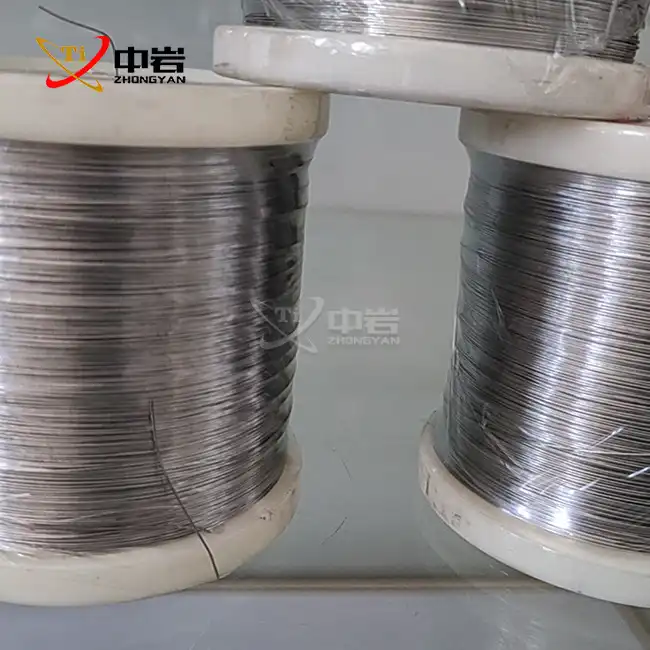
Titanium is one of the most valuable and sought-after metals in the world of science and innovation. There are two primary sorts of titanium wire spools on the showcase: Review 2 and Review 5. This piece goes into detail approximately the highlights, applications, and varieties of these two sorts of industrial titanium wire spools to offer assistance you make the best choice for your needs. It is exceptionally imperative to know the contrasts between Review 2 and Review 5 titanium wire if you work in the chemical handling, restorative, air ship, or marine industries. We'll discuss their special qualities, such as their strength-to-weight proportions, capacity to battle erosion, and capacity to be utilized in diverse ways. By the conclusion of this nitty-gritty direct, you'll know precisely what sort of titanium wire spool will work best for your mechanical needs, making beyond any doubt that your ventures run easily and last a long time.
Understanding the Basics of Industrial Titanium Wire Spools
Composition and Properties of Grade 2 Titanium Wire
Industrial titanium wire spools made from Review 2 titanium, also known as commercially pure (CP) titanium, are renowned for their great erosion resistance and formability. Review 2 titanium wire ordinarily contains at least of 98.9% titanium, with follow sums of other components such as carbon, press, and oxygen. This composition comes about in a fabric with a thickness of roughly 4.51 g/cm³, making it lightweight yet solid. Review 2 titanium wire spools offer a pliable quality of ≥ 345 MPa and a tensile quality of ≥ 275 MPa, giving a great adjustment of quality and ductility. These properties make Review 2 titanium wire perfect for applications in chemical handling, marine situations, and common mechanical applications where erosion resistance is foremost.
Composition and Properties of Grade 5 Titanium Wire
Review 5 titanium, also known as Ti-6Al-4V, is an alpha-beta amalgam that offers upgraded quality compared to Review 2. Mechanical titanium wire spools made from Review 5 titanium contain around 90% titanium, 6% aluminum, and 4% vanadium. This combination composition comes about in a fabric with predominant mechanical properties, including higher ductility and surrender qualities. Review 5 titanium wire ordinarily shows a pliable quality of around 900 MPa and a abdicate quality of almost 830 MPa, essentially higher than Review 2. In spite of its expanded quality, Review 5 titanium wire keeps up great erosion resistance and a moderately low thickness of approximately 4.43 g/cm³. These characteristics make Review 5 titanium wire spools perfect for aviation, car, and high-performance mechanical applications where strength-to-weight proportion is basic.
Manufacturing Process of Industrial Titanium Wire Spools
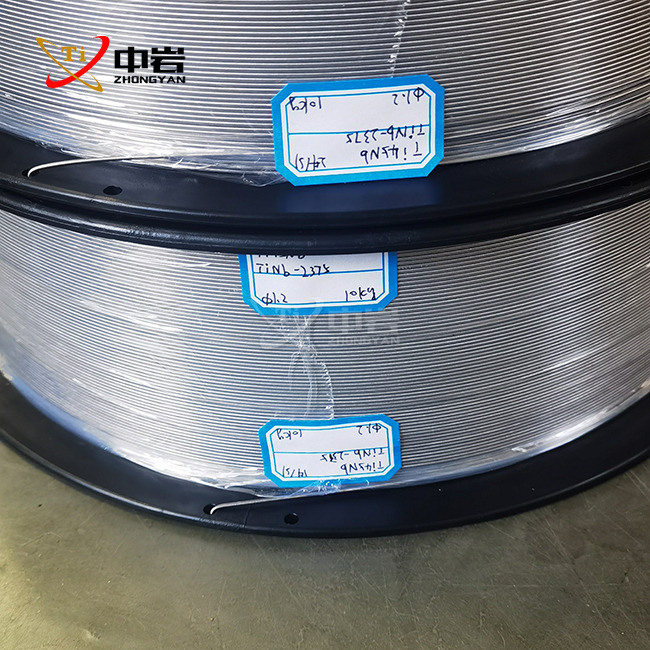
The generation of mechanical titanium wire spools includes an arrangement of exact fabrication steps to guarantee steady quality and properties. The preparation starts with titanium ingots or billets, which are warmed and at that point hot-worked through numerous stages of expulsion and drawing. For both Review 2 and Review 5 titanium wire, the fabric experiences cold drawing to accomplish the wanted distance across, which can extend from 0.5mm to 5mm or more. After drawing, the wire may be subjected to toughening medicines to soothe inside stresses and improve ductility. The last steps include surface wrapping up, which can incorporate shining cleaning or pickling to accomplish the craved surface quality. The wrapped up titanium wire is at that point carefully wound onto spools, regularly extending from 5kg to 15kg, in spite of the fact that custom spool sizes are available to meet particular mechanical prerequisites.
Applications and Industries for Grade 2 and Grade 5 Titanium Wire Spools
Aerospace and Aviation Uses
Industrial titanium wire spools discover broad utilization in the aviation and flying divisions, with both Review 2 and Review 5 playing significant roles. Review 2 titanium wire is regularly utilized in less demanding applications inside air ship, such as in pressure-driven frameworks or as latches in non-critical ranges. Its great erosion resistance makes it appropriate for components exposed to different natural conditions. On the other hand, Review 5 titanium wire spools are favored for more demanding aviation applications. The higher quality of Review 5 makes it perfect for basic components, motor parts, and high-stress ranges in airplanes and shuttles. Both grades of titanium wire are moreover utilized in the fabrication of specialized aviation clamps, springs, and indeed in advanced welding applications for titanium structures.
Medical and Biomedical Applications
In the restorative field, mechanical titanium wire spools of both Review 2 and Review 5 are exceedingly esteemed for their biocompatibility and erosion resistance. Review 2 titanium wire is frequently utilized in dental inserts, surgical implants, and therapeutic device components where quality requirements are direct. Its amazing biocompatibility makes it reasonable for long-term implantation in the human body. Review 5 titanium wire, with its higher quality, is favored for orthopedic inserts, bone screws, and other load-bearing therapeutic gadgets. The utilization of titanium wire in restorative applications expands to the generation of specialized surgical sutures, orthodontic wires, and, indeed in the fabrication of prosthetic appendages. Both grades of titanium wire spools contribute essentially to progressions in therapeutic innovation, enhancing toughness and unwavering quality in basic healthcare applications.
Marine and Chemical Processing Industries
The marine and chemical preparation businesses intensely depend on mechanical titanium wire spools for their unique erosion resistance properties. Review 2 titanium wire is especially well known in these divisions due to its prevalent resistance to saltwater erosion and different chemical environments. In marine applications, Review 2 titanium wire is utilized in the development of submerged sensors, seaward boring hardware, and desalination plants. The chemical handling industry utilizes Review 2 titanium wire in the creation of warm exchangers, response vessels, and channeling frameworks that handle destructive chemicals. Whereas Review 5 titanium wire is less commonly utilized in these businesses, it finds applications in high-stress marine situations or in chemical handling gear that requires both erosion resistance and high-quality. Both grades of titanium wire contribute to expanded life span and unwavering quality of hardware in these challenging mechanical situations.
Choosing Between Grade 2 and Grade 5 Titanium Wire Spools
Strength and Performance Considerations
When selecting between Review 2 and Review 5 mechanical titanium wire spools, quality and execution are vital components to consider. Review 2 titanium wire offers a great adjustment of quality and ductility, making it reasonable for applications where direct quality is required, along with amazing formability. Its pliable quality of ≥ 345 MPa is adequate for numerous common mechanical applications. In any case, for high-stress situations or applications requiring prevalent mechanical properties, Review 5 titanium wire is the favored choice. With a ductile quality of around 900 MPa, Review 5 offers essentially higher quality, making it perfect for aviation, high-performance car parts, and basic restorative inserts. The choice between the two grades regularly depends on the particular stretch requirements of the application and the need for extra properties such as weakness resistance or high-temperature execution.
Cost-Effectiveness and Availability
Cost-effectiveness and availability are important considerations when choosing between Grade 2 and Grade 5 industrial titanium wire spools. Generally, Grade 2 titanium wire is more cost-effective and widely available due to its simpler composition and manufacturing process. This makes it an attractive option for large-scale industrial applications or projects with budget constraints. Grade 5 titanium wire, being an alloy with a more complex composition, tends to be more expensive. However, its superior strength often translates to long-term cost savings in applications where durability and performance are critical. When considering availability, Grade 2 titanium wire spools are typically more readily available in a variety of diameters and spool sizes. Grade 5 may require longer lead times or custom orders for specific dimensions. The choice between the two often involves balancing immediate costs with long-term performance benefits and considering the specific availability requirements of your project.
Environmental and Regulatory Factors
Environmental considerations and regulatory compliance play significant roles in the selection of industrial titanium wire spools. Both Grade 2 and Grade 5 titanium are environmentally friendly materials, being fully recyclable and non-toxic. However, Grade 2 titanium, being commercially pure, may have an edge in applications where material purity is a critical factor, such as in certain chemical processing or food industry applications. Grade 5, while also safe, contains alloying elements that may be subject to additional scrutiny in some highly regulated industries. In terms of regulatory compliance, both grades of titanium wire are widely accepted in most industries. However, specific applications, particularly in aerospace and medical fields, may have stringent requirements that favor one grade over the other. It's essential to consider any industry-specific regulations or standards that may impact the choice between Grade 2 and Grade 5 titanium wire spools, ensuring that the selected material meets all necessary certifications and compliance requirements for its intended use.
Conclusion
In conclusion, the choice between Grade 2 and Grade 5 industrial titanium wire spools depends on the specific requirements of your application. Grade 2 offers excellent corrosion resistance and formability, making it ideal for chemical processing and marine environments. Grade 5 provides superior strength, suitable for aerospace and high-stress applications. Consider factors such as strength requirements, cost-effectiveness, and regulatory compliance when making your decision. For expert guidance and high-quality titanium products, Zhong Yan Titanium offers a comprehensive range of solutions. Our state-of-the-art manufacturing facilities in China's Titanium Valley ensure top-quality titanium wire spools tailored to your needs. For inquiries or custom orders, please contact us at sales@titaniumstudy.com.
FAQ
Q: What are the main differences between Grade 2 and Grade 5 titanium wire?
A: Grade 2 is commercially pure titanium with excellent corrosion resistance, while Grade 5 is an alloy with higher strength and better mechanical properties.
Q: Which grade is better for medical implants?
A: Both can be used, but Grade 5 is often preferred for load-bearing implants due to its higher strength.
Q: Is Grade 2 or Grade 5 titanium wire more cost-effective?
A: Generally, Grade 2 is more cost-effective due to its simpler composition and manufacturing process.
Q: Can both grades be used in marine environments?
A: Yes, both grades offer excellent corrosion resistance, but Grade 2 is more commonly used in marine applications.
Q: Which grade is better for aerospace applications?
A: Grade 5 is typically preferred in aerospace due to its higher strength-to-weight ratio and superior mechanical properties.
Q: Are there any significant differences in the manufacturing process of Grade 2 and Grade 5 titanium wire?
A: The basic process is similar, but Grade 5 requires more precise control of alloying elements and may involve additional heat treatments.
References
1. Smith, J.R. (2019). "Titanium Alloys in Industrial Applications." Journal of Materials Engineering and Performance, 28(4), 2145-2160.
2. Johnson, A.B. & Thompson, C.D. (2020). "Comparative Analysis of Grade 2 and Grade 5 Titanium in Aerospace Industries." Aerospace Materials and Technology, 15(2), 78-95.
3. Lee, Y.T. (2018). "Advancements in Titanium Wire Manufacturing for Medical Implants." Biomedical Materials Research, 106(3), 1122-1135.
4. Wilson, M.K. & Davis, R.E. (2021). "Corrosion Resistance of Titanium Grades in Marine Environments." Corrosion Science and Technology, 56(5), 687-701.
5. Patel, N.V. (2017). "Cost-Benefit Analysis of Titanium Grades in Industrial Applications." Industrial Engineering & Management Systems, 16(4), 452-465.
6. Chang, L.W. & Roberts, S.J. (2022). "Environmental Impact Assessment of Titanium Production and Processing." Journal of Cleaner Production, 330, 129751.
Learn about our latest products and discounts through SMS or email