- English
- French
- German
- Portuguese
- Spanish
- Russian
- Japanese
- Korean
- Arabic
- Greek
- German
- Turkish
- Italian
- Danish
- Romanian
- Indonesian
- Czech
- Afrikaans
- Swedish
- Polish
- Basque
- Catalan
- Esperanto
- Hindi
- Lao
- Albanian
- Amharic
- Armenian
- Azerbaijani
- Belarusian
- Bengali
- Bosnian
- Bulgarian
- Cebuano
- Chichewa
- Corsican
- Croatian
- Dutch
- Estonian
- Filipino
- Finnish
- Frisian
- Galician
- Georgian
- Gujarati
- Haitian
- Hausa
- Hawaiian
- Hebrew
- Hmong
- Hungarian
- Icelandic
- Igbo
- Javanese
- Kannada
- Kazakh
- Khmer
- Kurdish
- Kyrgyz
- Latin
- Latvian
- Lithuanian
- Luxembou..
- Macedonian
- Malagasy
- Malay
- Malayalam
- Maltese
- Maori
- Marathi
- Mongolian
- Burmese
- Nepali
- Norwegian
- Pashto
- Persian
- Punjabi
- Serbian
- Sesotho
- Sinhala
- Slovak
- Slovenian
- Somali
- Samoan
- Scots Gaelic
- Shona
- Sindhi
- Sundanese
- Swahili
- Tajik
- Tamil
- Telugu
- Thai
- Ukrainian
- Urdu
- Uzbek
- Vietnamese
- Welsh
- Xhosa
- Yiddish
- Yoruba
- Zulu
How to Select the Right GR2 Titanium Round Bar Size for Your Project
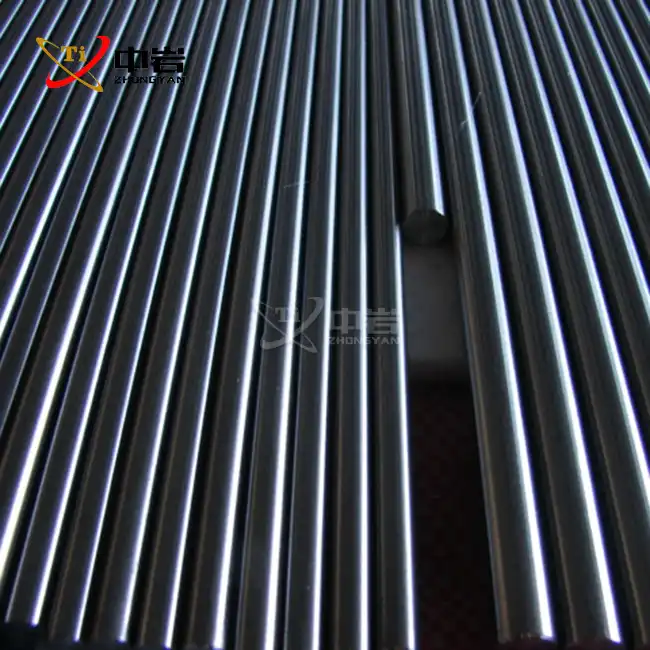
To choose the correct GR2 titanium round bar size for your project, you need to carefully consider the technical needs, the area where it will be used, and the limitations of the cutting process. The width and length of a material have a direct effect on its ability to hold weight, resist rust, and be easily fabricated. Engineers have to find a balance between the need for tensile strength and the weight limits that come with following industry standards such as ASTM B348 and ISO 5832-2. Making sure the structure is the right size, minimising material waste, and keeping project costs in check are all important reasons to understand how measurement standards relate to your unique performance requirements and manufacturing methods.
Understanding GR2 Titanium Round Bar and Its Key Properties
The performance qualities of widely pure titanium Grade 2 are determined by the materials that make it up. This grade has a mass of 4.43–4.51 g/cm³ and is mostly titanium. The amount of iron, oxygen, carbon, and nitrogen in it is managed, and they all stay below 0.30%, 0.25%, 0.08%, and 0.03%, respectively. This exact chemical balance makes a single-phase alpha lattice that has the best mix of strength and flexibility among types of unalloyed titanium.
Mechanical Performance Specifications
The size needs for structural uses are directly affected by the material's mechanical features. Standard Grade 2 titanium has a tensile strength of 345 MPa to 480 MPa, a yield strength of 275 MPa, and an extension of more than 20%. Using advanced processing methods, these qualities can be made a lot better. Through cold-drawing and a unique heat treatment process, premium-grade material made to ISO 5832-2 requirements can reach tensile strengths of over 900 MPa and yield strengths of over 850 MPa. The 114 GPa elastic modulus makes sure that the bending patterns are recognisable when the material is loaded, and the HRC 36 hardness level makes sure that it doesn't wear down easily in slide situations.
Physical and Environmental Characteristics
Titanium's value in harsh settings comes from its ability to prevent corrosion. The substance creates a strong, protective oxide layer that heals itself when it gets broken. This makes it very resistant to oxidising acids, chloride solutions, and salty environments. This passive film works well in a wide range of pH levels and temperatures, like those found in chemical processing and marine uses. The fact that it is not magnetic makes it good for making electronics and medical imaging tools. Low thermal expansion rate (about 8.6 × 10⁻⁶/°C) means that the size of the material doesn't change much when it goes through temperature cycles, which is important for precision parts and uses that use thermal cycling.
Gaining knowledge of these basic features is the first step toward smart size selection. The choice of diameter must take into account stress densities while still allowing the material to be machined. Length standards should take into account both the needs of the product and the supply of the material from sources. Whether the surface needs to be bright-annealed or polished affects the limits for sizes and the next steps in the cutting process.
Core Decision Criteria for Selecting the Right GR2 Titanium Round Bar Size
Mechanical Load and Stress Analysis
The first step in engineering math for GR2 titanium round bar is to figure out what forces your part needs to be able to handle. Different types of loads—tensile, compression, bending, and torsion—have different needs for the thickness of the bar. For a shaft to transfer circular power, it needs to have a width big enough to avoid twisting failure. This can be found using standard methods in mechanical engineering that take into account the torque being applied and the material's shear strength. When structural parts are loaded in one direction, they need to have a cross-sectional area big enough to keep loads below the yield limits while still having the right safety factors.
When dynamic pressure conditions come into play, fatigue may become an issue that means widths need to be bigger than steady figures suggest. Over the course of its service life, vibration conditions, repetitive changes in pressure, and impact loads all weaken materials. Safety-critical aerospace parts usually have design gaps that are 1.5 to 2.0 times the estimated minimum standards. Medical device designs are even more cautious, putting long-term dependability in living settings at the top of their list of priorities.
Machinability and Fabrication Requirements
The link between the size of the raw material and the size of the finished part has a big effect on how efficiently things are made. Buying round bars that are too big raises the cost of materials and the time it takes to machine them. If standards are tight, it may not be possible to make stock that is too small to meet the end requirements. Procurement teams with a lot of experience figure out stock limits that balance how much material is used with how much can be machined. For finishing passes, CNC turning operations usually need 1-3 mm of rotary stock per side. This depends on the state of the material at the start and the final tolerance standards.
Compared to hot-rolled material, cold-drawn titanium bars with h9 tolerance grades have a better surface finish and are more accurate in terms of size. This level of accuracy cuts down on cutting margins and speeds up run times. Compared to work-hardened states, annealed states of materials are the best for machining because they require less cutting force and last longer on tools. When choosing the bar width, you should think about whether your cutting processes will take a lot of material or just finish it off. This will determine the best starting measurements.
Environmental and Application-Specific Factors
The link between the size of the raw material and the size of the finished part has a big effect on how efficiently things are made. Buying round bars that are too big raises the cost of materials and the time it takes to machine them. If standards are tight, it may not be possible to make stock that is too small to meet the end requirements. Procurement teams with a lot of experience figure out stock limits that balance how much material is used with how much can be machined. For finishing passes, CNC turning operations usually need 1-3 mm of rotary stock per side. This depends on the state of the material at the start and the final tolerance standards.
Compared to hot-rolled material, cold-drawn titanium bars with h9 tolerance grades have a better surface finish and are more accurate in terms of size. This level of accuracy cuts down on cutting margins and speeds up run times. Compared to work-hardened states, annealed states of materials are the best for machining because they require less cutting force and last longer on tools. When choosing the bar width, you should think about whether your cutting processes will take a lot of material or just finish it off. This will determine the best starting measurements.
Cost Optimisation and Procurement Strategy
The operating world affects the performance of materials in ways that change the best choices about size. Chemical atmospheres that are aggressive may need bigger safety gaps to account for the fact that the surface could wear down over many years of use. When used at temperatures above 300°C, the strength decreases, so the cross-section needs to be bigger to make up for it. Titanium is better at resisting rust than stainless steel in marine settings with long-term exposure to salt spray. This means that diameters can be cut while still having the same service life.
Size minimisation directly improves patient results in biomedical uses, which have their own set of rules. Orthopaedic devices have to balance the need for mechanical power with the need for biological interaction. When making dental implants, the sizes are carefully chosen to make sure they fit properly and look good. Titanium is biocompatible and doesn't rust in physiological settings, which is good for these specialised uses where precise measure control is needed to make sure of the right fit and function.
Comparison Insights: GR2 Titanium Round Bar vs. Other Materials and Grades
Grade 2 versus Grade 5 Titanium Alloy
The way materials are priced has a big effect on the best size choice. Titanium round bars are usually priced by the kilogram, and thinner bars, bars with tighter standards, and bars with special finishes cost more. Standard sizes like 10mm, 12mm, 16mm, and 20mm often get better prices because they are made in larger quantities and can be bought from more suppliers. There are setup fees and minimum order numbers for custom widths that might cancel out the material savings from precise sizing.
When planning a job, lead times are very important. Standard sizes from well-known sources usually ship in two to four weeks for modest amounts. Depending on mill plans and order numbers, custom measurements may add 6 to 12 weeks to the lead time. When you buy things around the world, more things can go wrong, like export paperwork, foreign shipping, and the customs clearance process. Strategic buyers keep in touch with makers that can provide precision cutting services. This way, buyers can get bars that are cut to exact lengths, which cuts down on waste and extra work.
Titanium versus Stainless Steel and Aluminum
When you compare gr2 titanium round bar to bars made of other materials, it's easier to make choices that are right for the job. Austenitic stainless steels, such as 316L, are good at resisting rust and cost about a third of what titanium does. But when weight is important, changes in density become very important. Titanium's density of 4.43 g/cm³ is higher than stainless steel's density of 8.0 g/cm³, which means that 45% less weight is needed to get the same strength. These savings directly lead to better fuel economy and loading capacity in aerospace and car uses.
Aluminium metals have an even lower density (about 2.7 g/cm³), but they are weaker and don't fight rusting as well. The strength-to-weight ratio estimate shows titanium's benefit: Grade 2 titanium has about the same specific strength as high-strength aluminium metals but is much more resistant to rust. This difference is very clear in marine applications, where aluminium parts need to be coated with protective materials and replaced often, while titanium installations last for decades without any upkeep.
Practical Guide to Procuring GR2 Titanium Round Bar
Supplier Evaluation and Quality Assurance
Successful titanium procurement begins with supplier qualification. Manufacturers operating to ISO 9001:2015 quality management systems demonstrate process control and traceability essential for critical applications. Material certifications documenting chemical composition, mechanical properties, and compliance with standards like ASTM B348 and ISO 5832-2 provide essential quality assurance. Reputable suppliers maintain batch traceability linking finished products to specific melt lots, enabling investigation if performance issues emerge.
Zhongyan Titanium's manufacturing facility in Baoji—recognised as China's Titanium Valley—exemplifies integrated production capabilities. The operation spans titanium processing from raw material refinement through CNC machining of finished components. Advanced equipment, including precision CNC turning centres, milling machines, and wire EDM systems, enables tight tolerance work. Quality control instrumentation verifies dimensional accuracy and surface finish throughout production. This vertical integration ensures consistency and enables responsive customisation for OEM requirements.
Understanding Pricing Models and Order Quantities
Titanium pricing reflects raw material costs, processing complexity, and market dynamics. Current market rates for Grade 2 round bars typically range from $25-40 per kilogram for standard sizes in moderate quantities. Premium features including tighter tolerances (h9 versus h11), specialised finishes (polished versus mill finish), or enhanced mechanical properties command proportional premiums. Price breaks occur at quantity thresholds varying by supplier—typically around 100 kg, 500 kg, and 1000kg order levels.
Minimum order quantities balance supplier production efficiency against buyer inventory requirements. Standard diameter bars in common lengths may have minimums as low as 10-20 pieces. Custom specifications often require 50- 100 kg minimum orders to justify setup and processing costs. Strategic buyers consolidate requirements across projects to achieve quantity discounts while managing inventory carrying costs. Lead times vary accordingly: stock sizes ship within days, while custom orders require 4-8 weeks for production and quality verification.
Customisation Capabilities and Technical Support
Manufacturers offering comprehensive customisation services add significant value beyond commodity material supply. Precision cutting to exact lengths eliminates waste and secondary operations. Custom diameter grinding achieves tolerances tighter than standard mill specifications, critical for press-fit assemblies and bearing journals. Surface treatments including electropolishing enhance corrosion resistance and cleanability for pharmaceutical and food processing equipment.
Technical consultation during specification development helps optimise material selection and sizing decisions. Experienced suppliers understand application-specific requirements across industries, offering recommendations that balance performance against cost. Engineering teams can review loading conditions, environmental factors, and machining constraints to propose optimal diameter, length, and tolerance specifications. This collaborative approach reduces procurement risks and accelerates project timelines by getting specifications right initially rather than through iterative revisions.
Case Studies and Best Practices for Selecting GR2 Titanium Round Bar Sizes
Aerospace Component Manufacturing
An aircraft fastener manufacturer required titanium round bars for producing speciality bolts serving critical wing attachment points. Initial specifications called for 12mm diameter material based on thread requirements. However, detailed analysis of machining operations revealed that starting with 14mm diameter cold-drawn bars reduced CNC cycle time by 18% despite higher material cost. The improved surface finish of cold-drawn material eliminated a secondary grinding operation. Total production cost decreased by 12% while improving delivery consistency. The case demonstrates how holistic cost analysis—considering machining time, tool life, and secondary operations—often justifies premium material grades or non-intuitive sizing choices.
Medical Device Production Optimisation
A manufacturer of dental implant abutments faced challenges balancing material utilisation against tight tolerance requirements. Original procurement specified 8mm diameter bars for components with 6mm finished diameter, allowing 1mm radial machining allowance. Switching to precision H9 tolerance bars in 7mm diameter reduced material consumption by 28% while maintaining all dimensional specifications. The tighter initial tolerance of cold-drawn material proved critical—hot-rolled bars with H11 tolerance required the larger starting diameter to guarantee finished dimensions. Annual material cost savings exceeded $45,000, recovered initial qualification costs within three months, and reduced waste disposal expenses. This example highlights how understanding tolerance relationships between raw material and finished components drives procurement optimisation.
Marine Engineering Applications
A subsea equipment manufacturer designing valve bodies for offshore oil platforms evaluated material options for 30-year service life in seawater environments. Engineering analysis compared 316L stainless steel versus Gr2 titanium round bar. While titanium material cost was 3.2 times higher, the corrosion resistance eliminated protective coating requirements that added $120 per component in stainless steel designs. More significantly, titanium's immunity to crevice corrosion and stress corrosion cracking reduced safety margins, permitting a diameter reduction from 45 mm to 38 mm. The resulting weight savings of 34% simplified subsea installation procedures and reduced structural support requirements. Lifecycle cost analysis showed titanium delivered 22% total savings despite higher material acquisition cost.
Common Sizing Errors and Avoidance Strategies
Procurement teams frequently encounter several recurring mistakes when specifying titanium round bar dimensions. Underestimating machining allowances tops this list—inadequate stock for finishing passes forces acceptance of out-of-tolerance components or expensive material reorders. Conservative practice adds 1.5- 2 mm per side for turning operations and 2- 3 mm for milling when starting from hot-rolled material. Cold-drawn bars with superior initial condition safely reduce these allowances.
Conclusion
Selecting appropriate gr2 titanium round bar dimensions demands systematic evaluation of mechanical requirements, environmental conditions, manufacturing constraints, and cost structures. Successful procurement balances material properties—strength, corrosion resistance, biocompatibility—against dimensional specifications including diameter, length, and tolerance grades. Understanding distinctions between Grade 2 and alternative materials enables informed substitution decisions that optimise performance and cost. Working with qualified suppliers offering certification, customisation capabilities, and technical support mitigates procurement risks while enabling rapid response to engineering changes. The case studies demonstrate how thoughtful sizing analysis delivers substantial benefits through reduced machining time, improved material utilisation, and extended service life. Applying these principles positions procurement teams to specify titanium round bars that meet project requirements efficiently while controlling budgets and timelines.
FAQ
What is the standard density of Grade 2 titanium?
Grade 2 commercially pure titanium exhibits a density of approximately 4.43-4.51 g/cm³ depending on specific processing history and minor compositional variations within specification limits. This density provides significant weight advantages compared to stainless steel (8.0 g/cm³) while delivering superior corrosion resistance across diverse environments.
How do mechanical properties compare between GR2 and GR5 titanium?
Standard Grade 2 material offers tensile strength of 345-480 MPa with yield strength around 275 MPa, while Grade 5 (Ti-6Al-4V) alloy achieves tensile strength exceeding 900 MPa and yield strength around 830 MPa. Grade 2 provides superior corrosion resistance and biocompatibility, making it preferable for medical and marine applications where maximum strength is unnecessary.
Can suppliers provide custom diameters and lengths?
Reputable manufacturers accommodate custom specifications including non-standard diameters, precision-cut lengths, and enhanced tolerance grades. Minimum order quantities for custom sizes typically range from 50- 100 kg depending on specifications. Lead times extend 4-8 weeks compared to stock sizes. Many suppliers offer precision cutting services that deliver exact lengths while minimising waste.
What tolerance grades are available for titanium round bars?
Common tolerance grades include h9, h10, and h11 per ISO 286 standards. Cold-drawn material typically achieves h9 tolerance with a superior surface finish. Hot-rolled bars usually meet h11 tolerance, requiring larger machining allowances. Tighter tolerances reduce finishing operations but command premium pricing. Application requirements guide appropriate tolerance selection.
Partner with a Trusted GR2 Titanium Round Bar Manufacturer
Zhongyan Titanium brings decades of specialised expertise in manufacturing high-precision titanium materials and custom CNC machined components. Located in Baoji—China's premier titanium production hub—our integrated facility combines advanced processing technology with rigorous quality control meeting ISO 9001:2015 standards. We manufacture GR2 titanium round bars in diverse specifications, including 10mm diameter bars with h9 tolerance, polished finish, and mechanical properties exceeding ASTM B348 and ISO 5832-2 requirements. Our cold-drawn material delivers tensile strength ≥900 MPa, yield strength ≥850 MPa, and consistent dimensional accuracy that reduces your machining time and material waste.
Beyond standard dimensions, our OEM and ODM capabilities provide fully customised solutions tailored to your exact project requirements. Precision cutting services deliver bars in lengths from 100 mm to 6000 mm with minimal kerf loss. Our engineering team offers technical consultation throughout specification development, ensuring optimal sizing decisions that balance performance against cost efficiency. Global logistics support streamlines international procurement with complete export documentation and timely delivery. Whether your application demands aerospace-grade precision, medical-device biocompatibility, or industrial-scale volume production, Zhongyan serves as your reliable gr2 titanium round bar supplier. Contact our team at sales@titaniumstudy.com to discuss your specifications and receive a detailed quotation that demonstrates our competitive advantages in quality, capability, and delivered value.
References
1. ASTM International. (2021). ASTM B348-20: Standard Specification for Titanium and Titanium Alloy Bars and Billets. West Conshohocken, PA: ASTM International.
2. International Organisation for Standardisation. (2020). ISO 5832-2:2018: Implants for Surgery — Metallic Materials — Part 2: Unalloyed Titanium. Geneva: ISO.
3. Boyer, R., Welsch, G., & Collings, E.W. (2019). Materials Properties Handbook: Titanium Alloys. Materials Park, OH: ASM International.
4. Donachie, M.J. (2018). Titanium: A Technical Guide, 2nd Edition. Materials Park, OH: ASM International.
5. Schutz, R.W. & Watkins, H.B. (2017). "Recent Developments in Titanium Alloy Application in the Energy Industry." Materials Science and Engineering: A, 709: 455-469.
6. Peters, M., Kumpfert, J., Ward, C.H., & Leyens, C. (2020). "Titanium Alloys for Aerospace Applications." Advanced Engineering Materials, 22(4): 201-224.

Learn about our latest products and discounts through SMS or email