- English
- French
- German
- Portuguese
- Spanish
- Russian
- Japanese
- Korean
- Arabic
- Greek
- German
- Turkish
- Italian
- Danish
- Romanian
- Indonesian
- Czech
- Afrikaans
- Swedish
- Polish
- Basque
- Catalan
- Esperanto
- Hindi
- Lao
- Albanian
- Amharic
- Armenian
- Azerbaijani
- Belarusian
- Bengali
- Bosnian
- Bulgarian
- Cebuano
- Chichewa
- Corsican
- Croatian
- Dutch
- Estonian
- Filipino
- Finnish
- Frisian
- Galician
- Georgian
- Gujarati
- Haitian
- Hausa
- Hawaiian
- Hebrew
- Hmong
- Hungarian
- Icelandic
- Igbo
- Javanese
- Kannada
- Kazakh
- Khmer
- Kurdish
- Kyrgyz
- Latin
- Latvian
- Lithuanian
- Luxembou..
- Macedonian
- Malagasy
- Malay
- Malayalam
- Maltese
- Maori
- Marathi
- Mongolian
- Burmese
- Nepali
- Norwegian
- Pashto
- Persian
- Punjabi
- Serbian
- Sesotho
- Sinhala
- Slovak
- Slovenian
- Somali
- Samoan
- Scots Gaelic
- Shona
- Sindhi
- Sundanese
- Swahili
- Tajik
- Tamil
- Telugu
- Thai
- Ukrainian
- Urdu
- Uzbek
- Vietnamese
- Welsh
- Xhosa
- Yiddish
- Yoruba
- Zulu
Custom CNC Machined Titanium Parts vs Standard Titanium Components: Which Wins?
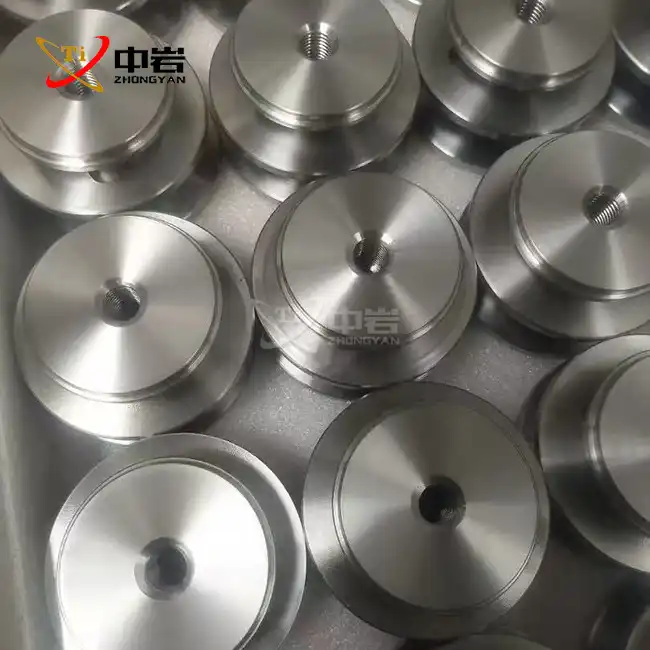
The choice between standard off-the-shelf titanium parts and custom CNC machined titanium parts determines operational success when buying titanium parts for mission-critical applications. Custom CNC-made titanium parts are carefully designed through computer numerical control methods to provide custom solutions. They can have complicated shapes, tight tolerances of up to ±0.005mm, and are optimised for specific applications. Standard parts are easy to find, but they lack the design freedom and measurement accuracy needed for difficult military, medical, and industrial applications where failure is not an option.
Understanding Custom CNC Machined Titanium Parts and Standard Titanium Components
What Are Custom CNC Machined Titanium Parts?
Specific engineering solutions are made from high-performance titanium alloys, mostly Grade 5 (Ti-6Al-4V) and commercially pure Grade 2, using subtractive manufacturing methods to make custom CNC cut titanium parts. CNC turning, milling, wire EDM, and precise cutting are used to make these parts based on technical plans provided by the client. Unlike mass-produced options, every size, shape, and finish on the surface is carefully managed to meet exact requirements. Our factory in Baoji City uses special grinding methods that are made for titanium's unique qualities. These include slow cutting speeds, high-pressure water delivery, and carbide tools to keep the metal from stiffening and galling during the production process.
Standard Titanium Components: Production and Limitations
Standard titanium parts are mass-produced with set sizes and specs so they can be used for a wide range of tasks. The cost per unit is much lower because these parts are made in big amounts using set design models. However, this means that they can't be customised as easily. These parts are fine for non-critical uses with standard requirements, but they have some built-in problems. For example, they only come in a few sizes (mostly common fastener sizes), are made of rigid materials that don't bend, and can't be changed to fit complex internal features or specific needs. In industries like aircraft, medical device manufacturing, and chemical processing, procurement teams often find that standard parts can't meet the strict requirements for measurement limits, material approvals, or design complexity that their projects need.
Material Grades and Manufacturing Processes
Grade 5 titanium (Ti-6Al-4V) is the most popular material for precision cutting because it has a high tensile strength (about 895 MPa), a low density (4.43 g/cm³), and can handle temperatures up to 600°C. This alpha-beta alloy has better mechanical qualities than widely pure types because it has 6% aluminium and 4% vanadium in it. We can do custom cutting on parts from sizes M3 to M100, so we can meet a wide range of needs for fasteners, structural parts, and specialised systems. X-ray fluorescence spectroscopy is used to check the material of each finished part and make sure that its chemical makeup meets the requirements of ASTM B348 and AMS. For aircraft and medical uses, where material approval paperwork goes with every package, this tracking is very important.
Comparing Performance and Benefits: Custom CNC Machined vs Standard Titanium Parts
Precision and Tolerance Capabilities
When you look at measurement accuracy, you can see the difference in performance between custom-made and stock titanium parts. Custom CNC cutting can get errors as small as 0.005mm by using multi-axis machining centers with coordinate measuring machines to check the work as it's being done. This level of accuracy makes sure that complicated parts fit perfectly, like hydraulic cylinder pistons, turbine blade roots, and medical tool joints, where even micron-level errors can render them useless. Standard parts usually have limits of ±0.1mm or more, which is fine for most uses but not good enough for ones that need to be very precise. Our laser cutting and wire EDM skills let us make complex internal openings, undercuts, and thread patterns that aren't possible with the usual methods used to make standard parts.
Mechanical Properties and Durability Advantages
It has been shown that Custom CNC Machined Titanium Parts are stronger and less likely to rust than standard titanium parts and parts made of other materials. The precise grinding process lets you control the surface roughness (Ra values that are specific to the application), make sure that stress concentrations don't form, and make changes that are rounded. These things have a direct effect on how long a part lasts in settings with repeated loads, like aeroplane landing gear and high-performance engine parts. Our parts don't rust or corrode in most ways when they're exposed to air, water, chlorides, acids, and coastal conditions that quickly break down stainless steel alternatives. Titanium's inactive oxide layer is biocompatible, which means that custom-machined medical implants and oral parts are safe for long-term touch with human flesh. This is an important condition that standard industrial-grade parts may not always meet.
Customization for Application-Specific Performance
The best thing about CNC-made titanium parts is that you can change every design aspect to fit your needs. Engineers can choose thread types that are best for certain loading situations, add weight-reducing pockets without affecting the structure's strength, and combine multiple functions into a single component to make assembly easier. We often make titanium tooth discs with precise surface textures that help ceramics stick to them, aircraft bolts with unique head shapes for composite structures, and chemical processing equipment with intricate flow channels inside. Standard parts force designers to make trade-offs in their designs, forcing them to build systems that fit the specs of the parts they have access to instead of designing parts to perform at their best. This design freedom includes surface processes like passivation, anodising, and special coats that make the metal more resistant to wear or hide electromagnetic waves.
Cost, Lead Time, and Production Considerations
Transparent Cost Comparison Analysis
To really understand how much special versus normal titanium parts cost, you need to look at the total cost of acquisition instead of just the unit price. When it comes to starting costs, standard parts are less expensive, and basic titanium screws have low prices per piece because of economies of scale in mass production. Individually, custom-made parts cost more because they require more engineering time, special tools, and more precise production methods. When testing needs, design changes, and performance-related risks are taken into account, the cost equation changes in a big way. A custom-machined part made just for your application cuts down on buying cycles, speeds up assembly by making sure everything fits perfectly, and stops expensive failures in the field. Our ability to make a lot of things at once takes advantage of batch manufacturing's benefits. This lowers the cost per unit by a large amount for orders over 500 pieces while still meeting the ISO 9001:2015 standards for precision and quality control.
Lead Time Factors and Production Scheduling
Lead times are very different depending on the difficulty of the parts, the supply of materials, and the size of the order. Standard titanium parts can be shipped within days from a distributor's stock, but there is no way to make them unique. Depending on how complicated the design is, custom-produced parts usually take two to six weeks. For design approval, initial samples can be made in less time. Our streamlined production process, which includes checking the quality of the raw materials and making sure the end measurements are correct, guarantees consistent delivery times. Purchasing managers like that we are close to Baoji City, which is China's titanium production hub. Having direct access to titanium bar, plate, tube, and wire sources cuts down on material wait times and ensures stable quality. We keep a smart store of popular titanium types so that we can quickly start production on pressing orders and give you options for when to do high-volume runs that work with your production planning cycles.
Supplier Evaluation and Quality Assurance
To find a good titanium machining provider, you need to carefully check their quality control skills and make sure they follow all the rules for approval. We follow the ASTM F136 standards for medical implant-grade titanium, the AS9100D aircraft quality control practices, and the ISO 9001:2015 quality systems when we make our products. Every custom-machined part is carefully checked using coordinate measuring tools to make sure that the physical dimensions and tolerances are correct according to the engineering plans. We use non-destructive testing methods like dye penetrant inspection to find flaws on the surface, positive material identification to prove the alloy's makeup, and surface roughness measurement to make sure that the specs meet the needs of the function. Each package comes with material tracking paperwork, which includes mill test records, inspection certificates, and measurement reports that are needed to follow the rules in the supply chains for medical devices and aircraft. This quality infrastructure gets rid of the risks that come with buying from low-quality sellers who don't have the right licensing or testing tools.
How to Decide: Which Titanium Components Are Right for Your Business?
Defining Procurement Criteria Based on Application Needs
The first step in the decision framework is to honestly evaluate your application's needs in three areas: technical specs, production number, and how important speed is. Custom CNC machined titanium parts are needed when the size tolerances need to be tighter than ±0.05mm, when the size ranges of typical fasteners don't work, when features need to be built in to cut down on assembly steps, or when the part failure could cause safety issues or catastrophic system failures. This group includes things like medical devices, aircraft structure parts, and precise instruments. Standard parts work well for non-essential fixing jobs that have wide tolerances, standard sizes, and situations where titanium's resistance to rust is useful but fine cutting doesn't make much of a difference in performance. Check to see if the way you put things together can handle standard part specs without having to use selective fitting or make changes after the fact, which would cost more in the beginning.
Aligning Material Selection with Performance Demands
Material grade selection significantly impacts both component performance and total cost. Grade 5 titanium provides the optimal balance of strength, machinability, and availability for most precision applications, offering tensile strength exceeding 900 MPa while maintaining excellent fatigue properties. Our custom machining services accommodate this workhorse alloy for aerospace fasteners, medical instruments, and high-performance industrial equipment. Commercially pure grades (Grades 1-4) offer superior corrosion resistance and formability at lower strength levels, appropriate for chemical processing equipment and marine applications where stress levels remain moderate. The ability to specify exact material grades based on mechanical property requirements represents a key advantage of custom manufacturing—your components are machined from certified material optimized for intended service conditions rather than compromising with whatever grade standard parts happen to use.
Strategic Supplier Relationships and Support Services
Long-term procurement success depends on establishing partnerships with manufacturers offering comprehensive support beyond basic component supply. We provide engineering consultation during the design phase, helping optimize part geometry for manufacturability while maintaining functional requirements. Our OEM and ODM capabilities extend to custom packaging and branding, important for medical device companies requiring sterile packaging or aerospace suppliers needing lot traceability. Technical support continues post-delivery, with our team available to address assembly questions, recommend surface treatment modifications, or adjust designs based on field performance feedback. This relationship model contrasts sharply with transactional standard component purchasing, where limited technical interaction leaves procurement teams solving manufacturing challenges independently. When evaluating suppliers, consider responsiveness to technical inquiries, willingness to provide material certifications, and capability to scale production volumes as your business grows.
Case Studies and Industry Insights
Aerospace Application: Turbine Fastener Optimization
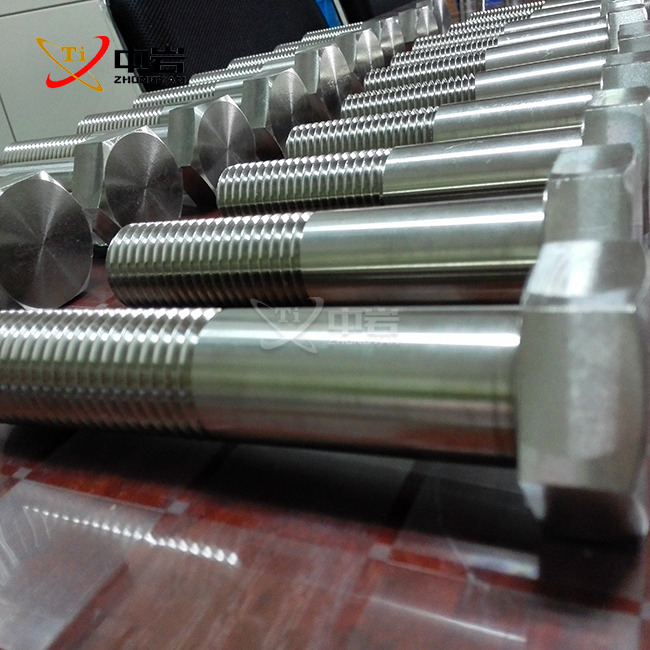
A major aerospace manufacturer approached us requiring titanium fasteners for turbine blade retention in next-generation jet engines. Standard fasteners failed to meet thermal cycling requirements and precise clamp load specifications needed to prevent blade liberation during extreme operating conditions. We engineered custom CNC-machined fasteners from Grade 5 titanium with optimized thread profiles that distributed clamp load evenly across the blade attachment interface. Precision tolerance control ensured consistent preload across hundreds of fasteners per engine, while specialized surface treatments prevented galling during assembly. The custom solution eliminated in-service failures that had plagued previous designs using standard fasteners, demonstrating how application-specific engineering delivers reliability improvements justifying higher component costs through lifecycle value.
Medical Device Manufacturing: Implant Precision Requirements
Orthopedic implant manufacturers face stringent regulatory requirements for dimensional accuracy and surface finish quality that standard components cannot consistently meet. We produced Custom CNC Machined Titanium Parts with complex anatomical contours and screw hole positioning accurate to ±0.01mm, enabling precise surgical placement and optimal load distribution across fracture sites. The biocompatible Grade 23 titanium material formed a stable oxide layer promoting osseointegration while resisting bodily fluid corrosion throughout the implant's decades-long service life. Surface roughness specifications were tightly controlled to specific Ra values promoting bone cell attachment while preventing bacterial colonization. This level of dimensional control and surface quality management lies beyond standard component manufacturing capabilities, illustrating why medical device applications almost universally require custom precision machining.
Industrial Machinery: When Standard Components Excel
Not every application justifies custom machining investment. A chemical processing equipment manufacturer needed corrosion-resistant fasteners for tank assembly where titanium's material properties provided value but dimensional tolerances remained generous. Standard titanium bolts and nuts supplied appropriate corrosion resistance at significantly lower cost than custom alternatives, with adequate dimensional control for flanged joint assembly. The procurement strategy correctly identified that customization offered minimal performance benefit for this non-precision application. This balanced perspective helps procurement teams allocate engineering resources and budget toward applications where custom solutions deliver measurable value while using cost-effective standard components where appropriate. Understanding this distinction prevents over-engineering while ensuring critical assemblies receive the precision components they require.
Conclusion
The choice between custom CNC machined titanium parts and standard components hinges on application requirements, performance criticality, and total lifecycle cost considerations. Custom machining delivers unmatched precision, design flexibility, and application-specific optimization essential for aerospace, medical, and high-performance industrial applications where dimensional accuracy and material properties directly impact safety and functionality. Standard components serve non-critical applications adequately at lower initial costs but cannot accommodate tight tolerances, specialized geometries, or rigorous certification requirements. Zhongyan's advanced manufacturing capabilities, strategic location in China's titanium production hub, and comprehensive quality control systems position us as your reliable partner for precision titanium machining that meets the most demanding industry standards.
FAQ
What tolerance levels differentiate custom CNC machined from standard titanium parts?
Custom CNC machined titanium parts routinely achieve tolerances of ±0.005 mm to ±0.05 mm depending on feature complexity, while standard components typically hold ±0.1mm or wider tolerances suitable for general fastening applications but inadequate for precision assemblies.
How do lead times compare between custom and standard titanium components?
Standard parts ship within days from distributor stock, whereas custom machined components require two to six weeks depending on complexity and order volume. Prototyping services can accelerate initial samples for design validation before committing to production quantities.
Which industries benefit most from custom titanium machining?
Aerospace manufacturers requiring certified materials and tight tolerances, medical device companies needing biocompatible implants with complex geometries, electronics producers using sputtering targets, and chemical processors demanding corrosion-resistant custom equipment represent our primary customer segments where custom machining delivers critical performance advantages.
Partner with Zhongyan for Precision Titanium Machining Solutions
Zhongyan stands ready to engineer custom CNC machined titanium parts that precisely match your application requirements. Our manufacturing excellence encompasses Grade 5 titanium components from M3 to M100 sizes, precision threading, corrosion-resistant finishes, and OEM packaging solutions—all produced under rigorous quality control meeting ASTM, AMS, and ISO standards. As a leading titanium parts manufacturer located in Baoji's titanium production hub, we combine material expertise, advanced CNC technology, and high-volume production capabilities to deliver components supporting aerospace innovation, medical device reliability, and industrial equipment durability. Contact our engineering team at sales@titaniumstudy.com to discuss your specific requirements and receive a detailed quotation for your next project.
References
1. Boyer, R., Welsch, G., & Collings, E.W. (1994). Materials Properties Handbook: Titanium Alloys. ASM International.
2. Donachie, M.J. (2000). Titanium: A Technical Guide, 2nd Edition. ASM International.
3. Ezugwu, E.O. & Wang, Z.M. (1997). Titanium Alloys and Their Machinability: A Review. Journal of Materials Processing Technology, 68(3), 262-274.
4. Lutjering, G. & Williams, J.C. (2007). Titanium, 2nd Edition. Springer Engineering Materials and Processes.
5. Peters, M., Kumpfert, J., Ward, C.H., & Leyens, C. (2003). Titanium Alloys for Aerospace Applications. Advanced Engineering Materials, 5(6), 419-427.
6. Veiga, C., Davim, J.P., & Loureiro, A.J.R. (2012). Properties and Applications of Titanium Alloys: A Brief Review. Reviews on Advanced Materials Science, 32(2), 133-148.
Learn about our latest products and discounts through SMS or email