- English
- French
- German
- Portuguese
- Spanish
- Russian
- Japanese
- Korean
- Arabic
- Greek
- German
- Turkish
- Italian
- Danish
- Romanian
- Indonesian
- Czech
- Afrikaans
- Swedish
- Polish
- Basque
- Catalan
- Esperanto
- Hindi
- Lao
- Albanian
- Amharic
- Armenian
- Azerbaijani
- Belarusian
- Bengali
- Bosnian
- Bulgarian
- Cebuano
- Chichewa
- Corsican
- Croatian
- Dutch
- Estonian
- Filipino
- Finnish
- Frisian
- Galician
- Georgian
- Gujarati
- Haitian
- Hausa
- Hawaiian
- Hebrew
- Hmong
- Hungarian
- Icelandic
- Igbo
- Javanese
- Kannada
- Kazakh
- Khmer
- Kurdish
- Kyrgyz
- Latin
- Latvian
- Lithuanian
- Luxembou..
- Macedonian
- Malagasy
- Malay
- Malayalam
- Maltese
- Maori
- Marathi
- Mongolian
- Burmese
- Nepali
- Norwegian
- Pashto
- Persian
- Punjabi
- Serbian
- Sesotho
- Sinhala
- Slovak
- Slovenian
- Somali
- Samoan
- Scots Gaelic
- Shona
- Sindhi
- Sundanese
- Swahili
- Tajik
- Tamil
- Telugu
- Thai
- Ukrainian
- Urdu
- Uzbek
- Vietnamese
- Welsh
- Xhosa
- Yiddish
- Yoruba
- Zulu
How to machine and weld titanium grade 4 plate efficiently?
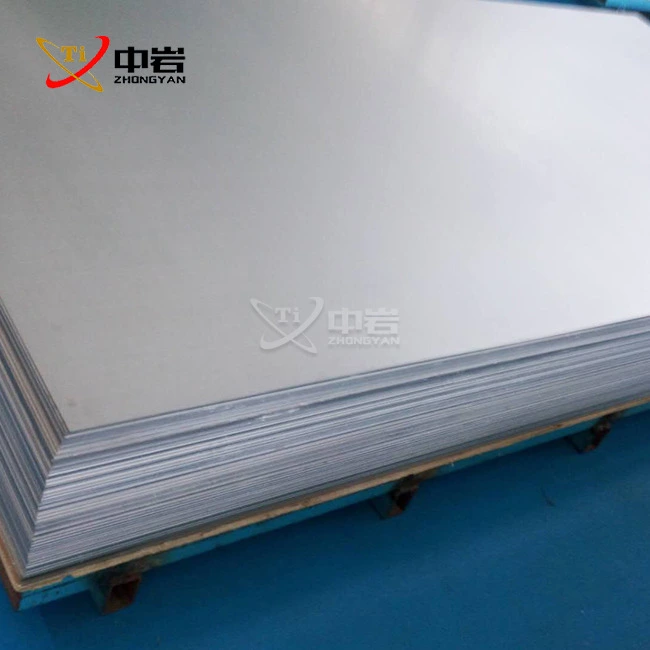
To effectively machine and weld titanium grade 4 plate, you need to know specific methods, choose the right tools, and keep the environment under control to get the job done quickly and well. To get the best results with this commercially pure titanium metal, you need to carefully optimize the parameters, use modern cooling systems, and join in a clean environment. Knowing the qualities of the material, using tried-and-true methods, and picking the right tools can cut down on processing time, keep tools from wearing out, and make sure that welds stay strong in medical, military, and industrial settings.
Understanding Titanium Grade 4 Plate: Properties and Applications
Chemical Composition and Mechanical Characteristics
Titanium Grade 4 is the purest and strongest type of titanium that can be bought in stores. It has very few alloying elements and is very pure. The tensile strength of this material is over 550 MPa and the yield strength is over 485 MPa. This makes it much stronger than smaller types. Its improved mechanical qualities come from a special mix of intermediate elements and oxygen content. This doesn't hurt its ability to fight rust or be biocompatible.The low density of 4.51 g/cm³ gives the material a great strength-to-weight ratio, which is important for uses that need to be light. It is very easy to shape after the right heat treatment, so it can be used to make complicated shapes while still keeping its shape. Because of these qualities, Grade 4 titanium is very useful in harsh settings where strength and longevity are very important.
Industrial Applications and Performance Benefits
Grade 4 titanium plates are great for flight parts that need to be very reliable, like engine housings, airplane structure elements, and important bolts. Because it doesn't rust in salt settings, this material is widely used in the marine industry to build underwater platforms, undersea parts, and systems that move seawater.Chemical processing plants can use Grade 4 because it doesn't respond badly with harsh media. This makes it perfect for heat exchangers, pressure tanks, and reactor parts. Because it is biocompatible, it is used in medicine for surgery implants, artificial devices, and dental frames. The non-magnetic qualities and temperature stability of the material make it even more useful in the electronics and precision manufacturing industries.
Comparison with Other Titanium Grades
While Grades 1 and 2 are easier to shape, Grade 4 is much stronger while still being easy to work with. Grade 4 (Ti-6Al-4V) has a simpler chemical makeup than Grade 5 (Ti-6Al-4V). This means that it is less likely to rust and is easier to work with. Because of this, Grade 4 is the best choice for uses that need more power than commonly pure grades but don't need the complexity of highly alloyed types.
Challenges in Machining and Welding Titanium Grade 4 Plate
Machining Difficulties and Work Hardening
The low heat conductivity and penchant for work hardening in Titanium Grade 4 make it difficult to machine in certain ways. During cutting activities, most of the heat is concentrated at the point where the tool meets the workpiece. This makes the tool wear out quickly and could damage the object. The elastic stiffness of the material causes problems with springback during cutting, which impacts the accuracy of measurements and the quality of the surface finish.Another big problem is galling, which happens when titanium sticks to cutting tools and makes built-up edge forms that lower the quality of the surface and speed up tool wear. When the temperature is high, the material's chemical reaction can cause the tool layer to break down and fail before it should. When these things come together, they make machine conditions that are difficult and need special techniques and constant parameter optimization.
Welding Complications and Quality Issues
When welding titanium grade 4 plate, it's very important to keep the work area clean because air, nitrogen, or hydrogen can form weak intermetallic compounds during the welding process. Even a small amount of pollution can make a joint much less flexible and resistant to wear, which can cause it to fail early in service. The high heat expansion rate of the material makes it hard to join, especially when big plate sets are involved.Controlling the amount of heat going in is very important because too high of temperatures can change the texture and tensile qualities of the material. If you don't use enough protective gas or prepare the joint properly, it can become porous, not fuse together, or become weak. To regularly get good results with these welding problems, you need high-tech tools, skilled workers, and strict quality control processes.
Best Practices for Efficient Machining of Titanium Grade 4 Plate
Tool Selection and Cutting Parameters
The first step in successful making is choosing the right tools, with a focus on those with sharp cutting edges and special shapes made for titanium use. Titanium aluminum nitride (TiAlN) layers on carbide tools make them work better by making them more resistant to wear and more stable at high temperatures. Positive rake angles lower the cutting forces while keeping the edge strong enough for cuts that are broken.Optimized cutting settings are a key part of how well machining works. Cutting at slower speeds, between 80 and 120 area feet per minute, keeps output high while preventing too much heat buildup. Higher feed rates help keep work from getting too hard by making sure that chips are always being removed and don't stay on the surface of the material. To keep the temperature stable during the whole process, the depth of cut should stay the same.
Cooling and Chip Management Strategies
Using water correctly is a very important part of successfully cutting titanium. Through-spindle coolant supply or high-pressure flood cooling makes sure that enough heat is removed while stopping chip welding to cutting tools. Different cutting fluids made just for titanium work better than regular coolants at keeping things moving smoothly and controlling heat.When chip removal is done right, it keeps cutting conditions constant and stops having to re-cut or damage the tool. Climb milling methods improve the quality of the surface finish while lowering the tendency for work hardening. Continuous engagement techniques keep the tool from resting and keep heat cycling to a minimum, which can damage the tool or change the shape of the workpiece.
Proven Techniques for High-Quality Welding of Titanium Grade 4 Plate
Welding Process Selection and Setup
Gas tungsten arc welding (GTAW/TIG) is still the best way to join titanium grade 4 plate, because it lets you precisely control the heat and makes the welds look great. Laser welding is better for small sections or high-speed tasks, while electron beam welding is better for thick parts that need to go deep. In order to get the best results, each process needs its own setting and weather limits.Cleaning the joint well to get rid of any surface dirt, oils, or oxides that might weaken the weld is an important part of proper joint preparation. Chemical scraping followed by mechanical cleaning makes sure that the surface is spotless. The design of the joint should take into account temperature growth while still letting welding tools and protective gas cover it.
Shielding and Contamination Control
When welding, complete air cover keeps the area from getting contaminated, which could make the joints unusable. The weld pool and anode are protected by the primary shielding gas, which is usually high-purity argon. Backing gas keeps the root side of the joint from oxidizing, and following screens keep the metal used for cooling from being exposed to air.Welding rooms or glove boxes are the best ways to keep contaminants out of important applications, but regular shielding methods can also work very well with the right technique. Most gas purity standards call for argon to have less than 10 parts per million of oxygen and less than 20 parts per million of wetness. It is important to find the best flow rates so that covering is achieved without causing turbulence that could pull in gases from the air.
Post-Weld Treatment and Inspection
For complicated parts or thick pieces, stress release heat treatment might be needed to lower remaining pressures and keep them from distorting while they're in use. The temperature and time ranges rely on the type of joint and the needs of the service. Typical ranges are from 480°C to 650°C for limited periods.Radiography, ultrasound checking, and penetrant testing are all non-destructive testing methods that check the soundness of a weld. Titanium welds have stricter visual checking rules than steel welds because even small surface flaws can reveal problems below the surface. Qualification examples are mechanically tested to make sure that the joint qualities meet the standards of the specification.
Procurement Insights and Vendor Selection for Titanium Grade 4 Plate
Material Certification and Quality Standards
To choose the right providers, you need to carefully look at their quality control systems and approval skills. ASTM B265 compliance makes sure that the material has the right chemical make-up and mechanical properties. Suppliers should give full material tracking, which includes mill test records that show chemical analysis, mechanical testing results, and a history of processing.An ISO 9001:2015 certification shows that quality management methods are well-established, while an AS9100 or NADCAP certification shows that the aerospace business is following the rules. Third-party testing and approved lab services give you even more peace of mind about the quality and accuracy of the materials.
Custom Specifications and Lead Time Considerations
Titanium grade 4 plate come in widths up to 1500 mm, lengths up to 6000 mm, and thicknesses range from 0.5 mm to 50 mm. Custom cutting services and unique surface finishes can be used for a variety of purposes. Knowing the minimum order amounts and wait times helps you plan your purchases and keep track of your goods better.Baoji Zhongyan Titanium Industry Co., Ltd. is an expert at offering high-quality titanium Grade 4 plates with precise surface finishes and sizes that can be customized. Our goods that meet ASTM B265 standards are very strong and don't rust, which makes them perfect for chemical and water uses. With our advanced CNC machine and OEM cutting services, we can make solutions that are strong and light that fit your needs.
Conclusion
To machine and weld titanium Grade 4 plate efficiently, you need to know a lot about the material's qualities, choose the right tools, and keep a close eye on the whole process. For success, use tried-and-true methods for choosing the right tools, setting the right cutting parameters, and keeping the work area clean while welding. Because of the way the material is made, it needs to be processed in a way that is very different from how steel is usually processed. Putting money into the right tools, training, and quality control methods pays off in a big way by increasing output, lowering waste, and making products more reliable. Strategic relationships with suppliers help make sure that the standard of the materials is always the same and help production processes run smoothly in a wide range of industries.
FAQ
What cutting tools work best for machining titanium Grade 4 plate?
Carbide tools with TiAlN coatings provide optimal performance for titanium Grade 4 machining. Sharp cutting edges with positive rake angles reduce cutting forces while maintaining edge strength. Specialized geometries designed for titanium applications help minimize work hardening and extend tool life significantly compared to standard cutting tools.
How do I prevent contamination during titanium Grade 4 welding?
Contamination prevention requires high-purity argon shielding gas with less than 10 ppm oxygen content, complete joint coverage including backing gas protection, and thorough pre-weld cleaning. Trailing shields protect cooling weld metal from atmospheric exposure. Proper gas flow rates provide coverage without creating turbulence that could draw in contaminants.
What are the typical lead times for custom titanium Grade 4 plates?
Lead times vary depending on specifications, quantities, and supplier capabilities. Standard sizes may be available from stock, while custom dimensions typically require 4-8 weeks for processing. Complex specifications or large quantities may extend lead times further, making advance planning essential for project scheduling.
Partner with Zhongyan for Superior Titanium Grade 4 Plate Solutions
Zhongyan stands as your trusted titanium grade 4 plate manufacturer, delivering exceptional quality and precision for demanding industrial applications. Our state-of-the-art facilities in China's Titanium Valley provide advanced CNC machining capabilities, custom cutting services, and comprehensive quality assurance backed by ISO 9001:2015 certification. With extensive experience serving aerospace, medical, and chemical processing industries, we understand the critical requirements for successful titanium processing. Contact our technical team at sales@titaniumstudy.com to discuss your specific requirements and discover how our expertise can optimize your manufacturing processes while ensuring reliable, high-performance results for your most challenging projects.
References
1. Boyer, R., Welsch, G., & Collings, E.W. (2020). Materials Properties Handbook: Titanium Alloys. ASM International, Materials Park, Ohio.
2. Donachie, Matthew J. (2019). Titanium: A Technical Guide, Second Edition. ASM International Publishing.
3. Lutjering, G., & Williams, J.C. (2018). Titanium Engineering Materials and Processes. Springer-Verlag Berlin Heidelberg.
4. Peters, M., Kumpfert, J., Ward, C.H., & Leyens, C. (2021). Titanium and Titanium Alloys: Fundamentals and Applications. Wiley-VCH Publications.
5. Welding Handbook Committee (2020). Welding Handbook Volume 4: Materials and Applications, Part 2. American Welding Society, Miami, Florida.
6. Machining Data Handbook (2019). Titanium Machining Guidelines and Best Practices, Fourth Edition. Institute for Advanced Manufacturing, Cincinnati, Ohio.
Learn about our latest products and discounts through SMS or email