- English
- French
- German
- Portuguese
- Spanish
- Russian
- Japanese
- Korean
- Arabic
- Greek
- German
- Turkish
- Italian
- Danish
- Romanian
- Indonesian
- Czech
- Afrikaans
- Swedish
- Polish
- Basque
- Catalan
- Esperanto
- Hindi
- Lao
- Albanian
- Amharic
- Armenian
- Azerbaijani
- Belarusian
- Bengali
- Bosnian
- Bulgarian
- Cebuano
- Chichewa
- Corsican
- Croatian
- Dutch
- Estonian
- Filipino
- Finnish
- Frisian
- Galician
- Georgian
- Gujarati
- Haitian
- Hausa
- Hawaiian
- Hebrew
- Hmong
- Hungarian
- Icelandic
- Igbo
- Javanese
- Kannada
- Kazakh
- Khmer
- Kurdish
- Kyrgyz
- Latin
- Latvian
- Lithuanian
- Luxembou..
- Macedonian
- Malagasy
- Malay
- Malayalam
- Maltese
- Maori
- Marathi
- Mongolian
- Burmese
- Nepali
- Norwegian
- Pashto
- Persian
- Punjabi
- Serbian
- Sesotho
- Sinhala
- Slovak
- Slovenian
- Somali
- Samoan
- Scots Gaelic
- Shona
- Sindhi
- Sundanese
- Swahili
- Tajik
- Tamil
- Telugu
- Thai
- Ukrainian
- Urdu
- Uzbek
- Vietnamese
- Welsh
- Xhosa
- Yiddish
- Yoruba
- Zulu
How to Ensure Quality When Ordering Custom CNC Machined Titanium Parts
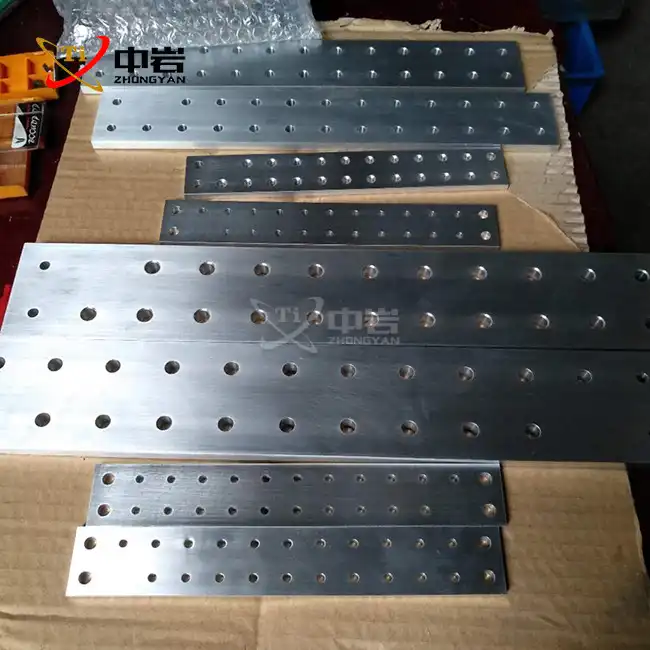
When you buy Custom CNC Machined Titanium Parts, you can be sure of their quality by knowing the material requirements, checking the supplier's certifications, putting in place strict testing procedures, and making sure there are clear lines of communication. Professionals in procurement need to check the grade of titanium they choose, especially Grade 5 (Ti-6Al-4V) for high-strength uses. They also need to make sure that the dimensions are accurate to within 0.005mm, ask for material tracking certificates, and make sure that the seller follows ASTM, AMS, and ISO standards. Effective quality assurance includes working together on the design, checking the progress using CMM tools, and testing after production, such as checking the tensile strength and doing a non-destructive examination, to avoid expensive failures in medical, industrial, and aircraft settings.
Understanding Quality Challenges in Custom Titanium CNC Machining
Titanium has a reputation for being hard to work with because of the way it is physically. Titanium doesn't transfer heat well like aluminium or steel does. This means that heat builds up at the cutting edges, which speeds up tool wear. This feature needs special CNC settings, like slower cutting speeds and higher feed rates, to keep the material from stiffening and losing its shape, which can affect the accuracy of measurements. Misconceptions about titanium's ability to be machined often cause buying teams to accept surface finishes or dimensions that aren't up to par.
Material Grade Variations and Their Impact
When being machined, different types of titanium behave in different ways. Grade 2, which is commercially pure, is very flexible and doesn't rust, but it mills differently than Grade 5, which has aluminium and vanadium added to it to make it stronger. When you buy precision parts in sizes from M3 to M100, the grade you choose directly affects the cutting tools you can use, the amount of coolant you need, and the tolerances you can achieve. Suppliers who don't know much about grade-specific cutting parameters often send parts with microstructural damage that can't be seen at first but is disastrous when they are used.
Root Causes of Quality Failures
The main cause of quality problems in titanium cutting is inadequate process controls. Not using enough high-pressure water leads to heat damage and the formation of alpha case, a rigid layer on the surface that needs to be chemically removed. Geometries in thin-walled sections are distorted by vibrations caused by bad workholding. In healthcare uses, stress risers are caused by contamination from bad treatment. These problems get worse when providers put speed over accuracy or don't buy the hard CNC equipment that is needed to keep tolerances tight during production runs.
Key Quality Criteria When Ordering Custom CNC Machined Titanium Parts
Quality specification begins before the first chip flies. Engineering teams must translate application requirements into measurable parameters that suppliers can execute and verify consistently.
Titanium Grade Selection and Material Certification
Grade 5 titanium used in Custom CNC Machined Titanium Parts has a tensile strength of up to 895 MPa and a density of only 4.43 g/cm³. These are important qualities for aircraft structural parts and medical implants where success depends on strength-to-weight ratios. Material verification through Mill Test Reports (MTR) checks the chemical make-up using spectroscopic analysis to prove that the aluminium content is between 5.5 and 6.75% and the vanadium content is between 3.5 and 4.5%. X-ray fluorescence (XRF) testing during arrival inspection confirms these specs before cutting starts. This keeps lower-grade alloys from being used by mistake, which could lead to failures in the field.
Precision Standards and Tolerance Specifications
Tolerance description tells the difference between useful parts and useless ones. For parts, tolerances of ±0.005mm are needed for critical measurements to make sure they fit correctly. For non-critical features, tolerances of ±0.05mm can be used to lower manufacturing costs. We use geometric dimensioning and tolerancing (GD&T) callouts for things like position, perpendicularity, and concentricity to control how things relate to each other instead of just setting limits on sizes. Coordinate measuring machine inspection creates audit trails that are necessary for medical and aircraft regulatory compliance by providing written proof that every measurement meets the requirements.
Surface Finish Requirements and Post-Processing
The wear life and rust resistance are directly affected by how rough the surface is. Most aerospace screws need Ra values between 0.4 and 0.8 µm to keep stress concentration points where cracks start to a minimum. To keep germs from sticking to medical devices and help them fuse with the bone, they need even finer finishing. To meet these requirements, you need to use multistage machining methods, starting with rough cutting and then finishing off with sharp tools and the best settings. Post-processing steps like anodising, shot peening, and electropolishing improve surface features even more and give the parts a unique look that helps with quality control tracking.
Testing and Certification Protocols
Non-destructive testing methods check the quality of the inside of produced parts without breaking them. Dye penetrant screening can find flaws in the surface that are as little as 0.01 mm deep. An X-ray can show that thick parts have internal holes. Ultrasonic testing finds problems below the ground. Tensile strength, yield strength, and stretch qualities are checked by destructive testing on sample parts from each batch to make sure they meet material standards. As required by AS9100 aircraft quality control systems, full paperwork files that include measurement reports, material certificates, and test results make it possible to track products from the mill where the raw materials are made to the final review.
Best Practices for Designing Parts to Optimize Quality in Titanium CNC Machining
Design decisions made during the engineering phase determine whether parts can be manufactured economically while meeting quality standards. Collaboration between design engineers and manufacturing experts prevents costly redesigns after production begins.
Design for Manufacturability Principles
Titanium tends to work harden, which makes sharp internal corners difficult. During cutting, this focuses stress, which leads to tool movement and mistakes in measurements. Setting large circles (usually at least 0.5 mm) lowers cutting forces and improves stress distribution in service. Uneven wall thickness causes different cooling rates that bend parts while they are being machined. When you avoid deep areas with high length-to-diameter ratios, the tool won't bend as much, which will result in curved walls instead of flat surfaces. These DFM ideas cut down on cutting time by 20 to 30 percent while making sure that the dimensions are always the same.
Tolerance Optimization Strategies
Tighter standards for Custom CNC Machined Titanium Parts make manufacturing more expensive because they require more cutting, special tools, and more time for checking. Strategic tolerance distribution only tightens controls on dimensions that are functionally important, like bearing surfaces, threaded features, and assembly interfaces. On the other hand, tolerances are loosened on features that aren't functionally important. This balanced method keeps the usefulness of the part while improving the speed of production. We suggest that you go over the tolerance stackup analysis with your suppliers to find ways to loosen tolerances without affecting the assembly requirements.
Collaborative Prototyping and Feedback Integration
Before going to mass production, prototype production shows any unexpected problems with the way the product is made. By making test runs, machinists can find the best cutting settings, figure out how tools wear, and make sure that checking methods are correct. Small changes to the design, like adding tool access features, changing wall thicknesses, or rewriting tolerance callouts, often lead to big improvements in production yields after test runs. This repeat method lowers the chance of quality problems and speeds up the time it takes for new parts to reach the market.
How to Choose a Reliable Supplier for Custom Titanium CNC Machined Parts
Supplier selection represents the most critical decision affecting long-term quality performance. Evaluation must extend beyond quoted pricing to assess capability, capacity, and commitment to quality systems.
Certification and Compliance Verification
ISO 9001:2015 approval shows basic quality management system execution, but for medical and aircraft uses, you need more certifications. AS9100D is a standard that directly handles the quality needs of aircraft, covering things like managing configurations and stopping fake parts. ITAR registration makes sure that international rules on the trafficking of weapons for military purposes are followed. Companies that make medical devices need to have ISO 13485 approval that shows they have design rules and risk management systems in place. Instead of depending only on papers from sellers, trustworthiness can be checked through the records of certification bodies. Zhongyan is based in Baoji, which is known as China's "Titanium Valley." It uses local knowledge and keeps up with international quality standards that meet global buying standards.
Production Capability Assessment
The standard levels that can be reached depend on how well the equipment works. Five-axis CNC machining centers can make complicated shapes in just one setup, so there is no setup-induced error stackup. Rigid machine design reduces vibrations that damage the finish on the surface. High-pressure cooling systems keep titanium from getting damaged by heat while it is being machined. When exact tasks are being done, climate-controlled work settings keep the dimensions stable. By visiting source sites or asking for specific lists of equipment, you can find out if the claimed skills match the real infrastructure. Our building has high-tech multi-axis machining centers that are set up to work with titanium. These centers can accurately machine parts from M3 (very small) to M100 (very big).
Cost-Quality Balance Analysis
In order to get your business, lowest-priced providers often skimp on quality by using bad tools that give surfaces a rough finish or by skipping checking steps that find problems before they are shipped. The total cost of ownership includes things like scrap rates, insurance claims, and production delays caused by quality problems. These costs are much higher than the original savings from buying the item. Value-based source selection looks at more than just price. It also looks at quality measures, on-time shipping performance, and expert support. When suppliers offer OEM packing and custom branding services, they show that they are flexible and focused on the customer, which is often a sign of quality commitment.
Reference Validation and Trial Production
Client reviews for Custom CNC Machined Titanium Parts show how reliable a seller is and how quickly they respond to quality problems. By asking for examples from customers in related businesses, you can find out if a source understands the unique needs of your application. Before placing a large order, make sure that the cutting skills are tested with sample parts or trial production runs. Checking the dimensions of test parts against the specs, measuring the surface finish, and looking over the material approval are all objective ways to show that the provider is competent. This care lowers the risk in the supply chain and sets performance standards for ongoing control of suppliers.
Process Controls and Verification Steps to Guarantee Quality
Systematic process controls embedded throughout production workflows prevent defects rather than detecting them after occurrence. Understanding these controls enables procurement professionals to evaluate supplier quality systems effectively.
In-Process Monitoring and Inspection
Real-time monitoring during machining operations catches deviations before completing entire production batches. Statistical process control charts track key dimensions from periodic sampling, revealing trends toward specification limits before producing nonconforming parts. Coordinate measuring machines verify critical dimensions at intermediate operations, ensuring subsequent machining starts from confirmed geometry. Tool wear monitoring through cutting force sensors or acoustic emission detection triggers tool changes before worn edges degrade surface finish. These proactive controls maximize yield while minimizing scrap costs. Our manufacturing process incorporates CMM inspection at defined intervals, maintaining dimensional integrity throughout multi-operation machining sequences.
Post-Production Testing Protocols
Mechanical testing validates that finished parts meet performance requirements beyond dimensional conformance. Tensile testing measures ultimate strength, yield strength, and elongation to confirm heat treatment effectiveness and material properties. Hardness testing using Rockwell or Brinell methods provides quick verification of material condition. Fatigue testing on sample parts from critical applications predicts service life under cyclic loading. Corrosion resistance verification through salt spray exposure confirms surface treatment effectiveness. These destructive tests on representative samples provide confidence that entire production batches meet specifications without testing every part.
Documentation and Traceability Systems
Complete documentation creates audit trails linking finished parts to raw material lots, machining parameters, inspection results, and operator identification. Batch traceability enables rapid recall if material defects are discovered after shipment while limiting affected quantities. First article inspection reports document that initial production parts meet all specifications before continuing production. Certificate of conformance statements formally declare compliance with purchase order requirements. Digital record systems facilitate retrieval during audits or failure investigations. We maintain comprehensive quality records meeting aerospace and medical device regulatory requirements, providing customers with complete documentation packages demonstrating compliance with ASTM, AMS, and ISO standards.
Conclusion
Quality assurance in titanium CNC machining demands comprehensive attention spanning material selection, design optimization, supplier evaluation, and process verification. Success requires understanding titanium's unique machining challenges, specifying measurable quality criteria, implementing DFM principles, selecting capable suppliers with appropriate certifications, and validating results through rigorous inspection. The investment in quality systems prevents catastrophic failures in demanding aerospace, medical, and industrial applications where component reliability directly impacts safety and performance. Procurement professionals who master these quality fundamentals reduce total cost of ownership while accelerating product development timelines through reduced rework and improved supplier partnerships.
FAQ
What tolerances are achievable when machining titanium components?
Modern CNC equipment combined with proper titanium machining parameters enables tolerances of ±0.005mm on critical dimensions for precision assemblies. Standard commercial tolerances typically range from ±0.025 mm to ±0.05 mm depending on part geometry and size. Tighter tolerances require additional finishing operations and inspection time, increasing manufacturing costs proportionally. We recommend specifying tight tolerances only on functionally critical dimensions while allowing standard tolerances on non-critical features to optimize cost-effectiveness.
How do I verify material grade authenticity in received parts?
Material verification begins with reviewing Mill Test Reports that document chemical composition from the original titanium mill. X-ray fluorescence spectroscopy provides non-destructive verification of elemental composition, confirming aluminum and vanadium content matches Grade 5 specifications. Hardness testing offers additional confirmation that material properties align with specified grades. Reputable suppliers provide complete material traceability linking finished parts to certified raw material lots, enabling verification through documented chain of custody.
What lead times should I expect for custom titanium machining projects?
Lead times vary based on part complexity, quantity, and current production schedules. Prototype quantities of simple geometries typically require two to three weeks from order to delivery. Complex multi-axis components or large production runs may extend to six to eight weeks. Rush services can accelerate critical projects, though expedited timelines may increase costs. Early engagement with suppliers during design phases enables production planning that aligns delivery schedules with project requirements.
Partner with Zhongyan for Superior Titanium Machining Solutions
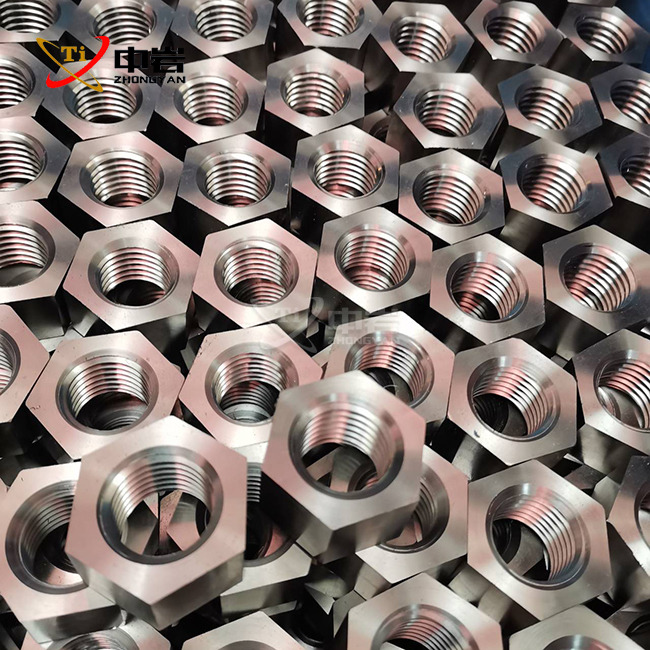
Zhongyan specializes in manufacturing high-precision Custom CNC Machined Titanium Parts that exceed the demanding requirements of aerospace, medical, and industrial applications. Our manufacturing operations in Baoji leverage regional titanium resources and processing expertise accumulated through decades of specialized production. We machine Grade 5 titanium parts from M3 miniature components to M100 large assemblies with tolerances to ±0.005mm, delivering exceptional strength-to-weight ratios and corrosion resistance. Our ISO 9001:2015-certified facility employs advanced CNC turning, milling, and grinding equipment operated by experienced technicians who understand titanium's unique machining requirements. Custom surface treatments, including anodizing and specialized finishes, meet application-specific performance standards. As a trusted titanium parts manufacturer, we support OEM packaging and branding while maintaining strict quality control throughout production. Contact our engineering team at sales@titaniumstudy.com to discuss your precision titanium machining requirements and discover how our manufacturing capabilities can enhance your product performance.
References
1. Boyer, R., Welsch, G., & Collings, E.W. (1994). Materials Properties Handbook: Titanium Alloys. ASM International, Materials Park, Ohio.
2. Donachie, M.J. (2000). Titanium: A Technical Guide, 2nd Edition. ASM International, Materials Park, Ohio.
3. Ezugwu, E.O. & Wang, Z.M. (1997). Titanium alloys and their machinability—a review. Journal of Materials Processing Technology, Volume 68, Issue 3, Pages 262-274.
4. Lutjering, G. & Williams, J.C. (2007). Engineering Materials and Processes: Titanium, 2nd Edition. Springer-Verlag, Berlin Heidelberg.
5. Schulz, H. & Moriwaki, T. (1992). High-Speed Machining. CIRP Annals - Manufacturing Technology, Volume 41, Issue 2, Pages 637-643.
6. Veiga, C., Davim, J.P., & Loureiro, A.J.R. (2012). Properties and applications of titanium alloys: A brief review. Reviews on Advanced Materials Science, Volume 32, Pages 133-148.
Learn about our latest products and discounts through SMS or email