- English
- French
- German
- Portuguese
- Spanish
- Russian
- Japanese
- Korean
- Arabic
- Greek
- German
- Turkish
- Italian
- Danish
- Romanian
- Indonesian
- Czech
- Afrikaans
- Swedish
- Polish
- Basque
- Catalan
- Esperanto
- Hindi
- Lao
- Albanian
- Amharic
- Armenian
- Azerbaijani
- Belarusian
- Bengali
- Bosnian
- Bulgarian
- Cebuano
- Chichewa
- Corsican
- Croatian
- Dutch
- Estonian
- Filipino
- Finnish
- Frisian
- Galician
- Georgian
- Gujarati
- Haitian
- Hausa
- Hawaiian
- Hebrew
- Hmong
- Hungarian
- Icelandic
- Igbo
- Javanese
- Kannada
- Kazakh
- Khmer
- Kurdish
- Kyrgyz
- Latin
- Latvian
- Lithuanian
- Luxembou..
- Macedonian
- Malagasy
- Malay
- Malayalam
- Maltese
- Maori
- Marathi
- Mongolian
- Burmese
- Nepali
- Norwegian
- Pashto
- Persian
- Punjabi
- Serbian
- Sesotho
- Sinhala
- Slovak
- Slovenian
- Somali
- Samoan
- Scots Gaelic
- Shona
- Sindhi
- Sundanese
- Swahili
- Tajik
- Tamil
- Telugu
- Thai
- Ukrainian
- Urdu
- Uzbek
- Vietnamese
- Welsh
- Xhosa
- Yiddish
- Yoruba
- Zulu
How strong is titanium grade 4 plate compared to other grades?
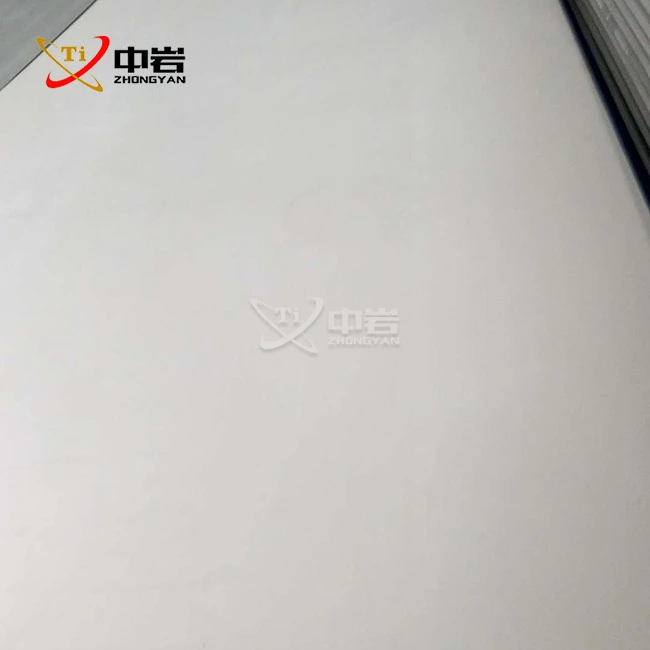
Titanium Grade 4 plate, also known as commercially pure (CP) titanium, is a versatile and robust material that has gained significant popularity across various industries. When comparing the strength of titanium grade 4 plate to other grades, it's essential to understand its unique properties and characteristics. Titanium Grade 4 offers an excellent balance of strength, corrosion resistance, and formability, making it a preferred choice for many applications. While it may not be the strongest among all titanium grades, its combination of properties often makes it the ideal choice for specific uses. In this blog post, we'll explore the strength of titanium grade 4 plate in comparison to other grades, delve into its advantages, and discuss its applications across different sectors. By understanding the strengths and limitations of titanium grade 4 plate, we can better appreciate its role in modern engineering and manufacturing processes.
Mechanical Properties of Titanium Grade 4 Plate
Tensile Strength and Yield Strength
Titanium grade 4 plate exhibits impressive mechanical properties that contribute to its overall strength and durability. The tensile strength of titanium grade 4 plate typically ranges from 550 MPa to 740 MPa, while its yield strength falls between 485 MPa and 655 MPa. According to these numbers, titanium grade 4 plate can handle a lot of stress before it bends or breaks. Compared to lower grades like Grade 1 and Grade 2, titanium grade 4 plate offers superior strength, making it suitable for applications that require enhanced mechanical performance. However, it's worth noting that higher grades like Grade 5 (Ti-6Al-4V) possess even greater strength, with tensile strengths reaching up to 1000 MPa or more.
Hardness and Elongation
The hardness of titanium grade 4 plate is another crucial factor in assessing its strength. Typically, it has a Rockwell C hardness of around 25-35 HRC, which translates to approximately 280 HV (Vickers hardness). This amount of hardness makes titanium grade 4 plate very durable and resistant to wear. With this, it can be used in situations where there is only light wear and stress on the machine. Ti grade 4 plate can bend at least 15%, which means it is very flexible and simple to shape. Because of this, the material is easy to shape and make without becoming weak, so it can be used in many industrial processes.
Fatigue Strength and Impact Resistance
Titanium grade 4 plate has a very high wear strength, which is important for uses that involve continuous stress or cycling loads. It usually has a higher wear strength than lower grades, which means it will work better over time under active loads. Also, titanium grade 4 plate is impressive in its ability to withstand impacts; it can take a lot of force without breaking. Because of this, it can be used in places where rapid hits or shocks are possible. Titanium grade 4 plate might not have the fatigue strength or impact resistance of some higher metal grades, but it still has a good mix of these qualities, which makes it a good choice for many industrial uses.
Corrosion Resistance and Chemical Properties
Corrosion Resistance in Various Environments
One of the standout features of titanium grade 4 plate is its exceptional corrosion resistance in a wide range of environments. When this material is introduced to oxygen, it forms a stable, protective oxide layer on its surface. This layer makes the material very resistant to weathering in a wide range of media. Titanium grade 4 plate is very good at resisting rust in saltwater, which makes it perfect for use in naval settings. Not only that, but it works better than most metals and alloys in both acidic and basic conditions. This high level of corrosion resistance makes titanium grade 4 plate much stronger and last longer because it keeps its shape even in hard situations where other materials would break down quickly.
Chemical Composition and Its Impact on Strength
The chemicals that make up titanium grade 4 plate are very important in determining its strength and other qualities. As a commercially pure titanium grade, it contains minimal alloying elements, with the primary component being titanium (typically 99% or higher). The small amounts of impurities, such as iron, carbon, nitrogen, and oxygen, are carefully controlled to achieve the desired mechanical properties. The presence of these elements, particularly oxygen and nitrogen, contributes to the increased strength of titanium grade 4 plate compared to lower grades. Because of its unique makeup, titanium grade 4 plate is very resistant to rust and also very strong, making it a popular choice for uses that need a balance between these qualities.
Biocompatibility and Inertness
Another notable aspect of titanium grade 4 plate is its exceptional biocompatibility and chemical inertness. These features come from the chemicals that make it up and the steady oxide layer that forms on top of it. Because it doesn't respond badly with living flesh and doesn't let bodily fluids pass through it, titanium grade 4 plate is a great material for medical implants and devices. For the same reason, it can be used in the chemical processing business, where it can handle many toxic substances without breaking down. The combination of strength, corrosion resistance, and biocompatibility gives titanium grade 4 plate a unique advantage in applications where these properties are crucial, such as in the medical and chemical industries.
Applications and Comparisons with Other Grades
Industrial Applications of Titanium Grade 4 Plate
Titanium grade 4 plate finds extensive use in various industrial applications due to its balanced combination of strength, corrosion resistance, and formability. In the aerospace industry, it is used for non-critical components that require good strength and excellent corrosion resistance. The marine industry utilizes titanium grade 4 plate for components exposed to saltwater, such as heat exchangers and propeller shafts. In chemical processing, it is employed in the construction of pressure vessels, tanks, and piping systems that handle corrosive materials. The energy sector benefits from titanium grade 4 plate in applications like geothermal wells and offshore oil and gas equipment. Its use in these diverse fields demonstrates the versatility and reliability of titanium grade 4 plate in challenging industrial environments.
Comparison with Lower Titanium Grades
When compared to lower titanium grades such as Grade 1 and Grade 2, titanium grade 4 plate offers significantly higher strength while maintaining excellent corrosion resistance. For instance, Grade 1 titanium has a typical tensile strength of around 240 MPa, while Grade 2 reaches about 345 MPa. In contrast, titanium grade 4 plate boasts a tensile strength of at least 550 MPa, making it substantially stronger. This increased strength allows for the use of thinner sections in design, potentially reducing weight and material costs. However, the lower grades may offer slightly better formability and ductility. The choice between titanium grade 4 plate and lower grades often depends on the specific requirements of the application, with Grade 4 being preferred when higher strength is necessary without compromising corrosion resistance.
Comparison with Higher Titanium Alloys
When comparing titanium grade 4 plate to higher titanium alloys like Grade 5 (Ti-6Al-4V) or Grade 23 (Ti-6Al-4V ELI), it's important to note that these alloys generally offer superior strength. For example, Grade 5 titanium can have a tensile strength of up to 1000 MPa or more, significantly higher than that of titanium grade 4 plate. However, titanium grade 4 plate maintains better corrosion resistance in many environments due to its higher purity. It also tends to be more cost-effective and easier to form and weld compared to the higher alloys. In applications where maximum strength is not the primary concern, but a balance of strength, corrosion resistance, and formability is required, titanium grade 4 plate often emerges as the optimal choice. Its versatility and balanced properties make it a popular option across various industries, even when compared to higher-strength alloys.
Conclusion
In conclusion, titanium grade 4 plate offers a unique combination of strength, corrosion resistance, and versatility that makes it an excellent choice for a wide range of applications. While it may not be the strongest among all titanium grades, its balanced properties often make it the ideal material for many industrial and medical uses. As a leading manufacturer of titanium products, Baoji Zhongyan Titanium Industry Co., Ltd. specializes in producing high-quality titanium grade 4 plates and other titanium materials. Our expertise in CNC machining and custom fabrication allows us to meet diverse customer needs with precision and efficiency. For more information or to discuss your specific requirements, please contact us at sales@titaniumstudy.com.
FAQ
Q: What is the main advantage of titanium grade 4 plate over other grades?
A: The main advantage is its balanced combination of strength, corrosion resistance, and formability, making it versatile for various applications.
Q: How does the strength of titanium grade 4 plate compare to stainless steel?
A: Titanium grade 4 plate generally has a higher strength-to-weight ratio and better corrosion resistance than most stainless steels.
Q: Is titanium grade 4 plate suitable for marine applications?
A: Yes, its excellent corrosion resistance in saltwater environments makes it ideal for marine applications.
Q: Can titanium grade 4 plate be welded easily?
A: Yes, titanium grade 4 plate has good weldability, especially compared to higher titanium alloys.
Q: What is the typical price range of titanium grade 4 plate compared to other grades?
A: Titanium grade 4 plate is generally more expensive than lower grades but more cost-effective than higher alloy grades.
References
1. ASTM International. (2020). ASTM B265 - Standard Specification for Titanium and Titanium Alloy Strip, Sheet, and Plate.
2. Lutjering, G., & Williams, J. C. (2007). Titanium (2nd ed.). Springer-Verlag Berlin Heidelberg.
3. Leyens, C., & Peters, M. (Eds.). (2003). Titanium and Titanium Alloys: Fundamentals and Applications. Wiley-VCH.
4. Boyer, R., Welsch, G., & Collings, E. W. (1994). Materials Properties Handbook: Titanium Alloys. ASM International.
5. Peters, M., Hemptenmacher, J., Kumpfert, J., & Leyens, C. (2003). Structure and Properties of Titanium and Titanium Alloys. In Titanium and Titanium Alloys (pp. 1-36). Wiley-VCH.
6. Donachie, M. J. (2000). Titanium: A Technical Guide (2nd ed.). ASM International.
Learn about our latest products and discounts through SMS or email