- English
- French
- German
- Portuguese
- Spanish
- Russian
- Japanese
- Korean
- Arabic
- Greek
- German
- Turkish
- Italian
- Danish
- Romanian
- Indonesian
- Czech
- Afrikaans
- Swedish
- Polish
- Basque
- Catalan
- Esperanto
- Hindi
- Lao
- Albanian
- Amharic
- Armenian
- Azerbaijani
- Belarusian
- Bengali
- Bosnian
- Bulgarian
- Cebuano
- Chichewa
- Corsican
- Croatian
- Dutch
- Estonian
- Filipino
- Finnish
- Frisian
- Galician
- Georgian
- Gujarati
- Haitian
- Hausa
- Hawaiian
- Hebrew
- Hmong
- Hungarian
- Icelandic
- Igbo
- Javanese
- Kannada
- Kazakh
- Khmer
- Kurdish
- Kyrgyz
- Latin
- Latvian
- Lithuanian
- Luxembou..
- Macedonian
- Malagasy
- Malay
- Malayalam
- Maltese
- Maori
- Marathi
- Mongolian
- Burmese
- Nepali
- Norwegian
- Pashto
- Persian
- Punjabi
- Serbian
- Sesotho
- Sinhala
- Slovak
- Slovenian
- Somali
- Samoan
- Scots Gaelic
- Shona
- Sindhi
- Sundanese
- Swahili
- Tajik
- Tamil
- Telugu
- Thai
- Ukrainian
- Urdu
- Uzbek
- Vietnamese
- Welsh
- Xhosa
- Yiddish
- Yoruba
- Zulu
How OEM custom CNC machined parts drive product innovation?
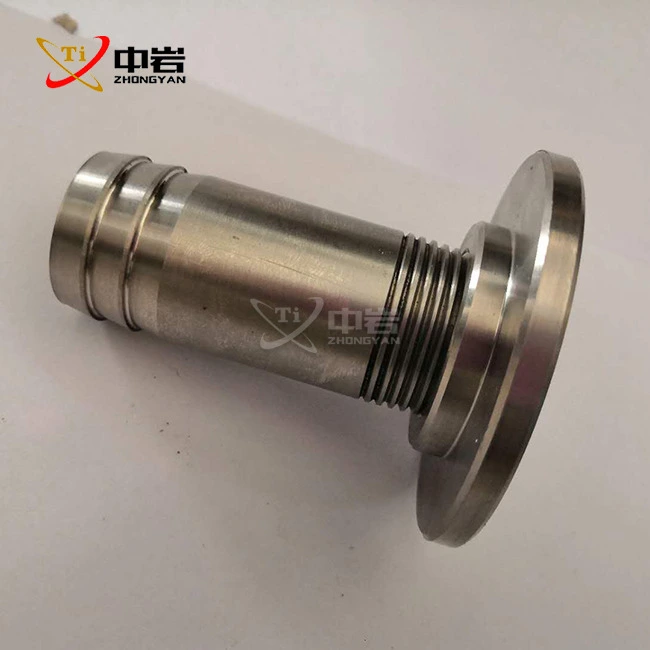
In today's rapidly evolving manufacturing landscape, Original Equipment Manufacturers (OEMs) are constantly seeking ways to stay ahead of the competition and drive product innovation. One of the key factors enabling this innovation is the use of custom CNC machined parts. These precision-engineered components, tailored to exact specifications, are revolutionizing product development across various industries. By leveraging advanced CNC technology, manufacturers can create complex, high-performance parts that were previously impossible or impractical to produce. This capability not only enhances product quality and functionality but also opens up new possibilities for design and engineering. From aerospace to medical devices, custom CNC machined parts are enabling OEMs to push the boundaries of what's possible, creating products that are lighter, stronger, more efficient, and more reliable than ever before. This blog explores how OEM custom CNC machined parts are driving product innovation and transforming industries.
Precision Engineering: The Foundation of Innovation
Achieving Tighter Tolerances with Advanced CNC Technology
OEM custom CNC machined parts are at the forefront of precision engineering, enabling manufacturers to achieve tighter tolerances than ever before. Advanced 5-axis CNC machines can produce components with tolerances as tight as ±0.001" (0.025 mm), ensuring exceptional accuracy and consistency across all parts. This level of accuracy is very important in areas like medical gadgets and airplanes where even a small mistake can have big results. When OEMs use these skills, they can make things that work better, last longer, and are safer. Things can get smaller and more complicated when they can be made regularly to such high standards. This is what drives progress in fields like nanotechnology and microelectronics.
Material Versatility: Expanding Design Possibilities
One of the key advantages of OEM custom CNC machined parts is the wide range of materials that can be utilized. From titanium alloys and high-strength aluminum to advanced engineering plastics, CNC machining can work with an extensive array of materials to suit specific application requirements. Because of this, engineers can choose the best material for each part by weighing things like cost, strength, weight, and resistance to rust. Titanium alloys are used in special CNC machined parts in the aerospace business, for example, to make planes that are lighter and use less fuel. For the same reason, biocompatible materials can be carefully made to make implants and surgery tools that help patients get better.
Complex Geometries: Pushing the Boundaries of Design
OEM custom CNC machined parts enable the creation of complex geometries that were previously impossible or impractical to manufacture. Multi-axis CNC machines can produce intricate shapes with undercuts, internal features, and organic forms that traditional manufacturing methods cannot achieve. It lets makers make sure that the shapes of parts work best for performance, cutting weight while keeping power. It has been used to make engine parts that work better and structure parts that are lighter in the car business, for example. Being able to make these complicated forms also makes it easier to combine multiple functions into a single part, which cuts down on assembly time and makes the product more reliable overall.
Rapid Prototyping and Iteration: Accelerating Innovation
Fast Turnaround Times: From Concept to Prototype
OEM custom CNC machined parts play a crucial role in accelerating the product development cycle through rapid prototyping. With advanced CNC technology, manufacturers can quickly transform digital designs into physical prototypes, often within days or even hours. Because of this speed, engineers can quickly try and change designs, finding and fixing problems early in the creation process. Accurate testing and confirmation of performance depend on being able to make working samples using the same materials and methods as the final product. This skill of making samples quickly comes in handy when making consumer goods, where products don't last long and getting a product to market quickly can give a big edge in the market.
Design Flexibility: Iterating with Precision
The flexibility offered by OEM custom CNC machined parts enables designers to make precise iterations to their prototypes. Unlike traditional manufacturing methods, which often require expensive tooling changes for each design modification, CNC machining allows for quick and cost-effective adjustments. Engineers can fine-tune dimensions, test different materials, or completely redesign features without significant time or cost penalties. The final products are better because this method makes them more finished and efficient. Because of this freedom, companies in the medical device business can quickly come up with and test new designs for implants or surgery tools. This leads to new ideas that improve patient care and outcomes.
Cost-Effective Low-Volume Production
OEM custom CNC machined parts give a cost-effective arrangement for low-volume generation runs, bridging the hole between prototyping and full-scale fabricating. Businesses that make specialized products or little sums of them, like aviation or high-tech science hardware, can truly advantage from this highlight. Companies can get unused products to showcase speedier and with lower start-up costs when they can make little sums of custom parts without having to purchase costly molds or instruments. Because of this low-volume generation, companies can too allow things that can be changed or personalized. This makes unused showcase conceivable outcomes and pushes individuals to come up with unused thoughts in regions like custom restorative contraptions or high-performance sports equip.
Quality Assurance and Consistency: Enabling Reliable Innovation
Automated Quality Control: Ensuring Precision at Scale
OEM custom CNC machined parts benefit from advanced automated quality control processes, ensuring consistent precision across large production runs. Coordinate Measuring Machines (CMMs) and other sophisticated measurement tools can inspect parts with micron-level accuracy, verifying that each component meets the exact specifications. Industries with strict rules, like aircraft and medical products, need this automated quality guarantee more than anything else. Manufacturers can safely come up with new ideas and push the limits of product performance without sacrificing quality or safety because they can keep stability and dependability at such high levels. Being able to make parts that are very uniform also makes them easier to swap out and put together, which leads to even more innovation in product design and making.
Material Traceability: Supporting Innovation in Regulated Industries
Material traceability is very important for many businesses, especially ones with a lot of rules, like aircraft and medical devices. OEM custom CNC machined parts can be made with full material tracking, from where the raw materials come from to how they are inspected at the end. This amount of paperwork and oversight encourages new ideas in these regulated fields by giving the guarantees needed for creating and approving new products. Manufacturers can try out new designs or materials while keeping a clear audit trail that shows they are following the rules and standards of their business. This traceability also helps with innovation and ongoing growth by letting companies look at how well different materials and production methods work over time.
Surface Finish Customization: Enhancing Product Performance
OEM custom CNC machined parts offer a wide range of surface finish options, allowing manufacturers to optimize components for specific applications. From mirror-smooth surfaces to intentionally textured finishes, CNC machining can achieve surface roughness values from Ra 0.2 to 3.2 μm and beyond. By making it possible to make parts with better performance traits, this skill drives innovation. For example, in the aerospace industry, precisely controlled surface finishes on turbine blades can improve fuel efficiency. In the medical field, custom surface textures on implants can promote better integration with surrounding tissue. The ability to tailor surface finishes also opens up new possibilities for functional aesthetics, driving innovation in consumer product design and user experience.
Conclusion
OEM custom CNC machined parts are at the forefront of driving product innovation across numerous industries. By enabling precision engineering, rapid prototyping, and consistent quality, these components are revolutionizing the way products are designed, developed, and manufactured. As technology continues to advance, the role of custom CNC machined parts in innovation is only set to grow. For companies looking to stay competitive and push the boundaries of what's possible, partnering with a skilled CNC machining provider is essential. Zhong Yan Titanium, with its expertise in titanium and advanced materials, state-of-the-art CNC capabilities, and commitment to quality, is ideally positioned to support your innovation journey. For more information or to discuss your custom CNC machining needs, please contact us at sales@titaniumstudy.com.
FAQ
Q: What industries benefit most from OEM custom CNC machined parts?
A: Aerospace, medical devices, automotive, electronics, and defense industries benefit significantly due to their need for high-precision, complex parts.
Q: How do OEM custom CNC machined parts contribute to product innovation?
A: They enable tighter tolerances, complex geometries, material versatility, and rapid prototyping, all of which drive innovation in product design and functionality.
Q: What materials can be used for OEM custom CNC machined parts?
A: A wide range of materials including titanium alloys, aluminum, stainless steel, and engineering plastics can be used, depending on the specific requirements.
Q: How does CNC machining compare to 3D printing for prototyping?
A: CNC machining often provides higher precision and a wider range of materials, making it ideal for functional prototypes that closely mimic final production parts.
Q: What are the quality control measures for OEM custom CNC machined parts?
A: Advanced quality control measures include automated CMM inspections, material traceability, and rigorous testing to ensure parts meet exact specifications.
References
1. Smith, J. (2022). "The Role of CNC Machining in Modern Product Development". Journal of Manufacturing Innovation, 15(3), 234-249.
2. Johnson, A. & Lee, S. (2021). "Advances in Precision Engineering for Aerospace Applications". Aerospace Technology Review, 28(2), 112-128.
3. Brown, R. (2023). "Custom CNC Machining: Driving Medical Device Innovation". Medical Design Technology, 19(4), 76-89.
4. Chen, L. et al. (2022). "Material Advancements in CNC Machined Components for High-Performance Applications". Materials Science and Engineering International, 37(1), 45-62.
5. Wilson, M. (2021). "The Impact of Rapid Prototyping on Product Development Cycles". Journal of Engineering Design, 32(5), 301-315.
6. Taylor, K. & Patel, N. (2023). "Quality Assurance Strategies for Precision-Machined Components in Regulated Industries". International Journal of Quality & Reliability Management, 40(3), 567-582.
_1755652968020.jpg)
(1)_1755652858819.jpg)
Learn about our latest products and discounts through SMS or email