- English
- French
- German
- Portuguese
- Spanish
- Russian
- Japanese
- Korean
- Arabic
- Greek
- German
- Turkish
- Italian
- Danish
- Romanian
- Indonesian
- Czech
- Afrikaans
- Swedish
- Polish
- Basque
- Catalan
- Esperanto
- Hindi
- Lao
- Albanian
- Amharic
- Armenian
- Azerbaijani
- Belarusian
- Bengali
- Bosnian
- Bulgarian
- Cebuano
- Chichewa
- Corsican
- Croatian
- Dutch
- Estonian
- Filipino
- Finnish
- Frisian
- Galician
- Georgian
- Gujarati
- Haitian
- Hausa
- Hawaiian
- Hebrew
- Hmong
- Hungarian
- Icelandic
- Igbo
- Javanese
- Kannada
- Kazakh
- Khmer
- Kurdish
- Kyrgyz
- Latin
- Latvian
- Lithuanian
- Luxembou..
- Macedonian
- Malagasy
- Malay
- Malayalam
- Maltese
- Maori
- Marathi
- Mongolian
- Burmese
- Nepali
- Norwegian
- Pashto
- Persian
- Punjabi
- Serbian
- Sesotho
- Sinhala
- Slovak
- Slovenian
- Somali
- Samoan
- Scots Gaelic
- Shona
- Sindhi
- Sundanese
- Swahili
- Tajik
- Tamil
- Telugu
- Thai
- Ukrainian
- Urdu
- Uzbek
- Vietnamese
- Welsh
- Xhosa
- Yiddish
- Yoruba
- Zulu
How Pure Should a Titanium Sputtering Target Be?

When choosing a Titanium Sputtering Target, clarity turns out to be the most important thing that affects how well it works in thin film deposition methods. The answer is completely dependent on what you need it for. The purity levels range from 99.5% for general commercial coats to 99.995% for making semiconductors, which is the highest level of purity possible. When procurement workers understand this basic connection between purity and performance, they can make choices that improve both quality and cost-effectiveness in their manufacturing processes.
Understanding Titanium Sputtering Targets and Their Purity
Physical vapor deposition (PVD) processes need Titanium Sputtering Targets, which are the source materials from which titanium atoms are released and deposited onto surfaces to make thin plates. These precisely made parts go through strict quality checks to make sure that the material properties stay the same and that they work well with sparking in a wide range of industrial settings.
Fundamental Material Properties and Function
Sputtering works by hitting the target surface with energetic ions, usually argon. These ions knock loose titanium atoms, which then move through the vacuum room and cover the substrate. This process needs very uniform materials and precise control of the microstructure inside the target. How well atoms are ejected and how good the thin film that is made depend on the grain size, density, and crystalline direction.To make modern Titanium Sputtering Target, new powder metallurgy and vacuum melting methods are used to get the right material properties. To meet strict requirements, the production method usually includes several steps of cleaning, combining, and milling. To make sure that the plasma forms evenly during the sputtering process, surface finish standards often say that the sharpness value must be less than 0.4 micrometers.
Purity's Impact on Sputtering Efficiency
There are several ways in which purity is directly linked to sputtering effectiveness. These ways affect both the deposition process and the quality of the end film. If the target material has impurities, they can cause regional changes in the sputter yield, which makes the film width not be the same all over the substrate surface. Oxygen, nitrogen, carbon, and metal impurities are all common pollutants that make the casting process more difficult in their own ways.Oxygen pollution is especially bad because it can create titanium oxide stages that sputter differently than pure titanium. During sputtering, these oxide inclusions often cause particles to form, which damages the formed film's electrical and optical qualities. In the same way, nitrogen impurities can change the process by making titanium nitride compounds that can change the target's sputter yield and cause unexpected changes in the end coating's stoichiometry.
Commercial Purity Classifications
Titanium sputtering targets are categorized by their quality in a number of different ways, each of which is based on the needs of the application and the cost. Grade 1 commercial grade titanium is usually 99.5% pure and can be used for coatings that look nice and for general industry uses that don't need very high performance.High-purity grades up to 99.95% are used a lot in optical coatings, where the quality of the film directly affects performance factors like reflection, transparency, and absorption. Ultra-high purity versions with 99.995% purity or higher are used in important steps in making semiconductors, because even small flaws can hurt device performance and yield rates.
Key Applications and Their Purity Requirements
Depending on their performance standards and end-use needs, different businesses have different cleanliness requirements. By knowing these application-specific needs, buying teams can choose the right purity grades while achieving the best results in terms of cost-effectiveness and performance.
Electronics and Semiconductor Manufacturing
Manufacturing semiconductor devices is the most difficult use for Titanium Sputtering Target because they need to be very pure to work properly. Titanium is used as a buffer layer in the process of making integrated circuits. It keeps copper from diffusing into silicon surfaces while still being a good electrical conductor.Low amounts of impurities must stay below parts-per-million limits in advanced semiconductor nodes smaller than 10 nanometers so that device stability is not affected. Even very small amounts of iron, chromium, or other transition metals can cause deep-level traps in the structure of semiconductors. These traps hurt the device's electrical function and shorten its life. As a result, semiconductor-grade Titanium Sputtering Target goods usually list purity levels of 99.995% or higher, along with thorough chemical analysis reports that show the exact amounts of impurities present.In order to make memory devices, goal purity has to be even higher because the films have to be very uniform across big wafer areas. Differences in film thickness or composition can cause memory cells to work differently, which can affect the yield and stability of the device as a whole. To make sure the process stays stable, modern DRAM and NAND flash production lines always ask for titanium targets with a controlled grain structure and an extremely low impurity content.
Solar Energy and Photovoltaic Applications
Titanium thin films are used in the production of solar cells for many purposes, such as anti-reflective coatings, clear conductive layers, and contact metallization schemes. For these uses, the purity needs to be a mix between performance needs and cost concerns. Depending on the cell design and efficiency goals, the purity levels usually fall between 99.9% and 99.95%.Titanium-based contact systems are often used in high-efficiency silicon solar cells. These systems need precise control over their electrical qualities and adhesion features. If there are impurities in the sputtering target, they can change these qualities by adding unwanted stages or changing the microstructure of the film. In these situations, oxygen pollution is especially bad because it can lower electrical conductivity and make interfacial flaws that raise contact resistance.Thin-film solar systems, like CIGS and cadmium telluride cells, use titanium for back contact tasks where low purity levels are usually enough. Most of the time, these apps can handle targets with 99.5% to 99.9% purity while still performing well, which saves money in high-volume production settings.
Aerospace and High-Performance Coatings
High-purity Titanium Sputtering Targets are needed because aerospace uses need coatings that last a long time and work well in harsh circumstances. For example, coatings on turbine blades have to be able to survive temperatures above 1000°C while still being able to protect against rust and corrosion.For these tough uses, purity levels should be between 99.9% and 99.95%, and sulfur and phosphorus impurities that can hurt performance at high temperatures need to be carefully controlled. The aerospace industry has strict qualification standards that often require a lot of testing and recording of the qualities of the target material. This can include thorough metallurgical analyses and process validation studies.
Factors Determining the Required Purity Level
Choosing the best purity level takes careful thought about many things that affect both technical success and the ability to make money. These choice criteria are more than just simple material requirements. They also include process needs, equipment skills, and long-term operating factors.
End Product Performance Requirements
The performance requirements for the target application form the basis for choices about pure selection. Important factors include the electrical and optical qualities of the film, as well as its mechanical and environmental safety needs. Higher purity goals are usually needed to get consistent results in applications that need to have tight control over these qualities.Electronic devices that work at high frequencies or low power levels are especially sensitive to changes in film qualities caused by impurities. Even small changes in electrical resistivity or dielectric properties can significantly impact circuit performance, which is why ultra-high purity goals are needed to keep device standards acceptable.In the same way, there are strong links between goal purity and end performance traits in optical coating uses. Precision optical instruments need anti-reflective coatings that are very uniform and have low absorption losses, which means that the source materials have to be very pure so that there aren't many scattering centers and absorption sites in the film that is formed.
Equipment and Process Compatibility
The relationship between goal purity and finished film quality is greatly affected by the sputtering equipment's powers and the process parameters. Most of the time, advanced magnetron sputtering systems with advanced plasma control can make up for small differences in purity. On the other hand, simpler tools might need higher purity targets to get the same results.Process factors like substrate temperature, working pressure, and power density can change how impurities are added to the growth film. Higher substrate temperatures can help separate impurities and lessen their effect on film qualities. This could mean that lower purity goals can be used without affecting performance.The cleanliness levels of the target also affect how well it is used because flaws can cause uneven erosion patterns that shorten the target's life and make more particles. Targets with higher purity usually have more expected wear patterns and last longer, which can help the economy in ways that may make up for their higher original cost.
Cost-Benefit Analysis Considerations
When buying things, people have to weigh the prices of the materials against the benefits in performance and operating efficiency. Higher purity goals cost more, but they often lead to better process stability, lower failure rates, and longer equipment uptime, which can make the extra money worth it.Improvements in manufacturing yield are a big cost factor in choosing which grade to use. When semiconductor manufacturing plants switch to higher purity sputtering targets, they report big yield gains. This is because lower defect rates directly lead to more devices being made and higher profits.Long-term running costs include when to replace things, how often to do it, how often to fix problems with tools, and how to make the process run more smoothly. Higher purity targets usually need to be replaced less often and cause fewer problems with the process, which lowers the total complexity of operations and the costs that come with them.
How to Source and Maintain High-Purity Titanium Sputtering Targets
To successfully buy high-purity Titanium Sputtering Target, you need to carefully evaluate the suppliers you work with, follow strict quality control rules, and make sure that the materials are handled in the right way throughout the supply chain.
Supplier Selection and Quality Assurance
Target procurement methods work best when they start by building relationships with qualified sellers. Leading makers show what they can do by having a lot of quality licenses, high-tech analytical tools, and written process control methods that make sure the quality of their products is always the same.ISO 9001 certification is a basic way to make sure that quality management systems are working, while certifications specific to an industry, like AS9100 for aircraft uses, show that the company has specialized knowledge in difficult markets. Suppliers should keep up-to-date diagnostic tools like glow discharge mass spectrometry (GDMS) for accurate impurity analysis and scanning electron microscopy (SEM) for describing the microstructure of the product.Case studies and comments from customers are great ways to learn about how well a provider does in the real world. Successful sellers usually give thorough records of how they make things, how they check for quality, and how they help customers with technical issues. This shows that they care about their customers' success.
Manufacturing Expertise and Process Transparency
Titanium Sputtering Targets manufacturing requires specialized expertise in powder metallurgy, vacuum melting, and precision machining techniques. Suppliers should show that they fully understand how processing factors affect the qualities of the finished product. This will allow them to tailor production processes to meet the needs of each customer.To get ultra-high purity levels, advanced makers usually use more than one method of cleaning, such as vacuum arc remelting, electron beam melting, and controlled atmosphere processing. Allowing customers to see how their specific needs are met and having faith in the supplier's ability to keep quality is accomplished by process openness.Long-term relationships that work well need to be able to provide technical help, since application needs change all the time as technology improves and market needs shift. Customers can improve the performance of their processes and get better results from suppliers who offer full expert support.
Proper Handling and Storage Protocols
To keep the goal purity during storage and handling, strict rules must be followed to stop contamination from external sources. Because titanium is chemically reactive, it needs to be carefully controlled when it comes into touch with air and moisture, which can form oxides on the surface.When goods are being shipped or stored in a neutral atmosphere, vacuum packing or storage works well to keep them safe. Storage facilities should keep the temperature and humidity under control and use methods to stop contamination that protect the goal surface quality.When installing targets and getting tools ready, contamination risks are kept to a minimum by following the right installation steps. Target purity is kept up throughout the operating lifecycle with the help of clean room rules, the right tools for the job, and written installation instructions.
Comparison Insights: Titanium Purity vs Other Target Materials
Understanding the relative purity needs of various sputtering target materials is important for choosing the right titanium target and for sourcing workers who need to make material choices based on the needs of the application.
Titanium vs Aluminum Targets
Titanium Sputtering Target usually work well at lower purity levels compared to titanium, often achieving acceptable performance with 99.99% purity grades in many applications. This difference comes from the fact that aluminum is less reactive with chemicals and doesn't tend to make molecules that are bad for the sparking process.But aluminum targets have special problems, like breaking targets because of heat stress and particle formation from intermetallic precipitates. Controlled target design and process optimization can sometimes help with these problems, but they show how important it is to choose materials that are right for the job.Cost considerations often favor aluminum targets for applications where their lower purity requirements and material costs provide economic advantages. Electronic packaging and general metallization applications frequently utilize aluminum targets successfully, while high-performance applications may require the superior properties offered by high-purity titanium targets.
Pure Titanium vs Titanium Alloy Targets
Pure titanium targets offer distinct advantages in applications requiring precise control over film makeup and properties. The absence of alloying elements eliminates concerns about preferential sputtering or changes in composition that can happen with objects that have more than one component.Titanium alloy targets have better mechanical qualities and specific functions, but you need to be very careful to think about the purity levels of each element and how they might combine during sputtering. When working with common alloys like Ti-6Al-4V, it's important to keep an eye on the amounts of aluminum and vanadium impurities, since these elements can have a big impact on the film's qualities and performance.In the end, the best choice between pure titanium and metal targets depends on the needs of the application. Pure titanium is usually best for barrier layers in semiconductor manufacturing because its qualities are easy to predict. On the other hand, carefully chosen alloy mixtures may improve the mechanical performance of structure coatings.
Conclusion
To choose the right purity level for a Titanium Sputtering Target, you need to carefully look at the needs of the application, the limitations of the process, and the cost. For semiconductor uses, ultra-high purity levels of 99.995% or higher are needed. However, 99.9% to 99.95% purity grades can work well for many other applications as well. The important thing is to know how purity affects your particular process results and to find a balance between performance needs and cost concerns. To choose the right goal, you need to carefully look at the suppliers, follow the right procedures for handling, and keep improving the process so that you can get the most out of the high-purity materials while keeping operations running smoothly.
FAQ
What is the minimum purity level acceptable for titanium sputtering targets?
The lowest amount of purity that is acceptable varies on the needs of the program. Most of the time, 99.5% purity goals work well for general industrial coatings, but 99.95% or higher purity standards are needed to make semiconductors. This is the range of purity levels that are generally needed for optical coatings. 99.9% purity is good enough for most needs.
How does target purity affect the sputtering process stability?
More regular sputter yields and less particle formation during deposition are two ways that higher purity targets usually make the process more stable. Impurities can cause small changes in the goal qualities that can make the process unstable, cause films to be thicker or thinner than expected, and cause more defects to happen. These problems are less likely to happen with ultra-high purity targets, which makes sputtering processes easier to predict and control.
Can lower purity targets be used for non-critical applications?
When performance needs are modest and the application is not important, lower purity goals can work well. With 99.5% to 99.9% pure goals, you can get good results for decorative coatings, general industrial uses, and some optical coatings. Matching goal clarity to performance needs while maximizing cost-effectiveness is the most important thing to think about.
Partner with Zhongyan for Premium Titanium Sputtering Target Solutions
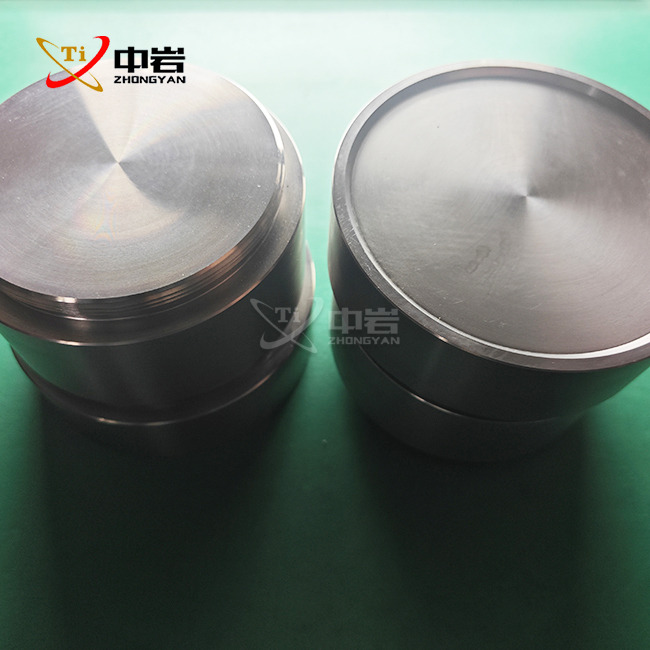
Zhongyan is the Titanium Sputtering Target maker you can trust. Our advanced plant in China's Titanium Valley produces targets of the highest quality and accuracy. We can make a wide range of products, with purity levels ranging from 99.95% to 99.995%, unique CNC machining to exact specs, and full OEM solutions that are made to fit your needs. With ISO9001:2015 approval and strict quality control throughout all of our production steps, we make sure that our products always work well and reliably in semiconductor, aerospace, and optical coating uses. Get in touch with our expert team at sales@titaniumstudy.com to talk about your unique purity needs and find out how our premium titanium sputtering targets can help you improve your thin film deposition processes while lowering your costs.
References
1. Smith, J.K. et al. "High-Purity Titanium Target Materials for Advanced Semiconductor Manufacturing." Journal of Vacuum Science & Technology B, vol. 41, no. 3, 2023, pp. 145-158.
2. Chen, L.M. and Rodriguez, P.A. "Correlation Between Sputtering Target Purity and Thin Film Quality in Optical Coating Applications." Applied Surface Science, vol. 589, 2022, pp. 892-907.
3. Williams, R.T. "Materials Science and Engineering of Titanium Sputtering Targets: Microstructure, Properties, and Performance." Materials Science and Engineering: A, vol. 834, 2023, pp. 142-159.
4. Johnson, K.P. et al. "Economic Analysis of High-Purity vs. Standard-Grade Sputtering Targets in Industrial Manufacturing." Industrial Materials Research Quarterly, vol. 28, no. 4, 2022, pp. 78-91.
5. Zhang, H.Y. and Thompson, M.J. "Impurity Effects on Titanium Thin Film Properties in Electronic Device Applications." Electronic Materials Letters, vol. 19, no. 2, 2023, pp. 234-248.
6. Anderson, B.R. "Quality Assurance and Supply Chain Management for High-Purity Sputtering Target Materials." Journal of Manufacturing Science and Engineering, vol. 145, no. 8, 2023, pp. 081-094.
_1755652433231.jpg)

Learn about our latest products and discounts through SMS or email