- English
- French
- German
- Portuguese
- Spanish
- Russian
- Japanese
- Korean
- Arabic
- Greek
- German
- Turkish
- Italian
- Danish
- Romanian
- Indonesian
- Czech
- Afrikaans
- Swedish
- Polish
- Basque
- Catalan
- Esperanto
- Hindi
- Lao
- Albanian
- Amharic
- Armenian
- Azerbaijani
- Belarusian
- Bengali
- Bosnian
- Bulgarian
- Cebuano
- Chichewa
- Corsican
- Croatian
- Dutch
- Estonian
- Filipino
- Finnish
- Frisian
- Galician
- Georgian
- Gujarati
- Haitian
- Hausa
- Hawaiian
- Hebrew
- Hmong
- Hungarian
- Icelandic
- Igbo
- Javanese
- Kannada
- Kazakh
- Khmer
- Kurdish
- Kyrgyz
- Latin
- Latvian
- Lithuanian
- Luxembou..
- Macedonian
- Malagasy
- Malay
- Malayalam
- Maltese
- Maori
- Marathi
- Mongolian
- Burmese
- Nepali
- Norwegian
- Pashto
- Persian
- Punjabi
- Serbian
- Sesotho
- Sinhala
- Slovak
- Slovenian
- Somali
- Samoan
- Scots Gaelic
- Shona
- Sindhi
- Sundanese
- Swahili
- Tajik
- Tamil
- Telugu
- Thai
- Ukrainian
- Urdu
- Uzbek
- Vietnamese
- Welsh
- Xhosa
- Yiddish
- Yoruba
- Zulu
How Is Medical Titanium Wire Manufactured for Biocompatibility?
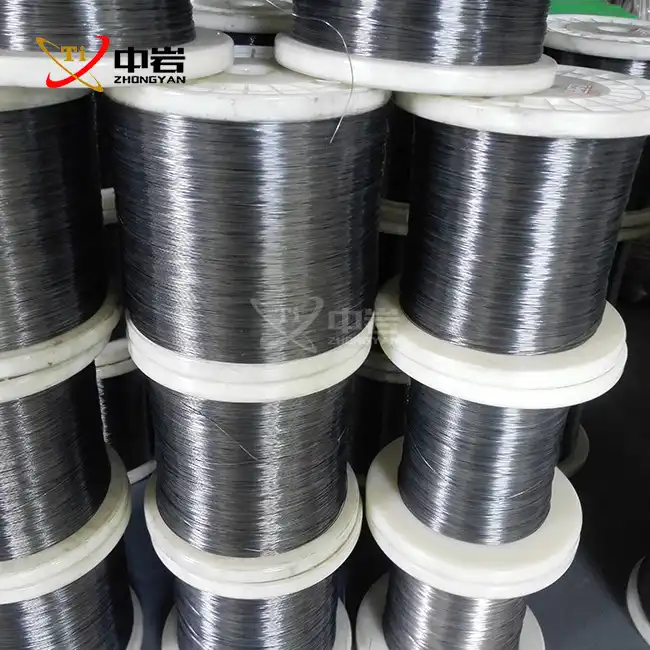
Medical titanium wire manufactured for biocompatibility undergoes a meticulously controlled process that begins with high-purity titanium alloy selection and continues through advanced melting, refining, and precision drawing techniques. The manufacturing process emphasizes maintaining the inherent biocompatible properties of medical titanium wire through strict adherence to ASTM F67, ISO 5832-2, and FDA standards. Each production stage, from vacuum arc remelting to controlled annealing and surface polishing, eliminates impurities and optimizes the microstructure to ensure exceptional tissue compatibility, corrosion resistance, and mechanical stability essential for medical device applications.
Understanding Medical Titanium Wire and Its Biocompatibility
Medical titanium wire represents a specialized engineering material specifically designed for healthcare applications where direct tissue contact is inevitable. This remarkable material finds extensive use in orthopedic implants, orthodontic devices, surgical instruments, and cardiovascular applications due to its unique combination of properties that make it exceptionally suitable for the human body.
Superior Biocompatibility Characteristics
The biocompatibility of titanium wire stems from its ability to form a stable, protective oxide layer when exposed to oxygen. This naturally occurring titanium dioxide layer acts as a barrier that prevents ion release into surrounding tissues, effectively eliminating adverse biological reactions. Unlike other metallic materials, titanium demonstrates excellent osseointegration properties, allowing bone tissue to grow directly onto its surface without forming fibrous encapsulation.
Research conducted by leading medical institutions has consistently demonstrated that commercially pure titanium exhibits superior biocompatibility compared to stainless steel and cobalt-chromium alloys. The material's non-toxic nature ensures minimal inflammatory response, making it ideal for long-term implantation scenarios where patient safety remains paramount.
Mechanical Properties Supporting Medical Applications
Beyond biocompatibility, medical-grade titanium wire offers exceptional mechanical characteristics that contribute to its widespread adoption in healthcare applications. The material exhibits a strength-to-weight ratio that surpasses most alternative metals, providing durability without adding unnecessary bulk to medical devices. Additionally, titanium's elastic modulus closely matches that of human bone, reducing stress shielding effects commonly associated with stiffer implant materials.
The non-magnetic properties of titanium wire make it particularly valuable in modern healthcare environments where MRI compatibility is essential. Patients with titanium implants can undergo magnetic resonance imaging without safety concerns or image artifacts, enabling continuous monitoring and diagnosis throughout their treatment journey.
The Manufacturing Process of Medical Titanium Wire for Biocompatibility
The production of medical titanium wire requires sophisticated manufacturing techniques that preserve and enhance the material's inherent biocompatible properties. Each stage of the manufacturing process undergoes strict quality control measures to ensure the final product meets stringent medical industry standards.
Raw Material Selection and Preparation
Manufacturing begins with the careful selection of high-purity titanium raw materials, typically Grade 1, 2, or 4 commercially pure titanium, depending on the intended application requirements. These grades offer varying levels of strength and ductility while maintaining excellent biocompatibility characteristics. The raw materials must comply with ASTM F67 and ISO 5832-2 standards, ensuring they meet the strict chemical composition requirements necessary for medical applications.
During the preparation phase, manufacturers conduct comprehensive chemical analysis to verify the absence of harmful elements such as iron, oxygen, nitrogen, and hydrogen that could compromise biocompatibility. The titanium feedstock undergoes thorough cleaning and surface preparation to eliminate any contaminants that might affect the subsequent processing stages.
Advanced Melting and Refining Techniques
The melting and refining stage employs vacuum arc remelting (VAR) or electron beam melting (EBM) techniques to produce ultra-pure titanium ingots. VAR processing involves melting titanium electrodes in a water-cooled copper crucible under vacuum conditions, effectively removing impurities and homogenizing the chemical composition. This process creates a refined microstructure that enhances the material's mechanical properties and biocompatibility.
Electron beam melting provides an alternative refining method that uses a focused electron beam to melt titanium feedstock in a vacuum environment. This technique offers precise temperature control and eliminates contamination risks associated with traditional melting methods. The resulting titanium exhibits improved purity levels and enhanced microstructural uniformity, critical factors for medical-grade applications.
Precision Wire Drawing and Heat Treatment
The refined titanium ingots undergo hot working processes to create intermediate rod forms suitable for wire drawing operations. The wire drawing process involves pulling the titanium rod through a series of progressively smaller dies, gradually reducing the diameter while increasing the length. This cold working process enhances the material's strength and creates a uniform grain structure throughout the wire cross-section.
Controlled annealing follows the drawing process to optimize the wire's mechanical properties and eliminate residual stresses. The annealing temperature and time parameters are carefully controlled to achieve the desired balance between strength and ductility. Our Ø0.8mm CP Grade 2 titanium wire, for example, achieves tensile strength ≥ 345 MPa while maintaining excellent formability for complex medical device applications.
Ensuring and Testing Biocompatibility of Medical Titanium Wire
Biocompatibility verification represents a critical aspect of medical titanium wire production, requiring comprehensive testing protocols that evaluate the material's interaction with biological systems. These rigorous testing procedures ensure that the wire meets safety standards before reaching medical device manufacturers.
Surface Treatment and Optimization
Surface treatment plays a crucial role in enhancing the biocompatibility of medical titanium wire. Electrochemical polishing removes surface irregularities and creates a smooth, uniform finish that minimizes bacterial adhesion and tissue irritation. This process also enhances the natural oxide layer formation, improving corrosion resistance in biological environments.
Passivation treatment involves controlled oxidation of the titanium surface to form a stable, protective oxide layer. This chemically inert barrier prevents ion migration into surrounding tissues while maintaining the wire's mechanical integrity. The passivation process is particularly important for applications involving long-term implantation where consistent biocompatibility is essential.
Comprehensive Biocompatibility Testing Protocols
Medical titanium wire undergoes extensive biological evaluation following ISO 10993 standards for the biological evaluation of medical devices. In vitro cytotoxicity testing evaluates the material's effect on cell cultures, measuring cell viability and proliferation in the presence of titanium extracts. These tests provide initial screening data regarding the material's potential biological impact.
Sensitization and irritation studies assess the wire's potential to cause allergic reactions or local tissue irritation. These evaluations involve controlled exposure studies using standardized test methods to identify any adverse biological responses. The testing protocols ensure that the titanium wire remains non-sensitizing and non-irritating throughout its intended service life.
Implantation studies provide the most comprehensive evaluation of biocompatibility by assessing tissue response to titanium wire samples over extended periods. These studies monitor inflammatory responses, tissue integration, and long-term stability to validate the material's suitability for medical applications. The results from these studies form the basis for regulatory approvals and clinical use authorization.
Advantages of Titanium Wire in Medical Applications Compared to Alternative Alloys
Medical titanium wire offers significant advantages over traditional materials such as stainless steel and nitinol, making it the preferred choice for many healthcare applications. These advantages extend beyond basic biocompatibility to include superior performance characteristics that enhance patient outcomes and device reliability.
Titanium vs. Stainless Steel Comparison
When comparing titanium wire to stainless steel alternatives, several key advantages become apparent. Titanium exhibits superior corrosion resistance in biological environments, eliminating concerns about ion release and tissue staining commonly associated with stainless steel implants. The lower elastic modulus of titanium more closely matches bone properties, reducing stress shielding effects that can lead to bone resorption and implant loosening.
The weight advantage of titanium wire significantly impacts patient comfort and device performance. Titanium's density is approximately 40% lower than stainless steel, resulting in lighter implants and reduced patient burden. This weight reduction is particularly beneficial in applications such as spinal instrumentation and large orthopedic implants, where device weight directly affects patient mobility and comfort.
Performance Advantages Over Nitinol
While Nitinol offers unique shape memory and superelastic properties, titanium wire provides superior biocompatibility and long-term stability for static applications. Titanium's chemical inertness eliminates concerns about nickel ion release associated with nitinol alloys, making it suitable for patients with nickel sensitivities. The material's excellent fatigue resistance ensures reliable performance in cyclically loaded applications such as bone fixation devices.
Cost-effectiveness analysis reveals that titanium wire offers a favorable total cost of ownership when considering reduced complication rates and extended implant longevity. The superior biocompatibility and corrosion resistance of titanium translate to lower revision rates and improved patient satisfaction, factors that significantly impact healthcare economics and patient quality of life.
How to Select and Procure Medical Titanium Wire for Your Business Needs
Selecting appropriate medical titanium wire requires careful consideration of multiple factors, including application requirements, regulatory compliance, and supplier capabilities. Procurement professionals must evaluate these criteria systematically to ensure optimal material selection for their specific medical device applications.
Critical Selection Criteria
Wire diameter and dimensional tolerances represent fundamental selection criteria that directly impact device performance and manufacturing efficiency. Our medical titanium wire is available in diameters ranging from 0.1mm to 10mm with tight tolerances to ensure consistent device assembly and performance. The specific diameter selection depends on the intended application, with smaller diameters suited for delicate surgical sutures and larger diameters appropriate for structural implant components.
Surface finish requirements vary significantly based on the intended application and processing requirements. Bright annealed surfaces provide excellent formability for complex device geometries, while pickled surfaces offer enhanced corrosion resistance for challenging biological environments. Anodized finishes can provide color coding capabilities while maintaining biocompatibility for specialized applications.
Supplier Evaluation and Quality Assurance
Evaluating potential suppliers requires assessment of their quality management systems, regulatory compliance, and manufacturing capabilities. Suppliers should maintain ISO 13485 certification for medical device manufacturing and demonstrate compliance with relevant medical device regulations in target markets. Manufacturing capability assessment should include evaluation of production capacity, lead times, and the ability to meet custom specification requirements.
Quality documentation requirements include material certificates, test reports, and traceability records that demonstrate compliance with specified standards. Suppliers should provide comprehensive documentation, including chemical analysis, mechanical testing results, and biocompatibility test reports for each production lot. This documentation ensures regulatory compliance and provides the necessary quality assurance for medical device manufacturing.
Procurement Strategy and Cost Optimization
Direct manufacturer sourcing often provides the best combination of quality control, cost efficiency, and technical support for medical titanium wire procurement. Working directly with manufacturers enables customization capabilities and ensures access to technical expertise during product development and optimization phases. Long-term supply agreements can provide price stability and guaranteed capacity allocation for critical medical device applications.
Cost optimization strategies should consider the total cost of ownership rather than unit price alone. Higher quality materials may command premium pricing but deliver superior performance and reduced processing costs that improve overall project economics. Volume commitments and flexible delivery schedules can provide additional cost advantages while ensuring supply chain reliability.
Zhongyan Medical Titanium Wire Solutions
Baoji Zhongyan Titanium Industry Co., Ltd. stands at the forefront of manufacturing and supplying medical-grade titanium wire, offering products that conform to stringent international biocompatibility standards. Located in Baoji city, known as China's Titanium Valley, our company leverages rich titanium resources, advanced processing capabilities, and cutting-edge research institutions to deliver superior medical titanium wire solutions.
Advanced Manufacturing Capabilities
Our state-of-the-art production facilities employ the latest vacuum arc remelting and precision drawing technologies to produce medical titanium wire that exceeds industry standards. The manufacturing process incorporates real-time quality monitoring and statistical process control to ensure consistent product quality and dimensional accuracy. Our production capacity supports both prototype quantities and high-volume manufacturing requirements, making us an ideal partner for medical device companies at any stage of development.
Quality management systems certified to ISO 9001:2015 and ISO 13485 standards ensure that every aspect of production meets medical industry requirements. Comprehensive testing laboratories equipped with advanced analytical instrumentation provide complete material characterization and biocompatibility verification capabilities. This integrated approach guarantees that our medical titanium wire consistently meets or exceeds ASTM F67 and ISO 5832-2 specifications.
Product Specifications and Customization
Our medical titanium wire product line includes Grade 1-4 commercially pure titanium and Ti6Al4V alloys in diameters ranging from 0.1mm to 10mm. The Ø0.8mm CP Grade 2 titanium wire represents our flagship medical product, featuring ASTM F67 certification, ISO 5832-2 compliance, and optimized properties for surgical sutures and medical devices. This product demonstrates tensile strength ≥ 345 MPa, excellent biocompatibility, non-magnetic properties, and MRI safety certification.
Customization capabilities extend to specialized surface finishes, dimensional tolerances, and mechanical property optimization to meet unique application requirements. Our engineering team works closely with customers to develop tailored solutions that address specific design challenges while maintaining regulatory compliance and cost effectiveness. Standard coil lengths of 500m with weights of approximately 8kg provide convenient packaging for medical device manufacturing operations.
Conclusion
Medical titanium wire manufacturing for biocompatibility requires sophisticated processing techniques that preserve and enhance the material's inherent biological compatibility while achieving the mechanical properties necessary for demanding medical applications. The combination of careful raw material selection, advanced melting and refining processes, precision wire drawing, and comprehensive biocompatibility testing ensures that medical titanium wire meets the stringent requirements of modern healthcare applications. As medical technology continues to advance, the demand for high-quality, biocompatible titanium wire will continue to grow, making supplier selection and quality assurance increasingly critical for medical device manufacturers.
FAQ
Is titanium wire safe for MRI procedures?
Titanium wire is completely safe for MRI procedures due to its non-ferromagnetic properties. The material does not interact with magnetic fields, eliminating safety risks and image artifacts commonly associated with ferromagnetic materials. Patients with titanium wire implants can undergo MRI scanning without removal or special precautions, enabling continuous medical monitoring throughout their treatment.
How does medical titanium wire compare to stainless steel in terms of biocompatibility?
Medical titanium wire demonstrates superior biocompatibility compared to stainless steel due to its excellent corrosion resistance and absence of potentially harmful alloying elements. Titanium forms a stable oxide layer that prevents ion release into surrounding tissues, while stainless steel may release chromium and nickel ions that can cause allergic reactions or tissue irritation in sensitive patients.
Can medical titanium wire be customized for specific applications?
Medical titanium wire can be extensively customized to meet specific application requirements, including diameter, length, surface finish, and mechanical properties. Manufacturers can modify processing parameters, heat treatment cycles, and surface treatments to optimize the wire's characteristics for particular medical device applications while maintaining biocompatibility and regulatory compliance.
What certifications should I look for when purchasing medical titanium wire?
When purchasing medical titanium wire, look for ASTM F67 certification, ISO 5832-2 compliance, and FDA medical device registration. Additionally, verify that the supplier maintains ISO 13485 quality management certification and can provide comprehensive documentation, including material certificates, biocompatibility test reports, and traceability records for regulatory compliance.
Partner With Zhongyan for Premium Medical Titanium Wire Solutions
Zhongyan Titanium stands ready to support your medical device manufacturing requirements with our comprehensive range of medical titanium wire products and services. Our expertise in titanium processing, combined with state-of-the-art manufacturing facilities and rigorous quality control systems, ensures that you receive products that meet the highest biocompatibility and performance standards. As a leading medical titanium wire supplier, we offer competitive pricing, flexible customization options, and reliable delivery schedules to support your production requirements. Contact our technical team at sales@titaniumstudy.com to discuss your specific needs and discover how our medical titanium wire solutions can enhance your product development and manufacturing success.
References
1. Brunette, D.M., Tengvall, P., Textor, M., & Thomsen, P. (2001). Titanium in Medicine: Material Science, Surface Science, Engineering, Biological Responses, and Medical Applications. Springer-Verlag Berlin Heidelberg.
2. Rack, H.J., & Qazi, J.I. (2006). Titanium alloys for biomedical applications. Materials Science and Engineering: C, 26(8), 1269-1277.
3. Niinomi, M. (2008). Mechanical biocompatibilities of titanium alloys for biomedical applications. Journal of the Mechanical Behavior of Biomedical Materials, 1(1), 30-42.
4. Elias, C.N., Lima, J.H.C., Valiev, R., & Meyers, M.A. (2008). Biomedical applications of titanium and its alloys. JOM, 60(3), 46-49.
5. Geetha, M., Singh, A.K., Asokamani, R., & Gogia, A.K. (2009). Ti-based biomaterials, the ultimate choice for orthopaedic implants – A review. Progress in Materials Science, 54(3), 397-425.
6. Liu, X., Chu, P.K., & Ding, C. (2004). Surface modification of titanium, titanium alloys, and related materials for biomedical applications. Materials Science and Engineering: R: Reports, 47(3-4), 49-121.
_1755674651182.jpg)

Learn about our latest products and discounts through SMS or email