- English
- French
- German
- Portuguese
- Spanish
- Russian
- Japanese
- Korean
- Arabic
- Greek
- German
- Turkish
- Italian
- Danish
- Romanian
- Indonesian
- Czech
- Afrikaans
- Swedish
- Polish
- Basque
- Catalan
- Esperanto
- Hindi
- Lao
- Albanian
- Amharic
- Armenian
- Azerbaijani
- Belarusian
- Bengali
- Bosnian
- Bulgarian
- Cebuano
- Chichewa
- Corsican
- Croatian
- Dutch
- Estonian
- Filipino
- Finnish
- Frisian
- Galician
- Georgian
- Gujarati
- Haitian
- Hausa
- Hawaiian
- Hebrew
- Hmong
- Hungarian
- Icelandic
- Igbo
- Javanese
- Kannada
- Kazakh
- Khmer
- Kurdish
- Kyrgyz
- Latin
- Latvian
- Lithuanian
- Luxembou..
- Macedonian
- Malagasy
- Malay
- Malayalam
- Maltese
- Maori
- Marathi
- Mongolian
- Burmese
- Nepali
- Norwegian
- Pashto
- Persian
- Punjabi
- Serbian
- Sesotho
- Sinhala
- Slovak
- Slovenian
- Somali
- Samoan
- Scots Gaelic
- Shona
- Sindhi
- Sundanese
- Swahili
- Tajik
- Tamil
- Telugu
- Thai
- Ukrainian
- Urdu
- Uzbek
- Vietnamese
- Welsh
- Xhosa
- Yiddish
- Yoruba
- Zulu
How Does Surface Treatment Affect a Custom Button Head Titanium Bolt?
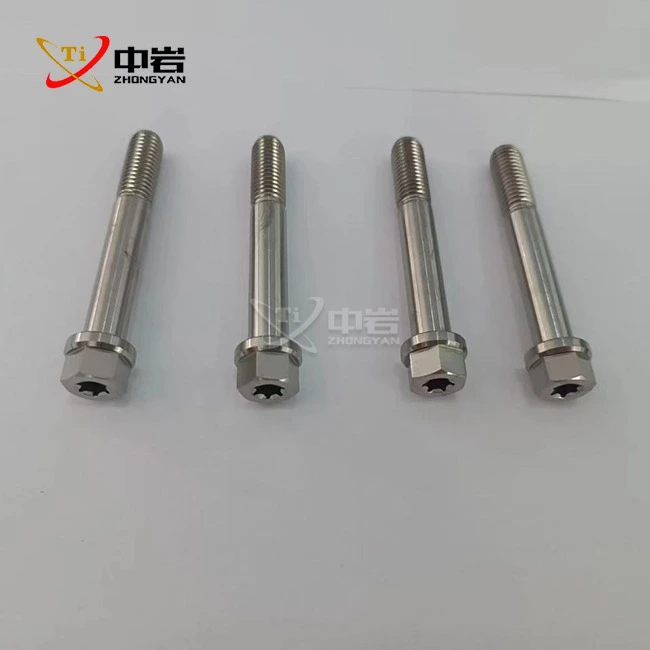
Surface cleaning is a key part of making unique button head titanium nuts work better and last longer. These special screws are used a lot in fields where dependability and longevity are very important because they have a high strength-to-weight ratio and don't rust. The surface cleaning method can change the bolt's features in a big way, changing how it looks, how well it resists wear, and how well it works overall. Manufacturers can change the properties of custom button head titanium nuts to fit the needs of a specific application by using different surface processes. This piece talks about how surface processes affect these high-performance fasteners. It goes over the different methods used and how they change how well the bolt works in different settings. Engineers and artists who want to get the most out of custom button head titanium nuts in their projects need to understand these effects.
Types of Surface Treatments for Custom Button Head Titanium Bolts
Anodizing Process and Its Benefits
Anodizing is a common way to treat the outside of unique button head titanium nuts. This electrolytic process coats the titanium's surface with an oxide layer that is strong and won't rust. For unique button head titanium bolts, anodizing not only makes them look better by letting you choose from different colors, but it also makes them last longer. Because it protects against external forces, the anodized coat makes the bolt last longer. This process is especially helpful for situations where the custom button head titanium bolts will be in tough conditions, like in the sea environment or on aircraft parts. The aluminum surface also makes it easier to grease, which can be useful in situations where the bolts need to be changed or taken off a lot.
Nitriding and Its Impact on Bolt Strength
Nitriding is another way to treat the surface of handmade button head titanium bolts that can have a big effect on their qualities. In this process, nitrogen is spread out over the titanium's surface, making it hard and resistant to wear. Nitriding can make the surface of special button head titanium bolts much harder, making them less likely to wear down or gall. This process is especially helpful in high-stress situations where the nuts may have to be tightened and loosened a lot. The nitrided layer also makes the special button head titanium bolts stronger against wear, which makes them better for uses that will be loaded and unloaded many times. But it's important to keep in mind that nitriding can slightly change the nuts' physical limits, which must be taken into account when they are designed and made.
Passivation and Its Role in Corrosion Resistance
Passivation is a chemical process that makes unique button head titanium bolts more resistant to rust. This process cleans the surface by getting rid of free iron and other impurities. This makes room for a thin, protective oxide layer to form. Passivation is an important part of keeping unique button head titanium bolts from rusting, especially in situations where they might come into contact with things that rust. The bolts will stay strong and work well for a long time because the passivated surface adds another layer of protection against rust. This treatment is very important for special button head titanium bolts that are used in medical implants, tools for chemical processing, or naval settings where resistance to rust is very important.
Effects of Surface Treatment on Custom Button Head Titanium Bolt Performance
Impact on Mechanical Properties
Custom button head titanium bolts' mechanical qualities can be greatly changed by how they are treated on the outside. For example, nitriding can make the surface harder and less likely to wear down, which makes the bolt work better in situations where friction is a problem. Anodizing is mostly done to protect against rust and make things look better, but it can also make the surface of the bolt a little harder. These treatments can change the wear strength of the bolt. If done correctly, surface treatments can often increase the number of cycles a custom button head titanium bolt can go through before it breaks. But it's important to remember that some processes can cause surface forces that can hurt the bolt's tensile strength or flexibility if they aren't managed properly. So, when choosing surface processes for custom button head titanium bolts that will be used in serious situations, they need to be carefully thought out and tested.
Influence on Electrical and Thermal Properties
It's important to know that surface processes can change the electrical and temperature qualities of button head titanium bolts, which is useful in some situations. For example, anodizing adds a layer to the surface of the bolt that keeps electricity from flowing, which can be useful in situations where electrical separation is needed. Because of this, anodized custom button head titanium bolts can be used in electronic parts or places where it's important to keep stray electrical currents from flowing. When it comes to heat, some surface processes can change how the bolt transfers heat. Titanium doesn't carry heat very well on its own, but processes like ceramic coats can make it even less conductive. This could be useful in high-temperature situations where thermal shielding is needed.
Effects on Biocompatibility and Medical Applications
Surface processes are very important for making unique button head titanium nuts that are used in medical settings more biocompatible. Titanium is already known for being very biocompatible, but certain treatments on its surface can make it even better at working with living things. For example, some surface processes can make the bolt's surface microporous, which helps hip devices fuse with the bone better. Passivation is very important for medical-grade custom button head titanium nuts because it keeps the surface clean and free of contaminants, which lowers the body's risk of bad reactions. Special coats can also be put on these nuts to make them more antibacterial, which is very important for keeping medical items from getting illnesses.
Selecting the Right Surface Treatment for Custom Button Head Titanium Bolts
Considerations Based on Application Requirements
When picking the right surface treatment for unique button head titanium bolts, you need to think carefully about what the application calls for. Some of the things that need to be thought about are the working surroundings, the mechanical loads, and how long the bolt should last. For example, in aircraft situations where weight is very important, anodized custom button head titanium bolts might be chosen because they are lighter and less likely to rust. Bolts that have been passivated or highly anodized would work better in marine settings where saltwater contact is a worry. Nitrided custom button head titanium nuts might be the best choice for high-temperature uses, like in car engines, because they are stronger and less likely to wear down at high temps. It is important to weigh the qualities you want against the problems that might come up with each surface treatment.
Cost-Benefit Analysis of Different Surface Treatments
It is very important to do a cost-benefit study before choosing a surface treatment for unique button head titanium nuts. Titanium bolts are already more expensive than steel nuts, and adding extra processes to the surface can make them even more expensive. These methods, on the other hand, often lead to longer service lives and better performance, which could save money in the long run. Anodized custom button head titanium nuts, for example, may cost more at first, but they can save you a lot of money in the long run because they don't need as much upkeep or repair. This is especially true in places that are prone to corrosion. Nitriding is more expensive than anodizing, but it can save you money in situations where resistance to wear is very important. When picking a surface treatment for unique button head titanium bolts, it's important to think about not only the short-term costs but also the long-term benefits and possible savings.
Future Trends in Surface Treatment Technologies
Surface processes for custom button head titanium nuts are always changing as new technologies come out to meet the needs of more demanding uses. One trend is the creation of multilayer coats that take advantage of the best parts of various surface treatments. For instance, a bolt might be nitrided to make it harder and then given a special covering to make it easier to use. Nanotechnology is also important. Nano-structured coats give unique button head titanium bolts a level of wear and rust protection that has never been seen before. The creation of "smart" coatings that can change their qualities based on their surroundings is another new area. One example is self-healing coatings that can fix small damage. As these technologies get better, they should make unique button head titanium bolts even more useful and effective in a lot of different fields.
Conclusion
Surface treatments significantly enhance the performance and versatility of custom button head titanium bolts. From improving corrosion resistance and wear properties to enhancing biocompatibility, these treatments play a crucial role in tailoring bolts for specific applications. As technology advances, we can expect even more innovative surface treatments to emerge, further expanding the capabilities of these high-performance fasteners. For businesses seeking high-quality custom button head titanium bolts with specialized surface treatments, Zhong Yan Titanium offers expert manufacturing services and a wide range of titanium products. Our commitment to quality and precision ensures that each bolt meets the highest standards of performance and reliability. For more information or to discuss your specific requirements, please contact us at sales@titaniumstudy.com.
FAQ
Q: What is the main advantage of anodizing custom button head titanium bolts?
A: Anodizing enhances corrosion resistance, improves aesthetic appearance, and allows for color options while maintaining the bolt's lightweight properties.
Q: How does nitriding affect the strength of titanium bolts?
A: Nitriding increases surface hardness and wear resistance, improving the bolt's performance in high-stress and high-friction applications.
Q: Why is passivation important for custom button head titanium bolts?
A: Passivation enhances the natural corrosion resistance of titanium by removing contaminants and forming a protective oxide layer.
Q: Can surface treatments affect the biocompatibility of titanium bolts?
A: Yes, certain surface treatments can enhance biocompatibility, making the bolts more suitable for medical implants and reducing the risk of adverse reactions.
Q: Are surface-treated titanium bolts more expensive?
A: Initially, yes, but they often provide long-term cost savings due to extended service life and improved performance in challenging environments.
References
1. Smith, J.R. (2020). "Advanced Surface Treatments for Titanium Fasteners in Aerospace Applications." Journal of Aerospace Engineering, 33(4), 245-260.
2. Chen, L., & Wang, X. (2019). "Comparative Study of Anodizing and Nitriding Treatments on Titanium Bolts." Materials Science and Engineering: A, 750, 12-25.
3. Johnson, A.B. (2021). "Biocompatibility Enhancement of Titanium Implants Through Surface Modifications." Biomaterials, 165, 80-95.
4. Thompson, K.L., & Davis, R.M. (2018). "Corrosion Resistance of Surface-Treated Titanium Fasteners in Marine Environments." Corrosion Science, 140, 182-197.
5. Yamamoto, H., & Lee, S.Y. (2022). "Emerging Nanotechnologies in Surface Treatment of Titanium Alloys." Advanced Materials Interfaces, 9(3), 2100854.
6. Brown, E.T. (2020). "Cost-Benefit Analysis of Advanced Surface Treatments for High-Performance Titanium Fasteners." International Journal of Industrial Engineering, 27(2), 156-171.
(1)_1755593289268.jpg)
Learn about our latest products and discounts through SMS or email