- English
- French
- German
- Portuguese
- Spanish
- Russian
- Japanese
- Korean
- Arabic
- Greek
- German
- Turkish
- Italian
- Danish
- Romanian
- Indonesian
- Czech
- Afrikaans
- Swedish
- Polish
- Basque
- Catalan
- Esperanto
- Hindi
- Lao
- Albanian
- Amharic
- Armenian
- Azerbaijani
- Belarusian
- Bengali
- Bosnian
- Bulgarian
- Cebuano
- Chichewa
- Corsican
- Croatian
- Dutch
- Estonian
- Filipino
- Finnish
- Frisian
- Galician
- Georgian
- Gujarati
- Haitian
- Hausa
- Hawaiian
- Hebrew
- Hmong
- Hungarian
- Icelandic
- Igbo
- Javanese
- Kannada
- Kazakh
- Khmer
- Kurdish
- Kyrgyz
- Latin
- Latvian
- Lithuanian
- Luxembou..
- Macedonian
- Malagasy
- Malay
- Malayalam
- Maltese
- Maori
- Marathi
- Mongolian
- Burmese
- Nepali
- Norwegian
- Pashto
- Persian
- Punjabi
- Serbian
- Sesotho
- Sinhala
- Slovak
- Slovenian
- Somali
- Samoan
- Scots Gaelic
- Shona
- Sindhi
- Sundanese
- Swahili
- Tajik
- Tamil
- Telugu
- Thai
- Ukrainian
- Urdu
- Uzbek
- Vietnamese
- Welsh
- Xhosa
- Yiddish
- Yoruba
- Zulu
How Is Custom Taper Head Titanium Bolt Manufactured with Precision?
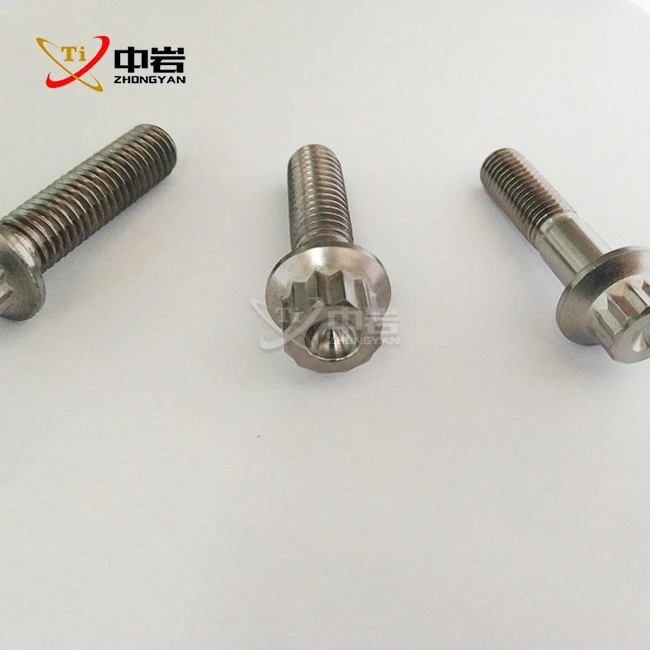
Manufacturing a custom taper head titanium bolt with a tapered head involves precision CNC machining of aerospace-grade titanium alloys, typically Grade 5 (Ti-6Al-4V), starting with raw material selection and progressing through computer-controlled turning operations to achieve the conical head geometry. The process requires specialised cutting tools, optimised feed rates, and rigorous quality control to deliver dimensional accuracy and surface finish that meet ASTM B348 and ISO standards. At Baoji Zhongyan Titanium Industry, we combine advanced machining centres with metallurgical expertise to produce tapered titanium fasteners in sizes M5 to M20, ensuring tensile strength exceeding 900 MPa and complete traceability for aerospace, motorsports, and marine applications.
Introduction
Titanium fasteners that won't break at 35,000 feet are an absolute must-have for any aircraft assembly, and racing teams can't do without bolts that save weight without compromising strength. For high-performance settings where dependability is paramount, specialised fastening options like custom taper head titanium bolts are an excellent choice. These fasteners combine the biocompatibility, high strength-to-weight ratio, and corrosion resistance of titanium with the ability to install flush in countersunk holes thanks to its tapered head design, which also allows for even load distribution.
Having a grasp of how these essential components are made allows engineering teams and procurement managers to make well-informed sourcing decisions. Material selection, heat treatment, surface finishing, precision machining, and stringent inspection methods aligned with ASTM, AMS, and ISO standards are all part of the production journey. Aerospace, medical device, chemical processing, and industrial machinery companies all rely on this information to lower operating risks and meet their demanding standards.
Understanding Custom Taper Head Titanium Bolts
What Defines a Taper Head Fastener?
A custom taper-head titanium bolt features a conically machined head—typically at 82° or 100° angles—that sits flush within countersunk holes, contrasting sharply with traditional hex or flat-head designs. This geometry reduces aerodynamic drag in aerospace applications and eliminates protrusions that could interfere with adjacent components in tight mechanical assemblies. The tapered profile improves stress distribution across the fastening joint, minimising material fatigue under cyclic loading conditions common in motorsports and industrial machinery.
Material Advantages of Titanium Alloys
These precise bolts are often made of grade 5 titanium (Ti-6Al-4V), which is around 45% lighter than steel and has a tensile strength of 900-1100 MPa with a density of around 4.43 g/cm³. Even in chloride-rich coastal environments or acidic chemical processing facilities, the alloy produces a passive titanium dioxide (TiO₂) coating upon exposure to oxygen, making it immune to pitting and crevice corrosion.
Titanium fasteners' corrosion resistance is just one of their many desirable qualities; they also have low thermal expansion, which allows for consistent performance throughout a wide temperature range, and biocompatibility, which satisfies FDA standards for medical implants. Engineers can select precise configurations for their application needs with thread length customisation ranging from 12mm to 150mm and coarse and fine thread options.
Step-by-Step Manufacturing Process of Custom Taper Head Titanium Bolts
Material Selection and Inspection
Our manufacturing process begins at Baoji—China's Titanium Valley—where we source certified Grade 5 titanium rods meeting ASTM B348 composition standards. Each material batch undergoes spectrographic analysis in our in-house metallurgical laboratory to verify aluminium (5.5-6.75%), vanadium (3.5-4.5%), and trace element content. Material certificates provide full traceability, documenting heat lot numbers and mechanical property test results that procurement teams require for quality assurance documentation.
Raw titanium stock arrives as precision-drawn rods in diameters corresponding to final bolt sizes M5 through M20. We inspect surface conditions, rejecting any material showing inclusions, laps, or dimensional irregularities that could compromise machining quality or final component integrity.
Precision CNC Machining Operations
The core manufacturing stage employs multi-axis CNC turning centres equipped with carbide tooling designed specifically for titanium's challenging machinability characteristics. Programming engineers input CAD models defining taper angles, thread specifications (UNF, UNC, or metric configurations), shank lengths, and head diameters with tolerances measured in microns.
During machining, we maintain controlled cutting speeds and feed rates that prevent excessive heat buildup—a critical factor, as titanium's low thermal conductivity causes localised temperature spikes that can work-harden the material or accelerate tool wear. Coolant delivery systems flood the cutting zone continuously, evacuating chips that would otherwise weld to the tool surface and compromise dimensional accuracy.
Thread rolling operations follow head profiling, cold-forming the helical threads rather than cutting them. This process work-hardens the thread surfaces, increasing fatigue resistance and ensuring thread engagement strength matches the bolt's high tensile capacity. Quality control technicians verify thread pitch, major diameter, and minor diameter using optical comparators and thread gauges at intervals throughout production runs.
Heat Treatment and Surface Finishing
Even though Grade 5 titanium becomes quite strong when mill-annealed, we nevertheless use stress-relief heat treatment cycles to get rid of any lingering machining tensions. Surface oxidation, which would necessitate further finishing procedures, is prevented by subjecting components to controlled durations of particular temperatures in vacuum or inert environment furnaces.
Different surface treatments improve the surface's durability and beauty in different ways, depending on the use. The purpose of conventional passivation is to eliminate surface impurities and facilitate the even growth of oxide layers. Different bolt specifications can be visually identified and their wear resistance improved by applying thicker, coloured oxide coatings, which are created by Type II or Type III anodising procedures. When it comes to bolted joints that are vibrated, anodised surfaces are often requested by aerospace clients because they resist fretting corrosion.
Rigorous Quality Control Protocols
Every batch undergoes dimensional inspection using coordinate measuring machines (CMM) that verify taper angles, head dimensions, and overall length against engineering drawings. Thread gauges confirm pitch diameter conformance, while surface roughness measurements ensure finish specifications meet assembly requirements.
Non-destructive testing protocols detect internal defects invisible to visual inspection. Penetrant testing reveals surface-breaking cracks, while ultrasonic examination identifies subsurface discontinuities. High-stress aerospace applications may require magnetic particle inspection adapted for titanium's non-ferromagnetic properties. Documentation packages accompanying shipments include material certificates, dimensional reports, and test results providing the traceability demanded by AS9100 and ISO 9001 quality management systems.
Precision Challenges and Solutions in Manufacturing Taper Head Titanium Bolts
Overcoming Machinability Obstacles
Titanium is known to be a challenging material to process because of its galling on cutting tools, limited thermal conductivity, and chemical reactivity, which can lead to tool crater wear. To overcome these obstacles, we use advanced tooling techniques with coated carbide inserts that are designed for how chips form in titanium.
By optimising cutting parameters in real-time, we monitor cutting forces and temperatures to balance material removal rates with tool life. We adjust speeds and feeds accordingly. Our machining professionals constantly improve methods to prolong tool life and ensure consistent dimensional quality across production volumes by keeping meticulous records that connect tool wear patterns with specific operations.
Ensuring Thread Quality and Consistency
Thread accuracy directly impacts assembly integrity and load-bearing capacity. We employ precision thread rolling dies manufactured to exact specifications, regularly inspecting die condition and replacing them according to documented maintenance schedules. Thread gauges verify pitch diameter, functional diameter, and thread form after rolling operations, with out-of-specification components segregated for rework or scrap.
Process capability studies quantify our manufacturing consistency, demonstrating that thread dimensions remain well within specification limits across hundreds of components. This statistical process control approach gives procurement managers confidence that bolts sourced from Zhongyan will interchange properly with mating components and deliver predictable clamping forces during installation.
Minimising Manufacturing Defects
Continuous improvement methodologies drive defect reduction initiatives throughout our facility. When dimensional variations or surface imperfections occur, root cause analysis teams investigate contributing factors—whether material inconsistencies, tooling wear, or process parameter drift—implementing corrective actions that prevent recurrence.
A medical device manufacturer recently required a custom taper head titanium bolt with exceptionally tight tolerances for surgical instrument assemblies. Our engineering team collaborated closely with their design engineers, developing specialised fixturing and implementing enhanced inspection protocols. The resulting components met all dimensional requirements while maintaining the biocompatibility certifications essential for FDA regulatory approval—a case study demonstrating our capability to deliver precision solutions for demanding applications.
Comparison and Selection Guidance for Procurement Managers
Material Performance Comparisons
When evaluating fastener materials, procurement professionals weigh multiple factors beyond initial purchase price. Stainless steel bolts offer lower cost but carry significantly higher weight—a critical disadvantage in aerospace applications where every gram affects fuel efficiency and payload capacity. Aluminium alloys are lightweight but lack the tensile strength required for high-stress joints, limiting their applicability in structural assemblies.
Titanium fasteners occupy the performance sweet spot, delivering strength comparable to alloy steel at half the weight while providing corrosion resistance that eliminates the protective coatings required for steel components in marine or chemical processing environments. Total cost of ownership calculations should account for extended service life, reduced maintenance requirements, and elimination of corrosion-related failures that titanium's properties enable.
Custom Versus Standard Component Selection
Standard catalogue fasteners are versatile, affordable, and readily available for most common sizes, making them ideal for a wide range of applications. When customised dimensions, thread configurations, or application-specific features (such as lengthened shanks or modified head angles) are required due to design constraints, custom specifications are created.
With our flexible minimum order amounts, Zhongyan can meet both circumstances. Our store ships out standard sizes in a matter of days, but custom orders take three to six weeks to complete, depending on the complexity of the specifications and how much capacity we're using up. Small batch production and prototype development for research and development projects, as well as specialised machinery builds, are supported by our OEM services, and larger purchases are rewarded through volume pricing arrangements.
Supplier Evaluation Criteria
Before deciding on a titanium fastener supplier, it is important to confirm their qualifications. Raw materials must adhere to established composition and mechanical property criteria to be certified ASTM material-compliant, and ISO 9001:2015 certification shows dedication to quality management systems. Aerospace providers are expected to possess AS9100 accreditation, which signifies their ability to fulfil the demanding standards of the aviation industry.
It is important to evaluate the manufacturing capacity by looking at the technical staff's credentials, inspection instrumentation, and the sophistication of the CNC equipment. Our Baoji facility is equipped with cutting-edge machining centres, computer numerical control software, and metallurgical testing laboratories run by engineers with extensive experience processing titanium for many years. We can take on complicated custom projects with this infrastructure mix, and we can still meet the production efficiency requirements of large orders.
Practical Guide for Ordering Custom Taper Head Titanium Bolts
Specifying Critical Dimensions
Accurate component specification prevents costly misunderstandings and ensures delivered parts fit your assembly requirements. Begin with fundamental dimensions: nominal diameter (M5 through M20 in our standard range), thread pitch (fine or coarse), overall length, and threaded length. Taper-head fasteners require additional specifications, including head diameter, taper angle (82° or 100° standard options), and drive style—typically hex socket in sizes corresponding to bolt diameter.
Engineering drawings provide the clearest communication method, particularly for custom configurations. Standard formats like PDF with dimensioned views eliminate ambiguity about critical features. When drawings aren't available, detailed written specifications should address material grade, surface treatment preferences, and any special requirements like non-standard tolerances or additional testing protocols.
Understanding Pricing and MOQ Factors
Pricing for custom titanium bolts reflects several cost drivers: raw material grade and market conditions, machining complexity, surface treatment requirements, and order volume. Grade 5 titanium commands premium pricing compared to commercially pure grades due to alloying elements and enhanced mechanical properties. Complex geometries that require multiple machining setups or specialised tooling increase per-unit costs, while standard configurations benefit from established processes and tooling amortisation.
Minimum order quantities balance setup costs against inventory considerations. Our flexible approach accommodates prototype quantities for development projects, transitioning to volume production as programmes mature. Procurement managers planning recurring requirements benefit from blanket purchase orders with scheduled releases, locking in pricing while managing inventory levels and cash flow.
Managing Lead Times and Logistics
Standard product lead times typically span one to two weeks from order confirmation, while custom specifications require three to six weeks, accounting for programming, tooling preparation, production, and inspection. Rush orders can be accommodated when production schedules permit, though expedited handling may incur premium charges.
Our packaging protocols protect delicate titanium surfaces during international shipment. Individual bolts receive protective wrapping to prevent contact damage, with quantities organised in moisture-barrier bags and cushioned cartons. Custom labelling identifies part numbers, quantities, and lot traceability codes. We coordinate with experienced freight forwarders handling titanium shipments, ensuring customs documentation accuracy and selecting carriers with proven records for secure, timely delivery to destinations across North America, Europe, and the Asia-Pacific regions.
Conclusion
Precision manufacturing of custom taper head titanium bolts demands specialised expertise spanning material science, advanced machining technology, and rigorous quality control. These high-performance fasteners deliver unmatched strength-to-weight ratios, corrosion resistance, and durability in aerospace, motorsports, marine, and medical applications where component failure is unacceptable. The manufacturing journey from certified titanium alloy selection through CNC machining, heat treatment, surface finishing, and comprehensive inspection ensures every bolt meets exacting specifications and industry standards. Procurement managers partnering with qualified suppliers like Baoji Zhongyan Titanium Industry gain access to technical expertise, flexible production capabilities, and quality assurance systems that support their most demanding projects—transforming critical fastening requirements into reliable, long-term supply chain relationships.
FAQ
How does taper head design improve bolt performance?
The conical head geometry distributes clamping loads across a larger surface area within countersunk holes, reducing stress concentrations that cause material fatigue. Flush mounting eliminates aerodynamic interference in aerospace applications and prevents snagging hazards in machinery assemblies. This design proves particularly valuable in thin-section joints where conventional hex heads would protrude excessively.
Can I order small quantities for prototyping?
Absolutely. We recognise that product development requires flexibility beyond standard MOQs. Our OEM services support prototype batches as small as 25-50 pieces, allowing engineering teams to validate designs before committing to production volumes. This approach helps R&D departments manage budgets while accessing the same quality standards applied to volume orders.
What certifications should I verify when sourcing titanium fasteners?
Essential certifications include ISO 9001:2015 for quality management, ASTM B348 material compliance for titanium alloy composition, and industry-specific credentials like AS9100 for aerospace suppliers. Request material certificates documenting heat lot traceability, chemical analysis, and mechanical property test results. These documents provide the quality assurance foundation required by regulated industries and support your own compliance obligations.
Partner with Zhongyan for Your Precision Titanium Fastener Requirements
Engineering teams and procurement professionals seeking a reliable Custom Taper Head Titanium Bolt supplier will find comprehensive solutions at Baoji Zhongyan Titanium Industry Co., Ltd. Our 15 years of titanium processing experience, combined with state-of-the-art CNC machining centres and in-house metallurgical laboratories, provide the precision, quality, and consistency your applications demand. We manufacture tapered bolts in sizes M5 through M20, with tensile strength exceeding 900 MPa, offering thread length options from 12 mm to 150mm and optional anodised surface treatments. Our ISO 9001:2015-certified operations ensure full traceability, competitive pricing, and on-time delivery, all of which support your supply chain optimisation. Contact our technical team at sales@titaniumstudy.com to discuss your specific requirements, request detailed quotations, or explore our complete catalogue of titanium CNC-machined parts and raw materials. Let us demonstrate why global manufacturers trust Zhongyan as their preferred custom taper head titanium bolt manufacturer for mission-critical applications.
References
1. Boyer, R., Welsch, G., & Collings, E.W. (1994). Materials Properties Handbook: Titanium Alloys. ASM International, Materials Park, Ohio.
2. Donachie, M.J. (2000). Titanium: A Technical Guide, 2nd Edition. ASM International, Materials Park, Ohio.
3. Ezugwu, E.O. & Wang, Z.M. (1997). Titanium alloys and their machinability—a review. Journal of Materials Processing Technology, 68(3), 262-274.
4. Lutjering, G. & Williams, J.C. (2007). Titanium, 2nd Edition. Springer-Verlag, Berlin Heidelberg.
5. Veiga, C., Davim, J.P., & Loureiro, A.J.R. (2012). Properties and applications of titanium alloys: A brief review. Reviews on Advanced Materials Science, 32(2), 133-148.
6. Yang, X. & Liu, C.R. (1999). Machining titanium and its alloys. Machining Science and Technology, 3(1), 107-139.
_1755652433231.jpg)
Learn about our latest products and discounts through SMS or email