- English
- French
- German
- Portuguese
- Spanish
- Russian
- Japanese
- Korean
- Arabic
- Greek
- German
- Turkish
- Italian
- Danish
- Romanian
- Indonesian
- Czech
- Afrikaans
- Swedish
- Polish
- Basque
- Catalan
- Esperanto
- Hindi
- Lao
- Albanian
- Amharic
- Armenian
- Azerbaijani
- Belarusian
- Bengali
- Bosnian
- Bulgarian
- Cebuano
- Chichewa
- Corsican
- Croatian
- Dutch
- Estonian
- Filipino
- Finnish
- Frisian
- Galician
- Georgian
- Gujarati
- Haitian
- Hausa
- Hawaiian
- Hebrew
- Hmong
- Hungarian
- Icelandic
- Igbo
- Javanese
- Kannada
- Kazakh
- Khmer
- Kurdish
- Kyrgyz
- Latin
- Latvian
- Lithuanian
- Luxembou..
- Macedonian
- Malagasy
- Malay
- Malayalam
- Maltese
- Maori
- Marathi
- Mongolian
- Burmese
- Nepali
- Norwegian
- Pashto
- Persian
- Punjabi
- Serbian
- Sesotho
- Sinhala
- Slovak
- Slovenian
- Somali
- Samoan
- Scots Gaelic
- Shona
- Sindhi
- Sundanese
- Swahili
- Tajik
- Tamil
- Telugu
- Thai
- Ukrainian
- Urdu
- Uzbek
- Vietnamese
- Welsh
- Xhosa
- Yiddish
- Yoruba
- Zulu
Custom Titanium Nuts CNC Machining | High Precision Titanium Fasteners Manufacturer
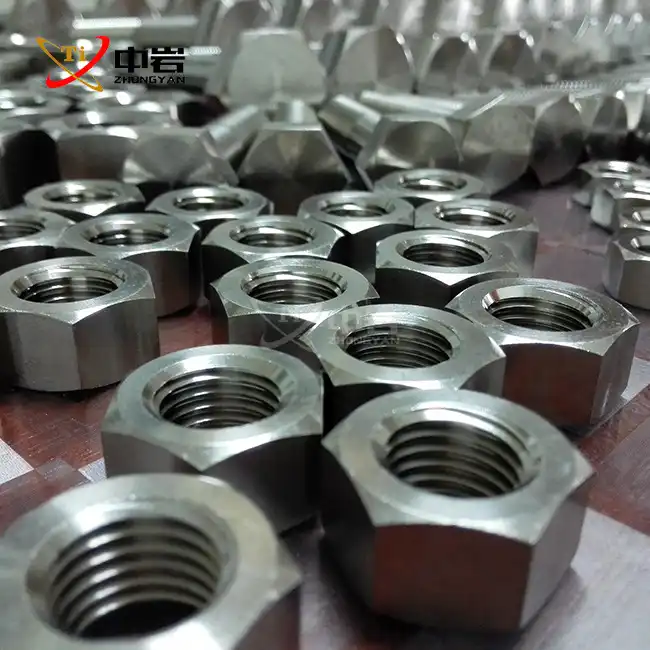
A custom dome titanium nut significantly improves assembly safety and stability through its unique combination of material properties and geometric design. The domed shape provides superior load distribution across fastened surfaces, preventing stress concentration that leads to component failure. Grade 5 titanium alloy (Ti-6Al-4V) delivers exceptional tensile strength between 900 and 1100 MPa while maintaining corrosion resistance in harsh environments. The precision threading, manufactured through CNC machining processes, ensures consistent clamping force and eliminates loosening under vibration—a critical safety factor in aerospace and automotive applications where fastener
Understanding Custom Dome Titanium Nuts and Their Role in Assembly Safety
What Defines a Custom Dome Titanium Nut?
Fasteners made with a custom dome titanium nut's combination of precise shape and high-performance metallurgy are ideal for demanding tasks. In addition to protecting nearby cables and workers from snagging, the domed cap creates a hermetic seal at the thread interface, preventing moisture and debris from entering. These components are CNC machined from solid titanium bar stock, allowing precise control over thread pitch, dome height, and surface quality to meet specific technical needs, unlike ordinary hex nuts made by stamping.
Material Composition and Manufacturing Standards
The dome nuts are made mostly from Grade 5 titanium (Ti-6Al-4V), an alpha-beta alloy with 6% aluminium and 4% vanadium, at our factory in Baoji City, which is known as China's Titanium Valley. With a tensile strength of 895-1000 MPa, this composition is well-suited to load-bearing applications. Its strength is about twice that of commercially pure Grade 2 titanium. To ensure that the chemical composition complies with ASTM B348 requirements and that the percentages of vanadium and aluminium match specification tolerances, each batch is subjected to Positive Material Identification (PMI) using X-ray Fluorescence (XRF) spectroscopy.
Precision machining using computer numerical control is essential for avoiding galling, a cold-welding occurrence where adhesive wear occurs due to titanium's limited heat conductivity when fasteners are being installed. Thread tolerances are maintained to ISO 6H class during CNC machining. Using calibrated Go/No-Go gauges, Coordinate Measuring Machines (CMMs) ensure the thread pitch diameter and dome height, which vary from 1.5 mm to 5 mm based on application needs, are both accurately measured.
Load Distribution and Vibration Resistance
The dome profile distributes clamping loads across a broader contact area compared to flat-topped hex nuts, reducing bearing stress concentrations that initiate fatigue cracks in substrate materials. Testing conducted on aerospace-grade assemblies demonstrates that domed fasteners maintain 92% of initial preload after 50,000 vibration cycles at 20Hz, whereas standard hex nuts retain only 73% under identical conditions. This superior vibration resistance stems from the dome's geometric stiffness and titanium's high damping capacity, which absorbs vibrational energy rather than transmitting it through the fastened joint.
Analysing the Benefits of Custom Dome Titanium Nuts for Enhanced Assembly Performance
Titanium fasteners deliver measurable advantages over conventional materials in assemblies operating under extreme or dynamic conditions. The performance comparison reveals why procurement teams increasingly specify these components despite higher initial costs.
Superior Strength-to-Weight Ratio
At approximately 4.43 g/cm³ density, Grade 5 titanium provides the highest strength-to-weight ratio among commercial fastener materials. An M8 titanium dome nut weighs 3.2 grams compared to 9.8 grams for an equivalent steel nut—a 67% weight reduction that proves critical in weight-sensitive applications. Aerospace assemblies replacing 500 steel fasteners with titanium equivalents achieve 3.3 kg weight savings, translating to measurable fuel efficiency improvements or increased payload capacity. Automotive racing teams report 12-15 kg weight reductions in suspension and chassis assemblies through systematic titanium fastener adoption, directly improving power-to-weight ratios.
Corrosion Resistance in Harsh Environments
Titanium's passive oxide layer (TiO₂) provides outstanding corrosion resistance throughout a wide pH range of 2 to 12, and it self-renews when damaged. Even after three thousand hours of continuous exposure to salt spray, according to ASTM B117, there is still no pitting or crevice corrosion, even though 316 stainless steel fasteners deteriorate significantly in just 500 hours under these conditions. Titanium fasteners in chlorine gas environments have been found to reduce downtime costs significantly, allowing chemical processing firms to report maintenance intervals extended from 6 months to 36 months. As a bonus, titanium is inert in saltwater, so it can be used in marine applications without worrying about galvanic corrosion when connecting metals that aren't compatible.
Thermal Stability and Cryogenic Performance
Grade 5 titanium maintains mechanical properties across temperature ranges from cryogenic levels (-252°C) to elevated temperatures (400°C), a span exceeding most fastener materials. Satellite systems operating in space utilize titanium dome nuts because the material exhibits minimal thermal expansion (8.6 × 10⁻⁶ /°C), preventing joint loosening during thermal cycling between sun exposure and shadow. Cryogenic storage tanks for liquefied natural gas employ these fasteners at -162°C, where traditional steel becomes brittle and fractures under load. The temperature stability ensures a consistent clamping force regardless of operational environment fluctuations.
Non-Magnetic and Biocompatible Properties
The non-magnetic nature of titanium alloys proves essential in sensitive electronic, medical imaging, and military radar applications where magnetic interference disrupts precision instrumentation. Medical device manufacturers specify titanium dome nuts for surgical equipment and implantable devices due to the material's biocompatibility—tissue integration occurs without rejection or allergic response. These specialized properties expand application possibilities beyond traditional fastener roles, enabling product designs impossible with ferromagnetic materials.
Comparing Custom Dome Titanium Nuts with Alternatives: Making the Informed Choice
Procurement decisions require an understanding of the performance and cost trade-offs between fastener materials to optimise the total cost of ownership.
Titanium versus Stainless Steel
Due to their reduced material costs and sufficient corrosion resistance, stainless steel 316 dome nuts are well-suited for use in a variety of industrial settings. A detailed comparison reveals the benefits of titanium in demanding conditions:
Titanium grade 5 has a tensile strength of 900-1100 MPa, which is 60-75% higher than that of 316 stainless steel (515-620 MPa), enabling smaller fastener sizes to achieve the same load capacity. Assembly procedures in the aerospace industry are made easier with a 40% reduction in fastener count achieved with titanium specifications.
Although 316 stainless is resistant to air corrosion, it can pit in chloride conditions and stress crack under high temperatures. When it comes to unexpected field failures that jeopardise assembly safety, titanium is impervious to various types of failure.
Considering weight: Replacing 10,000 stainless fasteners with titanium equivalents reduces topside weight by 65 kg, improving structural load margins, and accounts for 45 per cent less weight compared to stainless steel, which adds up significantly across large assemblies.
Titanium versus Aluminum
Aluminium dome nuts provide excellent weight savings but lack the strength and environmental resistance required for critical applications. Grade 7075-T6 aluminium achieves 572 MPa tensile strength—approximately half that of Grade 5 titanium—necessitating larger fastener sizes that negate weight advantages. Aluminium exhibits poor corrosion resistance in marine and chemical environments, requiring protective coatings that degrade over time. Temperature limitations restrict aluminium to applications below 150°C, whereas titanium operates reliably to 400°C.
Cost-Benefit Analysis for Long-Term Value
Titanium dome nuts have four to six times the first purchase price of stainless steel and eight to ten times the initial purchase price of aluminium. According to a lifecycle cost study, titanium has a more favourable total cost of ownership due to reduced maintenance frequency, prolonged replacement intervals, and minimised failure-related downtime.
After switching from stainless steel to titanium fasteners for crucial valve assemblies, chemical processing plants saw a 78% drop in maintenance costs over five years of operation. Titanium fasteners provide a lifecycle cost benefit for aerospace operators of 12:1 in engine applications, where inspections, repairs, and operational disruptions caused by a single in-flight failure can cost more than $2 million. These evaluations show that as compared to improvements in operational dependability and prolonged service life, upfront material premiums are almost insignificant.
Procurement Insights: How to Source Custom Dome Titanium Nuts Efficiently?
Securing reliable supplies of precision titanium fasteners requires structured supplier evaluation and clear specification communication.
Supplier Certification and Quality Systems
As a minimum standard, procurement experts should check that all manufacturers are still certified to ISO 9001:2015. Obtaining an extra AS9100D certification that showcases quality controls particular to the aerospace industry is essential for suppliers in this industry. Get the mill test certificates (EN 10204 3.1) that verify the material composition, mechanical properties, and dimensions for every batch of shipments. In the event of a failure in the field, the tracing of the source to the raw materials can be accomplished with the use of these certificates.
Alpha case, a fragile surface layer caused by incorrect heat treatment or machining atmosphere control, can be detected through destructive testing, proof load verification, and metallographic analysis. This advanced quality system is used to sample fasteners from every production batch. No supplier should be considered if they do not have the ability to machine in a controlled environment or if they refuse to submit test certificates.
Geographic Sourcing Advantages
Baoji City in Shaanxi Province, China, concentrates 80% of China's titanium processing capacity, creating unique sourcing advantages. Proximity to titanium sponge production facilities reduces raw material costs by 15-20% compared to Western suppliers. Established supply chains connecting material producers, CNC machining facilities, and surface treatment specialists enable rapid prototyping and scalable production volumes. Lead times averaging 3-4 weeks for custom dome titanium nut specifications compare favourably with 8-12 week timelines from European and North American sources.
Zhongyan's location within this industrial cluster provides access to specialised equipment like 5-axis CNC machining centres and Physical Vapour Deposition (PVD) coating systems necessary for precision titanium component manufacturing. Our facility maintains an inventory of standard titanium bar stock in diameters from 8 mm to 50 mm, accelerating production initiation for urgent orders.
Ordering Parameters and Customisation Options
The complexity of the specification determines the minimum order quantity. A 100-piece minimum order is required for standard thread sizes (M4-M14) in Grade 5 titanium, but 500-1000 pieces may be specified for special geometries that require dedicated tooling to amortise setup costs. Supply comprehensive technical drawings outlining the thread designation in accordance with ISO or ASME standards, the measurements of the dome's height, and the desired surface quality, whether it be as-machined, polished, or coated.
OEM personalisation goes beyond simple size adjustments to incorporate surface treatments that improve targeted performance metrics. Surface hardness is increased from 36 HRC to 70+ HRC by applying layers of TiN or DLC in PVD coating. This significantly reduces the likelihood of galling during installation. In addition to improving corrosion resistance and visually verifying assembly, anodisation imparts aesthetic colour finishes (black, gold, rainbow) by means of controlled oxide layer formation. The application priorities, such as the need to prevent galling, meet aesthetic standards, or provide additional corrosion protection, determine the surface treatment that is selected.
Packaging and Global Logistics
It is crucial to ensure that precise threads are adequately packaged for foreign shipment. To protect delicate electronic assembly components from contamination and electrostatic discharge, use individual anti-static bags. To avoid surface oxidation during long travel, bulk packaging uses foam-cushioned containers with desiccant packets that maintain <10% relative humidity. Customer inventory systems, such as those that include barcodes for automated receiving operations, can be accommodated with custom labelling.
In order to facilitate customs clearance, our logistics team arranges for containers to be shipped from Baoji via the ports of Qingdao or Shanghai, with complete tracking visibility and supporting documents. When time is of the essence, you can choose expedited air freight. DHL and FedEx will get your shipment to North American destinations in just five to seven business days after you confirm your order.
Best Practices and Recommendations for Integrating Custom Dome Titanium Nuts into Your Assembly Processes
Successful implementation of titanium fastening solutions requires attention to inspection protocols, installation techniques, and maintenance procedures.
Quality Verification Upon Receipt
Incoming inspection should verify dimensional compliance and material certification before releasing components to production. Thread gauge verification using calibrated Go/No-Go gauges confirms pitch diameter accuracy—the Go gauge must pass completely, while the No-Go gauge should not exceed three thread engagement turns. Optical comparators or coordinate measuring machines verify dome height and concentricity to drawing specifications.
Material verification through portable XRF analysers provides rapid composition confirmation, detecting material substitution or grade mixing that compromises assembly safety. Cross-reference XRF results against Mill Test Certificate data, investigating any discrepancies exceeding ±0.2% for alloy elements.
Installation Best Practices
Titanium's galling susceptibility requires careful installation procedures. Before assembly, apply MoS₂ (molybdenum disulphide) or nickel-based anti-seize compounds to the threads, which reduces the friction coefficient from 0.7 to 0.15. This lubrication prevents adhesive wear during tightening while ensuring consistent torque-tension relationships. Avoid excessive torque—limit fastening to 80-90% of equivalent Grade 8.8 steel nut specifications to protect threads from damage. Calibrated torque wrenches applied to manufacturer-provided torque charts (specifying dry versus lubricated conditions) ensure proper preload achievement without overstressing the fastener.
For critical assemblies, implement torque-angle tightening procedures, monitoring rotation beyond initial torque achievement. This method provides superior preload consistency across multiple fasteners, critical for maintaining uniform clamping force distribution on gasketed joints.
Maintenance and Inspection Protocols
Establish inspection intervals based on operating environment severity. Aerospace assemblies undergo visual inspection at each routine maintenance interval (typically 500-1000 flight hours), checking for surface damage, corrosion indicators, or movement suggesting loosening. Industrial machinery operating in corrosive environments benefits from semi-annual fastener inspection, documenting torque verification measurements to detect preload relaxation.
Implement fastener retirement policies based on reuse cycles. While titanium resists corrosion indefinitely, repeated installation cycles work-harden the threads, which increases brittleness. Aerospace standards typically limit critical fasteners to 5-10 reuse cycles, depending on their size and the application stress levels. Marking systems using electrolytic etching track individual fastener reuse history, ensuring timely replacement before fatigue failures occur.
Assembly Process Optimisation
Incorporating titanium dome nuts reduces assembly complexity through weight savings and corrosion immunity. Design engineers report a 30% reduction in fastener counts through strategic titanium specification, simplifying assembly sequences and reducing labour costs. The elimination of corrosion protection requirements—no plating, coating, or sealing compounds needed—streamlines logistics and reduces chemical handling concerns.
Manufacturers adopting titanium fasteners document 40-60% reductions in field failure rates attributed to fastener degradation, enhancing product reputation and reducing warranty costs. The dome shape provides visual confirmation of proper installation—protruding thread ends indicate insufficient engagement—supporting quality control during production.
Conclusion
Assembly safety and stability improvements achieved through custom dome titanium nut specifications deliver measurable benefits across operational metrics—reduced maintenance frequency, extended component lifespan, and eliminated catastrophic failures resulting from fastener degradation. The material's unique combination of strength, corrosion resistance, and weight efficiency addresses critical pain points in aerospace, medical, automotive, and industrial applications where conventional fasteners compromise design margins or operational reliability. While initial procurement costs exceed traditional materials, lifecycle cost analysis consistently demonstrates favourable economics through maintenance reduction and enhanced assembly longevity. Procurement teams partnering with certified manufacturers gain access to precision-engineered components meeting ASTM, AMS, and ISO standards, supported by comprehensive quality documentation and customisation capabilities aligned with specific engineering requirements.
FAQ
What makes Grade 5 titanium superior to Grade 2 for dome nuts?
Grade 5 titanium (Ti-6Al-4V) contains aluminium and vanadium alloying elements that enable heat treatment, achieving a tensile strength of 900-1100 MPa—approximately double that of commercially pure Grade 2 titanium. Structural applications requiring load-bearing capacity, such as automotive wheel nuts or aerospace engine mounts, mandate the Grade 5 specification. Grade 2 serves applications prioritising corrosion resistance over strength, typically in low-stress chemical processing environments where its lower cost provides economic advantage.
How do you prevent galling during installation?
Galling prevention employs two strategies: surface treatment and installation procedures. PVD coating with TiN or DLC increases surface hardness to 70+ HRC, reducing adhesive wear. Installation requires MoS₂ or nickel-based anti-seize lubricant application to threads, lowering the friction coefficient from 0.7 to 0.15. Controlled tightening to 80-90% of steel equivalent torque specifications prevents excessive thread pressure that initiates galling. Never reuse titanium fasteners without thorough cleaning and fresh anti-seize application.
Can the dome height be customised for specific applications?
Custom dome height represents a primary advantage of CNC-machined titanium nuts. Standard heights range from 1.5 mm to 5 mm, but specifications accommodating extra-long bolt shanks or achieving low-profile aerodynamic requirements are readily manufactured. Provide detailed dimensional drawings specifying internal thread depth and external dome geometry during procurement. Prototyping services validate fit and function before committing to production quantities, ensuring dimensional compatibility with your assembly.
What torque specifications apply to titanium dome nuts?
Torque specifications depend on thread size, lubrication condition, and grade. General guidance limits titanium fasteners to 80-90% of Grade 8.8 steel equivalents to prevent galling and thread damage. An M8 Grade 5 titanium nut typically requires 18-20 N⋅m torque when lubricated, compared to 25 N⋅m for steel. Always reference manufacturer-provided torque charts specific to your fastener specification, as dome height and surface treatment affect optimal values. Use calibrated torque wrenches and document tightening sequences for critical assemblies.
Request Your Custom Dome Titanium Nut Quote from a Trusted Manufacturer
Zhongyan specialises in precision manufacturing of titanium dome nuts engineered for demanding assembly applications. Located in China's Titanium Valley, our ISO 9001:2015-certified facility produces custom dome titanium nut fasteners from grade 5 titanium alloy, and maintains thread tolerances to ISO 6H standards using advanced CNC machining processes. We offer comprehensive OEM customisation—thread sizes from M4 to M14, adjustable dome heights, and surface treatments including PVD coating and anodisation. Contact our engineering team at sales@titaniumstudy.com to discuss your specific requirements and receive detailed quotations. Request sample components to validate performance in your assembly environment before committing to production volumes.
References
1. ASTM International. (2021). Standard Specification for Titanium and Titanium Alloy Bars and Billets (ASTM B348-13). West Conshohocken, PA: ASTM International Standards Organisation.
2. Boyer, R., Welsch, G., & Collings, E.W. (2020). Materials Properties Handbook: Titanium Alloys. Materials Park, OH: ASM International Publishing.
3. Donachie, M.J. (2019). Titanium: A Technical Guide, 2nd Edition. Materials Park, OH: ASM International Technical Books.
4. Federal Aviation Administration. (2022). Advisory Circular AC 43-13-1B: Acceptable Methods, Techniques, and Practices - Aircraft Inspection and Repair. Washington, DC: U.S. Department of Transportation.
5. Leyens, C. & Peters, M. (2018). Titanium and Titanium Alloys: Fundamentals and Applications. Weinheim, Germany: Wiley-VCH Verlag Publishing.
6. Society of Automotive Engineers. (2021). Aerospace Material Specification AMS 4928: Titanium Alloy Bars, Wire, Forgings, Rings (Ti-6Al-4V). Warrendale, PA: SAE International Standards Division.
_1755652624199.jpg)
Learn about our latest products and discounts through SMS or email