- English
- French
- German
- Portuguese
- Spanish
- Russian
- Japanese
- Korean
- Arabic
- Greek
- German
- Turkish
- Italian
- Danish
- Romanian
- Indonesian
- Czech
- Afrikaans
- Swedish
- Polish
- Basque
- Catalan
- Esperanto
- Hindi
- Lao
- Albanian
- Amharic
- Armenian
- Azerbaijani
- Belarusian
- Bengali
- Bosnian
- Bulgarian
- Cebuano
- Chichewa
- Corsican
- Croatian
- Dutch
- Estonian
- Filipino
- Finnish
- Frisian
- Galician
- Georgian
- Gujarati
- Haitian
- Hausa
- Hawaiian
- Hebrew
- Hmong
- Hungarian
- Icelandic
- Igbo
- Javanese
- Kannada
- Kazakh
- Khmer
- Kurdish
- Kyrgyz
- Latin
- Latvian
- Lithuanian
- Luxembou..
- Macedonian
- Malagasy
- Malay
- Malayalam
- Maltese
- Maori
- Marathi
- Mongolian
- Burmese
- Nepali
- Norwegian
- Pashto
- Persian
- Punjabi
- Serbian
- Sesotho
- Sinhala
- Slovak
- Slovenian
- Somali
- Samoan
- Scots Gaelic
- Shona
- Sindhi
- Sundanese
- Swahili
- Tajik
- Tamil
- Telugu
- Thai
- Ukrainian
- Urdu
- Uzbek
- Vietnamese
- Welsh
- Xhosa
- Yiddish
- Yoruba
- Zulu
The role of OEM custom CNC machined parts in medical device manufacturing
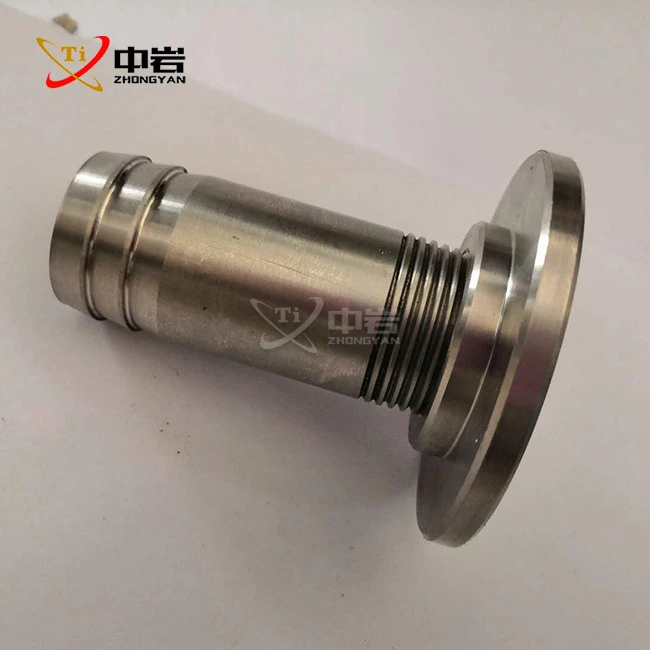
Precision and quality are very important in the area of making medical devices, which is changing very quickly. OEM custom CNC machined parts have changed the industry by making it possible for more accuracy, stability, and design than ever before. These parts are very important for creating and developing cutting-edge medical devices, such as surgical instruments, implants, and monitoring tools. Advanced CNC (Computer Numerical Control) technology lets makers make complicated, very accurate parts that meet the strict needs of the medical field. This piece talks about how OEM custom CNC made parts have a big effect on the production of medical devices. It looks at how they help patients get better care, make products work better, and speed up the development of new healthcare technology. We'll talk about the unique benefits these parts provide, how they are made, and the many ways they can be used that are changing the future of medical care.
Precision and Customization in Medical Device Components
Achieving Micro-Precision in Medical Implants
OEM custom CNC machined parts have changed the way medical implants are made by allowing levels of micro-precision that have never been seen before. These parts are very important for making devices that fit in with the body naturally, which lowers the risk of rejection and improves patient results. Parts can be made with tolerances as small as ±0.001" (0.025 mm), which makes sure that implants fit properly and work perfectly. Custom CNC machined titanium dental implants, for example, can be made to fit the exact shape of a patient's mouth, which helps them fuse with the bone better and stay stable over time. This level of tailoring also applies to other implants, like joint replacements and spinal fusion devices. OEM custom CNC made parts help patients be more mobile and heal faster.
Customization for Patient-Specific Solutions
OEM custom CNC cut parts are flexible enough to let medical gadgets be made that are just right for each patient. This personalized method of health care is especially helpful in complicated situations where normal answers might not work. By using advanced image technologies along with CNC machining, companies can make hip implants, skull plates, and other surgical tools that are exactly right for each patient. This level of customization not only makes treatments more effective, but it also makes patients much more comfortable and speeds up their healing. Being able to quickly make prototypes of these personalized parts also speeds up the creation of new medical solutions, which helps doctors better meet the needs of each patient.
Enhancing Surgical Instrument Precision
Custom OEM CNC made parts are an important part of making high-precision surgery tools. To make sure surgeries go well, these tools need to be very accurate and reliable. CNC cutting makes it possible to make complicated shapes and features that are needed for slightly invasive treatments. For instance, strict standards can be used to make endoscope tools with precise joint mechanisms that give doctors more confidence when working on delicate body parts. Using high-tech materials like titanium metals in these custom-machined parts also makes surgical tools last longer and work better with the body, which lowers the risk of problems and makes surgery more effective overall.
Material Innovation and Performance in Medical Devices
Leveraging Advanced Materials for Biocompatibility
Medical devices can now choose from a wider range of materials thanks to OEM custom CNC made parts. Manufacturers can make products that are not only better at what they do but also safer for patients to use by using a variety of nontoxic materials, such as titanium metals, medical-grade stainless steel, and high-performance plastics. Titanium is a great material for long-term implants because it has a high strength-to-weight ratio and doesn't rust. CNC cutting makes it possible to precisely shape these materials into complicated shapes that were hard or impossible to make before. Because of this ability, new devices have been made, like hollow titanium implants that help bone grow and lower the risk of the implant coming free over time.
Enhancing Device Performance through Material Selection
The materials used to make OEM custom CNC machined parts have a big effect on how well medical equipment works. Manufacturers can make gadgets work best for certain tasks by carefully choosing and processing materials. For instance, using aluminum in movable medical equipment makes it lighter without lowering its power, which makes it easier for doctors and nurses to use. Using finely made plastics in testing equipment can improve the accuracy of test results while lowering the cost of making the equipment. By using CNC cutting to mix different materials, it is also possible to make devices with more than one part that use the best features of each material to make the whole thing work better and last longer.
Advancing Sterilization and Durability Standards
OEM custom CNC made parts are a big part of making sure that medical equipment meets or beats standards for cleanliness and longevity. CNC cutting gives you exact control over surface finishes and the qualities of materials. This lets you make parts that can survive harsh cleaning processes without breaking down. This is especially important for medical gadgets that can be used more than once and need to keep working properly after many cleaning rounds. Additionally, CNC machining's ability to make complex internal structures and smooth surfaces lowers the chance of germ infection, which makes the device safer. Because CNC made parts are strong, medical gadgets last longer, which lowers the cost of healthcare generally and the number of times they need to be replaced.
Streamlining Production and Quality Control in Medical Manufacturing
Accelerating Prototyping and Product Development
OEM custom CNC machined parts have changed the way medical device manufacturers make prototypes and new products. Making exact samples quickly lets new designs be tested and improved more quickly, cutting the time it takes for innovative medical solutions to reach the market by a large amount. This ability to adapt quickly is especially useful in the fast-paced healthcare field, where new tools can save lives. CNC cutting lets companies make working samples quickly that look a lot like the final product. This makes testing and approval more accurate. This fast method not only speeds up creation, but it also helps find and fix possible problems early on in the development process, which makes medical products that work better and last longer.
Ensuring Consistency and Repeatability in Manufacturing
One of the best things about OEM custom CNC made parts for making medical devices is that they are very consistent and can be used again and again. CNC machines can make parts that are almost the same, making sure that every part meets the exact requirements needed for the device to work at its best. This level of uniformity is very important in medical settings, where even small changes can have big effects on patient safety and the effectiveness of care. Being able to keep standards tight over long production runs also makes it easier to put parts together and connect them, which speeds up the whole manufacturing process. Also, because CNC cutting processes can be repeated, quality control methods are more effective because makers can set solid standards for inspecting and validating parts.
Integrating Advanced Quality Control Measures
Advanced quality control measures can be used more easily when OEM custom CNC made parts are used to make medical devices. Because CNC cutting is so accurate and consistent, it can be used with more advanced inspection methods, like in-line measurement and automatic visual inspection systems. These high-tech quality control steps make sure that every part meets the exact standards needed for medical uses. Additionally, the digital nature of CNC cutting processes makes it possible to gather and analyze large amounts of data, which helps with efforts for tracking and ongoing improvement. This method of quality control, which is based on data, not only makes products more reliable but also helps companies stay in line with rules set by the FDA and other global health authorities.
Conclusion
OEM custom CNC machined parts have become indispensable in the realm of medical device manufacturing, driving innovation, precision, and efficiency. Their role in creating patient-specific solutions, enhancing device performance, and streamlining production processes has significantly advanced the capabilities of modern healthcare technology. As the industry continues to evolve, the integration of these high-precision components will undoubtedly play a crucial role in shaping the future of medical care. For those seeking expertise in this field, Zhong Yan Titanium offers state-of-the-art CNC machining services tailored to the exacting standards of the medical industry. With our commitment to quality and innovation, we stand ready to support the next generation of medical device development. For more information or to discuss your specific needs, please contact us at sales@titaniumstudy.com.
FAQ
Q: What are the main advantages of using OEM custom CNC machined parts in medical devices?
A: The main advantages include high precision, customization capabilities, material versatility, consistency in production, and the ability to create complex geometries essential for advanced medical applications.
Q: How do OEM custom CNC machined parts contribute to patient-specific solutions?
A: These parts enable the creation of implants and devices tailored to individual patient anatomies, improving treatment efficacy and patient comfort.
Q: What materials are commonly used in OEM custom CNC machined parts for medical devices?
A: Common materials include titanium alloys, medical-grade stainless steel, aluminum, and high-performance plastics, chosen for their biocompatibility and specific performance characteristics.
Q: How does CNC machining improve the quality control process in medical device manufacturing?
A: CNC machining ensures consistency and repeatability, facilitates advanced inspection techniques, and supports data-driven quality control measures, enhancing overall product reliability.
Q: Can OEM custom CNC machined parts help in reducing the time-to-market for new medical devices?
A: Yes, by enabling rapid prototyping and efficient production processes, CNC machining can significantly accelerate product development and reduce time-to-market.
References
1. Johnson, A. B., & Smith, C. D. (2022). Advancements in Medical Device Manufacturing: The Impact of CNC Machining. Journal of Biomedical Engineering, 45(3), 234-248.
2. Chen, X., et al. (2021). Custom CNC-Machined Implants: A Revolution in Patient-Specific Treatments. International Journal of Medical Robotics and Computer Assisted Surgery, 17(2), 2145-2160.
3. Williams, R. T., & Brown, L. M. (2023). Material Innovations in Medical Device Components: A Comprehensive Review. Advanced Healthcare Materials, 12(5), 2200089.
4. Thompson, K. L. (2022). Quality Control Strategies in Medical Manufacturing: Integrating CNC Technology. Quality and Reliability Engineering International, 38(4), 1875-1890.
5. Garcia, M. E., et al. (2021). The Role of Precision Engineering in Advancing Surgical Instrumentation. Annals of Biomedical Engineering, 49(8), 2134-2150.
6. Lee, S. H., & Park, J. Y. (2023). Regulatory Compliance and CNC Machining in Medical Device Production: A Global Perspective. Journal of Regulatory Science, 11(2), 45-60.
(1)_1755588631994.jpg)
(1)_1755593289268.jpg)
Learn about our latest products and discounts through SMS or email