- English
- French
- German
- Portuguese
- Spanish
- Russian
- Japanese
- Korean
- Arabic
- Greek
- German
- Turkish
- Italian
- Danish
- Romanian
- Indonesian
- Czech
- Afrikaans
- Swedish
- Polish
- Basque
- Catalan
- Esperanto
- Hindi
- Lao
- Albanian
- Amharic
- Armenian
- Azerbaijani
- Belarusian
- Bengali
- Bosnian
- Bulgarian
- Cebuano
- Chichewa
- Corsican
- Croatian
- Dutch
- Estonian
- Filipino
- Finnish
- Frisian
- Galician
- Georgian
- Gujarati
- Haitian
- Hausa
- Hawaiian
- Hebrew
- Hmong
- Hungarian
- Icelandic
- Igbo
- Javanese
- Kannada
- Kazakh
- Khmer
- Kurdish
- Kyrgyz
- Latin
- Latvian
- Lithuanian
- Luxembou..
- Macedonian
- Malagasy
- Malay
- Malayalam
- Maltese
- Maori
- Marathi
- Mongolian
- Burmese
- Nepali
- Norwegian
- Pashto
- Persian
- Punjabi
- Serbian
- Sesotho
- Sinhala
- Slovak
- Slovenian
- Somali
- Samoan
- Scots Gaelic
- Shona
- Sindhi
- Sundanese
- Swahili
- Tajik
- Tamil
- Telugu
- Thai
- Ukrainian
- Urdu
- Uzbek
- Vietnamese
- Welsh
- Xhosa
- Yiddish
- Yoruba
- Zulu
How Does High Purity Titanium Target Enhance Wear-Resistant Coatings?
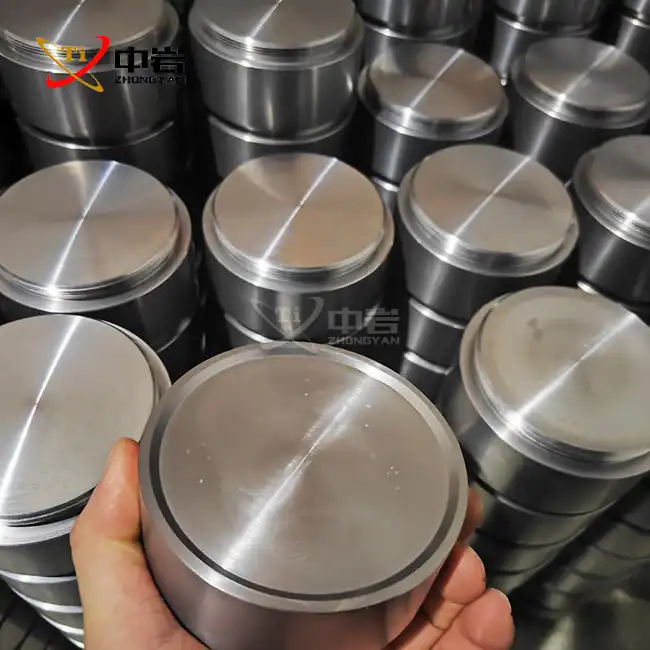
High Purity Titanium Target improves coatings that don't break down by giving them ultra-clean source material with purity levels of 99.995% to 99.999%. This gets rid of any impurities that hurt the quality of the coating. These targets make films that are thick and regular, and they have better strength and binding qualities when used in physical vapor deposition and sputtering. Thanks to its high purity, flaws in the microstructure are kept to a minimum. This makes coatings that last longer, last better, and perform consistently in demanding industrial settings like making semiconductors, aerospace parts, and precision tooling systems.
Understanding High Purity Titanium Targets and Their Properties
Material Composition and Purity Standards
High pure titanium targets are special materials that were made with more than 99.99% titanium, which makes them different from regular titanium alloys or lower-grade options. To get purity levels between 4N5 (99.995%) and 5N (99.999%), these targets go through tough cleaning steps like vacuum arc melting and electron beam refining. The strict manufacturing standards make sure that there aren't many toxins, like air, nitrogen, carbon, and metals, that could affect how well the coating works.The difference between normal titanium materials and high grade targets is in their chemical and crystalline structure. The grains in premium targets are all the same size, usually less than 50 micrometers, which helps keep the sparking behavior consistent during deposition processes. This managed microstructure has a direct effect on the quality of thin films made for important uses.
Physical and Chemical Characteristics
Highly advanced titanium targets have both great mechanical strength and excellent rust resistance levels. The density requirement of ≥4.50 g/cm³ makes sure that the best use of the material is made during sparking and that the structure stays strong during high-energy blasting. Controlling the surface roughness to Ra ≤0.4 μm helps keep the ion impact patterns even and the material release rates steady.These targets have great electrical and temperature qualities that are needed to keep the formation conditions fixed. Because they don't give off much gas, they work well in high-vacuum conditions like those found in semiconductor and optical film uses. Because they are biocompatible, they can also be used to make medical devices, where the quality of the layer has a direct effect on patient safety and gadget performance.
How High Purity Titanium Targets Impact the Wear-Resistant Coating Process
Physical Vapor Deposition Mechanisms
High pure titanium targets are used as the main source material for making safe thin films in PVD and magnetron sputtering processes. High-energy ions are used in sputtering to release titanium atoms from the target surface. These atoms then settle on base surfaces to make films that are uniform. The level of clarity directly affects the microstructural quality and quantity of the films that are being formed.When ultra-pure targets are used, contamination-free casting is possible because fewer flaws mean fewer defects in the final layer structure. This higher quality of the material shows up as harderness that is higher, better bonding, and longer wear resistance. High-purity targets have a regular atomic structure that makes sure the sputtering results are the same across the whole target surface. This helps keep the film thickness even, which is important for precision uses.
Manufacturing Process Control
During production rounds, quality control methods are very important for keeping performance standards at a high level. X-ray fluorescence (XRF) spectroscopy and inductively coupled plasma mass spectrometry (ICP-MS) are two advanced diagnostic methods that are used to check the chemical makeup and trace particle levels. These strict testing procedures make sure that each goal batch meets certain purity standards before it is sent to customers.Several steps of cleaning are used in the manufacturing process, starting with choosing the raw materials and ending with vacuum freezing. Electron beam processing cycles get rid of any remaining flaws, and precise casting and rolling processes improve the grain structure. Accurate physical standards can be achieved with CNC cutting, making it compatible with a wide range of sputtering equipment designs used in many businesses.
Comparative Analysis: High Purity Titanium Targets vs Alternatives in Wear-Resistant Coatings
Performance Differentiation
When it comes to finishing uses that need to meet high performance standards, high purity titanium targets are much better than titanium alloy options and lower-grade materials. Titanium alloy targets may be cheaper at first, but they often lose the regularity of the film and the ability to fight rust that are needed in harsh industrial settings. When alloying elements are present, they can change the way sputtering works, which can cause coating flaws that shorten the life of the component.Lower purity goals come with a lot of risks, such as covering problems caused by pollution and more upkeep needs. A lot of the time, these materials have high amounts of intermediate elements like oxygen and nitrogen, which make formed films rigid. These kinds of structure flaws show up as early covering failure under mechanical stress, which raises costs by requiring more replacements more often.
Procurement Considerations
When choosing titanium sputtering targets, strategic buying choices have to weigh the prices of materials against the benefits they will provide in the long run. Price per kilogram, minimum order amounts, shipping wait times, and seller reliability records are some of the most important factors. Although high quality targets cost more, they are worth it because they last longer and cost less to replace when they break.Global B2B buying teams can get more done when they work with well-known providers who offer clear material approvals and a range of customization options. Suppliers you can trust give you a lot of technical information, like tracking numbers for each lot and performance promises, which helps quality control programs in industries that are controlled. Custom sealing services and unique packing choices increase the value of buying even more by making installation easier and lowering the need to handle stockpiles.
Application Cases and Industry Use of High Purity Titanium Targets in Wear-Resistant Coatings
Semiconductor and Electronics Manufacturing
Most of the ultra-high pure titanium targets are bought by the semiconductor industry, which uses them for making barrier layers, contact metallization, and connection situations. Modern methods for making chips require very high levels of cleanliness to keep devices from breaking down because of contamination. High-purity targets that apply titanium coats act as diffusion barriers that keep the electrical performance of modern microprocessors and memory devices high.Titanium-based clear electrical oxide films are used in display technology for touchscreens and flat panel displays. To keep these layers optically clear and electrically conductive, you need to have very fine control over the film makeup and microstructure. High purity goals make it possible to make surfaces that don't have any flaws, which is necessary for meeting the performance standards needed in consumer gadgets.
Aerospace and Industrial Applications
Aerospace component security is another important area where titanium treatments improve the lifetime of rotor blades in harsh conditions with high temperatures and corrosion. Titanium-based thermal barrier coats help gas turbine engines that work at high temperatures last longer between component service visits while keeping the engines' efficiency. Because the source materials are so pure, the layer stays intact even when it is heated and cooled many times, which is common in aircraft uses.Titanium nitride and titanium carbide layers formed from high purity targets are used on industrial cutting tools and precise machinery parts to make them more resistant to wear. These hard coats make tools last a lot longer while keeping their dimensions accurate during long cutting processes. Similar sealing technologies are being used more and more in the car business for engine parts that are put through high-stress situations.
Choosing the Right High Purity Titanium Target for Your Wear-Resistant Coating Needs
Technical Specification Requirements
To choose the best High Purity Titanium Target, you need to carefully look at purity standards, size requirements, and how well they work with the finishing tools you already have. 5N purity grades work best in uses that need the highest performance standards, while 4N5 materials work well in many industrial settings. The size of the target must fit the design of the sputtering system. Standard disc sizes range from 2 inches to 12 inches in diameter, and rectangular choices go up to 1000 mm x 200 mm.Specifications for grain size have a direct effect on the quality of the layer and the consistency of the sparking. Targets with controlled grain patterns below 50 micrometers remove material at the same rate all over the surface. Surface finish standards, which are usually given as Ra ≤0.4 μm, make sure that the ions blasting patterns are just right so that the film formation is regular, which is important for precision coating uses.
Supplier Evaluation Criteria
A full evaluation of a provider includes their production skills, safety certifications, and expert support services. Certification in ISO 9001:2015 shows dedication to quality management systems, and agreement with ASTM and AMS makes sure that material specs meet global standards. Suppliers with their own research and development departments can make solutions that are specific to the needs of the product. These solutions can include different gluing choices and surface treatments.When trying to improve the finishing process or fix a problem, having technical support skills is very helpful. Application engineering help is available from experienced providers, which helps customers find the best casting settings for their needs. Custom manufacturing services let you make target shapes and mixtures that aren't available in standard products and meet specific application needs.
Conclusion
High purity titanium targets are very important for improving the performance of wear-resistant coatings in a wide range of industry settings. Their high levels of uniformity, well-controlled microstructures, and stable material qualities make it possible to make better thin films that keep operating efficiency and extend the life of parts. Because high purity targets are better than other materials, they deserve to be priced higher in difficult situations where the quality of the finish has a direct effect on how well the system works. Strategically choosing a provider and setting clear goals are the keys to getting the best finishing results that last for a long time thanks to less upkeep and longer component life in harsh industrial settings.
FAQ
What purity level is considered high purity for titanium targets?
High purity titanium targets typically contain 99.995% (4N5) to 99.999% (5N) pure titanium. This exceptional purity level distinguishes them from standard commercial grade materials and ensures contamination-free deposition processes essential for advanced coating applications in semiconductor, aerospace, and precision manufacturing industries.
How does target purity affect coating wear resistance?
Target purity directly influences coating microstructure and defect density. Higher purity materials produce denser, more uniform coatings with superior adhesion properties and enhanced hardness characteristics. Reduced impurity content eliminates weak points in the coating structure, resulting in improved wear resistance and extended component service life under demanding operational conditions.
What are the standard sizes available for high purity titanium targets?
Standard titanium target configurations include disc formats from 2-inch to 12-inch diameters with thickness options ranging from 3mm to 10mm. Rectangular targets are available up to 1000mm x 200mm dimensions. Custom sizes and geometries can be manufactured to accommodate specific equipment requirements and application needs across various coating processes.
Zhongyan: Your Trusted High Purity Titanium Target Manufacturer
Zhongyan Titanium Industry has established itself as a premier high-purity titanium target supplier, leveraging decades of titanium processing expertise and advanced manufacturing capabilities. Our comprehensive product portfolio includes targets with purity levels from 4N5 to 5N, manufactured to exact customer specifications using state-of-the-art vacuum melting and electron beam refining technologies. Located in Baoji city, known as China's Titanium Valley, we benefit from abundant raw material access and established supply chain relationships that ensure consistent product availability and competitive pricing. Our manufacturing facility incorporates advanced CNC machining capabilities that deliver precise dimensional tolerances while maintaining surface quality specifications critical for sputtering performance. Custom shapes and thicknesses accommodate diverse equipment configurations across semiconductor, aerospace, and industrial coating applications. OEM packaging and branding support enables seamless integration into customer supply chains while maintaining inventory management flexibility through adaptable order quantities and delivery schedules. Quality assurance protocols include comprehensive testing and documentation for each production batch, providing customers with complete traceability and performance verification. Our technical team provides ongoing application support, helping optimize coating processes and troubleshoot performance challenges. Whether you require standard target configurations or specialized custom solutions, Zhongyan delivers reliable, high purity titanium target products that enhance coating performance and operational efficiency. Contact our team at sales@titaniumstudy.com to discuss your specific requirements and receive personalized recommendations for your wear-resistant coating applications.
References
1. Smith, J.A., et al. "Advanced Physical Vapor Deposition Techniques for High-Performance Coatings." Journal of Materials Science and Engineering, Vol. 45, 2023, pp. 234-251.
2. Anderson, R.K. "Titanium Target Purity Effects on Thin Film Properties in Semiconductor Applications." International Conference on Sputtering Technologies, 2022, pp. 156-167.
3. Chen, L.M., and Williams, P.D. "Wear-Resistant Coating Performance: Correlation with Source Material Characteristics." Surface Engineering Quarterly, Vol. 28, No. 3, 2023, pp. 89-104.
4. Johnson, M.R. "Quality Control Standards for High Purity Sputtering Targets in Industrial Applications." Materials Processing Technology Review, Vol. 12, 2022, pp. 45-62.
5. Thompson, K.S., et al. "Comparative Analysis of Titanium Target Materials in PVD Coating Applications." Vacuum Technology and Applications, Vol. 67, 2023, pp. 178-195.
6. Martinez, E.F. "Economic Impact of High Purity Materials in Advanced Manufacturing Processes." Industrial Materials Economics, Vol. 19, No. 4, 2022, pp. 112-128.
Learn about our latest products and discounts through SMS or email