- English
- French
- German
- Portuguese
- Spanish
- Russian
- Japanese
- Korean
- Arabic
- Greek
- German
- Turkish
- Italian
- Danish
- Romanian
- Indonesian
- Czech
- Afrikaans
- Swedish
- Polish
- Basque
- Catalan
- Esperanto
- Hindi
- Lao
- Albanian
- Amharic
- Armenian
- Azerbaijani
- Belarusian
- Bengali
- Bosnian
- Bulgarian
- Cebuano
- Chichewa
- Corsican
- Croatian
- Dutch
- Estonian
- Filipino
- Finnish
- Frisian
- Galician
- Georgian
- Gujarati
- Haitian
- Hausa
- Hawaiian
- Hebrew
- Hmong
- Hungarian
- Icelandic
- Igbo
- Javanese
- Kannada
- Kazakh
- Khmer
- Kurdish
- Kyrgyz
- Latin
- Latvian
- Lithuanian
- Luxembou..
- Macedonian
- Malagasy
- Malay
- Malayalam
- Maltese
- Maori
- Marathi
- Mongolian
- Burmese
- Nepali
- Norwegian
- Pashto
- Persian
- Punjabi
- Serbian
- Sesotho
- Sinhala
- Slovak
- Slovenian
- Somali
- Samoan
- Scots Gaelic
- Shona
- Sindhi
- Sundanese
- Swahili
- Tajik
- Tamil
- Telugu
- Thai
- Ukrainian
- Urdu
- Uzbek
- Vietnamese
- Welsh
- Xhosa
- Yiddish
- Yoruba
- Zulu
Are Custom Hex Titanium Nuts Resistant to Pitting and Corrosion?

Of course, because titanium is a special metal, unique hex titanium nuts are very resistant to both cracking and rust. When you put the Custom Hex Titanium Nut together, it creates a naturally occurring oxide layer that protects better against limited rust attacks. When paired with titanium's chemical stability, this protective layer makes these specialized screws very resistant to harsh environments like sea, chemical exposure, and high temperatures. Most of the time, Grade 5 titanium metal is used to make these parts because it is more resistant to rust and keeps its shape under tough operating conditions.
Understanding Corrosion and Pitting in Fasteners
In industrial settings, pitting corrosion is one of the most damaging types of localized rust that can weaken fasteners. In contrast to uniform rust, which slowly wears away whole surfaces, pitting makes small, deep holes that quickly go through metal surfaces, often causing surprising structural failures.
The Science Behind Pitting Corrosion
Pitting corrosion happens when certain protective oxide layers break down, leaving behind anodic sites where harmful ions can attack the metal below. This electrolytic process speeds up in places where chloride ions are present, which makes marine and chemical processing uses especially at risk. Because pitting only happens in one place, it is very dangerous because it can cause the fastener to fail completely even if most of it is still together.Environmental factors have a big effect on how likely it is to pit. Moisture, changes in temperature, and chemical contact are all great for starting rust. When traditional steel bolts are put in tough naval settings, they often break within months. On the other hand, stress corrosion cracks can happen in aluminum metals in the same conditions.
Real-World Consequences of Fastener Corrosion
Failures caused by rust are very expensive for the aircraft business, and a lot more upkeep work needs to be done when standard screws corrode. Manufacturers of airplanes say that upkeep related to rust can cost up to 25% of the total operating cost. This shows how important it is to choose the right materials, like the Custom Hex Titanium Nut, for fixing jobs.The problems with automotive uses are similar, especially in places where road salt is used a lot. Engine parts and drive systems depend on the stability of fasteners, and rust problems can make them unsafe and cost a lot to fix under warranty. In chemical processing plants or factories near the coast, standard screws often break down in harsh acidic conditions, causing prolonged downtime.
Corrosion Resistance of Custom Hex Titanium Nuts
Titanium is very resistant to rust because when it comes in contact with oxygen, it forms a steady, self-healing oxide layer. This shield, which is mostly made up of titanium dioxide, protects very well against both general and specific rust attacks.
Material Properties and Performance Characteristics
When compared to other materials, Grade 5 titanium (Ti-6Al-4V) is more resistant to rust and still has a high strength-to-weight ratio. Aluminum and vanadium are added to the metal to improve its mechanical qualities without lowering its ability to resist rust. This type of titanium is very resistant to cracking caused by chloride, which makes it perfect for use in coastal settings and chemical processing areas.Comparative research shows that the performance of the different material choices is very different. Fasteners made of stainless steel may work well in mild settings, but when the conditions get rough, they can crack from stress rust and salt pitting. Aluminum alloys are lighter than other metals, but they don't have the full rust protection needed for tough jobs. While brass and copper can prevent rust to some extent, titanium is the best material for high-stress, acidic conditions.
Customization Benefits for Enhanced Performance
Custom production methods let you get the best surface finishes and geometric shapes, which make the Custom Hex Titanium Nut even more resistant to rust. Changing the thread pitch can make the binding better, which lowers the chance of rust in cracks between surfaces that fit together. Heat treatment methods can improve the microstructure to make it more resistant to rust while keeping the necessary functional qualities. Surface finishing methods are very important for keeping things from rusting. Precision cutting makes surfaces that are smooth and have few areas of high stress. This makes it less likely that pitting will start. The natural oxide layer can be improved even more with advanced surface processes, giving the Custom Hex Titanium Nut surface even more protection against harsh conditions.
Manufacturing Process and Its Influence on Corrosion Resistance
The method of making titanium hex nuts has a big effect on how resistant they are to rust. Quality control measures and exact production methods make sure that materials work at their best throughout the span of a product.
Critical Manufacturing Steps
Forging methods make thick, uniform shapes out of materials that get rid of places where rusting could start. Controlled distortion during forging improves the structure of the grains and gets rid of any holes that could make the material less resistant to rust. Precision cutting gets rid of any flaws on the surface while keeping the exact measurements needed for a good fit.To get the best mechanical qualities and rust protection, heat treatment processes must be carefully managed. When heat processing is done right, it gets rid of any leftover stresses that could speed up rust while still maintaining the right level of strength. To get the best microstructural conditions, temperature and time are carefully managed.
Surface Treatment Technologies
Passivation methods help the natural oxide layer form, which adds to the defense against rust. Chemical passivation methods get rid of surface impurities and help an even oxide layer form. These treatments are especially important for uses that will be exposed to harsh conditions for a long time.Anodizing methods can make things even more resistant to rust and give them other benefits like better resistance to wear and better looks. Controlled anodizing makes thick, even oxide layers that protect better against both general and localized rust attacks.Throughout the production process, quality control methods make sure that the rust protection is always the same. Material approvals check the chemical make-up and mechanical qualities, and surface inspections make sure the finish is good. Following aerospace and military standards ensures steady performance in tough situations.
Practical Applications and Performance Insights
Many different types of businesses use titanium hex nuts because they are resistant to rust, which is important for both safety and operational success. Because of their unique design, these screws allow tools to work in conditions that would quickly damage other materials.
Aerospace and Defense Applications
Titanium screws are used by aircraft makers in important structure areas where both weight reduction and rust protection are important. Because engine parts are exposed to high and low temperatures and salt spray, titanium is a great material choice. Satellite systems need screws that stay in place for long amounts of time without being able to be accessed for repair.Titanium's resistance to rust makes it useful in military uses like navy ships and sea equipment. Attachments used in underwater systems need to be able to withstand galvanic rust and keep their shape under high stress. The fact that titanium is not magnetic makes it even better for use in sensitive computer applications.
Industrial and Chemical Processing
Equipment used in chemical processes works in very toxic places where fasteners failing can have terrible results. Acids, bases, and chemical fluids that quickly break down other materials can't damage titanium hex nuts. Corrosion-resistant screws keep the structure of heat exchangers and pressure tanks together and stop leaks.Offshore oil and gas platforms are especially hard to work on because they are exposed to saltwater and have to withstand high mechanical loads. These settings are great places for titanium fasteners to work because they stay strong for long periods of time without needing to be replaced often.
Selection Guidelines for Optimal Performance
Choosing the right grade depends on the needs of the application. For the toughest jobs, Grade 5 titanium has the best strength and rust protection. Specifications for torque must take into account the unique properties of titanium, which means that fitting must be done with great care to avoid galling.Choosing the right thread solution can improve speed and keep the machine from seizing up. Anti-seize additives that work with titanium help make sure that the part is installed correctly and that it doesn't rust. When you place fasteners correctly, they work better and last longer.
Procurement Considerations for Custom Hex Titanium Nuts
To find high-quality titanium screws, you need to carefully look at what the company can do and how they make sure the quality of their products. To do a good job of buying, you need to know about wait times, minimum amounts, and expert support needs.
Supplier Evaluation Criteria
Manufacturer approvals show that the company can control quality and follow industry norms. ISO 9001 certification shows that quality management systems are well-established, while AS9100 certification shows that a company meets the standards for the aircraft business. According to ASTM and AMS standards, material certificates check the chemical make-up and mechanical qualities of a product like the Custom Hex Titanium Nut.When selecting unique screws for tough jobs, being able to provide technical help becomes very important. Suppliers should offer technical help with choosing materials, specifying surface treatments, and giving fitting instructions. CAD design support helps make sure that things fit right and work well in certain situations.
Lead Times and Production Planning
Custom titanium screws usually have longer wait times than normal steel ones because of the steps needed to handle the material and make sure it's of high quality. When planning production, you should allow for wait times of 4 to 6 weeks for basic customizations. More time is needed for more complicated changes.Minimum order amounts are set because processing titanium is very specialized and economies of scale are needed to make production cost-effective. Understanding the MOQ standards helps improve how you buy things and keep track of your goods.
Company Introduction and Product Information
Baoji Zhongyan Titanium Industry Co., Ltd. is a well-known company that makes high-precision titanium screws and custom CNC made parts. Zhongyan is in China's Titanium Valley and uses its vast experience handling titanium and advanced production skills to make high-quality goods for difficult industrial uses.
Manufacturing Capabilities and Quality Assurance
CNC turning, milling, grinding, laser cutting, and EDM machining are just some of the many production methods we can do. These advanced manufacturing methods make sure that the dimensions are exactly controlled and that the surfaces are finished in a way that makes them more resistant to rust. Each part goes through strict quality control steps to make sure it meets foreign standards like ASTM, AMS, and ISO requirements.The company merges its research and development, manufacturing, and global sales efforts into a single process called "integrated production." With this wide range of skills, we can quickly meet specific customer needs while still keeping high quality standards. Advanced testing tools and skilled technical staff make sure that behavior is reliable in a wide range of situations.
Product Range and Customization Options
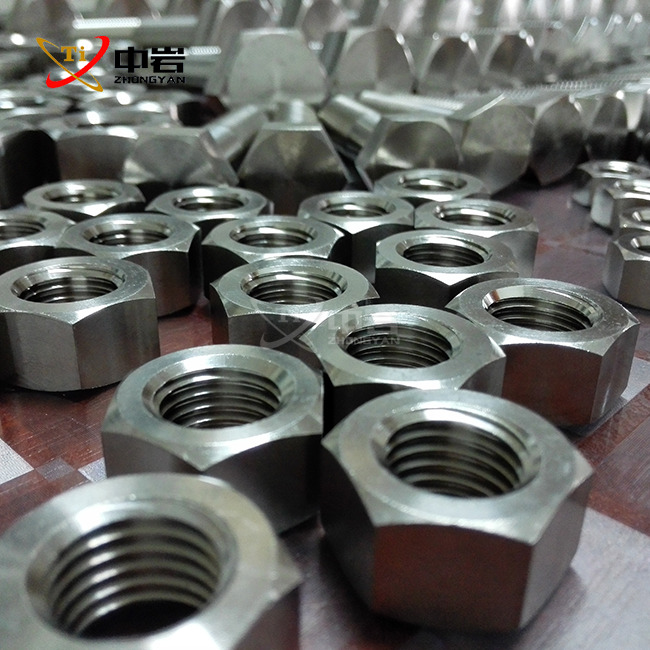
Titanium bars, plates, tubes, wires, and finely made parts are some of the things that Zhongyan sells. Custom hex titanium nuts are a unique line of products made from Grade 5 titanium and come in sizes from M3 to M20. Custom sizes and shapes can be made to fit specific application needs while still keeping the best performance.Passivation, anodizing, and special coats that improve rust protection and tensile qualities are all surface treatment choices. Support for OEM packing and logos makes it easier to integrate into customer supply chains and keeps quality high during delivery.
Conclusion
Custom hex titanium nuts are very resistant to cracking and rust because titanium is a very strong metal and they are made using advanced techniques. The naturally occurring oxide layer protects better against localized rust attacks and keeps the structure strong even in tough circumstances. For aircraft, medical, and industrial uses, grade 5 titanium building offers the best strength-to-weight ratios and complete rust protection. Quality assurance and choosing the right provider are key to making sure that performance is stable over long service times. Investing in titanium screws pays off in the long run because they require less upkeep and work more reliably.
FAQ
Are titanium hex nuts suitable for marine environments?
Yes, titanium hex nuts excel in marine applications due to their exceptional resistance to saltwater corrosion. The naturally forming oxide layer prevents chloride-induced pitting that commonly affects stainless steel fasteners. Grade 5 titanium maintains structural integrity even under extended saltwater exposure combined with mechanical stress.
How do I choose between Grade 2 and Grade 5 titanium for my application?
Grade 5 titanium offers higher strength characteristics and enhanced corrosion resistance compared to Grade 2. Applications requiring high strength-to-weight ratios and superior corrosion performance benefit from Grade 5 construction. Grade 2 provides adequate performance for less demanding applications where cost considerations are primary.
What are typical lead times for custom titanium hex nuts?
Standard customizations typically require 4-6 weeks for production and delivery. Complex modifications or specialized surface treatments may extend lead times to 8-10 weeks. Early engagement with suppliers helps optimize production scheduling and ensures timely delivery for project requirements.
Can titanium hex nuts be used in high-temperature applications?
Grade 5 titanium maintains mechanical properties and corrosion resistance at temperatures up to 400°C. The material's low thermal expansion coefficient ensures dimensional stability under temperature cycling conditions. High-temperature applications benefit from titanium's retained strength and oxidation resistance.
Partner with Zhongyan for Premium Titanium Fastener Solutions
Zhongyan delivers industry-leading expertise in custom hex titanium nut manufacturing with comprehensive quality assurance and technical support. Our Grade 5 titanium construction ensures superior corrosion resistance and mechanical performance for demanding applications across aerospace, medical, and industrial sectors. Located in China's Titanium Valley, we leverage advanced CNC machining capabilities and ISO 9001:2015 certification to deliver precision components that exceed industry standards. As your trusted Custom Hex Titanium Nut supplier, we provide flexible customization options, competitive pricing, and reliable global delivery. Contact our technical team at sales@titaniumstudy.com to discuss your specific requirements and discover how our corrosion-resistant fasteners can enhance your application performance.
References
1. ASTM International. "Standard Specification for Titanium and Titanium Alloy Bars and Billets." ASTM B348-19, West Conshohocken, PA, 2019.
2. Boyer, R.R., Welsch, G., and Collings, E.W. "Materials Properties Handbook: Titanium Alloys." ASM International, Materials Park, OH, 1994.
3. Schutz, R.W. and Thomas, D.E. "Corrosion of Titanium and Titanium Alloys." In ASM Handbook, Volume 13, Corrosion. ASM International, Materials Park, OH, 2003.
4. Military Specification. "Nuts, Hexagon, Titanium Alloy, Self-Locking and Non-Self-Locking." MIL-N-25027, Department of Defense, Washington, DC, 2018.
5. Aerospace Material Specification. "Titanium Alloy Bolts and Screws 6Al-4V." AMS 4967, SAE International, Warrendale, PA, 2020.
6. National Association of Corrosion Engineers. "Corrosion Performance of Titanium Fasteners in Marine Environments." NACE Publication 34109, Houston, TX, 2017.
(1)_1755588522797.jpg)
Learn about our latest products and discounts through SMS or email