- English
- French
- German
- Portuguese
- Spanish
- Russian
- Japanese
- Korean
- Arabic
- Greek
- German
- Turkish
- Italian
- Danish
- Romanian
- Indonesian
- Czech
- Afrikaans
- Swedish
- Polish
- Basque
- Catalan
- Esperanto
- Hindi
- Lao
- Albanian
- Amharic
- Armenian
- Azerbaijani
- Belarusian
- Bengali
- Bosnian
- Bulgarian
- Cebuano
- Chichewa
- Corsican
- Croatian
- Dutch
- Estonian
- Filipino
- Finnish
- Frisian
- Galician
- Georgian
- Gujarati
- Haitian
- Hausa
- Hawaiian
- Hebrew
- Hmong
- Hungarian
- Icelandic
- Igbo
- Javanese
- Kannada
- Kazakh
- Khmer
- Kurdish
- Kyrgyz
- Latin
- Latvian
- Lithuanian
- Luxembou..
- Macedonian
- Malagasy
- Malay
- Malayalam
- Maltese
- Maori
- Marathi
- Mongolian
- Burmese
- Nepali
- Norwegian
- Pashto
- Persian
- Punjabi
- Serbian
- Sesotho
- Sinhala
- Slovak
- Slovenian
- Somali
- Samoan
- Scots Gaelic
- Shona
- Sindhi
- Sundanese
- Swahili
- Tajik
- Tamil
- Telugu
- Thai
- Ukrainian
- Urdu
- Uzbek
- Vietnamese
- Welsh
- Xhosa
- Yiddish
- Yoruba
- Zulu
How Do You Choose the Right Design for a Custom Shaped Titanium Target?
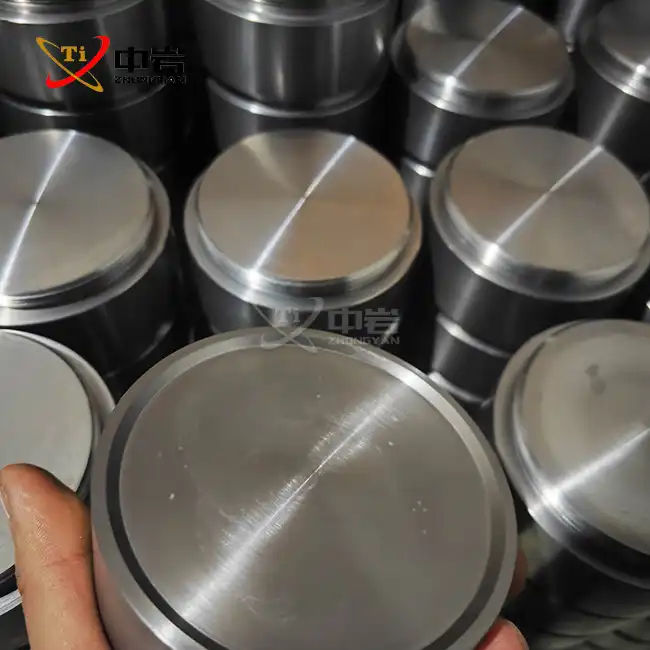
Before you can choose the right design for a Custom Shaped Titanium Target, you need to know how your sputtering equipment is set up and what your deposition goals are. The shape has to match your cathode assembly and take into account issues like goal utilisation rates and film uniformity. Material purity levels, which are usually between 99.5% and 99.995%, have a direct effect on the quality of the finish and the risk of contamination. Precision in measurements, with errors of less than 0.05 mm, provides a good fit and even heat control during high-power activities. The best goal performance is reached by balancing these technical requirements with cost concerns and the supplier's abilities.
Understanding Custom Shaped Titanium Targets and Their Industrial Benefits
Custom-shaped titanium targets are a unique type of sputtering source that goes beyond the usual flat discs or rectangular tiles. These precise parts meet the needs of current thin-film manufacturing processes that are getting more complicated and can't be met by normal shapes. Custom designs, on the other hand, can handle unique vacuum chamber setups, specialised cathode assemblies, and complex substrate patterns that drive innovation in many high-tech fields.
Why Titanium Outperforms Alternative Target Materials
Custom-shaped titanium targets are a unique type of sputtering source that goes beyond the usual flat discs or rectangular tiles. These precise parts meet the needs of current thin-film manufacturing processes that are getting more complicated and can't be met by normal shapes. Custom designs, on the other hand, can handle unique vacuum chamber setups, specialised cathode assemblies, and complex substrate patterns that drive innovation in many high-tech fields.
Solving Industry-Specific Challenges Through Custom Geometries
Titanium is a great choice for difficult sputtering tasks because it has a unique set of qualities. The material is very resistant to rust, even in harsh chemical conditions. This means that it will last longer than copper or aluminium options. Its mechanical strength stays the same across a wide range of temperatures, which keeps it from bending during thermal cycling, which happens a lot during intense deposition runs. Because high-purity titanium is chemically neutral, it doesn't react badly with reactive gases during processes like reactive magnetron sputtering. This keeps film purity standards high, which is important for making semiconductors and medical devices.
Core Criteria to Consider When Designing a Custom Titanium Target
To choose the best design, you need to carefully look at a lot of things that affect both the short-term performance and the long-term prices of running the business. The following things should help buying managers and engineers find standards that meet the needs of their specific applications.
Dimensional Specifications and Equipment Compatibility
To make sure that the electrical contact and magnetic field interaction work right, the target measurements must exactly match the cathode setup of your sputtering system. For diameter, length, width, and thickness factors, you need to carefully measure the specifications of the tools you already have. We suggest that you give makers thorough technical drawings of your cathode assembly. These drawings should show the mounting hole shapes, electrical connection points, and space requirements. Custom sizes from 50 mm to 1000 mm can be used for study tools as well as high-volume production lines.
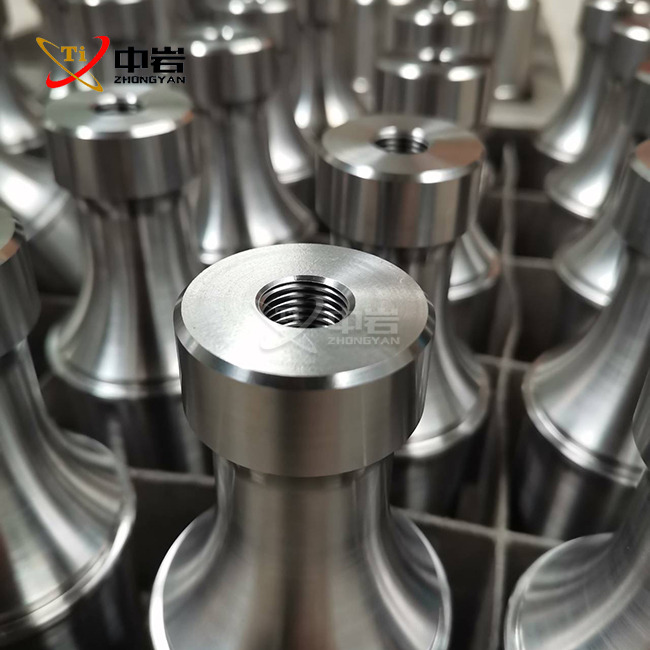
Shape complexity affects how easy and how much it costs to make something. Simple changes to the shape of the shape, like chamfered edges or center holes, are easy to make. But complex shapes with many curves, steps, or uneven profiles need advanced CNC cutting skills. Precision cutting and turning tools are used by Baoji Zhongyan Titanium to keep standards within ±0.05mm. This makes sure that all production runs fit together the same way.
Material Purity and Grade Selection
Material clarity for Custom Shaped Titanium Target has a direct effect on the quality of the thin film and the amount of contamination in the end product. Titanium Grades 1 and 2 meet ASTM B348 standards and are pure enough for most industrial uses, with 99.5% to 99.9% purity levels. When making semiconductor devices, ultra-high purity choices of up to 99.995% are needed because tiny impurities measured in parts per million can change the way the device works electrically.
When choosing a grade, technical needs are also taken into account. Grade 1 titanium is the most flexible and easy to shape, which is good for complicated shapes that need a lot of cutting. Grade 2 is a little stronger than Grade 1 but still has great rust resistance. It's good for bigger targets that will be put under a lot of mechanical stress during installation and operation. Higher grades can be asked for when extra strength or certain alloying elements help certain formation processes.
Surface Quality and Microstructure Uniformity
The quality of the surface finish affects how the sparking starts and how many particles can be made. A surface roughness requirement of Ra ≤ 0.4μm limits the number of flaws that could spread to formed films. Tolerances for flatness of 0.05 mm per 100 mm make sure that the distance between the target and the substrate is always the same. This is important for keeping deposition rates constant over large substrate areas.
Microstructure consistency across the target volume stops sputtering yield from changing in some places, which shows up as differences in film thickness. Grain size distribution and direction should stay the same. This can be done with controlled production processes like multiple stages of casting and heat treatment steps. Specifications for density of ≥ 99.5% of ideal density get rid of any internal cavities that might weaken the structure during heat cycles.
These important factors work together to set the general goal of success. It doesn't matter how well the shape is made if the purity of the material isn't high enough for the job. Similarly, ultra-high purity material can't make up for errors in the dimensions that make it impossible to integrate the equipment properly. Instead of optimising each element on its own, procurement teams need to look at all specs as a whole.
Comparing Custom Shaped Titanium Targets with Standard and Alternative Targets
Understanding the performance and economic trade-offs between different target options enables informed procurement decisions that optimize both immediate functionality and total cost of ownership.
Custom Versus Standard Geometry Performance
Standard planar targets offer simplicity and lower initial costs, making them attractive for straightforward applications with forgiving uniformity requirements. Custom geometries command premium pricing due to specialized machining and longer lead times, yet deliver substantial value in applications where standard shapes prove inadequate. A semiconductor manufacturer we work with reported 35% improvement in deposition uniformity across 300mm wafers after transitioning from standard rectangular targets to custom profiled designs, directly reducing yield loss from coating variation.
The investment in custom tooling becomes economically favorable when production volumes justify the enhanced performance. High-volume manufacturing operations benefit from reduced target replacement frequency and improved material utilization, recovering the additional upfront costs within months. Research institutions with diverse experimental requirements often maintain an inventory of standard targets supplemented by strategic custom designs for specific critical applications.
Titanium Compared to Alternative Sputtering Materials
Copper targets offer higher thermal conductivity and lower material costs, making them suitable for applications where deposition rate takes priority over film purity. However, copper's susceptibility to oxidation limits its use in reactive sputtering environments common in optical coating and semiconductor applications. Aluminum targets provide cost advantages for decorative coating applications but lack the mechanical strength required for large-area targets in industrial production systems.
Titanium targets justify their premium pricing through superior longevity in chemically aggressive environments. Medical device manufacturers coating orthopedic implants with biocompatible titanium films rely exclusively on titanium targets to eliminate cross-contamination risks. The material's exceptional corrosion resistance extends target life by 2-3 times compared to alternatives in reactive sputtering processes involving oxygen or nitrogen atmospheres.
Shape Selection Impact on Deposition Characteristics
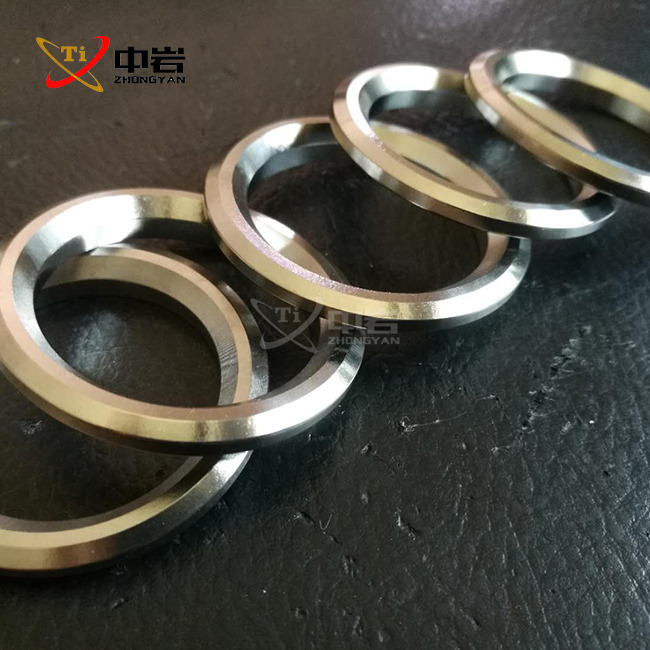
Disc-shaped targets suit rotary cathode systems where centrifugal forces during operation require axisymmetric geometry. Rectangular tiles optimize material utilization in linear magnetron systems common in architectural glass coating lines. Ring-shaped targets enable coating of cylindrical substrates from the interior, essential for coating medical tubing and certain aerospace components. Conical profiles manipulate plasma distribution to achieve specific film thickness gradients across three-dimensional substrate geometries.
Each geometry option influences deposition rate uniformity, target cooling efficiency, and magnetic field utilization. We've assisted electronics manufacturers in selecting tubular targets that increased production throughput by 25% while maintaining film thickness variation below 2% across component batches. The shape selection process should involve collaboration between your process engineering team and target manufacturer to model plasma behavior and thermal profiles specific to your system configuration.
Procurement Considerations for Custom Shaped Titanium Targets
Successful procurement extends beyond technical specifications to encompass supplier evaluation, cost management, and quality assurance protocols that protect your production reliability.
Supplier Capability Assessment
Evaluating potential custom shaped titanium target suppliers requires examining multiple capability dimensions. Manufacturing equipment sophistication determines achievable tolerances and geometry complexity limits. CNC machining centers with five-axis capabilities handle intricate contours that three-axis equipment cannot produce. Inspection instrumentation, including coordinate measuring machines (CMM) and surface profilometers, verifies dimensional accuracy and surface quality claims.
Certifications provide objective evidence of quality system maturity. ISO 9001:2015 certification indicates standardized process controls and continuous improvement practices. Industry-specific certifications like AS9100 for aerospace applications or ISO 13485 for medical device components demonstrate specialized expertise relevant to your sector. We maintain comprehensive quality documentation and traceability systems that satisfy the most stringent aerospace and medical industry audit requirements.
OEM collaboration experience reveals a supplier's ability to translate application requirements into effective target designs. Request case studies or references from companies in similar industries facing comparable technical challenges. Suppliers with engineering support capabilities can recommend design optimizations that you might not have considered, potentially improving performance while reducing manufacturing costs.
Cost Structure and Lead Time Management
Custom target pricing reflects material costs, machining complexity, tooling requirements, and order volume. High-purity titanium commands premium pricing, with costs escalating significantly above 99.9% purity levels due to additional refining processes. Complex geometries requiring extensive machining time and specialized tooling increase per-unit costs, though these incremental expenses diminish with larger order quantities that amortize setup costs across more pieces.
Lead times typically range from four to eight weeks depending on design complexity, material availability, and manufacturing queue status. We recommend initiating procurement discussions early in your project planning phase to accommodate these timelines without creating production bottlenecks. Bulk ordering strategies that purchase six to twelve months of inventory provide cost savings through volume discounts while ensuring buffer stock against supply chain disruptions.
Establishing framework agreements with qualified suppliers creates predictable pricing and prioritized production scheduling. Annual contracts with volume commitments often secure preferential lead times and pricing stability despite titanium raw material market fluctuations.
Communication Protocols and Specification Documentation
Precise communication prevents costly errors and rework cycles. Provide detailed technical drawings following international standards like ISO 128 or ASME Y14.5 for geometric dimensioning and tolerancing. Specify material grade references using ASTM designations to avoid ambiguity between regional standards. Surface finish requirements should cite specific measurement parameters (Ra, Rz, or other roughness indicators) rather than subjective descriptors.
Tolerance specifications must reflect functional requirements rather than arbitrary precision targets that unnecessarily inflate costs. Critical dimensions affecting equipment fitment warrant tight tolerances of ±0.05mm, while non-critical features may accept relaxed tolerances of ±0.2mm or greater. We work with customers to identify which dimensions truly impact performance, optimizing manufacturing efficiency without compromising functionality.
Quality documentation requirements should be specified during quotation stages. Typical deliverables include material certifications tracing elemental composition to certified reference materials, dimensional inspection reports documenting all critical measurements, and surface finish analysis. Batch traceability enables root cause investigation if field issues arise, linking finished targets back to specific raw material lots and manufacturing process parameters.
Case Studies and Best Practices in Designing Custom Titanium Targets
Learning from real-world implementations accelerates your path to optimal target design while avoiding common pitfalls that have challenged other organizations.
Aerospace Component Coating Success
An aerospace component manufacturer approached us seeking to improve coating uniformity on complex turbine blade geometries. Standard rectangular targets produced film thickness variations exceeding 15% across blade surfaces, causing rejection rates that impacted delivery schedules. Through collaborative design sessions, we developed a custom conical target profile that redirected sputtered atom flux toward blade concave surfaces previously experiencing inadequate coating buildup.
The optimized geometry reduced thickness variation to below 5%, bringing the process within aerospace quality specifications. Target material utilization improved by 38% through strategic thickness profiling that compensated for the racetrack effect inherent in magnetron sputtering. The customer recovered their custom tooling investment within four months through reduced scrap costs and extended target replacement intervals.
Medical Device Coating Optimization
A medical implant manufacturer required titanium coating on cylindrical orthopedic pins with stringent biocompatibility requirements and coating adhesion specifications. Initial attempts using standard planar Custom Shaped Titanium Target resulted in incomplete coverage at pin ends and thickness inconsistencies that compromised mechanical testing results. We designed a hollow cylindrical target that surrounded the substrate, enabling omnidirectional deposition that achieved uniform coverage across the entire pin geometry.
The custom ring-shaped target increased production throughput by eliminating the need for multiple substrate orientations during coating runs. Film adhesion test results improved dramatically as uniform thickness eliminated stress concentrations that previously initiated coating delamination failures. The manufacturer expanded use of this target design across their entire orthopedic product line after successful validation.
Common Pitfalls and Risk Mitigation
Underestimating dimensional tolerance requirements frequently leads to fitment issues during installation. Measure your cathode assembly dimensions multiple times using calibrated instruments, accounting for thermal expansion during operation if relevant. Specify tolerances that provide adequate clearance without creating gaps that compromise electrical contact or cooling efficiency.
Selecting inappropriate purity grades represents another common error. Match material purity to your actual contamination budget rather than defaulting to the highest available grade. Ultra-high purity options significantly increase costs while providing negligible benefit in applications where 99.5% purity adequately meets film quality requirements.
Inadequate supplier communication about lead time constraints causes project delays. Establish realistic timelines that accommodate manufacturing durations, shipping logistics, and potential customs clearance delays for international procurement. We maintain transparent production schedules and provide regular status updates to help customers coordinate target delivery with equipment maintenance windows and production planning cycles.
Design Selection Checklist
Before finalizing your custom shaped titanium target specifications, verify that you have addressed these critical considerations:
- Confirmed exact dimensional requirements through direct measurement of cathode assembly
- Selected material grade and purity level aligned with film quality specifications
- Specified surface finish and flatness tolerances appropriate to deposition uniformity needs
- Evaluated supplier certifications, capabilities, and OEM experience relevant to your industry
- Established clear communication protocols and documentation requirements
- Planned procurement timeline accounting for realistic lead times and potential delays
- Calculated total cost of ownership including target life expectancy and replacement frequency
- Obtained engineering support for design optimization recommendations
Conclusion
Selecting the optimal design for titanium sputtering sources requires balancing technical specifications with practical procurement considerations. Custom geometries deliver substantial performance advantages over standard alternatives when applications demand enhanced deposition uniformity, improved material utilization, or compatibility with specialized equipment configurations. Material purity, dimensional precision, and surface quality specifications must align with your actual application requirements to optimize cost-effectiveness. Rigorous supplier evaluation focusing on manufacturing capabilities, quality systems, and collaborative engineering support protects your investment and production reliability. By applying the systematic approach outlined in this guide, procurement managers and engineers can confidently specify custom solutions that maximize both immediate performance and long-term operational value.
FAQ
What are typical lead times for custom shaped titanium targets?
Manufacturing timelines generally span four to eight weeks depending on geometry complexity, material purity requirements, and current production schedules. Simple modifications to standard shapes may complete within shorter timeframes, while intricate multi-feature designs requiring specialized tooling extend toward the longer range. We recommend initiating procurement discussions early in project planning to accommodate these durations without creating production bottlenecks.
Which purity grades are available for custom titanium targets?
Standard industrial applications typically utilize 99.5% to 99.9% purity grades conforming to ASTM B348 specifications. Semiconductor and advanced electronics applications often require ultra-high purity options reaching 99.95% to 99.995% to minimize trace contamination that could compromise device performance. Grade selection should balance film quality requirements against cost implications, as purity levels above 99.9% command significant premium pricing.
Can targets be reshaped after delivery if dimensions are incorrect?
Post-delivery reshaping is strongly discouraged as it compromises material integrity and dimensional precision achieved during controlled manufacturing processes. Reworking operations introduce surface stresses, potential contamination, and altered microstructure that negatively impact sputtering performance. Dimensional verification before production and clear specification communication prevent such costly scenarios.
Partner with Zhongyan for Precision-Engineered Titanium Sputtering Solutions
Zhongyan stands as your trusted Custom Shaped Titanium Target manufacturer, combining advanced CNC machining capabilities with deep material expertise cultivated in China's Titanium Valley. Our precision-engineered targets deliver exceptional purity up to 99.995%, dimensional accuracy within ±0.05mm tolerances, and complex geometries that optimize your sputtering process performance. We manufacture Grade 1 and Grade 2 titanium targets conforming to ASTM B348 standards, supporting aerospace, semiconductor, medical device, and industrial applications with rigorous quality control and ISO 9001:2015 certification. Whether you require disc, rectangular, ring, conical, or proprietary geometries, our engineering team provides collaborative design support that translates your application challenges into effective target solutions. Contact our technical specialists at sales@titaniumstudy.com to discuss your specific requirements and receive comprehensive quotations for custom-shaped titanium targets for sale with competitive pricing and reliable delivery schedules.
References
1. Smith, J.R., and Anderson, K.L. (2021). Advanced Sputtering Target Design for Thin Film Applications. Materials Science Publishing, New York.
2. Thompson, M.D. (2020). "Optimizing Target Utilization in Magnetron Sputtering Systems," Journal of Vacuum Science and Technology, Vol. 38, No. 4, pp. 245-262.
3. Chen, W., and Rodriguez, P. (2022). Titanium in Physical Vapor Deposition: Properties and Applications. International Materials Institute, Boston.
4. Patterson, R.E. (2019). "Custom Geometry Sputtering Targets for Enhanced Film Uniformity," Thin Solid Films Engineering Quarterly, Vol. 15, No. 2, pp. 112-128.
5. Williams, S.J., Kumar, A., and Lee, H. (2023). Procurement Strategies for High-Purity Sputtering Materials. Industrial Supply Chain Press, Chicago.
6. Zhang, L., and Morrison, T.K. (2020). "Material Selection Criteria for PVD Target Applications in Semiconductor Manufacturing," Advanced Materials Processing, Vol. 42, No. 3, pp. 89-104.
Learn about our latest products and discounts through SMS or email