- English
- French
- German
- Portuguese
- Spanish
- Russian
- Japanese
- Korean
- Arabic
- Greek
- German
- Turkish
- Italian
- Danish
- Romanian
- Indonesian
- Czech
- Afrikaans
- Swedish
- Polish
- Basque
- Catalan
- Esperanto
- Hindi
- Lao
- Albanian
- Amharic
- Armenian
- Azerbaijani
- Belarusian
- Bengali
- Bosnian
- Bulgarian
- Cebuano
- Chichewa
- Corsican
- Croatian
- Dutch
- Estonian
- Filipino
- Finnish
- Frisian
- Galician
- Georgian
- Gujarati
- Haitian
- Hausa
- Hawaiian
- Hebrew
- Hmong
- Hungarian
- Icelandic
- Igbo
- Javanese
- Kannada
- Kazakh
- Khmer
- Kurdish
- Kyrgyz
- Latin
- Latvian
- Lithuanian
- Luxembou..
- Macedonian
- Malagasy
- Malay
- Malayalam
- Maltese
- Maori
- Marathi
- Mongolian
- Burmese
- Nepali
- Norwegian
- Pashto
- Persian
- Punjabi
- Serbian
- Sesotho
- Sinhala
- Slovak
- Slovenian
- Somali
- Samoan
- Scots Gaelic
- Shona
- Sindhi
- Sundanese
- Swahili
- Tajik
- Tamil
- Telugu
- Thai
- Ukrainian
- Urdu
- Uzbek
- Vietnamese
- Welsh
- Xhosa
- Yiddish
- Yoruba
- Zulu
How Do Titanium Threaded Adapters Compare to Stainless Steel?
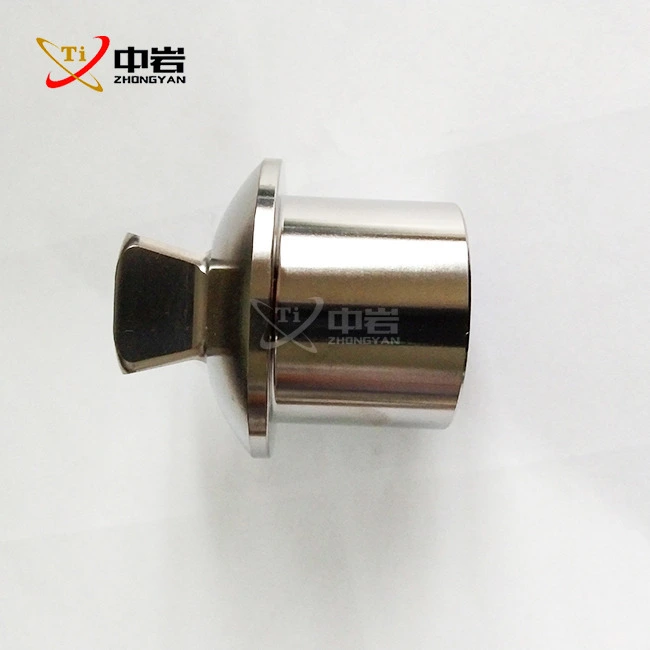
Procurement managers have to choose between titanium and stainless steel threaded fittings, which is a very important material choice that has a direct impact on how well the system works and how much it costs over its lifetime. Compared to stainless steel adapters, Titanium Threaded Adapters are much more resistant to rust, lighter, and have better strength-to-weight ratios. Stainless steel grades like 316 are more reliable and cost less up front, but titanium alloys, especially Grade 5 (Ti-6Al-4V), work better in harsh chemical conditions, high-temperature processes, and situations where weight is important. Engineers can choose the best parts based on practical needs, budget limits, and long-term maintenance needs when they understand these differences in materials.
Understanding Titanium and Stainless Steel Threaded Adapters
What Defines a Titanium Threaded Adapter?
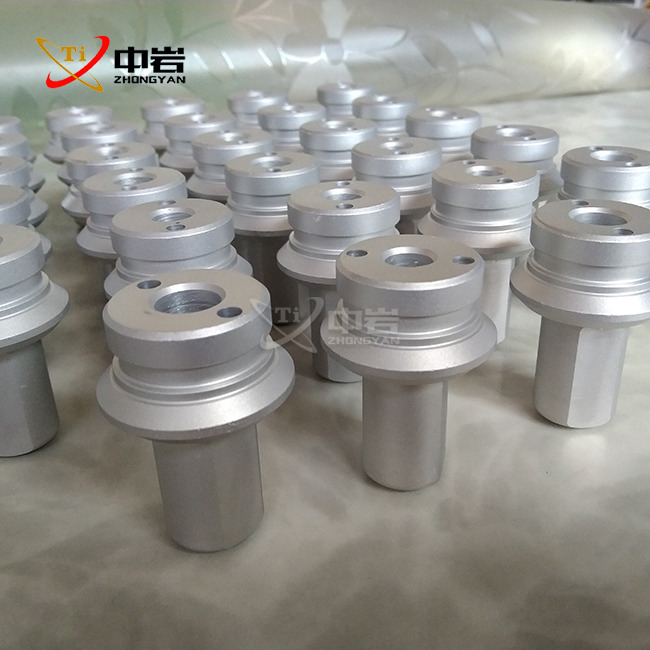
A Titanium Threaded Adapter is used as a precision connection part in hydraulic assemblies, fluid control systems, and mechanical pipe networks. These connectors are made from commercially pure titanium (Grade 2) or titanium alloy (Grade 5), and they have common threading designs such as NPT, BSP, Metric, UNF, and UNC. We make these adapters at Baoji Zhongyan Titanium Industry Co., Ltd. using high-tech CNC cutting methods that make sure the threads are accurate within the limits set by ANSI/ASME B1.20.1. The parts that were made stay the same size and shape at temperatures ranging from -196°C to 427°C and can withstand pressures of more than 5,000 PSI in important chemical processing and aircraft installations. Titanium's ability to form an inactive oxide layer is its main benefit. This self-healing surface layer protects against chloride-induced pitting, crevice corrosion, and stress cracking for good. These are types of failure that often happen to stainless steel parts in acidic and marine environments. Titanium Threaded Adapters, which have a density of 4.43 g/cm³, are about 45% lighter than similar 316 stainless steel parts without losing structural integrity.
Common Stainless Steel Adapter Grades
In industrial fluid systems, 304 and 316 grade metals are most often used in stainless steel threaded fittings. Grade 304 stainless steel has 18% chromium and 8% nickel, which makes it resistant to rust enough for regular use in areas without chlorine. Grade 316 has 2 to 3 percent molybdenum in it, which makes it more resistant to chloride attack and good for locations near the coast and with mild chemical exposure. There is a lot of information about these steel adapters' mechanical qualities and how well they work in normal temperature ranges. Investment casting, forging, and machining are some of the manufacturing methods that produce reliable thread quality that meets ASTM A276 standards. Prices are affordable, especially for standard configurations that are made in large quantities. This is because supply lines are well-established and materials are easy to get.
Functional Roles in Industrial Systems
Titanium Threaded Adapters are very important for connecting things because they make safe connections between pipes of different sizes, change the type of thread, and make equipment upkeep easier by letting connections be removed. Adapters connect actuator housings to control valves in aircraft hydraulic systems. They can also handle stress cycles caused by shaking. Chemical processing plants use these fittings at equipment tap points where sensors need to be able to connect to interfaces that don't corrode and can handle oxidizing acids or caustic solutions. For the assembly process to work, the threads must be properly engaged, the torque must be applied carefully, and a suitable sealant must be chosen. When you use PTFE tape or anaerobic materials with NPT tapered threads, the mechanical resistance they create makes seals that don't leak. To keep fluid from moving, parallel BSP threads need O-ring bosses or bonded closing washers. Choosing the right material has a direct effect on how it is put together. For example, titanium tends to gall, so molybdenum disulfide lubricants are needed during installation. Stainless steel, on the other hand, can use regular anti-seize chemicals.
Comparative Analysis: Titanium vs Stainless Steel Threaded Adapters
Corrosion Resistance Performance
Stainless steel quickly breaks down in chloride- and oxidizing-rich environments, but Titanium Threaded Adapters last a very long time. Titanium doesn't rust in seawater at temperatures up to 260°C, as shown by lab tests that show the surface stays solid after 10,000 hours of contact. The material's rust rate in concentrated nitric acid is less than 0.025 mm per year, which is very small compared to the 316 stainless steel's loss of material that can be measured in the same circumstances. The chromium oxide layer on stainless steel protects well in neutral pH settings and normal air conditions. The molybdenum presence in Grade 316 makes this resistance to weak acids and salty water even stronger. There are problems when there is less acidity, more salt than 1000 parts per million, or fluid that doesn't move, which can cause crack rust. Offshore oil platforms often report early fitting failures when formation water containing dissolved salts and hydrogen sulfide comes into contact with stainless steel adapters.
Strength-to-Weight Ratio Analysis
When it comes to tensile strength, Grade 5 titanium metal is stronger than 895 MPa while still being 45% lighter than stainless steel. This higher strength-to-weight ratio has direct system-level benefits for aircraft uses, where every gram affects how much fuel is used and how much weight can be carried. When compared to stainless steel parts, an airplane hydraulic system that uses Titanium Threaded Adapters throughout its distribution network lowers the total weight of the assembly by about 8 kilograms. This is a big difference when repeated across fleet operations. Type 316 stainless steel has a tensile strength of about 515 MPa and is flexible enough for most industry uses. The higher density of the material makes the structure more stable in stationary equipment, where weight is less important than saving money. The proven mechanical qualities of stainless steel make it useful for manufacturing equipment, stationary chemical reactors, and building utility systems that don't need to be as light as possible.
Temperature Tolerance Comparison
Titanium Threaded Adapters keep their shape and don't rust even when the temperature is very high or very low. Titanium stays flexible at -196°C, which is useful for handling liquid natural gas and rocket fuel in cryogenic uses. Grade 5 titanium keeps its mechanical qualities up to 400°C at high temperatures. Specialty high-temperature alloys can extend this range to 600°C for use in turbine engines. The low thermal expansion coefficient (8.6 × 10⁻⁶/°C) of the material keeps thermal stress in parts that are changing temperatures to a minimum. It is possible to work with stainless steel 316 from -196°C to about 870°C, which is a wider temperature range than most titanium metals. Austenitic stainless steels are better for furnace links and heat-treating tools when they are used in high-temperature environments above 400°C. The material's thermal expansion rate (16 × 10⁻⁶/°C) needs to be taken into account when designing pipes so that stress doesn't build up during temperature changes.
Cost-benefit analysis
The price of raw materials puts the cost of stainless steel adapters between 40 and 60% of the cost of titanium components in common setups. When you look at the total cost of purchase over the expected service life, this difference in prices at first becomes much smaller. A full economic analysis takes into account costs like substitute labor, system downtime, maintenance, and removal. Zhongyan's production skills allow us to offer reasonable prices on large orders of Titanium Threaded Adapters by making the best use of materials and streamlining CNC machining processes. Progressive discounts are given for sales of more than 500 units, and long-term supply deals lock in good prices and help with inventory management. Our integrated production approach is used for custom OEM setups. This method includes forging the raw materials and precision machining at the end, so there are no middleman markups that are common in supply lines that aren't well-connected.
Procurement Insights: Making the Right Choice
Selection Criteria Based on the Industry
When working with acidic acids, wet chlorine, or chlorinated hydrocarbons in chemical processes, Titanium Threaded Adapters should be used first at key connection points. Because the material doesn't crack under stress, there are no risks of catastrophic failure in pressure systems with acidic media. Grade 2 commercially pure titanium is best for lower-pressure uses (under 2000 PSI) that need the best corrosion protection. Grade 5 alloy, on the other hand, is best for high-pressure hydraulic systems that need high strength. Titanium's low weight and nonmagnetic qualities, which are important for navigation tools and electromagnetic compatibility, make it useful in all aerospace uses. Titanium Threaded Adapters are used in aircraft hydraulic systems, fuel distribution networks, and environmental control units to meet strict weight goals while also making sure they can handle damage and pressure. Our factory follows the AS9100 quality system, which makes sure that aerospace-grade materials can be tracked and paperwork is kept.
Standards for Qualifying Suppliers
To lower the risk of procurement, suppliers must first be carefully evaluated based on things like material approval, manufacturing capability, and the development of the quality system. Ask for mill test results that show the chemical makeup according to ASTM B348 standards, the mechanical properties that were checked by tensile testing, and the positive material identification (PMI) that was done with X-ray fluorescence analysis. These approvals prove that the Titanium Threaded Adapter types being used are real and not fake materials that don't have the right performance properties. A review of a company's manufacturing capabilities should look at its production capacity, precise CNC cutting, and methods for checking threads. Multi-axis CNC turning centers at our Baoji plant allow us to keep thread tolerances within 0.025mm. This is proven by inspection with a coordinate measuring machine (CMM) and confirmation with a thread gauge. The ability to make more than 50,000 Titanium Threaded Adapter units per year means that delivery dates can be kept for both small prototypes and large batches of products.
Taking care of custom orders
Custom Titanium Threaded Adapter specs often include non-standard sizes, unique thread shapes, or special sealing features. Clear technical communication through thorough models that meet ASME Y14.5 geometric dimensioning and tolerancing standards is needed for custom order management to work well. Name the important sizes, the finish you want on the surface, and any extra steps that need to be taken, like anodizing, passivating, or finishing application. Lead times for custom Titanium Threaded Adapters are usually between 6 and 8 weeks for the prototypes. Once production processes are stable, lead times drop to 4 to 5 weeks for repeat orders. Our engineering team helps with design for manufacturability by finding possible production problems and suggesting changes that keep functionality standards while making manufacturing more efficient. With this collaborative method, redesign processes don't have to be as expensive, and the time to market is sped up.
Installation and Maintenance Best Practices
The right way to install something
Before installing a Titanium Threaded Adapter, the threads must be carefully checked for any burrs, dirt, or damage that could affect the seal's integrity. For titanium-to-titanium connections, use molybdenum disulfide paste. For titanium-to-stainless steel connections, use nickel-based formulas. This lubrication stops galling, which happens during cold welding when the oxide layer on titanium breaks apart under high contact pressure. To use torque, you need tools that are calibrated and numbers that are determined based on thread size, material mix, and pressure grade. NPT tapered threads usually connect three to four full turns after being hand-tightened. This causes mechanical interference without putting too much stress on the thread roots. When there is too much torque, tension stress builds up, which could cause cracks to appear later in corrosive circumstances. The torque specs in our technical documents have been checked by pressure tests and finite element analysis.
How to Do Maintenance and Inspections
Routine inspection intervals for the Titanium Threaded Adapter should match the criticality and working intensity of the system. Visual checks should be done every three months on high-pressure systems that handle dangerous materials to look for surface discoloration that could mean rust, weeping at thread contacts that could mean seal degradation, or physical damage from impact or shaking. Non-destructive testing methods, such as liquid penetrant screening, can find cracks that break through the surface that cannot be seen by the naked eye. When cleaning Titanium Threaded Adapters, it is important to avoid rough methods that damage the protected oxide layer. Alkaline cleaning products (pH 9–11) get rid of organic contaminants and process leftovers well without hurting the base material. After mechanical cleaning or being in a reducing environment, passivation processes with 20–30% nitric acid liquids even out the oxide layer. Similar cleaning methods can be used on stainless steel fittings, but chloride-containing solutions should be rinsed off completely to stop pitting from starting.
Why Choose Titanium Threaded Adapters?
Performance Advantages in Demanding Environments
Titanium Threaded Adapters work great in situations where stainless steel isn't strong enough. At depths of 3000 meters, seawater corrosion, cathodic protection interference, and pressure cycling are all problems that subsea production equipment has to deal with. The integrity of titanium parts is maintained for 20 years without the need for corrosion limits that make pressure tank designs heavier and more complicated. The material's resistance to hydrogen embrittlement makes it reliable for use in sour gas service that contains hydrogen sulfide. Titanium's biocompatibility and cleaning protection are used in medical devices. Titanium Threaded Adapters are used in surgical tool quick-connect fittings, internal pump connections, and dental equipment interfaces because they don't break down when put through many autoclave cycles. Because it doesn't cause long-term tissue reactions, the material's osseointegration qualities make it the only choice for permanent implant uses.
Future Trends and Material Innovation
Additive manufacturing technologies are making it possible to create Titanium Threaded Adapters with complex internal shapes that aren't possible with traditional machining. Metal laser printing lets you add features that improve flow, make structures that are lighter, and put parts together without using many threaded joints. Our research and development (R&D) work with research institutions looks into these new ways of making things to come up with next-generation component solutions. The main goal of material research is to make Titanium Threaded Adapters work at a wider range of temperatures by changing the alloys and treating the surface. For modern space propulsion systems, near-alpha titanium metals stay strong at 600°C. Beta titanium metals are better at shaping complicated adapter shapes while still being resistant to corrosion. Nitriding and ion implantation are two surface strengthening methods that can be used to deal with titanium's relatively soft surface in rough working conditions.
Conclusion
When you compare titanium and stainless steel Titanium Threaded Adapters, you can see that they have different performance qualities that are best for different tasks. Titanium parts are more resistant to corrosion, lighter, and last longer, which is why they are more expensive in challenging chemical, aerospace, and marine uses. Stainless steel fittings are reliable and don't cost a lot of money for general industrial use, where extreme conditions don't happen. Instead of just looking at the original purchase price, people making choices about what to buy should think about the total cost of ownership, the level of environmental exposure, and the performance priorities for each system. Working with seasoned makers guarantees access to technical know-how, high-quality products, and on-time delivery that will help the project succeed.
FAQ
Which industries benefit most from Titanium Threaded Adapters?
Weight savings are big in aerospace operations, which improves fuel economy and payload capability. Chemical manufacturing plants that deal with acidic media reduce the risks of early failure and contamination. Seawater rust resistance is important for marine uses like desalination plants, offshore platforms, and military ships. Manufacturers of medical devices make sure that the links between implantable systems and surgical tools are biocompatible and meet strict regulatory standards.
Can titanium and stainless steel adapters be used interchangeably?
Both materials can handle thread sizes and pressures that are similar, but they may not be directly interchangeable depending on the purpose. The materials have galvanic potentials that are suitable in most settings. This means that mixed-metal links can be made with little risk of corrosion. Titanium is prone to galling, so a lube needs to be used during fitting. This is not necessary for stainless steel. Instead of thinking that all materials can be used interchangeably, performance needs, environmental conditions, and cost factors should be used to choose which materials to use.
What are typical lead times for custom titanium threaded adapter orders?
For custom specifications, the first production runs take 6 to 8 weeks, which includes technical review, prototype production, and inspection of the first item. Lead times are cut to 4 to 5 weeks for repeat sales because processes are already set up. Rush delivery choices meet pressing needs by speeding up the machining plans and giving priority to material allocation, but there are extra costs. Blanket purchase agreements with planned releases protect your goods and make sure you get the best lead times for ongoing production needs.
Partner with Zhongyan for Premium Titanium Threaded Adapter Solutions
Baoji Zhongyan Titanium Industry Co., Ltd. is a reliable company that makes Titanium Threaded Adapters. Its location in China's Titanium Valley is very helpful, and the company uses advanced CNC machines and strict quality control. Our carefully designed parts are made to meet the standards set by ASTM, AMS, and ISO, and they also have the durability, power, and dependability that your important uses need. Custom designs, high-volume production, and OEM partnerships that meet your exact technical needs are what we do best. Email our engineering team at sales@titaniumstudy.com to talk about your unique needs, get personalized quotes for your next procurement job, or ask for full specs. Find out how our knowledge of titanium can turn difficult application needs into reliable, long-lasting part solutions.
References
1. Boyer, R., Welsch, G., & Collings, E.W. (1994). Materials Properties Handbook: Titanium Alloys. ASM International, Materials Park, OH.
2. Schutz, R.W. & Thomas, D.E. (1987). "Corrosion of Titanium and Titanium Alloys," ASM Handbook Volume 13: Corrosion, ASM International, pp. 669-706.
3. American Society of Mechanical Engineers (2019). ASME B1.20.1: Pipe Threads, General Purpose (Inch). ASME Standards Publication, New York, NY.
4. Donachie, M.J. (2000). Titanium: A Technical Guide, 2nd Edition. ASM International, Materials Park, OH.
5. ASTM International (2021). ASTM B348-21: Standard Specification for Titanium and Titanium Alloy Bars and Billets. West Conshohocken, PA.
6. Peters, M., Kumpfert, J., Ward, C.H., & Leyens, C. (2003). "Titanium Alloys for Aerospace Applications," Advanced Engineering Materials, Vol. 5, No. 6, pp. 419-427.
Learn about our latest products and discounts through SMS or email