- English
- French
- German
- Portuguese
- Spanish
- Russian
- Japanese
- Korean
- Arabic
- Greek
- German
- Turkish
- Italian
- Danish
- Romanian
- Indonesian
- Czech
- Afrikaans
- Swedish
- Polish
- Basque
- Catalan
- Esperanto
- Hindi
- Lao
- Albanian
- Amharic
- Armenian
- Azerbaijani
- Belarusian
- Bengali
- Bosnian
- Bulgarian
- Cebuano
- Chichewa
- Corsican
- Croatian
- Dutch
- Estonian
- Filipino
- Finnish
- Frisian
- Galician
- Georgian
- Gujarati
- Haitian
- Hausa
- Hawaiian
- Hebrew
- Hmong
- Hungarian
- Icelandic
- Igbo
- Javanese
- Kannada
- Kazakh
- Khmer
- Kurdish
- Kyrgyz
- Latin
- Latvian
- Lithuanian
- Luxembou..
- Macedonian
- Malagasy
- Malay
- Malayalam
- Maltese
- Maori
- Marathi
- Mongolian
- Burmese
- Nepali
- Norwegian
- Pashto
- Persian
- Punjabi
- Serbian
- Sesotho
- Sinhala
- Slovak
- Slovenian
- Somali
- Samoan
- Scots Gaelic
- Shona
- Sindhi
- Sundanese
- Swahili
- Tajik
- Tamil
- Telugu
- Thai
- Ukrainian
- Urdu
- Uzbek
- Vietnamese
- Welsh
- Xhosa
- Yiddish
- Yoruba
- Zulu
How Do GR2 Titanium Hex Bars Support Long-Term Reliability?
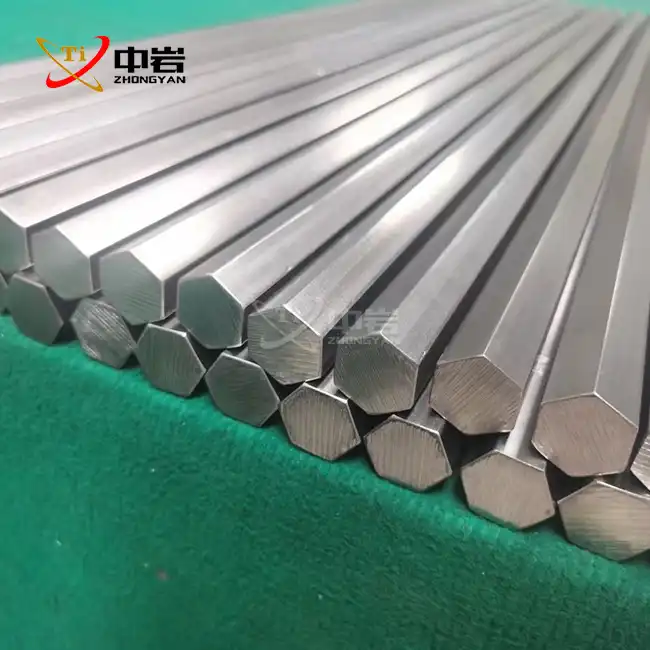
GR2 titanium hex bars deliver unmatched long-term reliability through their inherent corrosion resistance, fatigue stability, and dimensional consistency across decades of service. Manufactured from commercially pure titanium conforming to ASTM B348 standards, these hexagonal profiles resist oxidizing acids, chloride environments, and thermal cycling without degradation. The material's microstructure remains stable under repetitive mechanical stress, preventing crack propagation that commonly plagues alternative alloys. With proper heat treatment and machining protocols, Grade 2 titanium hex bars maintain structural integrity in aerospace fasteners, chemical processing equipment, and medical implants, offering procurement teams a proven solution for applications where failure carries severe operational and safety consequences.
Understanding GR2 Titanium Hex Bars and Their Long-Term Reliability
Material Fundamentals and Chemical Composition
The most useful type of unalloyed titanium is the GR2 titanium hex bar. The chemical makeup is mostly titanium (at least minimum 99.2%), with oxygen (0.25% max), iron (0.30% max), and nitrogen (0.03% max) being managed as minor elements. The exact mix of elements forms an alpha-phase architecture that is both mechanically stable and very easy to shape. These bars are different from regular round stock because they have a triangular shape. This six-sided shape makes it easier to apply pressure during assembly and cuts down on the time needed to machine fasteners, valve stems, and threaded parts. Our Baoji factory makes GR2 titanium hex bars using cold-drawing methods that smooth out the grain structure while keeping the h9 tolerance level that is needed for precision engineering uses.
Mechanical Properties Supporting Extended Service Life
The properties of our GR2 titanium hex bars are carefully adjusted. The material can hold enough weight for medium-stress uses, with a tensile strength of at least 345 MPa and a yield strength of at least 275 MPa. The ability to stretch by at least 20% makes cold forming possible without cracking, which is a big plus compared to stronger alloys like Grade 5 titanium. The modulus of elasticity is 114 GPa, which means that the shape stays the same when the temperature changes. Hardness levels between 160 and 220 HV make materials resistant to wear while still allowing them to be machined. These mechanical properties stay the same at temperatures ranging from very cold to 425°C, so the performance can be predicted in a wide range of working situations.
Corrosion Resistance Mechanisms
The main defense against environmental decline is the naturally occurring formation of a protective titanium dioxide layer on objects that are open to the air. This passive film heals itself right away when it gets broken, which is something that stainless steel can't do. When submerged in salt water for decades, GR2 titanium hex bars show no measured corrosion rate. This means they don't get crevice corrosion or pitting, which damages 316L stainless steel parts. The conditions in places where chemicals are processed are very tough. Our hex bars don't lose any material when they are exposed to wet chlorine gas, ferric chloride solutions, or reacting acids. Because there are no alloying elements, selective leaching doesn't happen. This keeps the structure strong in places where nickel-containing metals would suffer intergranular attack.
Comparative Insights: GR2 Titanium Hex Bars vs Alternative Materials
Performance Against Stainless Steel
When purchasing, teams look at bolt materials for corrosive conditions, and they find big differences in how long the GR2 titanium hex bar and 316L stainless steel last. Because of crevice corrosion under the washers and threads, naval stainless steel bolts usually need to be replaced every 5 to 7 years. Titanium hex bar-based fasteners fitted in the same way will still work after 25 years without any protective coatings. When it comes to big units, the weight advantage grows. Titanium's density of 4.43 g/cm³ is 45% less than stainless steel's density of 8.0 g/cm³. This means that offshore bases and subsea tools don't need as much structural support, and the costs of installation are lower. The substance stays paramagnetic, which keeps it from interfering with sensitive equipment on study ships and defense systems where magnetic signatures could hurt mission success.
Grade 2 vs Higher Titanium Alloys
When you compare GR2 titanium hex bars to Grade 5 (Ti-6Al-4V) titanium, you can see how to make smart choices. Grade 5 has twice as much tensile strength, at least 895 MPa, which makes it necessary for main aircraft structures that are subject to high-cycle loads. But adding aluminum and vanadium makes it harder to machine because it needs 40% longer cycle times and special carbide tools. GR2 titanium hex bars work best when rust, not mechanical pressure, is the main cause of failure. Commercially pure titanium is easier to shape and weld, which makes it better for use in desalination heat exchanger fittings, chemical processing valve stems, and electroplating racks. Because Grade 2 materials are about 25–30% less expensive than Grade 5 materials, they make good economic sense for medium-stress, high-corrosion uses.
Aluminum Alloys and Long-Term Degradation
Aluminum alloys like 6061-T6 are popular with engineers who want to make solutions that are lighter and cost less. Even though aluminum works very well at first, it is not nearly as reliable as titanium over time. Aluminum doesn't rust because it has passive oxide films that break down when it goes through cycles of wet and dry conditions. This starts pitting corrosion that spreads until the structure fails. Another very important issue is galvanic connection. Accelerated galvanic corrosion kills aluminum parts within months when they come into contact with carbon fiber composites or stainless steel during assembly.
Practical Procurement Guide for GR2 Titanium Hex Bars
Supplier Qualification and Certification Requirements
Before placing an order, procurement specialists must check that the manufacturing process follows the rules by looking over the paperwork. An EN 10204 3.1 Material Test Certificate makes it possible to track each production lot by connecting chemical analysis results, mechanical testing data, and records of heat treatment. The certificate has to include the exact heat number that was stamped on the material. This makes the whole supply chain clear. As long as the GR2 titanium hex bar enters U.S. supply lines, it must meet the minimum level set by ASTM B348. As part of ISO 5832-2 certification, standards for surgical implants are added, such as higher purity limits and biocompatibility tests. At our Baoji factory, we keep both certifications up to date by having ISO 9001:2015 quality management system checks done every year by qualified third parties.
Dimensional Specifications and Tolerance Control
For hexagonal sizes, it's important to be clear about how to measure them. In our normal catalog, the across flats measurement tells you how far apart the parallel faces are. It ranges from 6 mm to 100 mm. The h9 tolerance rating makes sure that precision cutting works, and for 10mm hex bars, the difference in size is kept to 0.03mm. Standard production lengths go up to 6 meters, but special cutting services can meet the needs of any job. Our cold-drawn manufacturing process creates smooth, bright surfaces that can be installed right away without the need for extra grinding. When a material is annealed, it is free of stress and can be machined easily without any problems caused by work-hardening during CNC processes.
Supply Chain Considerations and Lead Time Management
The availability of raw titanium sponge changes with the production processes in the aircraft industry, which causes supply problems from time to time. These risks can be reduced by keeping smart inventory ties with qualified suppliers. Our site in Baoji city, which is in China's designated Titanium Valley, gives us direct access to metal makers and makes the supply chain less vulnerable. Ocean freight is still the cheapest way to ship large items, but it takes 25 to 35 days for containers to get to the U.S. West Coast harbors. For pressing needs, air freight speeds up delivery to 5–7 days, but the cost of freight goes up a lot. Using foam separation in the right way during packing keeps the surface from getting damaged during handling, keeping the bright finish and the size tolerances that customers request.
How GR2 Titanium Hex Bars Support Long-Term Reliability in Industrial Applications
Fatigue Performance Under Cyclic Loading
Long-term dependability depends on how well something can stop stress cracks from starting and spreading. The GR2 titanium hex bar has great high-cycle fatigue qualities; under fully reversed loads, its durability limits are about 50% of its tensile strength. The material's alpha-phase microstructure doesn't have any phase borders, which are what cause cracks to start in two-phase metals. Hex bars that have been machined into nuts are used in flight fasteners and go through millions of load cycles over the life of an airplane. Test results show that Grade 2 titanium screws keep their preload tension better than steel versions because they creep less at working temperatures. Stress corrosion cracking processes are not present, so the machine can be used safely in damp places where high-strength steel bolts would fail suddenly and without notice.
Chemical Processing Equipment Case Studies
After failing several times in wet chlorine service, a chlor-alkali production plant replaced 316L stainless steel valve stems with parts made from our GR2 titanium hex bars. Within 18 months, the original stainless steel stems had rusted through, stopping the process and causing safety issues. After switching to titanium hex bar stock, the plant had no valve stem failures in five years of constant operation. This saved over $150,000 a year in maintenance costs. Chemical reactor parts are also hard to work with. In metal etching, ferric chloride solutions break down most common alloys, creating leaks and contamination risks. In these situations, hex-shaped bolts and threaded fittings made from Grade 2 titanium will always keep the seal's integrity. When installing, the hexagonal shape lets you use the right amount of force without the galling and seizing issues that happen with stainless steel threads in acidic media.
Medical Device Longevity and Biocompatibility
Surgical tool makers choose GR2 titanium hex bars for handles, connecting threads, and adjustment mechanisms that need to be resistant to rust and safe for living things. The material can be sterilized over and over at 134°C using steam without losing its mechanical properties or getting oxidized on the surface, which would make the tool less useful. Dental implant systems have hex link ports that need to stay precisely engaged for decades of use inside the mouth. Commercially pure titanium hex bars are reliable for keeping prosthetics in place for the whole life of the patient because they don't rust or change shape. Cobalt-chrome alloys release metal ions into the surrounding tissue. Grade 2 titanium, on the other hand, is completely biologically inactive, so it doesn't cause tissue reactions that make the implant need to be taken out.
Optimizing Your Use of GR2 Titanium Hex Bars for Maximum ROI
Machining Best Practices for Extended Tool Life
When cutting the GR2 titanium hex bar, you need to be careful about how you handle the heat and which tools you use. The material doesn't transfer heat well (17 W/m·K), so cutting heat builds up at the point where the tool meets the chip. This makes tool wear faster if speeds and feeds are higher than what is suggested. Cutting at speeds between 30 and 50 m/min with carbide tools keeps the work from hardening and makes the tools last as long as possible. It is important to get a lot of coolant straight to the cutting zone. Through-spindle coolant systems or flood cooling get rid of heat well while washing chips off the work area. Sharp cutting edges lower the cutting forces that make thin hex bar stock bend. We suggest indexable carbide inserts that are made for working with titanium. These inserts have positive rake angles and polished flute shapes that keep friction to a minimum.
Quality Control and Inspection Protocols
Implementing receiving checking processes makes sure that the materials are correct before they are used in machining activities. Using calibrated micrometers to check the dimensions proves the hex size precision and straightness tolerances. Using portable Rockwell tools to check the hardness of materials confirms the heat treatment conditions and finds over-aged materials that are less flexible. Ultrasonic testing finds problems inside that can't be seen with the naked eye. Even though commercially pure titanium doesn't have many inclusions, making sure the material is sound before cutting complicated parts saves a lot of money on rejects during final inspection. If you ask, we can give you ultrasonic test reports that show there are no reflections bigger than 1.5 mm in diameter across the whole bar.
Strategic Supplier Partnerships for Custom Solutions
Early involvement of suppliers during the planning phase is helpful for complicated tasks. Our engineering team works with customers to find the best shape for each part, which cuts down on waste while still meeting structural needs. Custom hex sizes between standard catalog measurements can be made cheaply when more than 500 pieces are being made. This gets rid of the need for extra machining steps that add cost but don't add value. Technical help lasts for the whole lifecycle of the object. When the conditions of an application change or new needs come up, our metallurgical experts suggest changes to the heat treatment, surface processes, or different types of titanium that work better. By working together, sellers become strategic partners, increasing the return on investment throughout the entire duration of a component instead of just completing buy orders.
Conclusion
When corrosion protection, biocompatibility, and a long work life over many decades are important, the GR2 titanium hex bar is the best material choice. When you combine commercially pure makeup, hexagonal shape, and tried-and-true manufacturing standards, you get parts that last longer and cost less to own overall. These bars are reliable, so buying teams and engineers trust them for everything from underwater fasteners to medical devices and tools for processing chemicals. Zhongyan is dedicated to precise production, full certification paperwork, and expert teamwork. This makes sure that the materials your projects receive meet the highest quality standards. Our factory combines high-tech production tools with years of metalworking knowledge to make hex bars that meet the standards set by ASTM B348 and ISO 5832-2. The quality is always the same, and the wait times are competitive.
FAQ
What maximum operating temperature can GR2 titanium hex bars withstand?
The GR2 titanium hex bar stays structurally stable and doesn't rust at temperatures up to about 425°C (800°F) in air. When the temperature goes above this point, oxidation rates speed up a lot, and the material qualities start to break down. For long-term use above 425°C, special high-temperature titanium alloys or other materials that are better at withstanding heat should be considered.
Can titanium hex bars be welded to stainless steel components?
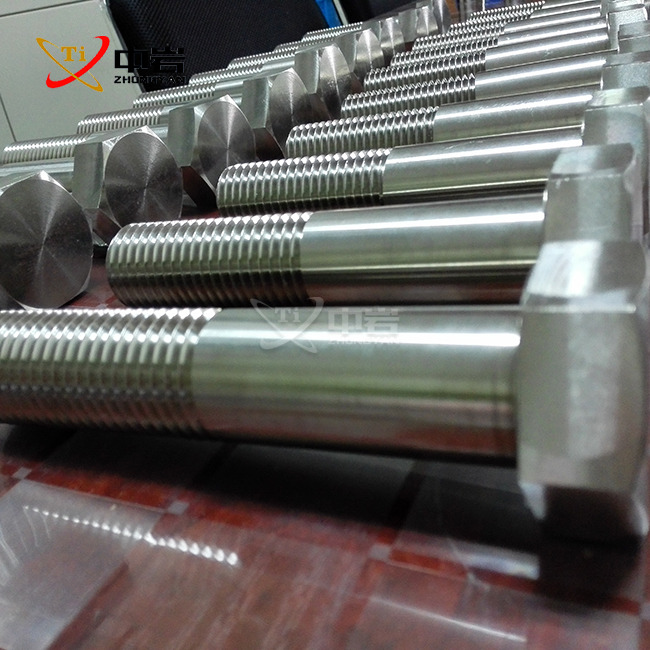
When titanium is directly fused to stainless steel, weak intermetallic compounds are formed at the fusion zone. These compounds cause the joint to break with little force. To attach titanium hex bar parts to steel buildings, engineers must use either mechanical fixing or explosion bonding methods. As a high-performance bolt material, the hexagonal shape works well on its own, making a solid mechanical link without any worries about metallurgical compatibility.
How does Grade 2 compare to Grade 5 titanium for fastener applications?
Grade 2 economically pure titanium is more resistant to corrosion and easier to work with than Grade 5 (Ti-6Al-4V) metal. Grade 5 has about twice as much tensile strength, which makes it necessary for high-stress structural uses. But Grade 2 hex bars work great in places like chemical processing and naval settings where rust is more likely to cause a part to fail than mechanical overload. Because Grade 2 materials are 25–30% less expensive, they are better for medium-stress uses from an economic point of view.
Partner with Zhongyan for Superior GR2 Titanium Hex Bar Solutions
Zhongyan Titanium Hex Bar Manufacturer has cutting-edge production tools and has been helping the aircraft, medical, and chemical processing industries for decades. We're in Baoji City's Titanium Valley, and we use the region's benefits in raw materials and partnerships with research institutions to give you unique solutions that fit your needs. Our team can help you with technical issues and make sure the quality of your projects is maintained, whether you need normal stock sizes or custom sizes with special surface treatments. Get in touch with our purchasing experts at sales@titaniumstudy.com to talk about your needs and ask for material test certificates that show our dedication to safety and tracking.
References
1. American Society for Testing and Materials. (2019). ASTM B348: Standard Specification for Titanium and Titanium Alloy Bars and Billets. West Conshohocken, PA: ASTM International.
2. Boyer, R., Welsch, G., & Collings, E.W. (1994). Materials Properties Handbook: Titanium Alloys. Materials Park, OH: ASM International.
3. Donachie, M.J. (2000). Titanium: A Technical Guide, 2nd Edition. Materials Park, OH: ASM International.
4. Lütjering, G., & Williams, J.C. (2007). Titanium, 2nd Edition. Berlin: Springer-Verlag.
5. Schutz, R.W., & Thomas, D.E. (1987). "Corrosion of Titanium and Titanium Alloys," in Corrosion: Metals Handbook, 9th Edition, Volume 13. Materials Park, OH: ASM International, pp. 669-706.
6. International Organization for Standardization. (2016). ISO 5832-2: Implants for Surgery - Metallic Materials - Part 2: Unalloyed Titanium. Geneva: ISO Standards.
_1755673729494.jpg)
(1)_1755652858819.jpg)
Learn about our latest products and discounts through SMS or email