- English
- French
- German
- Portuguese
- Spanish
- Russian
- Japanese
- Korean
- Arabic
- Greek
- German
- Turkish
- Italian
- Danish
- Romanian
- Indonesian
- Czech
- Afrikaans
- Swedish
- Polish
- Basque
- Catalan
- Esperanto
- Hindi
- Lao
- Albanian
- Amharic
- Armenian
- Azerbaijani
- Belarusian
- Bengali
- Bosnian
- Bulgarian
- Cebuano
- Chichewa
- Corsican
- Croatian
- Dutch
- Estonian
- Filipino
- Finnish
- Frisian
- Galician
- Georgian
- Gujarati
- Haitian
- Hausa
- Hawaiian
- Hebrew
- Hmong
- Hungarian
- Icelandic
- Igbo
- Javanese
- Kannada
- Kazakh
- Khmer
- Kurdish
- Kyrgyz
- Latin
- Latvian
- Lithuanian
- Luxembou..
- Macedonian
- Malagasy
- Malay
- Malayalam
- Maltese
- Maori
- Marathi
- Mongolian
- Burmese
- Nepali
- Norwegian
- Pashto
- Persian
- Punjabi
- Serbian
- Sesotho
- Sinhala
- Slovak
- Slovenian
- Somali
- Samoan
- Scots Gaelic
- Shona
- Sindhi
- Sundanese
- Swahili
- Tajik
- Tamil
- Telugu
- Thai
- Ukrainian
- Urdu
- Uzbek
- Vietnamese
- Welsh
- Xhosa
- Yiddish
- Yoruba
- Zulu
How Do Dental Titanium Milling Discs Affect Milling Tool Life and Wear?
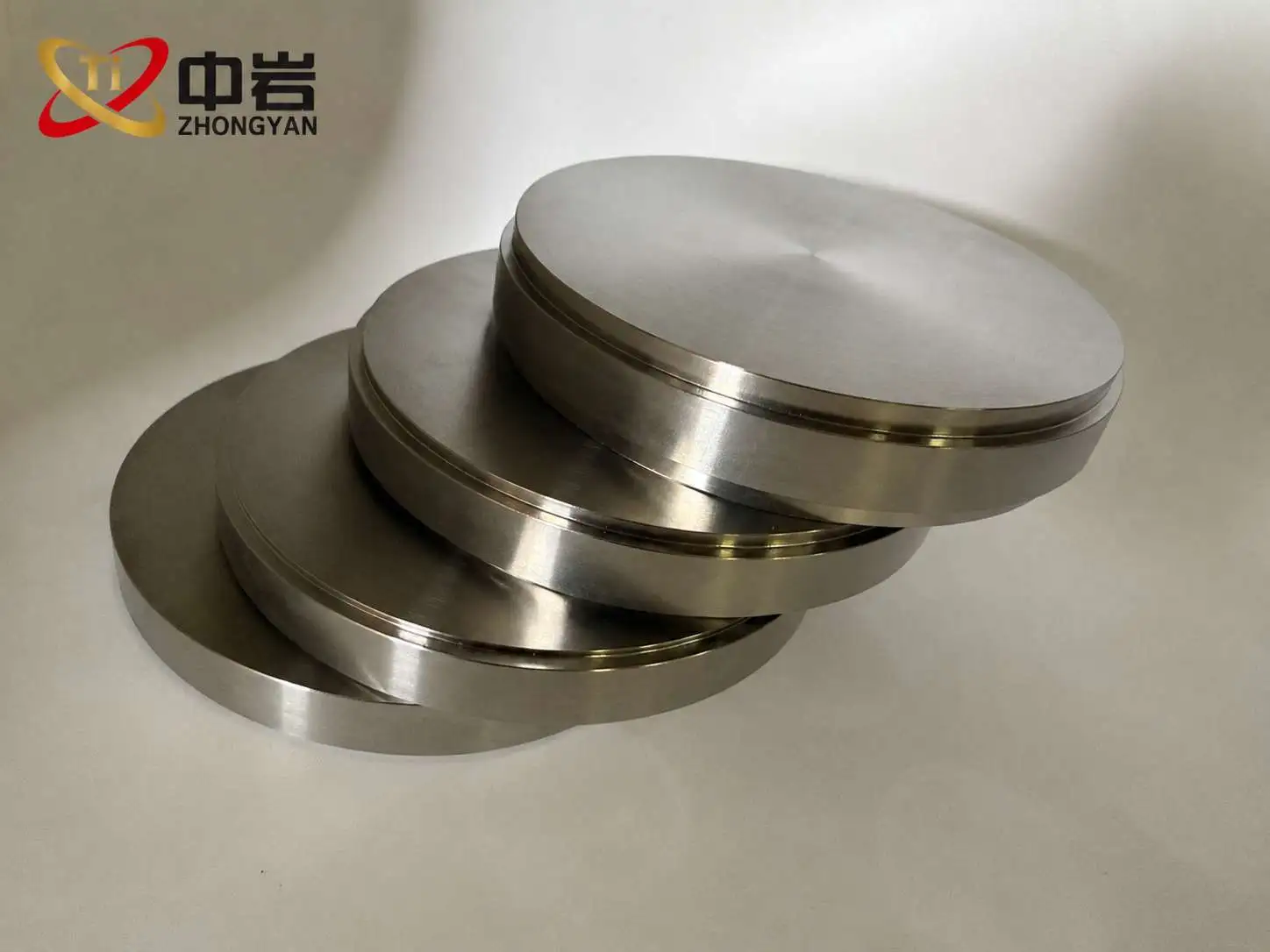
The hardness, microstructural consistency, and temperature qualities of Dental Titanium Milling Disc have a direct effect on the life and wear of milling tools. When CAD/CAM dentistry systems are used to make titanium parts, the rate at which the cutting edges wear down depends on the disc's inherent properties, such as how it hardens over time, how rough its surface is, and what alloys are used. High-quality discs that meet ASTM F67 and ASTM F136 standards reduce abrasive and adhesive wear. This means that dentistry labs and implant makers don't have to change tools as often and save money on operational costs.
Understanding Dental Titanium Milling Discs and Their Material Properties
Dental Titanium Milling Discs are precisely made bases that are used to make tooth prosthetics, implant abutments, and superstructures. There are two main types of materials used to make these discs: commercially pure (CP) titanium, which is usually Grade 4, and titanium alloys like Ti-6Al-4V (Grade 5). Which of these types to use depends on specific medical and mechanical needs.
Commercial Pure Titanium versus Titanium Alloys
Grade 4 CP titanium is better at being biocompatible and flexible, which makes it perfect for single-unit crowns and frontal bridges where high tensile strength is not as important. Its lower hardness (32–34 HRC) means that grinding burs will wear down less quickly. On the other hand, Grade 5 Ti-6Al-4V metal has a tensile strength of more than 900 MPa and a hardness of 36 to 38 HRC. For multi-unit frames, long-span bridges, and implant bars that are put through a lot of chewing force, this metal is required. The change in hardness between these types has a big effect on how long tools last. Carbide cuts wear out faster when they are made of harder metals, especially when the disc microstructure has uneven grain boundaries or impurities that are still there. Purchasing managers should make sure that the companies they work with use Vacuum Arc Remelting (VAR) methods to make sure that the microstructure is uniform, which is directly linked to consistent machine performance.
Key Material Attributes Affecting Machinability
Titanium plates work with milling tools in a certain way because of some of their natural qualities. The way chips form during cutting is determined by the tensile strength. Grade 5 and other materials with a yield strength above 830 MPa produce higher cutting forces that cause more heat to build up at the contact between the tool and the disc. This buildup of heat speeds up the breakdown of tools through diffusion wear. The specs for the surface finish are also very important. Discs with a surface roughness less than 0.4 μm have less initial contact when they are engaged, which keeps the cutting edge intact. The titanium milling discs made by Zhongyan meet strict ASTM F67/F136 compliance standards. This means that they are very pure and don't have any metal particles that could cause the tool to break in an unpredictable way. These material controls are especially helpful for dental labs that make a lot of tools, since knowing how much each one will cost directly affects their ability to make a profit.
How Dental Titanium Milling Discs Influence Milling Tool Life and Wear
When Dental Titanium Milling Disc substrates and cutting tools combine, they create unique wear patterns that procurement experts need to understand in order to get the best value for money in production. Titanium doesn't conduct heat well compared to steel (about 7 W/m·K vs. 50 W/m·K), so heat builds up at the cutting zone instead of spreading out through the workpiece. This limited heat stress makes tools wear out quickly.
Primary Wear Mechanisms in Titanium Milling
When hard bits in the disc material scratch and wear away the tool's cutting edge, this is called abrasive wear. Lower-quality titanium pieces that have more than 0.5% iron or oxygen in them make tiny hard phases that are used as abrasives. When compared to high-purity surfaces, this wear mode cuts tool life by 30 to 40 percent. When titanium's strong chemical reaction causes material to stick to the cutting tool, this is known as adhesive wear or built-up edge (BUE). Titanium tends to cold-weld under pressure, which makes chip formation unsteady and pulls off pieces of the tool finish. This effect is especially noticeable when cutting Grade 5 metals without enough coolant flow. When cutting processes are halted, cyclic loading causes fatigue wear to happen. With each grinding pass, the tool is put under different amounts of stress, which creates tiny cracks in the carbide base. Discs with uneven hardness patterns make these changes in stress worse, which speeds up the crack spread. Zhongyan's manufacturing standards stress the importance of even heat treatment to keep the hardness variance within 2 HRC across the whole blank width.
Critical Disc Attributes Influencing Wear Rates
Machining stability is affected by how regular the disc width is. When the blank width changes by more than 0.05 mm, it vibrates during high-speed milling, which makes chatter marks and causes the tool to chip off too soon. These problems with dynamics can be fixed by making models that are custom-sized and made to very tight standards. Work hardening action is directly affected by the nature of the alloy. Titanium metals quickly become harder when they are cut, with the surface hardness going up by 20 to 35 percent in the polished area. Discs made with controlled amounts of aluminum and vanadium (6% Al and 4% V for Grade 5) harden at known rates that let you set the best tool path. OEM shipping choices from providers like Zhongyan make sure that goods arrive clean, which stops surface oxidation that speeds up work hardening. Comparing titanium discs to discs made of other materials gives you an idea of how much they cost and how well they work. Zirconia blocks don't wear down tools very much, but they're not flexible enough for thin framework designs. Stainless steel is easy to work with, but it doesn't meet the biocompatibility standards needed for lasting implants. Titanium has the best combination of mechanical qualities and biological acceptance, which is why it is widely used even though it is hard to machine.
Optimization Strategies to Extend Milling Tool Life with Dental Titanium Discs
When machining Dental Titanium Milling Disc substrates, paying close attention to process factors and repair schedules is necessary to make tools last longer. There are a number of methods that engineers can use that have been shown to work to lower the rate of wear and the cost of making one unit.
Machine Parameter Optimization
Choosing the cutting speed has a huge effect on the warmth of the tool. According to research, speeds lower than 50 m/min for Grade 5 titanium keep heat damage to a minimum while still removing enough material. Feed rates of 0.05-0.15 mm/tooth balance cutting force control with output, keeping the tool from deflecting too much. How the coolant is applied is just as important as the makeup of the coolant. During roughing activities, flood cooling at 15-20 L/min is enough to get rid of the heat. High-pressure coolant (70–100 bar) is sent through the tool shaft straight to the cutting zone. This stops chip welding and cuts adhesive wear by 40%. When cutting corrosion-resistant titanium grades, water-soluble coolants with extreme-pressure ingredients work better than straight oils. When it's doable, CNC programming plans should include climb cutting. By placing the cutting edge so that it engages the object at its thickest chip, this method lowers the effects of rubbing and work hardening. Adaptive toolpath algorithms that change feed rates based on contact angle reduce heat spikes even more when implant abutment shapes are complicated.
Maintenance Protocols and Quality Assurance
Failures that keep happening are stopped by regular inspections. Tools with side wear greater than 0.3 mm should be replaced right away to keep them from breaking in a terrible way. Keeping discs clean increases their storage life and grinding accuracy. Titanium blanks that are kept in places with low humidity (below 50% RH) don't get surface rust, which forms rough layers. Working with approved suppliers guarantees stability from batch to batch, which keeps estimates about tool wear stable. Manufacturers that follow medical quality control methods, like Zhongyan in Baoji, keep track of everything from the raw material ingot to the finished milling blank. This paperwork lets dental labs connect disc lot numbers to tool performance data, which helps them figure out what materials work best with their particular sets of equipment. These combined methods let purchasing teams figure out how much a tool costs per prosthesis unit, which lets them negotiate with sellers based on data. By improving both disc selection and process factors at the same time, labs that mill more than 200 units per month can usually cut tool costs by 25 to 30 percent.
Selecting the Right Dental Titanium Milling Disc for Enhanced Tool Performance
To pick the right Dental Titanium Milling Disc, you have to weigh a lot of technical factors against the needs of the output and your budget. Managers in charge of buying things have to balance the initial cost of the disc with the total cost of cutting, which includes tool wear, cycle time, and scrap rates.
Technical Evaluation Criteria
In order for machines to work together, the dimensions must first be checked. Most open-architecture dentistry CAD/CAM systems can use standard discs with a diameter of 98.5 mm and stepped edges of 10 mm. Because proprietary systems may need specific dimensions, suppliers need to be able to be flexible. Zhongyan makes unique sizes to very close standards so they can fit in certain types of equipment. The hardness requirements should match the purpose of the prosthesis. Grade 4 titanium (32–34 HRC) works well for single crowns and small bridges because it wears down tools 20% less than Grade 5 titanium. For multi-unit frames that need tensile strength above 900 MPa, Grade 5 metal is needed, even though it means that cutter wear will go up. Precision scores show how well the product was made. Surface finish measures (Ra values) show how well the grinding was done after the casting. Values below 0.4 μm show improved manufacturing skills and are linked to lower starting tool friction. Flatness limits of less than 0.03 mm across the blank's width stop chattering caused by vibrations during high-speed milling operations.
Supplier Landscape and Procurement Strategies
Leading makers set themselves apart by making sure they follow certification rules and providing expert help. For surgical implants, ASTM F136 approval ensures strict chemical controls, especially low interstitial material. Compliance with ISO 5832-3 gives the same level of European standards for buying things across borders. Cost levels change a lot from one provider to the next. Premium blocks from well-known European manufacturers usually cost 40–60% more than similar products from Asia. Total cost analysis, on the other hand, often favors mid-tier providers that offer medical-grade quality at prices that are competitive. Baoji Zhongyan Titanium Industry is a good example of this value proposition because it uses materials from China's titanium valley while still meeting world quality standards. When you buy in bulk, you can get big discounts. Labs that use more than 50 discs a month can get 15–25% off the price by signing a yearly supply deal. Custom orders for widths that aren't standard (10mm, 12mm, 14mm, 16mm, 18mm, 20mm, and 25mm) usually need at least 100 pieces, but they don't lose material when they're made from blanks that are too big. Logistics issues affect wait times and the cost of keeping supplies. Deliveries from domestic providers take two to three weeks, while orders from abroad take six to eight weeks. OEM package choices with sterilization-ready layouts make it easier for labs that follow clean room rules to receive items.
Case Studies: Improved Milling Tool Life Using Premium Dental Titanium Milling Discs
In the real world, when labs improve their Dental Titanium Milling Disc specs and milling processes, they can see a measured boost in performance. These examples give buying teams useful information to use when they are thinking about switching suppliers.
Case Study 1: Mid-Volume Dental Laboratory Optimization
Before making changes, a dental lab in the Midwest that made 150 implant devices every month had to repair tools every 80 units on average. When they first bought discs, they focused on getting the cheapest ones, which led to uneven hardness profiles and rough surfaces. Tool costs made up 18% of direct production costs, which cut into profit margins. The lab started with material research and then moved on to ASTM F67-compliant Grade 4 blanks with a VAR-processed microstructure and a Ra 0.35 μm surface finish. At the same time, they changed the cutting settings to 45 m/min speeds and 18 L/min of flood water. These changes increased the life of each tool to 125 units, which cut the cost of each tool by 36%. The lab also set up procedures for reviewing suppliers and checked each blank shipment's proof of compliance. This quality control step got rid of three cases of mixed-grade blanks that were causing random tool failures before. The annual cost of tools went down by $12,400, but the amount of work that was done stayed the same.
Case Study 2: OEM Implant Manufacturer Precision Enhancement
A contract maker that made custom abutments for several implant brands had trouble with differences in the accuracy of the dimensions, which were linked to unstable tools. When they milled Grade 5 Ti-6Al-4V blanks in five dimensions, the end passes showed faster wear, which made it harder to keep key fit tolerances below 10 microns. Engineers found that disc thickness changes of about 0.08 mm caused harmonic vibrations at spinning speeds of 18,000 RPM. The maker worked with Zhongyan to find blanks that were custom-ground and had a 0.02mm flatness across the whole circle. They also set narrower chemical makeup windows, with 5.8 to 6.2% aluminum and 3.8 to 4.2% vanadium. This made the normal ASTM range smaller. When these superior blocks were used, the finishing tool life went from 65 to 110 abutments, which is a 69% increase. Rates of scraping due to features that were too strict went down from 3.2% to 0.8%. The extra $2.80 per blank cost was balanced out by savings of $4.15 per unit made on tools and scrap.
Conclusion
When making modern prosthetics, the choice of Dental Titanium Milling Disc has a big impact on how long tools last and how efficiently they are used. Wear processes, such as abrasive decline and thermal fatigue, are directly affected by the material's qualities, such as its alloy grade, microstructural regularity, and surface finish. To get the best results, procurement teams look at discs in a number of different areas, including ASTM compliance, measurement precision, source quality systems, and total cost modeling. Laboratory tests have shown that using expensive blanks with controlled specs lowers the number of times tools need to be replaced and the amount of scrap that is made. Strategic relationships with makers that uphold medical-grade quality standards, along with improved machining parameters, give dental companies long-term competitive benefits in a market that is becoming more focused on quality.
FAQ
What is the difference between Grade 4 and Grade 5 dental titanium blanks?
Grade 4 is commercially pure titanium that is not as hard (32–34 HRC) and has a tensile strength of about 550 MPa. It works well with living things and doesn't wear down tools easily, so it can be used for single crowns and simple bridges. Grade 5 (Ti-6Al-4V) is a metal that is very strong (more than 900 MPa) and very hard (36–38 HRC), which is important for making multi-unit frames and implant bars. The metal makes tools wear out about 30% faster, but it also lets designers make thinner, stronger shapes for high-stress situations.
How often should milling tools be replaced when machining titanium discs?
How often Dental Titanium Milling Discs need to be replaced depends on their quality and the process factors. Under ideal conditions, high-quality flats with a consistent microstructure can usually hold 100 to 150 replacement units per carbide cutter. This could go down to 60–80 units if you use lower-quality products. Checking every 50 units helps find side wear that is getting close to 0.3 mm, which is the point at which the part needs to be replaced. Labs that keep an eye on wear trends can set up predictive repair plans that cut down on unplanned downtime.
Can disc storage conditions affect milling performance?
Because titanium is volatile, it is very important to store it properly. When surfaces are exposed to humidity levels above 60%, they oxidize and form rough layers, which speeds up the initial wear of tools. Changes in temperature can cause dampness, which can bring in contaminants. The disc surface stays intact when stored in climate-controlled areas (40–50% RH, 18–24°C) with a lid. For labs that follow strict quality standards, sterilization-ready packaging choices completely remove external exposure risks.
Partner with Zhongyan for Superior Dental Titanium Milling Disc Solutions
Zhongyan provides precisely designed Dental Titanium Milling Discs that make tools last longer and meet the strict requirements of making dental implants. Our materials meet ASTM F67/F136 standards and have high-purity formulas and smooth CNC-machined surfaces that keep your cutting tools from wearing out too quickly. We are in Baoji, China, which is known as the titanium manufacturing hub of the country. We use our advanced production skills to offer custom sizes, OEM packing, and stable batch quality under medical-grade quality control systems. Our technical team can be reached at sales@titaniumstudy.com by purchasing managers looking for dependable dental titanium milling disc providers. They can talk about specs, ask for material certifications, or set up sample orders. Check out how our safe, corrosion-resistant blanks can help you cut down on your overall cutting costs while also improving the accuracy of your prosthetics in high-volume production settings.
References
1. Ezugwu, E.O. and Wang, Z.M. (1997). "Titanium Alloys and Their Machinability: A Review." Journal of Materials Processing Technology, 68(3), 262-274.
2. Peters, M., Kumpfert, J., Taylor, C.H., and Leyens, C. (2003). "Titanium Alloys for Aerospace Applications." Advanced Engineering Materials, 5(6), 419-427.
3. Donachie, M.J. (2000). Titanium: A Technical Guide, 2nd Edition. ASM International, Materials Park, Ohio.
4. Brunette, D.M., Tengvall, P., Textor, M., and Thomsen, P. (2001). Titanium in Medicine: Material Science, Surface Science, Engineering, Biological Responses, and Medical Applications. Springer-Verlag, Berlin.
5. Shaw, M.C. (2005). Metal Cutting Principles, 2nd Edition. Oxford University Press, New York.
6. American Society for Testing and Materials. (2013). ASTM F136-13: Standard Specification for Wrought Titanium-6Aluminum-4Vanadium ELI Alloy for Surgical Implant Applications. ASTM International, West Conshohocken, Pennsylvania.
(1)_1755652858819.jpg)
(1)_1755593289268.jpg)
Learn about our latest products and discounts through SMS or email