- English
- French
- German
- Portuguese
- Spanish
- Russian
- Japanese
- Korean
- Arabic
- Greek
- German
- Turkish
- Italian
- Danish
- Romanian
- Indonesian
- Czech
- Afrikaans
- Swedish
- Polish
- Basque
- Catalan
- Esperanto
- Hindi
- Lao
- Albanian
- Amharic
- Armenian
- Azerbaijani
- Belarusian
- Bengali
- Bosnian
- Bulgarian
- Cebuano
- Chichewa
- Corsican
- Croatian
- Dutch
- Estonian
- Filipino
- Finnish
- Frisian
- Galician
- Georgian
- Gujarati
- Haitian
- Hausa
- Hawaiian
- Hebrew
- Hmong
- Hungarian
- Icelandic
- Igbo
- Javanese
- Kannada
- Kazakh
- Khmer
- Kurdish
- Kyrgyz
- Latin
- Latvian
- Lithuanian
- Luxembou..
- Macedonian
- Malagasy
- Malay
- Malayalam
- Maltese
- Maori
- Marathi
- Mongolian
- Burmese
- Nepali
- Norwegian
- Pashto
- Persian
- Punjabi
- Serbian
- Sesotho
- Sinhala
- Slovak
- Slovenian
- Somali
- Samoan
- Scots Gaelic
- Shona
- Sindhi
- Sundanese
- Swahili
- Tajik
- Tamil
- Telugu
- Thai
- Ukrainian
- Urdu
- Uzbek
- Vietnamese
- Welsh
- Xhosa
- Yiddish
- Yoruba
- Zulu
How Do Engineers Ensure Precision in Titanium Threaded Adapters?

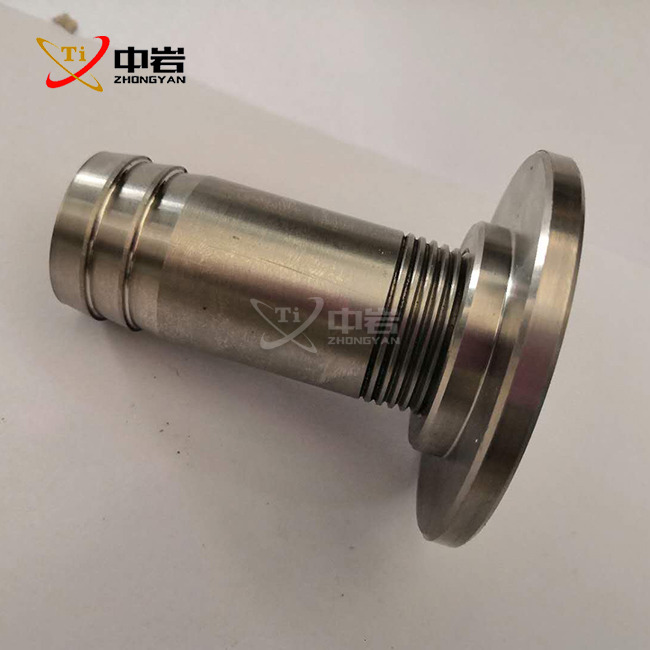
Engineers ensure precision in titanium threaded adapters through a multi-layered approach combining careful material selection, advanced CNC machining techniques, rigorous quality inspections, and strict adherence to international standards. Dimensional accuracy, proper thread pitch control, and surface finish optimization are achieved by using calibrated equipment, continuous measurement protocols, and experienced craftsmanship. Thread profiles meeting ASTM and ISO specifications prevent leakage and mechanical failure, critical in high-stakes industries like aerospace and medical device manufacturing, where even micron-level deviations can compromise safety and performance.
Understanding the Challenges in Achieving Precision with Titanium Threaded Adapters
The Critical Role of Dimensional Accuracy
Accurate measurements are the key to making threaded links that work. Engineers often have to work within ±0.001 inches of accuracy when they make a Titanium Threaded Adapter for chemical processing equipment or fluid systems in space. Thread fit tells you if the adapter will close properly when the pressure is high, between 3,000 and 5,000 PSI. Surface finish affects both how well the link seals and how long it lasts, especially in places where chemicals that break down metal are present or where saltwater is present. When oil is extracted from the sea, a badly made adapter can cause the whole system to fail. When thread profiles don't follow the rules, they create leak paths that let dangerous fluids escape. The same risks exist for companies that make medical devices. For example, an incorrectly fitted adapter in a surgical instrument assembly could damage the instruments' cleanliness or structural integrity during important procedures.
Material Properties That Complicate Manufacturing
Titanium is hard to machine precisely because it has its own problems. Because the material doesn't transfer heat well, heat builds up at the points where cutting tools touch it. This speeds up tool wear and could change the shape of the thread. Titanium reacts chemically with air at high temperatures, which can cause surface pollution that can weaken the thread. Because the material work-hardens, multiple passes through a machine can change its mechanical features and stability in terms of size. Grade 5 titanium (Ti-6Al-4V) has a tensile strength of more than 895 MPa, which means that it needs strong cutting tools and the best possible working conditions. Engineers have to think about springback, which is titanium's desire to return to some of its original shape after being shaped. This affects the final thread measurements. Because of the way this material is made, it takes special skills and tools to make threaded fittings that always meet requirements.
Industry Consequences of Precision Failures
In military uses, a threaded adapter with the wrong dimensions can cause the hydraulic system to stop working during flight. The effects go beyond broken parts; they also include the possibility of having to ground an airplane and pay for expensive repair rounds. Precise threaded connections are needed in chemical processing plants to hold dangerous chemicals like concentrated acids and chlorinated compounds. Leakage from connections that were not made correctly can cause safety problems at work and pollute the environment. When threaded parts don't meet written specs, medical implant makers are closely watched by regulators. To keep up with FDA rules and patient safety standards, adapters used in bone fixation devices or oral implants must be accurate across all production batches. In these fields, procurement managers know that mistakes in precision directly lead to business downtime, liability risks, and damage to the company's image.
Core Engineering Principles to Ensure Precision in Titanium Threaded Adapters
Material Selection and Alloy Specification
Choosing the right type of titanium is the first step in making an accurate Titanium Threaded Adapter. Commercially pure titanium grade 2 is very good at resisting rust and being flexible, which makes it good for chemical processing tasks where moderate strength is enough. Grade 5 titanium has better mechanical qualities for high-stress areas like high-performance car turbocharger links and aircraft hydraulic systems. Engineers choose materials based on ASTM B348 standards for titanium bars and ASTM F67 or F136 standards for medical-grade materials. These specs describe the chemical makeup, mechanical qualities, and microstructural features of the material that affect its ability to be machined and its ability to stay the same size. Each lot comes with material tracking paperwork, which lets quality teams check the alloy makeup using X-ray fluorescence analysis before the machining starts. When you choose a different type of titanium, the thread holding power and resistance to galling are different. Galling is when titanium surfaces cold-weld under pressure and friction. For the right material choice, you need to think about the temperature ranges that it will be used in, whether it will be exposed to harmful media, and how strong it needs to be compared to its weight.
Advanced CNC Machining Techniques
CNC technology makes it possible to get the exact thread shapes needed for important tasks. Live tooling on multi-axis machining machines lets them make complicated thread profiles, such as NPT, BSP, Metric, UNF, and UNC. In thread milling, special coats on carbide cutting tools make them resistant to the heat and wear that come from working with titanium. Spindle speeds for titanium are usually between 150 and 300 surface feet per minute, which is much slower than cutting steel. Cutting factors are carefully controlled. The best feed rates and depths of cut are used to keep the thread profile accurate and stop work hardening. Flood coolant systems or high-pressure coolant supply keep temperature distortion to a minimum and flush out chips that could damage threads that are already finished.
Quality Control and Measurement Protocols
Each component is checked to make sure it fits within certain limits using strict testing methods. Coordinate measuring machines (CMMs) with touch probes record three-dimensional data points for important thread traits like major diameter, minor diameter, pitch diameter, and thread angle. These values are compared to CAD models to find differences that are too big for the tolerance bands. Thread gauges that are set up to ANSI/ASME B1.20.1 standards can tell you if a thread fits or not. Optical comparators make thread profiles bigger so they can find surface flaws, burrs, or unfinished thread forms that might make closing less effective. Testing the roughness of the surface makes sure that the finish values meet the requirements, which are usually 32 Ra or higher for closing surfaces. Statistical process control charts show changes in dimensions over time for each production batch. This lets quality teams find process drift before parts don't meet the requirements. When engineers make special OEM parts, they write first-article inspection reports that include full dimensional verification and material approval. These reports set the standards for future production.
Innovations and Technologies Advancing Precision Manufacturing
Digital Design and Simulation Tools
Modern factories use CAD/CAM software that combines the goals of the design with the strategy for cutting. Engineers make thorough, solid models of every Titanium Threaded Adapter, making sure that the thread shapes meet international standards and that any changes made by the customer are taken into account. Finite element analysis models how stress is distributed under real-world conditions, which makes sure the design is correct before it goes into production. Thermal modeling can predict how heat will cause distortions during cutting processes. Software programs figure out the best way to move the tools so that there are the fewest differences in temperature and the fewest stresses on the parts they're making. Digital twins, which are virtual copies of real production tools, let engineers try out different ways to machine materials and find problems before they are cut.
Automation and Robotic Integration
Automated production rooms cut down on mistakes made by people in important threading tasks. Robotic systems move titanium blocks into machining tools with a level of accuracy measured in microns. Automated tool changes choose the right cutting tools based on pre-programmed routines. This makes sure that the best machining settings are always used. Vision devices check the quality of the threads right after they are machined, finding problems before the parts move on to the next step in the process. Using ultrasonic or solvent-based methods, automated cleaning stations get rid of machining leftovers, making threaded surfaces ready for final inspection and packing. Adding technology to all stages of the production process improves accuracy and meets the needs of high-volume output.
Surface Treatment and Enhancement Processes
Advanced surface processes improve both the function of the thread and its ability to fight corrosion. Anodizing makes a controlled oxide layer that makes the surface harder and lets you tell different adapter specs apart by their colors. Type II anodizing makes layers up to 25 microns thick, while Type III hard anodizing makes layers thicker for uses that need better wear resistance. By getting rid of free iron from polished surfaces, passivation processes help titanium's natural protective oxide film form. This step is especially important for medical-grade parts because the biocompatibility is directly affected by how clean the surface is. Chemical passivation that meets ASTM F86 standards ensures that the surface chemistry is the same from one production batch to the next. Precision cleaning processes improve the finish on the threads, which lowers friction during assembly and makes the seals work better. Electropolishing evenly removes surface material, getting rid of micro-burrs and leaving thread sides that are smooth and won't hurt. These methods for improving the surface work with precision machining to make threaded fittings that are best for harsh service settings.
Selecting the Right Titanium Threaded Adapter Supplier for Precision Components
Certification Verification and Standards Compliance
Purchasing managers give more weight to sellers who have well-known quality certifications for producing the Titanium Threaded Adapter. Getting ISO 9001:2015 approval shows that you have a method for managing quality in all parts of the production process, from getting the materials to delivering the finished product. AS9100 approval focuses on the needs of the aerospace industry, covering things like risk assessment procedures, configuration management, and traceability that are necessary for flight-critical parts. ASTM material compliance makes sure that titanium metals have the right chemical and mechanical properties. Customers can check that suppliers are meeting standards when they give material test reports (MTRs) that can be linked to specific production lots. Companies that make medical devices need providers that are certified to ISO 13485 standards, which cover the special quality needs of biomedical uses.
Manufacturing Capability Assessment
By looking at a supplier's technical skills, you can tell if they can consistently deliver quality parts. The specs of a machine tool show whether or not it is accurate enough for tight-tolerance threading tasks. Suppliers who use multi-axis CNC machining centers with temperature stability systems show that they are serious about controlling dimensions. Thread pitch skills show if a provider can meet special needs that go beyond standard thread forms. Being able to make specific thread types like ACME, Buttress, or proprietary profiles shows that the manufacturer has advanced programming skills and flexible production systems. Inspection equipment catalogs show what kinds of measurements can be made. For example, sellers who have their own CMM systems and certified thread gauges can check dimensions without having to use outside labs.
Service Factors and Partnership Considerations
Performance on lead times affects project schedules in both the planning and production stages. Suppliers who keep titanium materials on hand can meet pressing needs quickly without having to wait to get raw materials. Customers are helped at all steps of a product's development by flexible production schedules that can handle both small prototype orders and large OEM sales. The way prices are set should take into account how hard precision production is while still being cheap for large orders. Transparent quoting methods break down the prices of materials, operations, inspections, and surface treatments, which helps buying teams understand the value components. Structures for volume discounts reward partnerships that last a long time while keeping quality standards high. Technical support availability facilitates problem-solving when application requirements evolve. Suppliers with skilled engineering teams can suggest changes to the design that make it easier to make without affecting the performance. Support after the sale, such as paperwork packages, dimensional reports, and material certifications, makes getting inspections easier and speeds up the process of putting products together for customers.
Best Practices for Installation and Long-Term Use to Maintain Precision
Proper Installation Techniques
The way each Titanium Threaded Adapter is installed has a direct effect on how well it works and how precise it is over time. Controlled torque application keeps the threads from getting damaged by overtightening and makes sure there is enough pressure for a leak-free seal. The torque requirements rely on the thread size, the material grade, and the purpose. Because titanium has different tribological qualities than steel, engineers usually set values that are 20–30% lower than those used for steel connections. During fitting, alignment is very important. Angular misalignment causes uneven loading on the thread sides, which speeds up wear and could lead to stress buildup that starts a crack. Using alignment fixings or guide pins during assembly makes sure that parts that fit together correctly fit together. Molybdenum disulfide-based thread lubricants and anti-seize chemicals reduce friction and stop galling, which is especially important since titanium tends to cold-weld.
Maintenance and Inspection Protocols
Schedules for regular inspections find wear patterns before they become problems. Under a microscope, you can see the first signs of thread damage, such as cutting, galling, or rust pitting. Checking the dimensions with thread testers shows that the threads are still within the specifications after a long time of use. Optical or video borescope viewing lets you get to adapters that are placed in places that are hard to get to. Seal decay needs to be fixed by keeping an eye out for signs of leaks like pressure loss, fluid seepage, or corrosion staining. Vibration analysis can find connections that are coming loose in high-vibration environments, which are common in aircraft and industrial machines. Thermal imaging finds hot spots that could mean that fluid is leaking or flowing too slowly.
Storage and Handling Best Practices
When threaded fittings are stored correctly, they keep their sharpness before they are installed. Climate-controlled settings keep wetness levels low so that surfaces don't get oxidized or contaminated. Threads are kept safe from damage during storage and handling by being individually packaged. Thread guards, which are plastic caps or plugs that cover both internal and external threads, keep things from getting stuck and damage from impacts. Handling instructions stress careful handling to avoid drops or hits that could change the shape of the thread profiles. Adapters are stored in racks or bins that sort them by size and specification. This keeps them from getting mixed up, which could lead to the wrong choice of parts during assembly. Inventory cycle systems make sure that earlier items are used up before new ones arrive, which cuts down on the time that items are stored.
Conclusion
A precision Titanium Threaded Adapter is the result of integrated engineering practices like choosing the right material, advanced cutting, full quality control, and best practices for operations. Engineers use CNC technology, measurement systems, and surface treatments to make parts that meet the strict standards needed by the chemical processing, medical, and aircraft industries. Procurement teams can find reliable parts for important uses by building relationships with suppliers based on qualified skills, technical support, and consistent quality delivery. Installing, maintaining, and storing parts correctly keeps their precision traits throughout their lifetimes. This ensures long-lasting performance in harsh work settings where failure is not an option.
FAQ
What advantages do titanium threaded adapters offer compared to steel alternatives?
The Titanium Threaded Adapter provides exceptional corrosion resistance in harsh chemical and marine environments where steel fittings rapidly deteriorate. The material's strength-to-weight ratio delivers mechanical performance equivalent to steel while reducing assembly weight by approximately 45%, critical in aerospace applications. Titanium's non-magnetic properties make these adapters suitable for sensitive electronic equipment and MRI systems. Biocompatibility enables use in medical devices without tissue reaction concerns.
Can suppliers customize thread types and sizes for specific applications?
Reputable manufacturers offer extensive customization, including specialized thread pitches, non-standard sizes, and proprietary thread profiles. Custom capabilities extend to material grade selection between Grade 2 and Grade 5 titanium alloys, surface treatments including anodizing or passivation, and dimensional modifications accommodating unique installation requirements. OEM partnerships support design collaboration from concept through production, ensuring adapters integrate seamlessly into customer assemblies.
What certifications should I verify when selecting a titanium adapter supplier?
Suppliers who care about quality keep their ISO 9001:2015 approval, which shows that they use organized quality management practices. For aerospace uses, you need AS9100 certification that meets the quality standards for flight. Medical device makers should make sure that biological parts are compliant with ISO 13485. Material certifications, such as ASTM compliance paperwork and material test records, make it possible to track products back to specific production lots. This is very important for businesses that are regulated and need full documentation.
Partner with Zhongyan for Precision-Engineered Titanium Threaded Adapters
Zhongyan is an expert at making a precision Titanium Threaded Adapter that is exactly what you need. Our company is in Baoji City, which is in China's Titanium Valley. We have been working with titanium for decades and use cutting-edge CNC machines to make parts that meet ASTM, AMS, and ISO standards. Our engineering team works together with procurement managers and research and development (R&D) experts to create custom OEM solutions that solve specific problems in the aircraft, medical device, and industry sectors. During production, we keep a close eye on quality and include full paperwork on material tracking and dimensional proof with every order. Zhongyan offers regular precision, short lead times, and full technical support, whether you need small numbers for a prototype or large production runs. Email our team at sales@titaniumstudy.com to talk about your needs with a reputable company that is dedicated to doing a great job.
References
1. Donachie, Matthew J. "Titanium: A Technical Guide, Second Edition." ASM International, Materials Park, Ohio, 2000.
2. Boyer, Rodney, Gerhard Welsch, and E.W. Collings. "Materials Properties Handbook: Titanium Alloys." ASM International, 1994.
3. Ezugwu, E.O. and Z.M. Wang. "Titanium Alloys and Their Machinability: A Review." Journal of Materials Processing Technology, Volume 68, Issue 3, 1997.
4. American Society for Testing and Materials. "ASTM B348-13: Standard Specification for Titanium and Titanium Alloy Bars and Billets." ASTM International, West Conshohocken, Pennsylvania, 2013.
5. Aerospace Industries Association. "AS9100D: Quality Management Systems - Requirements for Aviation, Space, and Defense Organizations." SAE International, 2016.
6. Peters, Manfred, Christoph Leyens, editors. "Titanium and Titanium Alloys: Fundamentals and Applications." Wiley-VCH Verlag GmbH & Co., Weinheim, Germany, 2003.
_1755652624199.jpg)
Learn about our latest products and discounts through SMS or email