- English
- French
- German
- Portuguese
- Spanish
- Russian
- Japanese
- Korean
- Arabic
- Greek
- German
- Turkish
- Italian
- Danish
- Romanian
- Indonesian
- Czech
- Afrikaans
- Swedish
- Polish
- Basque
- Catalan
- Esperanto
- Hindi
- Lao
- Albanian
- Amharic
- Armenian
- Azerbaijani
- Belarusian
- Bengali
- Bosnian
- Bulgarian
- Cebuano
- Chichewa
- Corsican
- Croatian
- Dutch
- Estonian
- Filipino
- Finnish
- Frisian
- Galician
- Georgian
- Gujarati
- Haitian
- Hausa
- Hawaiian
- Hebrew
- Hmong
- Hungarian
- Icelandic
- Igbo
- Javanese
- Kannada
- Kazakh
- Khmer
- Kurdish
- Kyrgyz
- Latin
- Latvian
- Lithuanian
- Luxembou..
- Macedonian
- Malagasy
- Malay
- Malayalam
- Maltese
- Maori
- Marathi
- Mongolian
- Burmese
- Nepali
- Norwegian
- Pashto
- Persian
- Punjabi
- Serbian
- Sesotho
- Sinhala
- Slovak
- Slovenian
- Somali
- Samoan
- Scots Gaelic
- Shona
- Sindhi
- Sundanese
- Swahili
- Tajik
- Tamil
- Telugu
- Thai
- Ukrainian
- Urdu
- Uzbek
- Vietnamese
- Welsh
- Xhosa
- Yiddish
- Yoruba
- Zulu
How Are Titanium Pylon Connectors Tested for Quality and Safety?

To make sure they meet strict safety standards, Titanium Pylon Connectors go through a lot of tests, such as mechanical stress analysis, material composition proof, surface integrity studies, and dimensional accuracy checks. These precision-engineered parts are usually made from Grade 5 titanium alloy (Ti-6Al-4V). They have to pass the structural testing standards of ISO 10328 and get load ratings that are good for prosthetic uses, holding weights between 100 kg and 166 kg in cyclic loading conditions. Testing methods also check for corrosion resistance, fatigue life of more than two million cycles, and biocompatibility to make sure the device is safe to use with human tissue. This is especially important for transfemoral and transtibial prosthetic systems, where the reliability of the connectors directly affects the patient's ability to move and stay safe.
Understanding Titanium Pylon Connectors and Their Material Properties
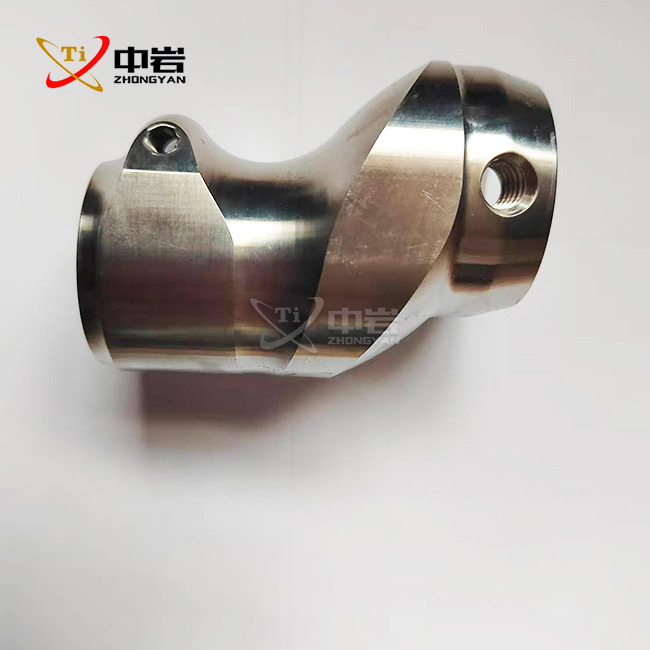
Learning About Titanium Pylon Connectors and How They Are Made: Procurement managers and research and development teams need to understand the basic features of structural connections when they are looking at them for important uses. The Titanium Pylon Connector is a special kind of precisely machined interface hardware that connects prosthetic sockets to distal support structures in lower-limb prosthetics. It also has important jobs to do in aircraft and industrial machinery.
What Makes Titanium the Optimal Material Choice
Grade 5 titanium metal was chosen for making pylon connectors because it has several technical benefits that set it apart from other materials. This alloy has a tensile strength of over 950 MPa and a density that is 40–45% lower than stainless steel equivalents. This gives it an amazing strength-to-weight ratio that helps prosthetic users avoid metabolic fatigue and aerospace applications avoid payload penalties. Titanium has great mechanical qualities, and it also doesn't rust, so it doesn't need any surface treatments or coatings. This feature is very useful in medical settings where links come into contact with body fluids, chemical processing plants that work with corrosive substances, and maritime or humid industrial settings. The biocompatibility of the material passes ISO 10993 standards, so it doesn't cause allergic reactions or tissue rejection like nickel-containing stainless steel can.
Material Properties Driving Testing Protocols
The special features of titanium metals have a direct effect on how we set up our testing methods at our Baoji site. Because the material is sensitive to notches, it is important to carefully check the torque specifications when checking the assembly. This is because over-tightening can cause stress concentration points that shorten the fatigue life. In the same way, titanium has a lower modulus of elasticity than steel, which means that different bending patterns must be taken into account when checking for dimensional stability. Temperature performance ranges from -55°C to 315°C. Set testing parameters that mimic harsh environmental conditions to make sure connectors keep their structural integrity at the high and low temperatures that are common in aerospace applications or on industrial machinery that is exposed to process heat. Every part of Zhongyan Titanium's quality assurance system is based on these material-specific factors.
Core Testing Methods for Quality Assurance of Titanium Pylon Connectors
Validation checks start as soon as the raw titanium materials arrive at our Baoji factory and continue through CNC cutting, surface finishing, and final assembly. Our unified method makes sure that every Titanium Pylon Connector meets the high standards needed by aircraft engineers, medical device procurement teams, and companies that make industrial machinery.
Mechanical Performance Testing
Our quality assurance method starts with mechanical testing, where we put each production batch through controlled stress situations that are like real-world conditions. Procurement workers can better understand the value of properly tested components when they know how these tests protect end users. Tensile testing involves putting more and more axial loads on the connector examples until they break. The yield strength, final tensile strength, and elongation percentages are recorded. Our testing procedures show that Grade 5 titanium alloy connections always have minimum tensile strengths of 950 MPa, which is higher than the minimum standards and gives you extra safety for high-stress situations. This information is especially useful for aircraft uses where a broken part could have terrible results. Compressive loading tests see how connectors react to axial crushing forces. These tests mimic situations where replacement users support their whole body weight during the stance phase or where flight structures are hit by landing loads. These tests make sure that the shape of the connection evenly spreads compressive stress without causing buckling or lasting deformation. The results help buying teams match connector specs to application needs and decide how to classify loads.
Material Composition Verification
The fast chemical study of optical emission spectroscopy confirms that the Grade 5 titanium alloy has the right amount of aluminium (around 6%) and vanadium (around 4%). Even small changes from the specs can affect the mechanical qualities and resistance to rust, so this step of checking is necessary to make sure that the product always works the same way. Part of how our procurement teams choose raw material sources is by how well they can provide approved mill test results that our spectroscopy testing then confirms. X-ray fluorescence research is used with spectroscopy to find trace elements and possible contaminants that might change how biocompatible or corrosion-resistant something is. We can test every output lot with this non-destructive method without having to use test samples, which saves money and makes sure we have full quality control. This method works really well when checking materials for use in medical devices, because full traceability is needed to meet legal requirements.
Surface Integrity and Dimensional Accuracy Assessments
For corrosion resistance testing, connector samples are put through rapid external conditions, such as being exposed to salt spray according to ASTM B117 guidelines and being submerged in simulated body fluids for medical uses. These tests show that the surface processes and natural oxide layers are good enough to protect the product from chemical attack in the area where it is meant to be used. We keep track of the rates of rust and compare them to the standards for acceptance that are specific to each type of application. Profilometry is used to measure the hardness of a surface to make sure that the finished surface meets the requirements for sealing, wear resistance, and good looks. Our CNC cutting skills allow us to make areas with controlled levels of roughness, and regular checks make sure the process is stable. This care with the surface finish is especially important for joints that need certain coating adhesion or friction factors.
Modern Standards and Certification Requirements
New rules and requirements for certification: Regulatory compliance is not an extra that can be added when selling titanium parts to businesses with a lot of rules. It is a basic requirement. Knowing about the different types of certifications helps procurement workers judge the skills of suppliers and make sure that the companies in their supply chains have the right quality management systems in place. Our Titanium Pylon Connector solutions are built on these rigorous safety frameworks.
International Standards Governing Connector Design and Testing
International rules for designing and testing connectors: ISO 10328 sets specific standards for structural testing of prosthetic parts. It describes test methods and acceptance factors that make sure devices can handle the repeated loads that come from walking normally. This standard sorts artificial parts into groups based on the heaviest person who can use them. As the weight goes up, the testing requirements get stricter. After going through tests, our titanium pylon connections are approved for groups that support users up to 166 kg, which is a lot of adult prosthetic users. ASTM guidelines give details about materials and how to test them that can be used in many different fields. ASTM F136 sets limits on the chemical makeup of titanium-6aluminum-4vanadium alloy used in medical implants. It also specifies the alloy's mechanical properties and quality control procedures. Medical device makers can be sure that connection materials meet biocompatibility standards and work consistently and predictably when they follow this standard.
Quality Management System Compliance
Compliance with the Quality Management System: Manufacturers who have ISO 9001:2015 approval follow structured quality management practices that include controlling the design, making sure the process works, managing suppliers, and working on ongoing improvement. Our Baoji plant is certified by ISO 9001, which means that our processes are regularly checked by third parties to make sure they are still following the rules. This certification gives people who work in buying concrete proof that we keep the organisational discipline needed to keep product quality high. ISO 13485 is a standard for quality management systems for companies that make medical devices. It goes beyond ISO 9001 and adds extra requirements that reflect the higher risk that comes with medical goods. ISO 13485 certification is helpful for companies that make titanium connectors for prosthetic uses because it shows that they know about medical device laws, risk management principles, and their responsibilities for post-market monitoring. Our major qualification is still ISO 9001, but to help clients in regulated medical markets, our quality systems also include parts of ISO 13485.
Supplier Auditing and Verification Processes
Auditing and checking processes for suppliers: Smart purchasing groups have seller qualification programs that include on-site checks and reviews of the suppliers' abilities, in addition to just looking at certifications. These programs check how well production equipment works, how well quality control labs can do their jobs, how well process control methods work, and how well systems are set up to train staff. These kinds of checks are great because they give us a chance to show off our technical skills and the cutting-edge CNC machines, testing tools, and quality management systems that make our business unique. Aerospace and medical device businesses need manufacturers to keep detailed records that show how finished goods were made and where the raw materials came from so that they can be traced. Our methods for keeping records keep track of each production lot from the time the materials are certified when they come in until they are inspected and certified again after being machined, heated, and finished on the outside. This complete traceability lets any problems in the field be looked into quickly and supports statistical analysis that leads to ongoing growth.
Comparative Analysis: Titanium vs Other Materials in Connector Testing
Titanium vs. Other Materials in Connector Testing: A Comparison. When choosing a material, you have to weigh the pros and cons of its performance, how hard it is to make, and how much it costs. Knowing how the Titanium Pylon Connector stacks up against other materials helps buying pros make smart choices that lower the total cost of ownership instead of just the purchase price.
Titanium Versus Stainless Steel in Prosthetic Applications
When it comes to prosthetics, titanium vs. stainless steel: 316L medical-grade metal is usually used to make stainless steel joints, which are cheaper to make and can be made by more machine shops. Great strength and good corrosion protection in most settings make this material a good choice. When testing stainless steel, the main goals are to make sure the inactive oxide layer is intact and to keep an eye out for stress corrosion cracking in chloride settings.
Titanium Versus Aluminium in High-Performance Applications
Under situations of high load or contact, important differences in performance show up. Aluminium is not as tough when it comes to breaking as titanium. This means that catastrophic failure is more likely when joints are overloaded by unexpected events like stumbles or falls. Because of this, aluminium can only be used in low-activity situations. Titanium pylon connectors, on the other hand, can safely handle busy users who run, jump, or play impact sports. When making decisions about what to buy, people have to weigh the cost savings against the legal risks that come with parts failing in demanding use cases.
Material Selection Impact on Testing Requirements
Effects of Material Choice on Testing Needs: Different materials fail in different ways, which must be taken into account in testing methods. Because titanium is notch sensitive, the thread design, hole edges, and geometry changes that could focus stress need to be carefully thought out. Some testing tools check for fracture mechanics, which might not be needed for materials that are more flexible. Also, because titanium tends to gall when threaded parts fit together, anti-seize treatments and pressure requirements must be tested in ways that aluminium or steel parts might not need.
Installation and Post-Installation Testing Procedures
Procedures for installation and testing after installation: Quality control for components goes beyond just making them; it also includes installing them correctly and keeping an eye on their performance over time. Comprehensive testing programs cover the whole lifetime of a product, making sure that parts that were made correctly reach their full performance potential through the right use and ongoing monitoring. The Titanium Pylon Connector must be verified at every stage of the assembly.
Pre-Installation Verification and Assembly Testing
Checking before installation and testing the assembly: Making sure that parts are not damaged during shipping or storage is the first step in making sure that the installation is done well. Protocols for visual checking find harm to the surface, the start of corrosion, or problems with the packing that could affect performance. Documentation systems keep track of the results of inspections, making quality records that meet legal standards and help find the root cause of problems in the field if they happen.
Functional Testing Post-Installation
Testing for functionality after installation: Load testing puts controlled forces on placed connectors to make sure that systems work the way engineers thought they would. These tests look for mistakes in the installation, incompatible parts, or unexpected compliance that could affect how well the system works. Testing loads are usually between 50% and 100% of the estimated working loads. This gives you trust without putting properly put together systems at risk of damage.
Long-Term Performance Monitoring and Field Testing
Field testing and long-term monitoring of performance: Longevity testing takes proof from the lab to the real world, where performance is affected by factors that can't be controlled in the lab. In field testing programs, certain sites are equipped with sensors that keep an eye on loads, temperatures, shaking levels, and other factors that can shorten the life of parts. Getting data confirms what the lab tests said they would find and shows how things are actually used, which may be different from what was planned.
Conclusion
In conclusion, Comprehensive testing procedures set the standard for the dependability of Titanium Pylon Connectors in medical, industrial, military, and prosthetic settings. Strength and wear resistance are checked by mechanical testing, the alloy's purity is confirmed by material proof, and the fit and function are confirmed by dimensional inspection. Following the rules set by ISO, ASTM, and AMS gives procurement workers concrete standards they can use to judge suppliers and goods. Titanium's high strength-to-weight ratio, rust resistance, and biocompatibility make it worth the time and money to test it thoroughly. This will pay off in the long run by extending its useful life and lowering its failure risk. Advanced CNC machining and strict quality control are combined in facilities like our Baoji operation to make connectors that meet exact specs for critical uses where part reliability has a direct effect on safety and performance outcomes.
FAQ
How frequently should titanium pylon connectors undergo quality testing during manufacturing?
How often tests are done depends on the type of data and how stable the process is. Critical measurements are checked automatically on all sides, and the mechanical properties of the Titanium Pylon Connector are tested using statistical sampling plans based on ASTM E2282. Usually, one sample is used for each production lot or shift. Every time a new batch of raw materials comes in, the makeup of the materials is checked, and each design version is checked for fatigue before it goes into production. This multi-level method strikes a balance between thorough supervision and efficient production.
What certifications should buyers require from titanium pylon connector suppliers?
ISO 9001:2015 certification should be a minimum condition for quality systems in procurement standards. Medical device applications also benefit from suppliers who know about ISO 13485 standards, even if they aren't officially recognised. Mill test records for raw materials and test certificates showing mechanical qualities, chemical makeup, and dimensional conformance should be part of material approvals. For aerospace uses, traceability paperwork that meets AMS standards is needed.
Can titanium pylon connectors be customised for specific load requirements?
Custom engineering is one of Zhongyan Titanium's main skills. Our design team works with customers to find the best connection shape, size, and material grade for the loads that will be used. With CNC cutting, you can make things in any shape or size without having to buy the expensive tools that are needed for casting or forging. Engineering analysis checks designs for errors before they are made, which makes sure that custom connections meet or beat performance standards. OEM and ODM services include unique branding and packaging that help customers reach their business goals.
Partner with Zhongyan for Certified Titanium Pylon Connector Manufacturing
For Certified Titanium Pylon Connector Production, Work with Zhongyan: Precision-engineered Titanium Pylon Connectors from Zhongyan Titanium are used in the most demanding aircraft, medical device, and industrial machinery uses. These connectors are made in ISO 9001:2015-certified factories that follow strict testing procedures. Our plant is in Baoji, which is known as the titanium production hub of China. It has state-of-the-art CNC machines, full quality control labs, and a lot of titanium knowledge that it uses to make custom parts that meet ASTM, AMS, and ISO standards. Our engineering team works with your purchasing and research and development (R&D) teams to create the best options possible, with sizes, shapes, and specs that are exactly what you need. As the maker and provider of your titanium pylon connection, we offer full tracking documents, material approvals, and technical support for the entire duration of your product. Email our team at sales@titaniumstudy.com to talk about the parts you need and find out how our OEM/ODM services can help you get reliable, high-performance titanium solutions for important uses.
References
1. American Society for Testing and Materials. (2020). Standard Specification and Test Methods for Metallic Medical Bone Screws (ASTM F543-17). West Conshohocken, PA: ASTM International.
2. International Organisation for Standardisation. (2016). Prosthetics—Structural Testing of Lower-Limb Prostheses—Requirements and Test Methods (ISO 10328:2016). Geneva: ISO.
3. SAE International. (2019). Titanium Alloy Bars, Forgings, and Rings 6Al-4V Annealed (AMS 4928). Warrendale, PA: SAE International Aerospace Material Specification.
4. Brunette, D.M., Tengvall, P., Textor, M., and Thomsen, P. (2012). Titanium in Medicine: Material Science, Surface Science, Engineering, Biological Responses, and Medical Applications. Berlin: Springer-Verlag.
5. Peters, M., Kumpfert, J., Ward, C.H., and Leyens, C. (2003). Titanium Alloys for Aerospace Applications. Advanced Engineering Materials, Volume 5, Issue 6, pp. 419-427.
6. Donachie, M.J. (2000). Titanium: A Technical Guide, Second Edition. Materials Park, OH: ASM International.
_1755652624199.jpg)
Learn about our latest products and discounts through SMS or email