- English
- French
- German
- Portuguese
- Spanish
- Russian
- Japanese
- Korean
- Arabic
- Greek
- German
- Turkish
- Italian
- Danish
- Romanian
- Indonesian
- Czech
- Afrikaans
- Swedish
- Polish
- Basque
- Catalan
- Esperanto
- Hindi
- Lao
- Albanian
- Amharic
- Armenian
- Azerbaijani
- Belarusian
- Bengali
- Bosnian
- Bulgarian
- Cebuano
- Chichewa
- Corsican
- Croatian
- Dutch
- Estonian
- Filipino
- Finnish
- Frisian
- Galician
- Georgian
- Gujarati
- Haitian
- Hausa
- Hawaiian
- Hebrew
- Hmong
- Hungarian
- Icelandic
- Igbo
- Javanese
- Kannada
- Kazakh
- Khmer
- Kurdish
- Kyrgyz
- Latin
- Latvian
- Lithuanian
- Luxembou..
- Macedonian
- Malagasy
- Malay
- Malayalam
- Maltese
- Maori
- Marathi
- Mongolian
- Burmese
- Nepali
- Norwegian
- Pashto
- Persian
- Punjabi
- Serbian
- Sesotho
- Sinhala
- Slovak
- Slovenian
- Somali
- Samoan
- Scots Gaelic
- Shona
- Sindhi
- Sundanese
- Swahili
- Tajik
- Tamil
- Telugu
- Thai
- Ukrainian
- Urdu
- Uzbek
- Vietnamese
- Welsh
- Xhosa
- Yiddish
- Yoruba
- Zulu
Can Custom CNC Aluminum Parts Reduce Manufacturing Errors?
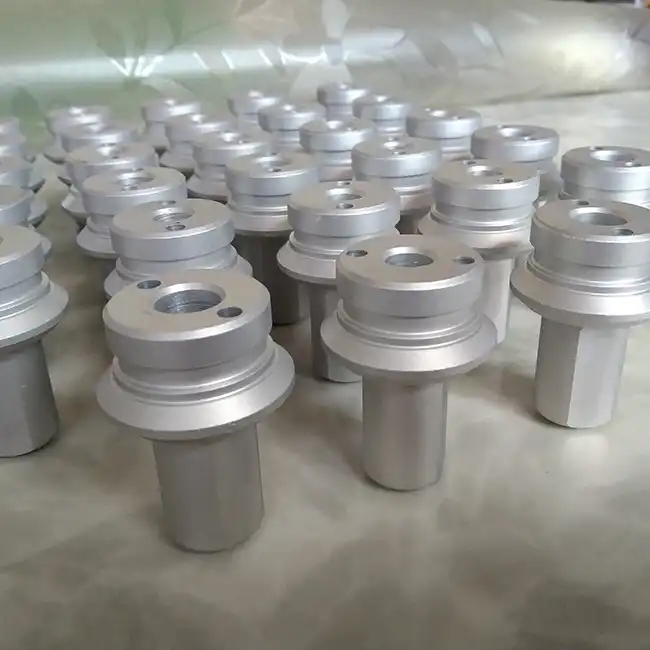
Precision CNC Machined Aluminum Parts cut down on production mistakes in a way that can be measured. When people work by hand, like when they machine or cast something, the results can be different. But with CNC systems, the tool paths are always the same, so the limits for size can be as small as ±0.005mm. Common problems in traditional manufacturing are taken care of by these made parts, which don't have any dimensional drift, uneven surface finishes, or material nonconformities. When designed correctly using the right aluminum alloys, such as 6061-T6 or 7075-T6, custom CNC aluminum parts meet strict aircraft and medical device requirements while keeping costs low for both prototypes and large-scale production.
Understanding Manufacturing Errors in Aluminum Components
Aluminum parts that were not made correctly cause problems all along the production lines and supply chains. Dimensional errors make it impossible for parts to fit together correctly, surface flaws make functions less effective, and material differences cause parts to break before they should. These problems come from many different places in standard production settings. When machining by hand, the skill and focus of the user are very important. It can be hard for even expert machinists to keep measures the same over long production runs. Tool wear happens randomly, cooling temperatures change, and measuring tools need to be recalibrated all the time. Each variable adds a chance for mistakes to add up.
Common Defect Categories in Aluminum Manufacturing
When B2B clients worry about quality, they usually fall into clear groups. Dimensional differences happen when parts don't measure within the allowed tolerances, which stops them from fitting properly with nearby parts during assembly. Surface flaws like tool lines, scratches, or oxidation can hurt both the look and the function of something, especially in optical or protected surfaces. Material inconsistencies happen when the makeup of an aluminum alloy doesn't match the standards. This can change mechanical qualities like hardness, tensile strength, or resistance to corrosion.
Root Causes Behind Production Failures
Material handling steps have a big effect on the quality of the end product. When aluminum stock is kept incorrectly, the surface gets oxidized or contaminated, which then gets into finished parts. Material approval methods that aren't always reliable let alloys that aren't up to par into the production process. Weak process controls make these material problems worse. For example, machines that aren't regularly calibrated move out of specs, cutting tools that are used past their suggested lifespans produce rough finishes, and parts that aren't inspected properly can get to customers. The cost effects go beyond the direct cost of scrap. Delivery plans are thrown off by production delays, which leads to higher shipping costs and the possibility of line-down fines. Complaints about quality hurt suppliers' names and put long-term contracts worth a lot of money. Instead of making new goods, engineering teams waste time looking into what went wrong and trying to fix it. Understanding how these errors happen is the first step in putting in place effective remedies.
How Custom Precision CNC Aluminum Machining Addresses Manufacturing Errors
Using Computer Numerical Control (CNC) technology changes how companies make metal parts. CNC systems turn digital design files into machine directions directly, so mistakes caused by human interpretation are not a part of the production process. Multi-axis machining centers can handle complicated shapes in a single setup, which gets rid of the alignment mistakes that come with doing many things by hand.
Automated Repeatability Ensures Consistency
No changes need to be made to the metal when CNC cutting it. Once a program has been checked, the machine always does the same things, no matter how much is being made. For thousands of parts, the spindle speeds, feed rates, and tool routes stay the same. This consistency is important for aircraft mounts that need similar bolt hole patterns or medical device housings that need precise seal surfaces.
Quality Control Integration Throughout Production
In modern CNC processes, checking procedures are built in at key steps of production. In-process probing checks the sizes of parts without taking them off the tools. This finds mistakes before they affect other processes. Coordinate measuring machines (CMM) check complex shapes against 3D models and make thorough inspection reports that show that the product meets the requirements. Optical comparators quickly check the accuracy of the shape on turned parts, and surface roughness testers measure the quality of the finish.
Proven Results Across Demanding Industries
Manufacturers of aerospace products have reported big drops in mistakes after switching from manual to CNC production. By using five-axis CNC machining and automatic checking, one company that makes structural parts cut the number of rejected parts from 8% to less than 0.5%. Suppliers of automotive transmission housings were able to speed up production cycles by 40% while also improving concentricity standards by a factor of ten.
Comparing Custom CNC Aluminum Parts with Other Manufacturing Methods
When procurement teams look at different ways to make things, they need to know what each technology can and can't do. Each production method has its own benefits that make it better for certain tasks, but they also have problems with accuracy, cost, and the ability to produce more.
CNC Machining Versus Casting Operations
When producing high volumes of metal components, die casting offers lower per-unit costs, making it suitable for simple geometries with loose tolerances. However, cast parts contain inherent porosity that limits their use in pressure-containing applications and restricts achievable surface finishes. While cast components exhibit inconsistent mechanical properties due to variations in wall thickness, Precision CNC Machined Aluminum Parts provide uniform material density throughout, ensuring reliable and repeatable performance.
Aluminum Versus Stainless Steel Machining
Material choice has a big effect on the chance of making mistakes during production. Stainless steel is harder to work with than other metals, but its high tensile strength makes it ideal for high-load structural uses. When cutting steel metals, tool wear speeds up a lot, so you have to change the tools often, which can cause problems with the dimensions. Cycle times get much longer, which makes production more expensive. Because aluminum is so easy to work with, cutting speeds and feed rates can be increased. This makes it less likely that heat distortion will happen during production. The material is very light—about one-third the density of steel—which makes it better for aerospace and car uses where weight reduction directly improves fuel economy. Aluminum is great for marine settings or chemical processing equipment because it doesn't rust and doesn't need protective coatings that change the thickness.
CNC Machining Compared to Additive Manufacturing
Three-dimensional printing is great for making quick prototypes and making organic forms that are too complicated to make with subtractive cutting. But right now, additive methods can't match the accuracy of CNC for making parts that are used in production. Layer-by-layer building naturally makes a textured surface that needs to be processed afterward, and the accuracy of the dimensions depends on how the build is oriented and how the heat is managed during printing. Because they are made from wrought metals with controlled grain structures, CNC-machined aluminum parts have better tensile qualities. Anisotropic qualities mean that the strength of printed metal changes based on the direction of the build. This makes structural analysis more difficult. Additive processes rarely produce surface finishes that are better than Ra 6μm without further grinding, while CNC operations regularly produce finishes that are Ra 0.8μm directly.
Key Parameters and Best Practices to Minimize Errors in CNC Aluminum Machining
To get uniform quality in CNC aluminum production, you need to pay close attention to how the different process factors affect each other. The accuracy and dependability of the final part depend on the cutting factors, the features of the material, and the methods used to check the quality.
Optimizing Cutting Parameters for Aluminum Alloys
Choices of spindle speed and feed rate have a direct effect on the quality of the surface finish and the accuracy of the dimensions. Because aluminum conducts heat well, it needs to be cut at certain speeds. For finishing tasks with carbide tools, these speeds are usually 200 to 400 meters per minute. Feed rates balance how quickly material is removed with how well the surface needs to be. Slower feeds give you a better finish at the cost of longer cycle times.
Managing Tight Tolerances Through Verification
When making parts with precision below ±0.02mm, the production process needs to be better controlled. Warming up the machine before production starts keeps the temperature stable and stops measurement drift during the first parts. Inspections done in the middle of the process find problems before they get too big, which lets you fix the problem by moving tools or changing parameters.
Material Selection Impact on Machinability
The choice of aluminum has a big impact on the level of accuracy that can be achieved and the economy of production. For general uses, the 6061-T6 metal is the best combination of being easy to machine, resistant to rust, and strong. It is moderately hard (95 HB), so it cuts cleanly and doesn't wear down tools too quickly. It's also strong enough for structural parts.
Quality Assurance Through Advanced Inspection
Regular machine maintenance plans for producing Precision CNC Machined Aluminum Parts prevent loss of accuracy over time. Ballscrew backlash compensation adjustments maintain precise positioning, while spindle bearing replacements prevent runout that could compromise surface finish. These preventive maintenance practices sustain manufacturing capability, ensuring that parts produced today match the specifications of parts made months ago.
Procurement Insights for B2B Clients: Purchasing Custom CNC Aluminum Parts
To choose the right CNC metal component providers, you need to look at more than just the prices they offer. Quality processes, technical skills, and operating flexibility all play a role in how well a relationship works and how much value it delivers over time.
Evaluating Supplier Quality Standards
Certification files show how committed providers are to managing quality in a structured way. ISO 9001 certification shows that a basic quality system is being used, but norms specific to the business give even more confidence. Aerospace makers need to keep their AS9100 approval, and companies that make parts for medical devices need to make sure they follow ISO 13485 rules. These certifications are regularly checked by a third party to make sure that the written processes are still being followed. Before agreeing to production numbers, ask for sample parts. Quotes alone can't show how good the surface finish is, how accurate the measurements are, or how much attention to detail is shown. Inspection reports that come with samples show how measurements are made and how they are recorded. Suppliers who are sure of their skills will gladly send samples with full measurement inspection data.
Understanding Cost Structure and Lead Time Factors
The price of CNC metal parts is affected by more than just the cost of the raw materials. Parts that need to be moved in five dimensions at the same time cost more than easy two-dimensional shapes because they are more complicated. Price is greatly affected by tolerance standards; specs tighter than ±0.02mm need better process controls and more inspection time. For surface finish callouts below Ra 1.6μm, cutting speeds need to be slowed down, and possibly more cleaning needs to be done. Minimum order amounts show how setup time is spread out over multiple production runs. Larger batch sizes are better for complex parts that require a lot of programming and fixturing, but small batches work well for simple shapes. Expected lead times need to take into account getting materials, planning production, inspecting, and ending. Because of scheduling changes and the need for faster handling, rush orders cost more.
Effective Technical Communication Practices
Correct technical sketches stop mistakes and revision processes that cost a lot of money during production. Dimensioned copies should use known datums, clearly show important measurements with the right amount of error, and have finish callouts for useful surfaces. GD&T symbols are a more accurate way to show what the designer meant than just using coordinate measurements, especially for systems that need parts that can be swapped out. Specifications for materials need to be very specific—just saying "aluminum" is not enough. Callouts should list the metals that are needed (6061-T6, 7075-T6), the standards that apply (ASTM B211), and any other needs, like material approvals or hardness ranges. Specifications for surface treatment could include the type and amount of anodizing, chemical film coatings, or paint systems with covering standards.
Flexible Manufacturing Capabilities
Suppliers with a wide range of production options offer strategic benefits throughout the lifecycle of a product. Rapid prototyping services check designs for errors before making production tools. They find interference issues or problems with how they work during the development stages. Low-volume production choices let you test the market or make one-of-a-kind items without having to meet a minimum number. Once a product is well-known and in high demand, it's important for sellers to be able to handle more production while still meeting quality standards. Geography affects how well people can communicate and how much it costs to move things. Suppliers in established industrial areas, such as Baoji, China, have easier access to materials, trained workers, and infrastructure that supports their work. For foreign partnerships to work, people need to be able to communicate technically well, including being able to speak English well and being flexible across time zones.
To find precision CNC machined aluminum parts providers, a full evaluation across these dimensions shows partners who can meet both short-term purchasing needs and long-term strategy needs. Spending time and money to carefully evaluate suppliers keeps you from having to deal with expensive quality problems, shipping delays, and relationship problems that slow down operations and hurt your place in the market.
Conclusion
Custom CNC aluminum parts have automated accuracy, repeatable processes, and built-in quality controls that clearly cut down on production mistakes. Traditional ways of making things are flawed by basic sources of mistakes, such as human variation, uneven material handling, and poor process control. This technology fixes these problems. When procurement teams choose CNC aluminum components, they can get uniform surface finishes, dimensions that are accurate to within ±0.01mm, and traceability that meets aircraft and medical standards. To perform something well, you need to know about the process factors, the properties of the materials, and what the supplier can do. When companies work with skilled CNC machining providers, they get better production quality, more reliable supply chains, and lower long-term costs for a wide range of difficult industrial uses.
FAQ
Can CNC machining achieve tolerances below 0.01mm on aluminum parts?
Tolerances of about ±0.005mm can be reached on metal parts using advanced CNC machines that are rigidly built, compensate for temperature changes, and have precision ball screws. Specifications this tight, on the other hand, need controlled environments, stricter checking procedures, and usually cost 30–50% more to make than normal ±0.025mm tolerances. Choosing the right alloy is important. At very high levels of precision, 6061-T6 machines more steadily than harder 7075-T6.
How does aluminum's machinability affect error rates compared to other metals?
Because aluminum is so easy to machine, mistakes are much less likely to happen. Its lower hardness keeps tools from wearing out too quickly, which can cause dimensions to shift, and its high thermal conductivity gets rid of cutting heat that could otherwise cause bending. Aluminum can be machined three to four times faster than stainless steel, and its tools last longer, which means that mistakes are less likely to happen when the tools are changed. Because it is naturally easy to machine, aluminum is perfect for uses with tight tolerances.
What certifications should I verify when selecting a CNC aluminum parts supplier?
ISO 9001 is a basic standard for quality management guarantee, and certifications specific to a field add authority. Aerospace suppliers need to be certified to AS9100 standards, medical device makers need to be certified to ISO 13485 standards, and car suppliers can benefit from being certified to IATF 16949 standards. Check that the calibration records for measuring tools can be traced back to national standards, that the materials come from reputable aluminum sources, and that there are written process control methods in place to make sure that the quality of each part is the same across production runs.
Partner With Zhongyan for Error-Free Precision CNC-Machined Aluminum Parts
Zhongyan specializes in delivering Precision CNC Machined Aluminum Parts that eliminate costly errors in your manufacturing process. Our advanced CNC machines produce custom aluminum components with tolerances as tight as ±0.005mm, using certified alloys such as 6061-T6, 7075-T6, and other materials optimized for your specific application. We are located in Baoji's Titanium Valley and are certified by ISO 9001:2015. We have been working with metal for decades and use cutting-edge inspection technology, such as CMM proof and full material tracking. We can make aircraft brackets, medical device parts, or parts for industrial machines. Our manufacturing process is flexible enough to handle both small prototypes and large batches of production with quick turnaround times. Get in touch with our expert team at sales@titaniumstudy.com to talk about how our precision-machined aluminum parts can help you make fewer mistakes and make better products. We're ready to become your long-term partner in success as a trusted company that makes quality CNC-machined aluminum parts.
References
1. Schmidt, T. & Anderson, M. (2021). Precision Manufacturing: Advances in CNC Machining Technology for Aerospace Applications. Journal of Manufacturing Science and Engineering, Vol. 143, No. 8.
2. Chen, W. (2020). Aluminum Alloys in Modern Manufacturing: Material Properties and Machining Optimization Strategies. Materials Science and Technology Press.
3. Roberts, K. & Davidson, L. (2022). Quality Control in High-Precision Machining: Statistical Process Control and Measurement Techniques. International Journal of Production Research, Vol. 60, Issue 12.
4. Liu, H., Zhang, Q. & Wang, S. (2021). Comparative Analysis of Manufacturing Methods for Complex Metal Components. Advanced Manufacturing Processes Journal, Vol. 36, No. 4.
5. Miller, J. (2023). Error Reduction Strategies in CNC Machining Operations: Best Practices for Aluminum Component Manufacturing. Manufacturing Engineering Handbook, Society of Manufacturing Engineers.
6. Thompson, R. & Hayes, D. (2020). Supplier Selection Criteria for Precision Machined Components in Critical Industries. Supply Chain Management Review, Vol. 24, No. 3.
(1)_1755587759206.jpg)
Learn about our latest products and discounts through SMS or email