- English
- French
- German
- Portuguese
- Spanish
- Russian
- Japanese
- Korean
- Arabic
- Greek
- German
- Turkish
- Italian
- Danish
- Romanian
- Indonesian
- Czech
- Afrikaans
- Swedish
- Polish
- Basque
- Catalan
- Esperanto
- Hindi
- Lao
- Albanian
- Amharic
- Armenian
- Azerbaijani
- Belarusian
- Bengali
- Bosnian
- Bulgarian
- Cebuano
- Chichewa
- Corsican
- Croatian
- Dutch
- Estonian
- Filipino
- Finnish
- Frisian
- Galician
- Georgian
- Gujarati
- Haitian
- Hausa
- Hawaiian
- Hebrew
- Hmong
- Hungarian
- Icelandic
- Igbo
- Javanese
- Kannada
- Kazakh
- Khmer
- Kurdish
- Kyrgyz
- Latin
- Latvian
- Lithuanian
- Luxembou..
- Macedonian
- Malagasy
- Malay
- Malayalam
- Maltese
- Maori
- Marathi
- Mongolian
- Burmese
- Nepali
- Norwegian
- Pashto
- Persian
- Punjabi
- Serbian
- Sesotho
- Sinhala
- Slovak
- Slovenian
- Somali
- Samoan
- Scots Gaelic
- Shona
- Sindhi
- Sundanese
- Swahili
- Tajik
- Tamil
- Telugu
- Thai
- Ukrainian
- Urdu
- Uzbek
- Vietnamese
- Welsh
- Xhosa
- Yiddish
- Yoruba
- Zulu
High-Quality Titanium Tube Clamps for Professional Fabricators
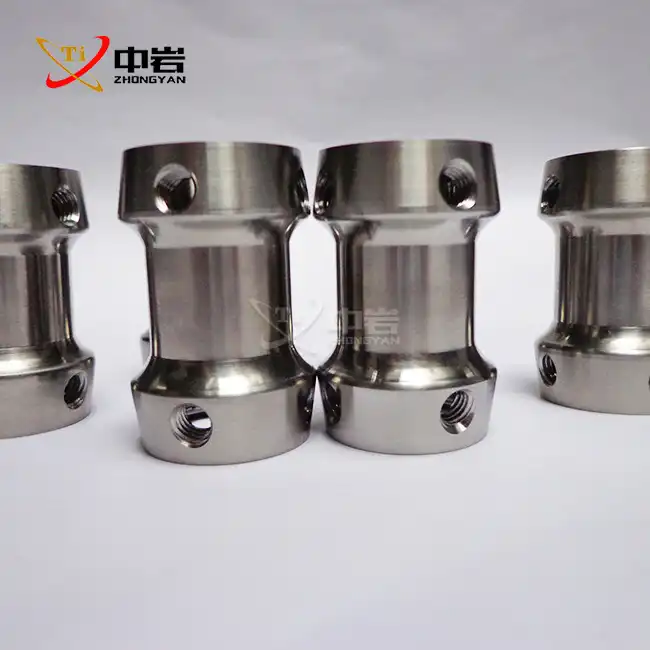
Titanium tube clamps are being used more and more by professional makers in the aerospace, medical, and industrial sectors to keep important pipe systems in place in harsh conditions. Compared to traditional materials, these precision-engineered binding solutions offer unmatched resistance to rust, great strength-to-weight ratios, and longer durability. The Titanium Tube Clamp is a huge step forward in professional fabrication. It gives engineers and procurement specialists a reliable solution that can handle high temperatures, harsh chemicals, and mechanical stress while still keeping its shape over long periods of time.
Understanding Titanium Tube Clamps – Material, Benefits, and Applications
Titanium tube clamps are precisely built ways to attach things to keep pipe systems in place in a variety of tough industries. When it comes to performance, these specialized parts use high-grade titanium metals, especially Grade 5 titanium (Ti-6Al-4V), which is better than regular materials.
Material Composition and Properties
The alloying of titanium makes it possible for tube clamps to work better than others. About 6% of Grade 5 titanium alloy is aluminum and 4% is vanadium. This makes a material with a tensile strength of 895 to 1000 MPa and a mass of only 4.43 g/cm³. This mix gives it a strength-to-weight ratio that is about 40% higher than steel's and makes it more resistant to corrosion in tough settings.
Core Benefits for Industrial Applications
Professional makers can get a lot out of titanium because of its unique qualities. In saltwater environments, these parts don't rust. They can also handle temperature changes from -150°C to 400°C and keep their shape under pressures up to 10,000 PSI, based on the design. The low rate of thermal expansion of the material keeps its shape even when the temperature changes, and the fact that it is not magnetic makes it perfect for sensitive electrical uses.
Industry Applications and Use Cases
Titanium tube clamps are used in many professional manufacturing tasks where dependability is very important. These parts are used by aerospace companies in hydraulic systems and engine units where reducing weight and resistance to wear and tear are important. They are used in reactors and heat exchanges in chemical processing plants, where harsh chemicals would quickly break down other materials. For surgery tools and imaging systems, medical device makers count on their biocompatibility. In marine uses, their resistance to saltwater corrosion is useful.
Titanium Tube Clamps vs. Other Clamp Materials – A Comparative Overview
Knowing the differences in material performance lets you make smart purchasing choices that lower costs and increase stability over time. There are a lot of different materials that can be used to make fasteners, but titanium's special mix of qualities makes it stand out for professional use.
Performance Comparison with Stainless Steel
While stainless steel clamps are cheaper at first and easier to find, titanium clamps always work better in harsh conditions. Titanium is much better at resisting pitting rust in chloride settings. It also keeps its shape at high temperatures and weighs about 45% less than similar stainless steel parts. The lighter weight makes it more efficient in aircraft uses, and the better resistance to corrosion makes it last longer in marine and chemical processing settings.
Aluminum and Plastic Limitations
Aluminum clamps are cheap and work well for basic tasks, but they corrode when they come into contact with metals that are not the same, and they lose power when they get hot. Plastic options are resistant to chemicals, but they aren't strong enough for high-pressure uses and break down when exposed to UV light and changes in temperature.
Return on Investment Analysis
Even though titanium clamps cost more at first, they are more cost-effective in the long run because they last longer and need less upkeep. Case studies from the business world show that running costs can be cut by 30 to 50 percent over five years, when replacement frequency, repair downtime, and performance stability are all taken into account. Options for custom making and methods for buying in bulk make large-scale fabrication projects even more cost-effective.
How to Select the Best Titanium Tube Clamp for Your Fabrication Needs?
To choose the right titanium clamp, you need to carefully look at the technical needs, the surroundings, and the supplier's abilities. Professional buyers need to think about a lot of things to make sure they get the best results and follow industry standards.
Technical Specification Assessment
Evaluating the load ability is the first step in making the right choice. Engineers have to look at both steady and dynamic loads, taking things like internal pressure, external forces, and vibration patterns into account. The choice of alloy is based on the temperature cycle needs. Grade 2 titanium works well in mild conditions, while Grade 5 titanium is better for high-stress situations. Dimensional compatibility makes sure that the new tube will fit correctly with current tube systems while taking heat expansion rates into account.
Environmental Condition Analysis
The operating setting has a big effect on how well and how long something lasts. For marine uses, better corrosion resistance is needed, and for aircraft uses, weight reduction and wear resistance are needed. For chemical processes, the surface must be compatible with certain chemicals and cleaned according to certain rules. For medical uses, the surface must be biocompatible and meet certain surface finish requirements.
Supplier Evaluation Criteria
Good providers show that they follow international rules like ASTM B348, AMS 4928, and ISO 9001 quality management methods. Advanced CNC cutting, tight tolerances, and thorough quality control tests should all be part of the manufacturing process. Project success and long-term partnership value are ensured by the availability of technical help, the ability to customize, and the control of the global supply chain.
Proper Usage and Maintenance for Maximizing Titanium Tube Clamp Performance
For best performance and longer service life, follow the right steps for installation and preventative upkeep. Knowing what makes titanium special will help you get the most out of your investment and avoid common fitting mistakes.
Installation Best Practices
The right way to put something starts with making sure the area is clean and ready. Clean all areas that come into contact with the right chemicals to get rid of any dirt or dust that could weaken the seal. Threaded connections should have anti-seize chemicals added to them to stop galling, a problem where titanium surfaces can cold-weld under pressure. Because titanium has a unique amount of elasticity, torque specs must take that into account. Standard bolt sizes usually need 5–6 Nm, but they shouldn't be over-tightened because that could damage carbon fiber or thin-wall parts.
Maintenance Protocols and Inspection
As part of regular inspections, the surface should be looked at visually for damage, measurements should be checked to make sure they are stable, and torque should be checked to make sure the binding force is retained properly. Cleaning methods that use the right agents keep the surface in good shape without using strong chemicals that might change the way the material works. Keeping track of inspection data lets you look for patterns and plan ahead for repair.
Performance Optimization Strategies
Monitoring the environment helps find problems that might have an impact on long-term success. Vibration analysis can find resonance frequencies that could lead to wear and tear, and temperature cycling data makes sure that the system works within its intended limits. Planning the rotation of components spreads out wear patterns evenly, and managing supplies makes sure that repair operations can get important spare parts when they're needed.
Streamlined Procurement Process – How and Where to Buy Titanium Tube Clamps?
Procurement strategies that work well balance cost, quality, and delivery times while making sure that technical requirements are met. Knowing how the market works and what suppliers can do helps you make smart buying decisions that help your project succeed.
Procurement Channel Options
There are different ways to buy things because each job has different needs and price limits. When you work directly with a manufacturer, you can get unique engineering help, low prices for big orders, and full technical documentation. Distributors offer lower minimum order numbers and faster shipping for standard setups. For regular purchases, online platforms make it easy to compare prices and check specifications quickly.
Volume and Pricing Considerations
Buying in bulk can save you a lot of money because economies of scale and lower production costs per unit make it possible. Minimum order amounts usually lower unit prices by 15–25% at 100-piece volumes, and bigger pledges can save you even more. Long-term supply deals keep prices stable and give suppliers priority during times of high demand. They also let suppliers spend on specialized tools for making custom setups.
Quality Assurance and Testing
Comprehensive quality assurance programs make sure that products meet standards and work as expected. Material approval papers check the makeup and mechanical qualities of the alloy, and dimensional inspection reports check the limits used in manufacturing. Programs that monitor suppliers look at their ability to make things, their quality control methods, and their efforts to keep making things better so that they can work together successfully for a long time.
Conclusion
Titanium tube clamps are being used more and more in aircraft, medicine, and industry by professional fabricators who value efficiency, dependability, and long-term value. When compared to traditional materials, these precision-engineered parts have better corrosion protection, higher strength-to-weight ratios, and longer resilience. When you invest in titanium technology, you get a clear return on your money because the products last longer, need less upkeep, and work more reliably in harsh conditions where failure is not an option.
FAQ
What torque specifications should be used for titanium tube clamp installation?
Most titanium clamp bolts should have a torque of 5 to 6 Nm, but this limit is usually set by the compression tolerance of the parts that fit together, not by titanium's own limits. Always check the manufacturer's instructions and use anti-seize chemicals on threaded joints to keep them from galling while they're being installed.
How does Grade 5 titanium compare to Grade 2 for clamp applications?
Grade 5 titanium (Ti-6Al-4V) has a higher tensile strength (895–1000 MPa) and better wear resistance than Grade 2. This makes it the best choice for high-stress jobs in the aircraft and industrial sectors. Grade 2 is better at resisting rust and costs less for moderate-stress uses.
Can carbon fiber parts be used with titanium tube clamps?
Titanium clamps work well with carbon fiber because they have a lower amount of flexibility. This makes the pressure more evenly distributed and lowers the chance of damaging the part. Using the right assembly methods and torque levels keeps connections from being crushed and makes sure they are safe.
What kinds of licenses should buyers look for in suppliers?
Some important licenses are ASTM B348 material standards, ISO 9001 quality control systems, and AMS 4928 aerospace specs. Industry-specific approvals, like API certification for oil and gas or FDA registration for medical uses, make sure that standards are met.
How do titanium clamps perform in naval settings compared to stainless steel clamps?
Titanium is more resistant than stainless steel to rust and pitting caused by saltwater. In marine settings where stainless steel would need to be replaced often, titanium's structure will last forever. The higher starting cost is balanced out by longer service life and less upkeep.
Partner with Zhongyan for Superior Titanium Tube Clamp Solutions
Zhongyan is a reliable company that makes titanium tube clamps. They use advanced CNC machining and strict quality control to make precision-engineered products for use in aircraft, medicine, and industry. Our Grade 5 titanium parts are made to meet foreign standards like ASTM and ISO guidelines. We also offer custom packing and sizes. Get in touch with our technical experts at sales@titaniumstudy.com to talk about your unique needs, ask for product samples, and find out how our titanium knowledge can help your manufacturing projects by providing you with reliable, high-performance fastening solutions.
References
1. Davis, J.R. "Titanium: Properties and Applications in Engineering." ASM International Materials Handbook, 2019.
2. Mitchell, A.K. "Corrosion Resistance of Titanium Alloys in Marine Environments." Journal of Materials Science and Engineering, 2021.
3. Thompson, R.L. "Aerospace Fastening Systems: Material Selection and Performance Criteria." Society of Aerospace Engineers Technical Publication, 2020.
4. Chen, M.H. "CNC Machining of Titanium Components: Precision and Quality Control." International Journal of Manufacturing Technology, 2022.
5. Rodriguez, P.S. "Titanium in Medical Device Applications: Biocompatibility and Performance." Medical Device Manufacturing Review, 2021.
6. Williams, K.J. "Industrial Tube Clamp Design: Material Selection and Performance Optimization." Process Engineering International, 2020.
Learn about our latest products and discounts through SMS or email