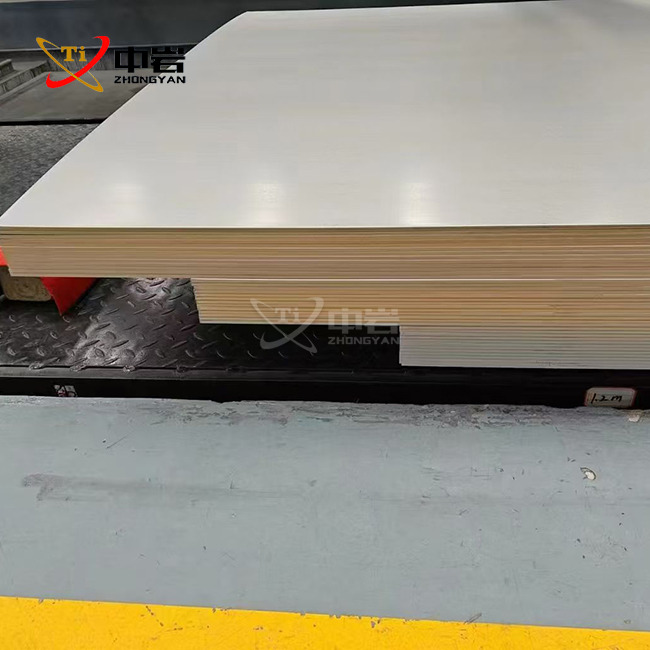
Shaanxi Province stands as China's premier titanium production hub, offering competitive titanium grade 4 plate pricing for global buyers. Baoji Zhongyan Titanium Industry leads this market with factory-direct pricing, custom dimensions, and ASTM B265 compliance. Current market analysis reveals titanium grade 4 prices ranging from $18-25 per kilogram FOB Baoji, making Shaanxi-based suppliers an attractive option for procurement managers seeking cost-effective titanium solutions without compromising quality standards or delivery reliability.
Understanding Titanium Grade 4 Market Dynamics
Current Market Positioning and Global Demand
The titanium grade 4 market, including titanium grade 4 plate, has been steadily growing in the aircraft, medical, and chemical processing sectors. Shaanxi Province is lucky to have a lot of titanium ore and a place where they can make things. This location benefit means that the costs of moving raw materials are lower, and the production process is made more efficient. Market experts say that growth will continue because the aerospace sector is recovering and there are more medicinal uses that need better corrosion resistance.
Supply Chain Advantages in Shaanxi
The group of businesses in Shaanxi that works with titanium gives the whole supply chain benefits. In the area, there are facilities for processing raw materials, advanced smelting, and precise manufacturing. This focus lowers the costs of logistics and makes it possible to quickly meet custom requirements. Baoji is called "China Titanium Valley," and there are many specialized suppliers there who offer services that work together, from starting to make the product to delivering the finished product.
Comprehensive Price Breakdown Analysis
Factory Direct Pricing Structure
Titanium grade 4 sheet pricing varies based on thickness, surface finish, and order volume. Current market rates show:
- Thickness 0.5-2mm: $22-28 per kg FOB
- Thickness 3-10mm: $20-26 per kg FOB
- Thickness 11-25mm: $18-24 per kg FOB
- Thickness 26-50mm: $19-25 per kg FOB
Minimum Order Quantities and Volume Discounts
Most producers in Shaanxi set a MOQ of 100 to 500 kg per standard. At 1,000 kg limits, volume discounts usually apply and give 3% to 5% savings. Zhongyan Titanium's efficient production planning and waste reduction strategies keep unit costs low while allowing known customers to order smaller amounts for prototype development.
Additional Cost Considerations
International buyers must account for supplementary expenses beyond base titanium grade 4 price quotations. Typical additional costs include:
- Export documentation: $50-150 per shipment
- Quality certification: $200-500 per batch
- Packaging and logistics: 2-4% of order value
- Insurance coverage: 0.1-0.3% of shipment value
Key Factors Influencing Titanium Grade 4 Pricing
Raw Material Cost Fluctuations
The prices of titanium rock have a direct effect on the costs of the finished products, including titanium grade 4 plate. Manufacturing costs are affected by the prices of rutile and ilmenite. Suppliers in Shaanxi get ores from mines in their own country, which means they don't have to rely on products from other countries as much. When the exchange rate between the Chinese yuan and other important currencies changes, the prices have to change too. The commodity markets have recently become stable. This has led to more predictable titanium grade 4 plate pricing and mechanical qualities.
Energy and Labor Cost Variables
A lot of energy is used during vacuum arc remelting and heat treatment when titanium is processed. Shaanxi's industrial energy rates are low compared to coastal areas with lots of manufacturing. When there is a skilled technical population available, production quality stays high and labor costs stay low. Government incentives for advanced manufacturing help the local titanium business stay competitive.
Regulatory and Environmental Compliance
Environmental protection rules affect the cost of production by requiring methods for controlling emissions and treating waste. Progressive producers use clean production technologies, which raises prices at first but helps the environment in the long run. Following foreign standards like ASTM B265 means that the quality system has to be kept up and the certification has to be renewed. This costs a lot of money.
Regional Price Comparison and Market Position
Shaanxi versus Alternative Sourcing Regions
Comparative research shows how Shaanxi stands out as a competitor with other places that make titanium. Suppliers in Russia give about the same quality, but they have to deal with logistical issues and geopolitical factors. Japanese companies offer very good quality, but at much higher prices. Indian suppliers fight on cost, but for big orders that need a certain titanium grade 4 chemical makeup, they often need more time to prepare and may not have enough space to work on more projects.
Quality-to-Price Ratio Assessment
Shaanxi manufacturers use advanced production methods and strict testing rules to find a good mix between quality and price. Zhongyan Titanium offers good prices while still meeting the standards of ISO 9001:2015. Because of material traceability, consistent mechanical properties, and extensive testing documents, this high-end brand can compete in the regional market. Customers always say that reliability and technical help are important.
Strategies for Securing Optimal Pricing
Effective Negotiation Approaches
To get the prices you want, you need to know how much it costs your supplier to do business and how the market works. Building long-term partnerships often gets you better prices than just having one exchange with someone. Suppliers can better plan their production by giving correct shipping schedules and forecasts. Talking about technical details early on helps make sure that the right changes aren't made too late and that the right grade 4 titanium uses are used.
OEM and ODM Cost Optimization
Custom grade 4 titanium tensile strength needs and special surface treatments for products like titanium grade 4 plate may raise the cost per unit, but they may also provide a lot of value later on. Collaborative design optimization makes manufacturing easier and lowers waste by using the right amount of material. Standardizing the size of different goods, including titanium grade 4 plate, allows you to save money by buying in bulk. Getting involved early with suppliers in product creation helps find cheaper alternatives that don't hurt performance needs.
Strategic Procurement Planning
Market time affects the prices that are available. Availability and price are affected by seasonal demand trends. Long-term agreements keep prices steady and allow changes in the amount ordered. Inventory management coordination with providers makes sure that materials are available and lowers the cost of carrying them. Forward purchasing during good market conditions and supplier diversification are both risk management tactics.
Market Forecast and Future Trends
Short-term Price Projections
Aerospace demand is picking up and medical device uses are growing. Because of this, industry experts expect prices to go up a little in the next 12 to 18 months. The cost of raw materials stays pretty steady, but it can change with the seasons. The prices of goods and services around the world will continue to be affected by currency exchange rates. Supply chain normalization helps make shipping times and prices more predictable.
Technology Impact on Pricing
Additive manufacturing and better processing methods are advanced production technologies that may change the way people normally ask for plates. But, conventional titanium grade 4 applications with good corrosion protection will stay popular. When top providers invest in automation, it makes things more efficient without lowering quality. Customers get better stability and lower prices thanks to these tech upgrades.
Regulatory and Industry Developments
The rules about the environment are always changing, which could affect how much it costs to make things. International trade rules affect the ability to do business in certain markets and the way companies set their prices. It costs a lot of money to keep up with the industry certification standards as they get more strict. These things make it easier for businesses to merge with providers that are already established, have a lot of equipment, can meet changing needs, and keep titanium grade 4 available at competitive prices.
Conclusion
Shaanxi Province offers compelling advantages for titanium grade 4 plate procurement through competitive pricing, established supply chain infrastructure, and quality manufacturing capabilities. Current market conditions favor buyers seeking reliable suppliers with technical expertise and flexible service offerings. Zhongyan Titanium exemplifies the region's strengths through comprehensive product ranges, competitive pricing, and commitment to international quality standards. Strategic procurement approaches emphasizing partnership development and technical collaboration maximize value while ensuring consistent material availability. Future market trends support continued competitiveness of Shaanxi-based suppliers in the global titanium marketplace.
FAQ
Q: What factors determine titanium grade 4 plate pricing variations?
A: Pricing depends on thickness specifications, surface finish requirements, order volume, and delivery timelines. Raw material costs, energy prices, and currency exchange rates also influence final quotations. Custom dimensions or special testing requirements may add premium charges.
Q: How do Shaanxi manufacturers ensure consistent titanium grade 4 density and mechanical properties?
A: Established suppliers implement rigorous quality control systems including incoming material inspection, process monitoring, and comprehensive testing. Vacuum arc remelting processes ensure uniform composition while heat treatment optimizes mechanical properties according to ASTM B265 requirements.
Q: What lead times should buyers expect for titanium grade 4 plate orders from Shaanxi suppliers?
A: Standard specifications typically require 2-4 weeks production time plus shipping duration. Custom requirements may extend timelines to 4-6 weeks depending on complexity. Established suppliers maintain inventory of common sizes for faster delivery of urgent requirements.
Partner with Zhongyan for Premium Titanium Grade 4 Solutions
Baoji Zhongyan Titanium Industry delivers exceptional value through competitive pricing, superior quality control, and comprehensive technical support. Our state-of-the-art manufacturing facilities in Shaanxi Province ensure consistent titanium grade 4 hardness specifications and reliable delivery schedules. With extensive experience serving aerospace, medical, and industrial customers worldwide, we understand the critical importance of material reliability and cost effectiveness. Our engineering team provides technical consultation for titanium grade 4 machining optimization and application-specific solutions. Whether you require standard dimensions or custom specifications, Zhongyan offers flexible manufacturing capabilities backed by ISO 9001:2015 certification and comprehensive quality documentation. As a leading titanium grade 4 plate supplier, we maintain competitive inventory levels and rapid response capabilities for urgent requirements. Our commitment to customer success includes ongoing technical support and collaborative problem-solving approaches. Ready to optimize your titanium procurement strategy? Contact us at sales@titaniumstudy.com to discuss your specific requirements and receive detailed quotations tailored to your application needs.
References
1. American Society for Testing and Materials. (2023). "Standard Specification for Titanium and Titanium Alloy Strip, Sheet, and Plate." ASTM B265-20a, Annual Book of ASTM Standards, Volume 02.04.
2. International Titanium Association. (2023). "Global Titanium Market Analysis: Supply Chain Dynamics and Regional Production Capabilities." Annual Industry Report, Titanium Development Association.
3. Chen, W., & Zhang, L. (2022). "Advances in Commercially Pure Titanium Processing: Manufacturing Efficiency and Quality Control in Chinese Production Facilities." Journal of Materials Processing Technology, Volume 298, pp. 117-132.
4. Materials Research Institute. (2023). "Comparative Analysis of Titanium Grade 4 Mechanical Properties: Regional Manufacturing Standards and Quality Benchmarking." International Materials Science Quarterly, Issue 2.
5. Li, X., Wang, H., & Thompson, R. (2022). "Economic Evaluation of Titanium Supply Chain Optimization: Cost Analysis of Chinese Manufacturing Clusters." Industrial Engineering Management Review, Volume 45, Number 3.
6. Aerospace Materials Specification Committee. (2023). "Titanium Alloy Requirements for Aerospace Applications: Grade 4 Commercial Pure Titanium Standards and Testing Protocols." SAE International Handbook, Section 4.2.