- English
- French
- German
- Portuguese
- Spanish
- Russian
- Japanese
- Korean
- Arabic
- Greek
- German
- Turkish
- Italian
- Danish
- Romanian
- Indonesian
- Czech
- Afrikaans
- Swedish
- Polish
- Basque
- Catalan
- Esperanto
- Hindi
- Lao
- Albanian
- Amharic
- Armenian
- Azerbaijani
- Belarusian
- Bengali
- Bosnian
- Bulgarian
- Cebuano
- Chichewa
- Corsican
- Croatian
- Dutch
- Estonian
- Filipino
- Finnish
- Frisian
- Galician
- Georgian
- Gujarati
- Haitian
- Hausa
- Hawaiian
- Hebrew
- Hmong
- Hungarian
- Icelandic
- Igbo
- Javanese
- Kannada
- Kazakh
- Khmer
- Kurdish
- Kyrgyz
- Latin
- Latvian
- Lithuanian
- Luxembou..
- Macedonian
- Malagasy
- Malay
- Malayalam
- Maltese
- Maori
- Marathi
- Mongolian
- Burmese
- Nepali
- Norwegian
- Pashto
- Persian
- Punjabi
- Serbian
- Sesotho
- Sinhala
- Slovak
- Slovenian
- Somali
- Samoan
- Scots Gaelic
- Shona
- Sindhi
- Sundanese
- Swahili
- Tajik
- Tamil
- Telugu
- Thai
- Ukrainian
- Urdu
- Uzbek
- Vietnamese
- Welsh
- Xhosa
- Yiddish
- Yoruba
- Zulu
Custom Medical Titanium Rods for OEM Device Manufacturers
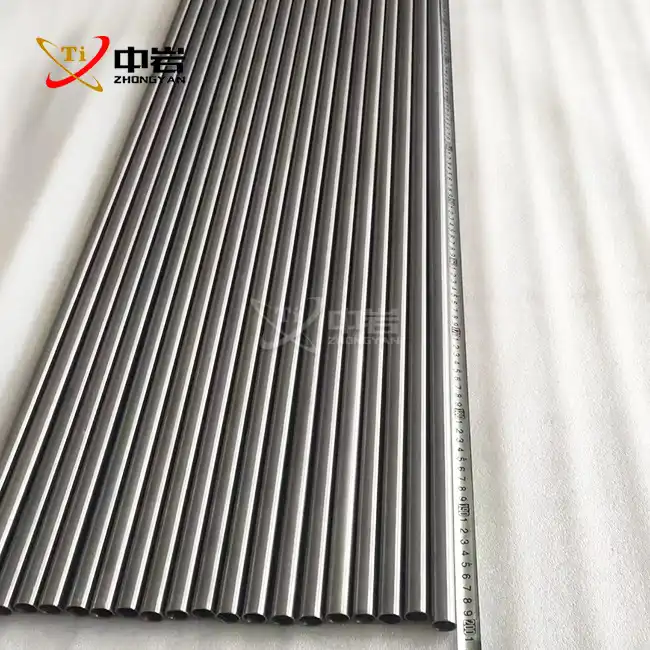
Custom medical titanium rods are the peak of precision engineering for companies that make medical devices. They have unique mechanical qualities and are very compatible with living things. Modern orthopedic implants, spine fixation systems, and oral replacements are all built around these specialty parts. OEM makers depend on custom medical titanium rods to provide solutions that are tailored to each patient and meet strict regulatory requirements while ensuring the best possible clinical results. We at Baoji Zhongyan Titanium Industry Co., Ltd. know how important these parts are for improving patient care and making new medical devices.
Understanding Medical Titanium Rods and Their Benefits
Medical titanium rods are cylinder-shaped parts made mostly from Ti-6Al-4V ELI (Grade 23) titanium metal that are very precise and don't react with living things. These special pieces are put through a lot of steps to make sure they meet the high-quality standards needed by the medical field. Unlike most industrial titanium goods, medical-grade bars have to meet strict microstructural standards that make sure there are no internal flaws and very little interstitial element content.
Superior Biocompatibility Characteristics
It is because of their unique surface chemistry and resistance to rust that titanium bars are so biocompatible. When titanium comes into contact with body fluids, it makes a steady oxide layer that stops tissue processes that could be harmful and helps the bone fuse together. Because of this, titanium rods are very useful for long-term implant uses where material interaction with human flesh is very important.
Mechanical Performance Advantages
Because they have such great mechanical qualities, medical titanium rods are great at solving important problems in the business. Their low elastic stiffness of about 110 GPa is very similar to that of human bone. This makes them better at preventing stress shielding events that can cause bone loss around implants. The better strength-to-weight ratio makes implants last longer while lowering the total weight of the device. This makes patients more comfortable and improves surgical results.
Enhanced Fatigue Resistance
It is possible for medical titanium rods to survive millions of cycles of loads while they are in the body because of their wear strength. This quality is very important in spinal stabilization systems and orthopedic implants, where the materials are put through a lot of mechanical stress while the patient is moving normally. The vacuum melting method used in production makes sure that the oxygen content is very low (≤0.13%), which directly improves the performance against tiredness.
Key Factors for Choosing Custom Titanium Rods for OEM Devices
To choose the right handmade titanium rods, you need to carefully think about a lot of technical and legal factors. OEM makers have to make sure that their products meet worldwide standards for medical devices while also meeting performance requirements and cost-effectiveness.
Precision Manufacturing Requirements
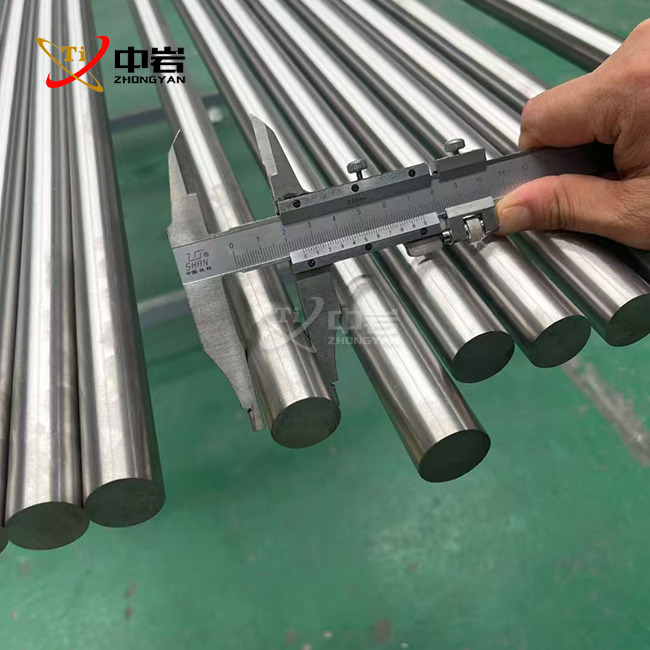
For specific medical uses, custom medical titanium rods need to be very accurate in terms of their dimensions. Our ASTM F136 Grade 23 rods have limits of ±0.05mm for lengths and diameters ranging from 100mm to 300mm and 2mm to 12mm. Because of this accuracy, OEM makers can create dependable building processes and make sure that devices work the same way throughout production runs.
Regulatory Compliance Standards
For medical device uses, it is still necessary to follow FDA rules, ISO 5832-3 approval, and other foreign standards. These approvals make sure that titanium rods meet strict standards for biocompatibility tests, chemical composition, and mechanical qualities. OEM makers benefit from working with providers who keep detailed records and make the whole manufacturing process easy to track.
Material Property Optimization
Specific application needs, like tensile strength (≥860 MPa), stretch (≥10%), and surface finish standards, must be taken into account during the selection process. Our hot-forged rods with acid-pickled sides make it possible for the following machining processes to go smoothly while protecting the titanium microstructure. These features make sure that finished gadgets meet the high standards of performance needed for medical uses.
Comparison of Medical Titanium Rods versus Other Materials
Knowing the benefits of medical titanium rods over other materials helps OEM makers choose the right material. Titanium's unique set of properties often makes up for its high price by improving health outcomes and making devices last longer.
Titanium vs. Stainless Steel Performance
Stainless steel is still used a lot in hospital settings, but titanium bars are much better because they are biocompatible and don't rust. Nickel and chromium ions can be released by stainless steel devices, which could make people who are allergic react. Titanium's neutral nature takes away these worries and makes it more resistant to crevice rust in biological settings.
Carbon Fiber Alternative Analysis
The biomechanical qualities of carbon fiber rods are different from those of titanium, but titanium has a track record of long-term success. Titanium rods are compatible with MRIs because they are not magnetic. This is very important for people who need regular medical imaging. Titanium's well-established biocompatibility profile also gives regulators faith in the approval process that younger materials might not have.
Cost-Benefit Considerations
Titanium rods are more expensive at first than rods made of other materials, but their longer service life and lower rate of complications often make their total cost of ownership lower. When OEM makers use premium titanium parts in their medical products, warranty claims go down, and the companies' market standing improves.
How to Procure Custom Medical Titanium Rods for OEM Manufacturing
OEM makers can get high-quality titanium rods at low prices and with stable supply lines if they have good procurement strategies. Knowing how the buying process works helps companies make better choices about where to buy things and build strong relationships with suppliers.
Supplier Qualification Process
To find good titanium rod providers, you need to carefully look at their manufacturing skills, quality control methods, and compliance with regulations. Suppliers should keep their ISO 9001:2015 approval and show that they have experience making medical devices. Facility checks and capability reviews are great ways to find out how reliable and technically skilled a provider is.
Custom Specification Management
Custom titanium rods will meet all application needs if you work with providers to create detailed specs. Dimensional tolerances, surface finish standards, mechanical qualities, and packing should all be spelled out in the specifications. Clear sharing of standards cuts down on confusion and the chance of quality problems.
Supply Chain Optimization
Things to think about when strategic sourcing medical titanium rods are wait times, minimum order amounts, and the ability to handle logistics. Suppliers in places with lots of titanium, like Baoji City in China's Titanium Valley, can often offer lower prices because they have direct access to raw materials and specialized production know-how. Having ties with several qualified providers lowers the risks in the supply chain and makes sure that supplies will always be available.
Ensuring Quality and Compliance in Custom Medical Titanium Rods
Quality control and following the rules are important parts of making medical devices that work well. OEM makers need to set up full quality systems to make sure that their products always work well and that patients are safe.
Regulatory Framework Compliance
The rules for medical devices, like FDA 21 CFR Part 820, ISO 13485, and CE marking requirements, must be followed to the letter. These setups require a lot of paperwork, risk management, and methods for keeping an eye on things after they've been sold. Suppliers must show that they are following the rules by having regular checks and keeping their certifications up to date to meet the needs of OEM manufacturers.
Quality Control Testing Protocols
Titanium bars must meet certain chemical and mechanical qualities before they can be used. Tensile strength, extension, hardness, and chemical makeup analysis are some of the things that are tested. Dimensional checking makes sure that the part fits within the limits that were set, and surface quality evaluation makes sure that the finish has the right properties for the job.
Traceability and Documentation
Full traceability from where the raw materials come from to the end inspection is important for regulatory filings and quality reviews. As a supplier, you should keep careful records of the heat treatment steps, testing results, and handling methods. This paperwork helps OEM makers show that they follow quality standards for medical devices.
Conclusion
Custom medical titanium rods continue to push the boundaries of medical device making with their unique mix of biocompatibility, mechanical performance, and design freedom. In the competitive medical device market, OEM makers who put quality supplier relationships and thorough procurement strategies at the top of their list of priorities will be able to do well. Investing in high-quality titanium parts leads to better product performance, fewer clinical problems, and better results for patients. Titanium rods that are precisely made are becoming more and more important in making new medical products that meet changing clinical needs as medical technology improves.
FAQ
What makes medical titanium rods superior to stainless steel alternatives?
Medical titanium rods are better than stainless steel in a number of important ways, such as being more biocompatible, not causing allergic reactions when nickel is used, and being more biomechanically compatible with human bone. Because titanium has a low elastic modulus, it doesn't hide stress as well, and its high corrosion resistance means it will stay stable in physiological conditions for a long time.
Can titanium rods be fully customized for specific OEM applications?
Yes, medical titanium rods can be changed in many ways to meet the needs of OEMs. Customization choices include exact size requirements, surface treatments, improving mechanical properties, and creating unique shapes. With tolerances of ±0.05mm, we can make things with diameters from 2mm to 12mm and lengths from 100mm to 300mm.
What certifications are essential for medical titanium rod suppliers?
ISO 5832-3 for medical titanium products, ASTM F136 compliance for Grade 23 titanium alloy, and ISO 9001:2015 for quality management systems are some of the most important standards. Suppliers should also show that they are registered with the FDA and keep all the paperwork that supports the standards for making medical devices.
Partner with Zhongyan for Superior Medical Titanium Rod Solutions
Zhongyan makes high-quality medical titanium rods that meet the strictest industry standards. They do this by mixing modern processing with full quality control. Our cutting-edge factory in China's Titanium Valley gives us direct access to high-quality raw materials and experts who know how to handle medical-grade titanium. As a reliable provider of them, we can meet all of your OEM production needs with our full customization services, low prices, and on-time delivery plans. Get in touch with our expert team at sales@titaniumstudy.com to talk about your specific needs and find out how our precision-engineered medical titanium rods for sale can help you expand your product line and make you more money faster.
References
1. American Society for Testing and Materials. "Standard Specification for Wrought Titanium-6Aluminum-4Vanadium ELI Alloy for Surgical Implant Applications." ASTM F136-13.
2. International Organization for Standardization. "Implants for Surgery - Metallic Materials - Part 3: Wrought Titanium 6-Aluminum 4-Vanadium Alloy." ISO 5832-3:2016.
3. Brunette, D.M., Tengvall, P., Textor, M., and Thomsen, P. "Titanium in Medicine: Material Science, Surface Science, Engineering, Biological Responses and Medical Applications." Berlin: Springer-Verlag, 2001.
4. Niinomi, M. "Mechanical Properties of Biomedical Titanium Alloys." Materials Science and Engineering: A, vol. 243, no. 1-2, 1998, pp. 231-236.
5. Geetha, M., Singh, A.K., Asokamani, R., and Gogia, A.K. "Ti-Based Biomaterials: The Ultimate Choice for Orthopedic Implants - A Review." Progress in Materials Science, vol. 54, no. 3, 2009, pp. 397-425.
6. U.S. Food and Drug Administration. "Guidance Document for the Preparation of Premarket Notifications for Orthopedic Devices." Center for Devices and Radiological Health, 2014.
Learn about our latest products and discounts through SMS or email