- English
- French
- German
- Portuguese
- Spanish
- Russian
- Japanese
- Korean
- Arabic
- Greek
- German
- Turkish
- Italian
- Danish
- Romanian
- Indonesian
- Czech
- Afrikaans
- Swedish
- Polish
- Basque
- Catalan
- Esperanto
- Hindi
- Lao
- Albanian
- Amharic
- Armenian
- Azerbaijani
- Belarusian
- Bengali
- Bosnian
- Bulgarian
- Cebuano
- Chichewa
- Corsican
- Croatian
- Dutch
- Estonian
- Filipino
- Finnish
- Frisian
- Galician
- Georgian
- Gujarati
- Haitian
- Hausa
- Hawaiian
- Hebrew
- Hmong
- Hungarian
- Icelandic
- Igbo
- Javanese
- Kannada
- Kazakh
- Khmer
- Kurdish
- Kyrgyz
- Latin
- Latvian
- Lithuanian
- Luxembou..
- Macedonian
- Malagasy
- Malay
- Malayalam
- Maltese
- Maori
- Marathi
- Mongolian
- Burmese
- Nepali
- Norwegian
- Pashto
- Persian
- Punjabi
- Serbian
- Sesotho
- Sinhala
- Slovak
- Slovenian
- Somali
- Samoan
- Scots Gaelic
- Shona
- Sindhi
- Sundanese
- Swahili
- Tajik
- Tamil
- Telugu
- Thai
- Ukrainian
- Urdu
- Uzbek
- Vietnamese
- Welsh
- Xhosa
- Yiddish
- Yoruba
- Zulu
Certified Titanium Flanges for Oil & Gas and Chemical Plants
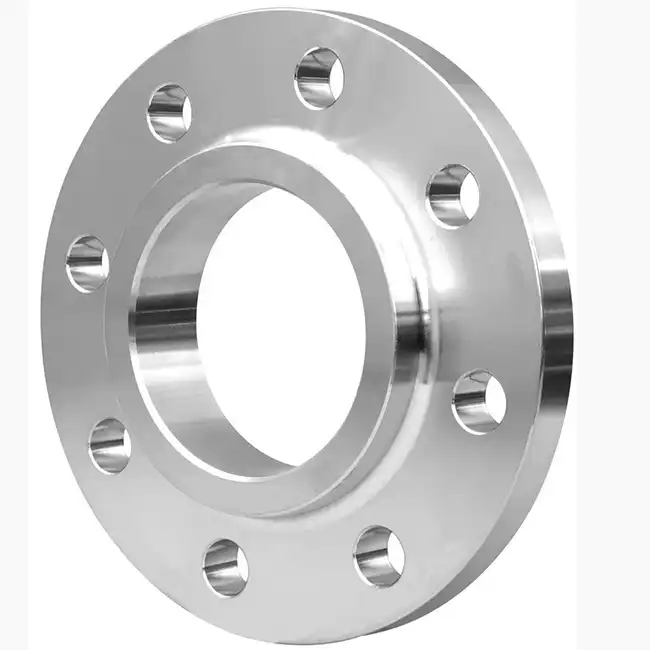
Certified titanium flanges are the best engineering ever made. They are used in tough environments like chemical plants and oil and gas fields, where materials need to be able to handle acidic environments, high pressures, and changes in temperature. A lot of care goes into making these one-of-a-kind parts so they meet strict industry standards like ASTM B363 and ANSI rules. They use the fact that titanium doesn't rust naturally. Titanium flange solutions are necessary for offshore platforms, industrial facilities, and processing plants where safety and dependability cannot be sacrificed because they provide exceptional durability in saltwater settings and harsh chemical processes.
Understanding Certified Titanium Flanges: Specifications, Types, and Advantages
Titanium flanges are important plumbing parts that hold pipes together. They are made to keep lines from leaking and keep the building strong in rough conditions. These parts are made with CNC cutting and precise casting. They are made from high-quality titanium metals that meet international standards such as ISO, ASTM B381, and ASME B16.5.
Manufacturing Standards and Certifications
Titanium flanges that have received certification are manufactured in strict accordance with stringent quality standards to ensure that they function efficiently in mission-critical scenarios. ASTM B363 describes the chemical make-up and mechanical properties of titanium Grade 2 materials. ANSI/ASME B16.5 rules set the limits for size changes and pressure ratings. These approvals show that each flange meets strict requirements for protecting against chemicals, being structurally stable, and working the same way at temperatures ranging from -196°C to 400°C.
A process called precision casting from titanium billets and then CNC cutting is used to make sure the finished product is the right size. The melting and heat treatment methods change the structure of the material's grains for the better. This makes it stronger and better at spreading stress. You can pick between a shiny or a matte finish for the outside. Each finish is made to make seals better and more resistant to rust.
Types and Criteria for Choice
Different flange designs are used for different tasks in oil and gas and chemical processes. Pressure class rates (ANSI 150–600), pipe width compatibility (1"–24"), and chemical compatibility with process media are some of the things that are thought about when making the choice.
Weld Neck Flanges are better for high-pressure uses in chemical labs and ocean fishing gear because their hubs are curved, which makes them stronger. Stress is spread out more evenly when the pipe changes to a joint slowly. This makes the product last longer in tough environments.
When used for low pressure, like in chemical processing lines and cooling water systems, Slip-On Flanges are cheap and easy to put in place. The way they're shaped lets them grow in temperature while keeping the seal's structure.
With blind flanges, you can take the system apart and fix it. This is especially helpful in chemical plants where parts of the pipeline need to be safely shut off in order to stop the process.
Performance Advantages in Harsh Environments
Titanium is very useful in business settings because it has special properties that make it stand out. If you put the material somewhere chloride-rich, like in ocean cooling systems or salt processing plants, its passive oxide layer will protect it from rust better than stainless steel.
The system is about 45% lighter than steel models thanks to the strength-to-weight ratio of titanium flanges. This makes the structures of floating bases and high-level pipe systems work better. It costs less to build now that people are lighter, and buildings don't need as much support.
Titanium Flanges vs. Alternative Materials: Making the Right Choice
The material you choose has a big impact on the long-term costs of running an oil and gas or chemical process and on how stable the system is. For smart decisions that balance the costs of the initial investment with the costs over the product's lifetime, know how different materials rate in terms of how well they work.
Corrosion Resistance Comparison
When it comes to a wider range of chemicals, titanium is the best material to fight rust. Titanium stays strong in strong acids, strong bases, and high-temperature oxidation environments that break down steel parts quickly. 316L stainless steel, on the other hand, works well in slightly acidic conditions.
Titanium doesn't break when it comes in contact with chloride, which makes it a very stable material for use in places with salt water, like offshore bases and treatment plants. Tests with other materials show that titanium doesn't rust in salt water, but it is clear that stainless steel loses material over time.
Mechanical Properties and Temperature Performance
Because they are very strong, titanium alloys can safely work in a wide range of temperatures that are usual in manufacturing. No matter how cold it gets, grade 2 titanium stays strong and flexible. This means it can be used to store and handle LNG.
Up to 400°C is the highest temperature that titanium plates can handle without losing much of their structural strength. A lot of different kinds of stainless steel lose some of their strength and ability to fight creep at the same temperatures given.
Cost-Benefit Analysis
Even though titanium flanges cost more up front than steel ones, they are often better in acidic situations in terms of total cost of ownership. Long-term savings are big because you don't have to replace things as often, they last longer, and you don't have to fix them as often.
It's easy to move and set up titanium parts because they are very light. This is especially helpful for projects that are done abroad, where weight limits can hurt the project's bottom line. Titanium is also safe and not magnetic, which makes it useful in places like MRI centers and medical gas systems.
Procurement Guide: How to Source Certified Titanium Flanges
It is important to carefully look at the quality systems, compliance papers, and sources when you want to get approved titanium flanges. For these parts to be made, they need to be made by companies that can constantly follow rules and meet quality standards.
Supplier Evaluation Criteria
To find titanium flange suppliers you can trust, you should look at how well they can make things, how well they can follow approval rules, and how well they keep quality in check. Suppliers with a good name use ISO 9001:2015 quality management systems and keep track of their raw materials and production methods.
There are third-party papers from well-known testing labs that show that the material is of the right quality and size. The materials should come with material test certificates (MTCs) that explain what they are made of, how they work, and that they meet certain requirements. Factory audits and clear quality papers are signs of production methods that you can trust.
Global Sourcing Considerations
Strategic manufacturing hubs are great places to buy titanium flanges because they offer many benefits. Chinese companies in places like Baoji can offer low prices for big orders because they have easy access to titanium raw materials and modern tools for preparing them. For important uses, American and European companies tend to stress quality and speed of delivery.
How people talk to each other and how well they can help with technology issues are very important to the success of a project. Engineers can get help, unique design services, and quick technical support from suppliers. This makes it easier to finish projects and figure out problems.
Procurement Best Practices
Early on in the project timeline, wait times, minimum order amounts, and the need for customization should all be taken into account when planning how to buy things. Getting standard flanges can take 4 to 6 weeks, but getting unique shapes can take up to 12 weeks, depending on how hard they are to make.
Some of the things that need to be kept are material licenses, records of measurement inspections, and statements that the items meet the standards that apply. When you set clear standards and requirements for acceptance, you avoid delays and make sure that the things you get meet the needs of the project.
Installation and Maintenance Best Practices for Titanium Flanges
When titanium flanges are put and kept properly, their performance advantages and useful life are maximized. When you understand material-specific problems, you can avoid making common mistakes that can weaken the structure of a system.
Installation Procedures
Before it is put together, the lip is checked to make sure it is in good shape and that the measurements and finish on the surface are right. It is important to fix any damage to the closing or fixing faces before installing so that leaks don't happen and the system fails too soon.
What kind of gasket you choose is very important for how well it seals. Due to PTFE, Viton, and other metal seals, titanium flanges can be used in a range of chemical environments. It's important to place a seal properly so that it doesn't get too tight and damage the binding surfaces.
Torque Specifications and Assembly
Bolt force numbers for titanium flanges are different from those for steel ones because the two materials are not made of the same stuff. Don't under-tighten, which can cause leaks, or over-tighten, which can put too much stress on the joint. Instead, follow the manufacturer's directions. Patterns of sequential tightening make sure that the gasket is pressed down consistently and that the seal works well.
Maintenance and Inspection Protocols
The flanges are inspected on a regular basis to find problems before they get in the way of work. If you look at the nuts, seals, and sealing surfaces, you can tell when they need to be fixed.
When you clean titanium, don't use rough or strong chemicals or materials that could damage the surface. To get rid of deposits, soft brushes and light alkaline cleaners work well. They won't hurt the oxide layer that protects against rust.
Trusted Brands and Manufacturers of Certified Titanium Flanges
There are well-known titanium flange companies that have worked with chemical and oil and gas processes for a long time. Looking at a supplier's skills and past work helps you pick reliable partners for big projects.
Baoji Zhongyan Titanium Industry Co., Ltd. is a good example of how China's titanium industry hub is getting better at making high-tech goods. It is in Baoji city, which is known as "China Titanium Valley," and the company makes high-quality flanges that meet international standards by using what it knows about the area and how easy it is to get raw materials. Their ISO 9001:2015-certified companies make parts for oil and gas, chemical processing, and airplanes. They use state-of-the-art CNC machines and strict quality control to do this.
A lot of different things are sold by the company, like Grade 2 and Grade 5 titanium flanges with 1" to 24" widths and ANSI 150 to 600 class pressures. As part of their production skills, they can make custom OEM/ODM solutions. This makes it possible to make plans that fit the wants of certain uses.
Quality assurance methods include keeping track of all the materials, checking their dimensions, and trying their performance. Customer support is more than just sending goods to customers. It also includes giving them expert advice and application building services to help them pick the best parts and put together the best systems.
Conclusion
In oil and gas and chemical plants where regular materials can't meet strict working needs, certified titanium flanges perform better than other materials. Because it doesn't rust, is strong for its weight, and has been shown to work effectively in difficult conditions, titanium technology is worth the money. To make application work, you need to pick your provider wisely, follow the right steps for installation, and do regular maintenance that keeps the material's natural benefits. Titanium flanges are an investment in the long-term dependability and efficiency of systems that are used in industries that are always pushing the limits of what they can do.
FAQ
What certifications are required for titanium flanges in oil & gas applications?
When used in oil and gas, titanium flanges must meet the size and material standards set by ANSI/ASME B16.5 and ASTM B381. API standards for some apps and NACE rules for bad service settings are two other licenses that might be needed. It is important to have material test sheets that show the chemical make-up and mechanical properties of a product so that you can keep track of and control quality.
How does titanium's corrosion resistance compare to stainless steel in chemical processing?
Titanium is better than stainless steel at staying strong in harsh chemical environments. Steel 316L is fine in mild conditions, but titanium is strong in strong acids, chloride solutions, and high-temperature oxidizing media that weaken steel and cause it to split and crack from stress corrosion.
Can titanium flanges be customized for specific project requirements?
Yes, titanium flanges can be changed in a lot of different ways to fit different needs in terms of size, material grade, and function. Different pressure grades, different face shapes, and different surface treatments are some of the custom options. OEM/ODM services are available from companies with a lot of knowledge, like Zhongyan, to make solutions that are made to work with different things.
Partner with Zhongyan for Premium Titanium Flange Solutions
One of the best places in China's titanium valley to make titanium flanges is Zhongyan. They make very precise parts that meet the strict needs of the chemical processing and oil and gas businesses all over the world. Our plants are ISO 9001:2015-approved and make Grade 2 and Grade 5 titanium flanges that meet all ASTM B363 requirements and are the right size as per ANSI/ASME B16.5 rules. We can get high-quality titanium products right away because we are in Baoji city. To make sure that every flange meets your exact needs, we use cutting-edge CNC machines and strict quality control. Our skilled engineers can help you with technology issues and create OEM/ODM solutions that are ideal for your needs. We can help you with your project. Email us at sales@titaniumstudy.com to get free quotes on approved titanium flanges that will make your important systems more reliable and last longer.
References
1. ASTM International. "Standard Specification for Titanium and Titanium Alloy Forged Flanges." ASTM B381-13, West Conshohocken, PA, 2018.
2. American Society of Mechanical Engineers. "Pipe Flanges and Flanged Fittings: NPS 1/2 through NPS 24 Metric/Inch Standard." ASME B16.5-2020, New York, NY, 2020.
3. Boyer, R., Welsch, G., and Collings, E.W. "Materials Properties Handbook: Titanium Alloys." ASM International, Materials Park, OH, 1994.
4. Schutz, R.W. and Thomas, D.E. "Corrosion of Titanium and Titanium Alloys in Chemical Process Industries." Materials Performance, Vol. 26, No. 5, 1987, pp. 58-61.
5. Donachie, Matthew J. "Titanium: A Technical Guide, 2nd Edition." ASM International, Materials Park, OH, 2000.
6. Peters, M., Kumpfert, J., Ward, C.H., and Leyens, C. "Titanium Alloys for Aerospace Applications." Advanced Engineering Materials, Vol. 5, No. 6, 2003, pp. 419-427.
Learn about our latest products and discounts through SMS or email