- English
- French
- German
- Portuguese
- Spanish
- Russian
- Japanese
- Korean
- Arabic
- Greek
- German
- Turkish
- Italian
- Danish
- Romanian
- Indonesian
- Czech
- Afrikaans
- Swedish
- Polish
- Basque
- Catalan
- Esperanto
- Hindi
- Lao
- Albanian
- Amharic
- Armenian
- Azerbaijani
- Belarusian
- Bengali
- Bosnian
- Bulgarian
- Cebuano
- Chichewa
- Corsican
- Croatian
- Dutch
- Estonian
- Filipino
- Finnish
- Frisian
- Galician
- Georgian
- Gujarati
- Haitian
- Hausa
- Hawaiian
- Hebrew
- Hmong
- Hungarian
- Icelandic
- Igbo
- Javanese
- Kannada
- Kazakh
- Khmer
- Kurdish
- Kyrgyz
- Latin
- Latvian
- Lithuanian
- Luxembou..
- Macedonian
- Malagasy
- Malay
- Malayalam
- Maltese
- Maori
- Marathi
- Mongolian
- Burmese
- Nepali
- Norwegian
- Pashto
- Persian
- Punjabi
- Serbian
- Sesotho
- Sinhala
- Slovak
- Slovenian
- Somali
- Samoan
- Scots Gaelic
- Shona
- Sindhi
- Sundanese
- Swahili
- Tajik
- Tamil
- Telugu
- Thai
- Ukrainian
- Urdu
- Uzbek
- Vietnamese
- Welsh
- Xhosa
- Yiddish
- Yoruba
- Zulu
Custom Medical Grade Titanium Wire for Implant Applications
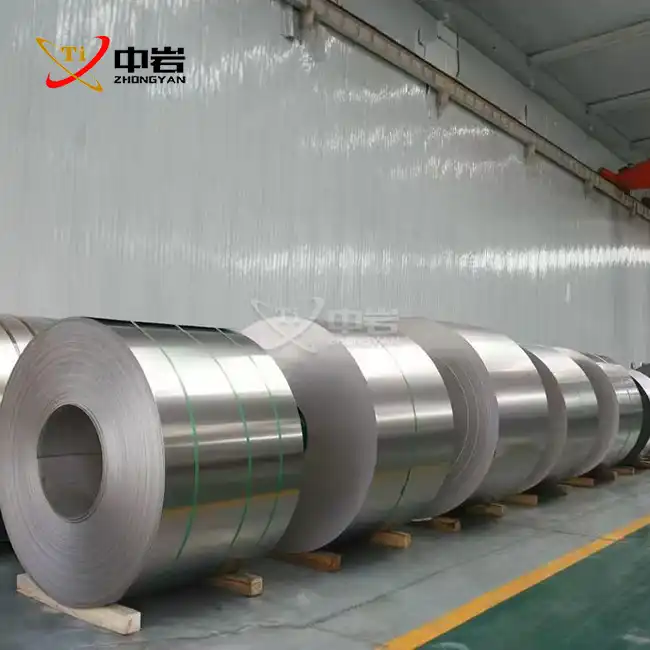
Custom medical grade titanium wire is the highest level of precision engineering, and it is made to fit medical implants and surgery tools. This special material, unlike regular industrial wire, follows strict ASTM F136 and ISO standards. It has very few intermediate elements, which make it biocompatible and good for mechanical performance. It is essential for orthopedic implants, cardiovascular devices, and dental uses where patient safety and long-term longevity are of the utmost importance because custom medical grade titanium wire combines exceptional corrosion resistance with exact measurement tolerances.
Understanding Medical Grade Titanium Wire for Implants
One of the most important materials used to make implants today is medical grade titanium wire, which is always made in accordance with international standards like ASTM F136, ISO 13485, and FDA rules. This particular wire material is the result of years of progress in metalworking. Everything about it, from its chemical makeup to its surface finish, has been carefully chosen to be safe for human insertion.
Chemical Composition and Purity Standards
The exact chemicals that make up medical grade titanium wire are what make it work. A lot of custom medical grade titanium wire is made from grade 23 titanium (Ti-6Al-4V ELI), which has about 6% aluminum and 4% vanadium with very few interstitials. This mixture strikes the perfect balance between strength and flexibility, and it is also very biocompatible. As part of the vacuum freezing process, impurities that could affect the performance of implants are removed. This makes sure that each wire meets the strict standards for medical uses.Throughout the production process, factories use complex quality control measures. Many tests are done on raw materials to make sure they are chemically correct, and advanced analysis makes sure they meet ASTM standards. The wire that was made has the same mechanical qualities across different production batches, which is what medical device makers need.
Manufacturing Processes and Quality Control
Several precise steps are needed to make medical-grade titanium wire. Each step is meant to improve the material's qualities and make sure it meets medical standards. The process starts with vacuum arc remelting, which gets rid of any flaws and makes the structure of the material more uniform. After that, hot working and cold drawing are used to get the circle to the right size while keeping the limits exact.Heat treatment methods are very important for figuring out the end mechanical properties. Manufacturers can change the properties of wire to fit different uses by using controlled heating methods to find the best balance between strength and flexibility. Some surface finishing methods, like centerless grinding and electropolishing, make the finish smooth and free of burrs, which is important for medical uses.Quality control goes beyond checking the sizes; it also includes trying the mechanical properties, the stability of the surface, and how well it works with living things. Tensile tests, fatigue tests, and corrosion protection tests are all done on each output lot. Documentation packages allow full tracking from certifying the raw materials to the final review, which helps with legal compliance and builds trust with customers.
Comparing Medical Grade Titanium Wire with Alternative Materials
When purchasing professionals look at wire materials for implants, they need to know how the pros and cons of each option compare in order to make smart choices. Medical-grade titanium wire regularly performs better than other materials in a number of important areas that have a direct effect on the success of implants and patient results.
Titanium vs. Stainless Steel Performance
Medical uses have traditionally used stainless steel, but titanium wire has better performance qualities. Titanium resists rust much better than stainless steel, especially in the harsh internal environment where chloride ions and changing pH levels can speed up the breakdown of materials.Custom medical grade titanium wire is much more resistant to wear than stainless steel wires. Testing in the lab shows that titanium wire can take millions of stress cycles without breaking. This is a very important property for implants that are loaded over and over again. Titanium has a smaller elastic elasticity than bone, which means it doesn't protect against stress as well and bone can break down around implants less often.Testing for biocompatibility repeatedly shows that titanium is better at integrating with flesh than stainless steel. When titanium surfaces are exposed to air, an inactive oxide layer forms naturally. This layer helps bone to fuse with the titanium while reducing inflammatory reactions. This means that the patient will have better results and there is a lower chance that the implant will not work.
Cost-Performance Analysis Across Materials
Even though valuable metals like gold are very biocompatible, medical grade titanium wire is usually the better choice because it is more cost-effective. Titanium is much cheaper than gold and has the same level of corrosion protection. This means that makers can make medical products that are cheaper without sacrificing quality.Nitinol is a nickel-titanium metal that has unique shape-memory qualities but needs to be handled and processed in a certain way. Standard medical grade titanium wire is easier to work with and can be processed in more ways when shape memory is not needed. Titanium wire is easy to find in a wide range of types and specs, which helps manufacturers meet a wide range of needs while keeping prices low.
How to Select and Order Custom Medical Grade Titanium Wire
To successfully purchase medical-grade titanium wire, you need to carefully think about the needs of your application and the skills of the seller. Technical specifications, quality certifications, and manufacturing skills are all looked at as part of the decision process to make sure the product will work best in the intended application.
Defining Application Requirements
The picking process starts with making sure that the functional needs of the application are fully understood. When used in orthopedics, the material needs to be strong and not wear down easily. When used in cardiovascular devices, it needs to be flexible and not rust. For dental uses, it may be important to have tight limits on dimensions and a good surface finish.The width of the wires must meet the needs of production and clinical performance goals. For most medicinal uses, diameters between 0.3mm and 2.0mm are fine, and smaller tolerances (±0.01mm) make sure that the product always works the same way. Different types of surfaces are needed for different uses. Smooth surfaces are better for dynamic situations where friction is a problem, while rough surfaces may help tissues stick together better.The requirements for mechanical properties should take into account the stresses that will be present during service. The numbers for tensile strength, yield strength, and elongation must meet the needs of the product while still leaving enough room for error. Through controlled processing and heat treatment, custom medical grade titanium wire can be made to have certain material qualities.
Evaluating Supplier Qualifications
To choose a supplier, you need to look at their producing skills, quality systems, and compliance with regulations. Getting ISO 13485 approval shows that a seller is dedicated to managing the quality of medical devices, and getting FDA registration makes sure that they follow US rules. When something has the European CE mark, it means that it follows the rules set by the EU.The manufacturing skills should match the needs of the project in terms of production numbers, delivery times, and customizations. Suppliers that offer both OEM and ODM services give custom applications a lot of useful freedom. Suppliers who use advanced manufacturing equipment, like precise drawing tools and controlled atmosphere heat treatment systems, can make consistent, high-quality goods.Certifications of materials, test results, and records of how they were made are all examples of quality documentation standards. The chemical make-up and mechanical qualities should be checked with mill test records, and the size and shape should be checked with dimensional inspection reports. In some cases, sterile packaging may be needed, which means that the provider must confirm that the sterilization methods work.
Case Studies & Practical Applications of Custom Medical Grade Titanium Wire
Applications in real life show how flexible and effective medical grade titanium wire is in a wide range of medical fields. These examples show how custom wire solutions can be used to solve specific clinical problems and meet strict regulatory needs.
Orthopedic Fixation Applications
Custom medical grade titanium wire for cerclage applications in complex fracture repair was developed in collaboration with a top orthopedic device maker. For this purpose, the wire had to have very high tensile strength to hold bone pieces in place while still being flexible enough to be manipulated during surgery.The customized solution involved Grade 23 titanium wire with optimized mechanical qualities obtained through controlled cold working and annealing methods. The 1.2mm diameter wire had a tensile strength of 1200 MPa and a 12% elongation rate, which allowed doctors to fix the bone securely without having to worry about the wire breaking during tightening processes.When compared to older stainless steel solutions, clinical results showed that fracture healing rates were much faster and problems were less common. Titanium is better at working with living things, so it reduces inflammation. Its lower elastic stiffness also helps bones grow naturally. Because of less pain after surgery and faster healing times, patient happiness scores went up.
Cardiovascular Device Integration
For pacemaker leads, a company that makes heart devices needed ultra-fine titanium wire. The tough standards included a thickness of 0.4 mm and high wear resistance so that it could withstand millions of cardiac cycles. To keep blood cell damage and clotting to a minimum, the surface finish had to be as clean as a mirror.The custom solution involved specialized drawing techniques to get the needed diameter while keeping the wire's mechanical properties the same along its length. The needed smoothness was achieved using advanced surface finishing techniques that kept the accuracy of the dimensions. A lot of tiredness tests confirmed performance under situations that were similar to how the body works.In comparison to earlier versions, the new pacemaker lines were more durable and reliable. Less lead failure meant fewer revision surgeries were needed, which improved patient results while lowering healthcare costs. The success of this application led to expanded collaboration on additional cardiovascular applications.
Future Trends and Innovations in Medical Grade Titanium Wire for Implants
Medical-grade titanium wire is changing faster because of progress in materials science, production technology, and concerns about the environment. These changes look like they will improve the performance of implants while also helping the environment and lowering costs in the medical device business.
Advanced Manufacturing Technologies
Some methods of additive manufacturing are starting to change how wire is made, opening up new ways to control the substructure and change the surface. With powder metallurgy methods, you can precisely control the chemical makeup and grain structure, which could lead to better mechanical qualities and biocompatibility. Custom medical grade titanium wire with gradient qualities along the wire's length may be possible thanks to these technologies.Quality control is built into digital manufacturing systems throughout the whole production process, so important factors can be monitored in real time. In order to predict quality results and automatically improve process factors, machine learning algorithms look at production data. These improvements look like they will make things more consistent while cutting down on costs and delivery times.Nanotechnology is being used more and more in technologies that change surfaces and coat them. The antibacterial and osseointegration qualities of nanostructured surfaces can be improved without changing the bulk mechanical properties. Coatings that are smart and react to changes in the body may have more uses than just being biocompatible.
Sustainability and Environmental Considerations
Environmental safety is becoming more and more important when choosing materials and making things. Programs that recycle titanium trash cut down on the use of raw materials while keeping quality standards high. Manufacturing methods that use less energy reduce carbon emissions without lowering the standard of the products.Decisions about which materials to use and how to handle them are based on life cycle studies. Sustainable packing options decrease the damage to the environment while still meeting the needs for cleanliness and tracking. These programs help companies reach their green goals and meet government requirements for being environmentally responsible.
Conclusion
Medical-grade titanium wire is an important part of current implant technology because it is biocompatible, performs well mechanically, and can be used in a wide range of medical situations. Picking the right grades, specs, and sources has a direct effect on how well implants work and how well patients do. As technology keeps getting better, custom medical grade titanium wire will become more and more important for making new medical products that are better for people's health and quality of life.
FAQ
What makes Grade 23 titanium superior to other grades for medical applications?
Grade 23 (Ti-6Al-4V ELI) has extra-low interstitials, which means it has less oxygen, nitrogen, and carbon than Grade 5. This decrease makes the material about 25% more fracture-resistant and ductile, which makes it perfect for use in implant uses where failure of the material could put patients at risk.
How does wire diameter affect mechanical properties and applications?
Because of work hardening effects during drawing processes, wire thickness has a big effect on its mechanical properties. It is common for smaller diameters to have better tensile strength but less flexibility. The diameter range of 0.3 to 2.0 mm works for most medical uses. For load-bearing uses, bigger diameters are better, while smaller diameters work better for slightly invasive treatments.
What surface finish options are available for medical grade titanium wire?
You can get the surface finished as-drawn, centerless ground, or electropolished. For accurate measurement limits and a smooth surface finish, centerless grinding is the way to go. Electropolishing, on the other hand, gets rid of surface imperfections and makes the material biocompatible. Which one to use relies on whether you need to reduce friction, integrate tissue, or make something.
How do you ensure traceability and quality documentation?
To have full tracking, you have to keep records from the heat numbers of the raw materials to the final review. As required by ASTM standards, mill test papers confirm the chemical make-up and mechanical qualities. Dimensional measurement records show that the product meets the required limits. Quality systems based on ISO 13485 make sure that recording methods are consistent throughout production.
Contact Zhongyan for Premium Custom Medical Grade Titanium Wire Solutions
You can trust Zhongyan to make the best custom medical grade titanium wire. They offer well-thought-out solutions that meet the strictest needs of medical devices. Our state-of-the-art factory in China's Titanium Valley uses advanced manufacturing tools and thorough quality control systems to make wire that always goes above and beyond what the industry requires. We offer medical device businesses the technical know-how and production options they need thanks to our ISO 13485 certification, FDA compliance, and many years of OEM/ODM experience. Email our technical team at sales@titaniumstudy.com to talk about your unique needs for custom medical grade titanium wire and find out how our creative solutions can help your implant uses while still meeting regulatory requirements and delivery dates.
References
1. American Society for Testing and Materials. "Standard Specification for Wrought Titanium-6Aluminum-4Vanadium ELI (Extra Low Interstitial) Alloy for Surgical Implant Applications." ASTM F136-13, 2019.
2. International Organization for Standardization. "Implants for Surgery - Metallic Materials - Part 3: Wrought Titanium 6-Aluminum 4-Vanadium Alloy." ISO 5832-3:2021.
3. Brunette, Donald M., et al. "Titanium in Medicine: Material Science, Surface Science, Engineering, Biological Responses and Medical Applications." Springer-Verlag Berlin Heidelberg, 2018.
4. Geetha, M., Singh, A.K., Asokamani, R., and Gogia, A.K. "Ti Based Biomaterials, the Ultimate Choice for Orthopaedic Implants - A Review." Progress in Materials Science, Volume 54, Issue 3, 2009.
5. Rack, H.J. and Qazi, J.I. "Titanium Alloys for Biomedical Applications." Materials Science and Engineering: C, Volume 26, Issues 8-9, 2006.
6. Williams, David F. "On the Mechanisms of Biocompatibility." Biomaterials, Volume 29, Issues 20-21, 2008.
(1)_1755588522797.jpg)
_1755591941325.jpg)
_1755652624199.jpg)
Learn about our latest products and discounts through SMS or email