- English
- French
- German
- Portuguese
- Spanish
- Russian
- Japanese
- Korean
- Arabic
- Greek
- German
- Turkish
- Italian
- Danish
- Romanian
- Indonesian
- Czech
- Afrikaans
- Swedish
- Polish
- Basque
- Catalan
- Esperanto
- Hindi
- Lao
- Albanian
- Amharic
- Armenian
- Azerbaijani
- Belarusian
- Bengali
- Bosnian
- Bulgarian
- Cebuano
- Chichewa
- Corsican
- Croatian
- Dutch
- Estonian
- Filipino
- Finnish
- Frisian
- Galician
- Georgian
- Gujarati
- Haitian
- Hausa
- Hawaiian
- Hebrew
- Hmong
- Hungarian
- Icelandic
- Igbo
- Javanese
- Kannada
- Kazakh
- Khmer
- Kurdish
- Kyrgyz
- Latin
- Latvian
- Lithuanian
- Luxembou..
- Macedonian
- Malagasy
- Malay
- Malayalam
- Maltese
- Maori
- Marathi
- Mongolian
- Burmese
- Nepali
- Norwegian
- Pashto
- Persian
- Punjabi
- Serbian
- Sesotho
- Sinhala
- Slovak
- Slovenian
- Somali
- Samoan
- Scots Gaelic
- Shona
- Sindhi
- Sundanese
- Swahili
- Tajik
- Tamil
- Telugu
- Thai
- Ukrainian
- Urdu
- Uzbek
- Vietnamese
- Welsh
- Xhosa
- Yiddish
- Yoruba
- Zulu
Industrial Titanium Pipe Flanges for Marine and Offshore Use
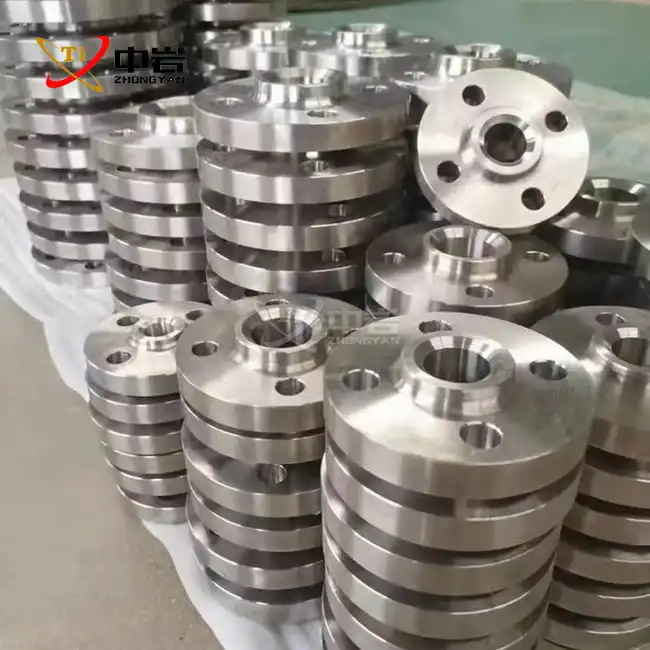
Industrial titanium pipe flange components are the best marine engineering options because they are very resistant to corrosion and keep their shape in harsh ocean settings. The high-quality ASTM B363 Grade 2 titanium used to make these special connecting parts makes them work better than standard steel options. These precisely designed flanges are used in marine and offshore operations to keep links leak-proof in seawater systems, chemical processing systems, and subsea installations where failure of the material is not an option.
Understanding Titanium Pipe Flanges: Properties, Types, and Specifications
Ti alloy flanging devices are essential for marine use because of their basic qualities. These parts use titanium's natural ability to form a steady oxide layer, which makes them very resistant to chloride-induced corrosion, which normally kills materials in saltwater.
Essential Material Properties and Characteristics
Titanium flanges have amazing mechanical qualities that help solve important problems in the business. While being completely resistant to pitting rust in seawater, the material has a strength-to-weight ratio that is about 40% higher than stainless steel. These features mean that the equipment will last longer, need less upkeep, and be safer to use in offshore sites.A passive oxide film forms naturally on titanium surfaces, making a shield that can heal itself against harsh sea environments. This protective layer stays stable at temperatures ranging from -196°C to 400°C, so it works the same way in arctic underwater activities as it does on the surface of the tropics.
Flange Types and Design Configurations
Marine titanium flanges come in a number of different shapes and sizes to meet the needs of different types of pipes. These are the main types of designs used in offshore situations:
- Weld Neck Flanges: These designs reduce stress and noise in high-pressure seawater systems by having built-in hubs that make bore changes smooth.
- Slip-On Flanges: These are inexpensive options for mild pressure uses that make installation easier in offshore settings with limited room.
- Blind Flanges: necessary to shut down the system for repair work and provide complete closing in important safety systems
These design choices make it possible to make the best choice based on specific operating factors and installation needs. Titanium is naturally very resistant to rust, and each design keeps that while also improving flow and mechanical performance.
International Standards and Quality Specifications
Products made by Zhongyan that are titanium pipe flanges meet strict international standards like ISO, ASME B16.5, and ASTM B363. Dimensional limits within 0.1 mm are built into our manufacturing methods, so they will fit perfectly with existing pipe systems. The pressure levels range from ANSI Class 150 to 600, and they can handle up to 1440 PSI of working pressure in marine settings.Ultrasonic testing, dimensional verification, and material approval documents are all examples of quality assurance processes. Each flange gets its own inspection certificate that can be used to track down the sources of the raw materials. This helps make sure that the requirements of ocean safety rules and classification societies are met.
Titanium Pipe Flanges vs. Other Materials: Making the Right Choice
The choice of material has a big effect on the long-term costs of running a system and how reliable it is in coastal settings. Comparative research shows that titanium solutions are clearly better than standard ones in many ways.
Performance Comparison with Alternative Materials
Stainless steel flanges, while initially cost-effective, suffer rapid degradation in chloride environments. When grade 316L stainless steel is exposed to seawater for two to five years, it pits and corrodes, so it needs to be replaced often. Alternatives to carbon steel need complicated finishing systems that make them heavier and harder to maintain and only offer limited protection against marine rust.Even though nickel-based metals are better at resisting rust, they cost a lot more to make and are heavier. Aluminum flanges aren't strong enough for high-pressure naval uses, and they don't work well with steel pipe systems because of galvanic compatibility problems.
Titanium Grade Selection for Marine Applications
For most naval uses, grade 2 titanium is the best compromise between resistance to rust and mechanical strength. This grade is economically pure and has a yield strength of 345 MPa. It is also very flexible and easy to weld, which are important for field installation processes.Grade 5 titanium metal (Ti-6Al-4V) is stronger for uses that are under a lot of pressure, but it needs to be welded in a certain way. The choice between grades is based on the project's unique pressure needs, working temperatures, and fitting limitations.
Cost-Benefit Analysis and Long-Term Value
Investing in titanium pipe flange components has big cost savings over the long term, even though they cost more at first. Within 5 to 7 years of installation, the system will have paid for itself thanks to lower maintenance costs, longer replacement times, and higher stability.As a result, operational benefits include fewer repair operations abroad, fewer breakdowns caused by corrosion, and higher safety gaps in important systems. These things help make platforms more available and lower operating costs over the lifecycles of assets.
Procurement Guide: How to Buy Industrial Titanium Pipe Flanges
When buying naval titanium flanges strategically, you need to carefully look at the supplier's skills, quality certifications, and delivery options. Knowing the important selection factors is the best way to make sure that projects go well and the supply chain works efficiently.
Quality Certifications and Compliance Standards
Reliable providers have full quality control systems that are certified to ISO 9001:2015 standards. Documentation for material tracking should include mill test records, chemical analysis results, and data for verifying the mechanical properties of the material. Having third-party inspection skills adds to the quality assurance for important apps.The factory where Zhongyan makes things has state-of-the-art CNC cutting centers, precise grinding tools, and full testing labs. Our quality control methods make sure that the dimensions are accurate to within 0.1 mm and that the surface finish stays between 32 and 63 RMS.
Order Logistics and Lead Time Considerations
Standard titanium flanges have a production lead time of 4 to 6 weeks, while custom designs can take up to 8 to 12 weeks, based on how complicated they are. Minimum order numbers depend on the size and specification of the item. Standard sizes can be bought in smaller quantities to meet upkeep needs.Through designated manufacturing slots and priority material placement, expedited production can meet the needs of urgent projects. Communication procedures make sure that project updates are sent regularly and that people are informed ahead of time of any possible plan changes.
Custom Manufacturing and Engineering Support
Custom flange designs can work with different pipe shapes, different pressure levels, and different ways of connecting. Some engineering support services are stress estimates, finite element analysis, and making sure that new systems will work with old ones.Collaboration on design starts with a thorough study of the needs, moves on to reviewing the concepts of the designs, and ends with detailed manufacturing models. With prototype development, you can test and make sure everything works before committing to full production.
Advantages and Applications of Titanium Pipe Flanges in Marine and Offshore Industry
Marine titanium flanges offer huge performance benefits that change the way marine pipe systems are designed and run. These benefits go beyond just resistance to rust; they also include improved safety, operating efficiency, and compliance with environmental laws.
Superior Corrosion Resistance in Marine Environments
The best thing about titanium pipe flange systems for naval use is that they are very resistant to rust caused by salt. Titanium's surface stays intact forever when it comes into contact with natural seawater, while stainless steel's surface breaks down in small areas when it sits in still water.Galvanic compatibility with stainless steel pipes stops rust from speeding up at the points where they join. Because of this feature, there is no need for isolation gaskets or the special fitting steps that are needed when mixing different metals in naval settings.
Weight Reduction and Installation Benefits
Titanium is less dense than steel (7.8 g/cm³ vs. 4.5 g/cm³), which means that it has a lower topside weight while still being as strong. This weight loss means that less structure is needed, the payload capacity is higher, and the assembly process on offshore bases is easier.Handling benefits during installation include fewer cranes being needed, safer work for workers because parts are lighter, and more accurate placement during assembly. These things help keep work costs low and project plans on track.
Diverse Application Scenarios
Marine titanium flanges for marine use are very important in many ocean uses. In the following situations, these parts are important for improving performance:
- Seawater Cooling Systems: Keeping temperature efficiency high in power generation and process cooling without changing because of marine growth or rust
- Fire Water Networks: Making sure the system works properly for emergency reaction while getting rid of the need for upkeep in standby systems that aren't used very often
- Ballast Water Treatment: Making sure that the chemicals can work with biocides and other treatment chemicals while also protecting against damage from fast flows
- Desalination Plants: Using cleaning agents and high-salinity brines without worrying about damage or contamination
These applications demonstrate the versatility and reliability of titanium flanges in demanding marine environments. Each use case leverages specific material properties to solve critical operational challenges that compromise conventional materials.
Environmental Compliance and Safety Features
By having a longer service life and not needing covering systems, titanium flanges help protect the environment. The lack of heavy metal leaking keeps marine ecosystems from getting harmed and cuts down on waste from having to repair parts so often.Safety benefits include more reliable systems, fewer repair tasks that need to be done offshore, and better emergency reaction times thanks to reliable fire water systems. These things help lower overall risks and make sure that regulations are followed in foreign activities.
Conclusion
Titanium pipe flange options are the best choice for marine and ocean uses that need performance and dependability that can't be compromised. When you combine better corrosion protection, high strength-to-weight ratios, and longer service life, you get a lot of value in the form of lower upkeep costs and safer operations. Buying good titanium flanges will save you money in the long run and help you meet your goals for worker safety and environmental compliance. Strategic buying from qualified makers guarantees the success of a project by setting up reliable supply lines and giving full technical support.
FAQ
What are the main benefits of titanium over stainless steel in marine environments?
Titanium flanges are completely resistant to pitting and crevice rust in salt water, while stainless steel usually breaks after 2 to 5 years of contact. The weight loss of about 45% lowers the needs for support structures and the cost of installation. Titanium keeps its functional qualities over a bigger range of temperatures and doesn't need any coatings or cathodic protection systems to keep them safe.
What are typical lead times for custom titanium flange orders?
Standard layouts take between 4 and 6 weeks to make, while custom patterns usually take between 8 and 12 weeks, based on how complicated they are. For urgent needs, choices for expedited production can cut wait times to two to three weeks. The steps of design approval and material purchase add an extra one to two weeks to the total project timeline.
Are local suppliers available for urgent maintenance needs?
For emergency repair needs, regional distribution networks make it easy to get popular sizes and setups quickly. Strategically placing inventory in major offshore service hubs makes shipping possible for important uses within 24 to 48 hours. Sizes ranging from 1" to 24" in diameter make them available for most repair situations.
How do pressure ratings compare between titanium and steel flanges?
Titanium flanges have the same pressure class values (ANSI 150–600) as steel versions, but they offer better safety margins because the material is better. The lower modulus of elasticity makes it easier to distribute stress and prevent wear when the load is applied in cycles. Temperature derating curves show that this material keeps its efficiency better at high temperatures than steel options.
What quality certifications should I expect from suppliers?
Manufacturers with a good reputation offer third-party inspection, ISO 9001:2015 quality system approval, and ASTM B363 material compliance paperwork. Each package should have its own mill test certificates, dimensional inspection records, and chemical analysis data. Traceability paperwork helps people follow offshore safety rules and the standards of the classification society.
Partner with Zhongyan for Superior Titanium Pipe Flange Solutions
Zhongyan stands as your trusted titanium pipe flange manufacturer, delivering precision-engineered solutions for demanding marine and offshore applications. Our ISO 9001:2015-certified factory in Baoji, China's Titanium Valley, uses cutting-edge CNC machines and thorough quality control systems to make sure that the products we make are very reliable. We offer cost-effective solutions without sacrificing quality because we are located in the center of China's titanium industry and have easy access to high-quality raw materials. Get in touch with our engineering team at sales@titaniumstudy.com to talk about your unique needs and find out how our custom manufacturing can help your marine piping systems work better.
References
1. American Society of Mechanical Engineers. "ASME B16.5 - Pipe Flanges and Flanged Fittings: NPS 1/2 through NPS 24 Metric/Inch Standard." ASME International, 2020.
2. ASTM International. "ASTM B363 - Standard Specification for Seamless and Welded Unalloyed Titanium and Titanium Alloy Welding Fittings." ASTM International, 2019.
3. Schutz, R.W. and Thomas, D.E. "Corrosion of Titanium and Titanium Alloys in Marine Environments." Journal of Materials Engineering and Performance, Vol. 16, 2007.
4. Marine Technology Society. "Guidelines for Titanium Applications in Offshore Oil and Gas Operations." MTS Technical Standards Committee, 2018.
5. International Association of Classification Societies. "Requirements for Materials and Welding in Marine Applications." IACS Publication No. 47, 2019.
6. Offshore Technology Conference. "Best Practices for Titanium Component Selection in Subsea Applications." OTC Proceedings, Houston, Texas, 2021.
Learn about our latest products and discounts through SMS or email