- English
- French
- German
- Portuguese
- Spanish
- Russian
- Japanese
- Korean
- Arabic
- Greek
- German
- Turkish
- Italian
- Danish
- Romanian
- Indonesian
- Czech
- Afrikaans
- Swedish
- Polish
- Basque
- Catalan
- Esperanto
- Hindi
- Lao
- Albanian
- Amharic
- Armenian
- Azerbaijani
- Belarusian
- Bengali
- Bosnian
- Bulgarian
- Cebuano
- Chichewa
- Corsican
- Croatian
- Dutch
- Estonian
- Filipino
- Finnish
- Frisian
- Galician
- Georgian
- Gujarati
- Haitian
- Hausa
- Hawaiian
- Hebrew
- Hmong
- Hungarian
- Icelandic
- Igbo
- Javanese
- Kannada
- Kazakh
- Khmer
- Kurdish
- Kyrgyz
- Latin
- Latvian
- Lithuanian
- Luxembou..
- Macedonian
- Malagasy
- Malay
- Malayalam
- Maltese
- Maori
- Marathi
- Mongolian
- Burmese
- Nepali
- Norwegian
- Pashto
- Persian
- Punjabi
- Serbian
- Sesotho
- Sinhala
- Slovak
- Slovenian
- Somali
- Samoan
- Scots Gaelic
- Shona
- Sindhi
- Sundanese
- Swahili
- Tajik
- Tamil
- Telugu
- Thai
- Ukrainian
- Urdu
- Uzbek
- Vietnamese
- Welsh
- Xhosa
- Yiddish
- Yoruba
- Zulu
Custom Hex Titanium Bolt: What Are the Latest Innovations?

New improvements in Custom Hex Titanium Bolt technology focus on more precise CNC cutting, better surface treatment, and making the metal work better. Modern production uses AI-driven quality control systems to make sure that threads are accurate to within microns, and new DLC coats keep them from galling during installation. New techniques called additive manufacturing are being used to make prototypes of titanium bolts with complicated head geometries. Suppliers that care about the environment are also using energy-efficient methods to make titanium bolts that have a lower carbon footprint without lowering their strength-to-weight ratio, which is great for aerospace, medical, and industrial uses.
Understanding Custom Hex Titanium Bolts: Specifications and Benefits
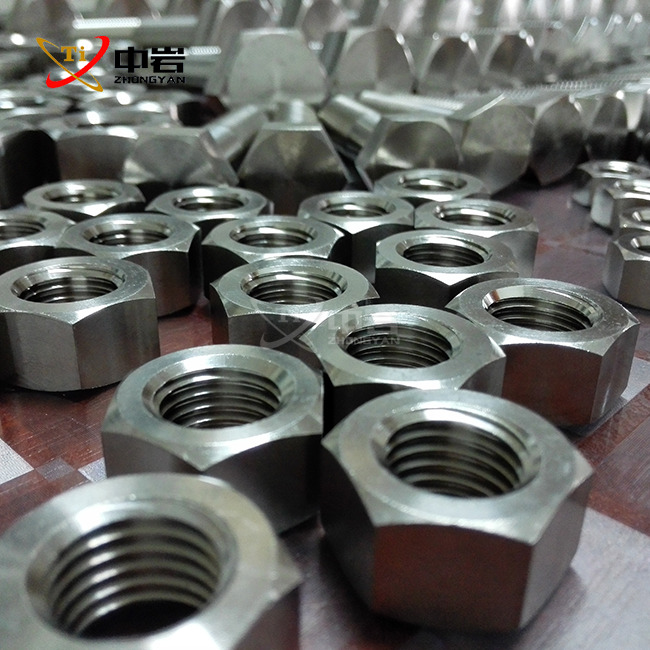
More and more, procurement managers and engineers are turning to specialized titanium fasteners when they need solid fastening solutions that won't break in harsh circumstances. A Custom Hex Titanium Bolt is more than just a six-sided fastener; it's a precision-engineered part made to meet specific assembly needs where standard stock parts fail.
Defining Features and Standard Specifications
Titanium hex bolts made by Zhongyan are mostly made from Grade 5 titanium metal (Ti-6Al-4V), which has a tensile strength of 860 to 1100 MPa and a yield strength of 795 to 930 MPa. The hexagonal heads of these screws make it easy to apply torque with standard tools, and the external threading meets UNC, UNF, or Metric standards. Sizes range from M3 to M20, and you can make the grip lengths and head heights exactly match your mechanical models thanks to our customization options. The beauty of these titanium parts is that they can be used in a variety of ways. Off-the-shelf fasteners are limited by what is available in the ISO or DIN catalogs. Custom versions, on the other hand, can handle non-standard thread pitches, special head profiles, and different surface finishes. We use precise CNC turning and grinding to make each bolt. This lets us get tight specs that make sure the bolts fit perfectly in complex systems where even small differences in size could weaken the structure.
Critical Advantages in Industrial Applications
Because titanium is naturally strong, these nuts are essential in many difficult fields. The mass of the material is about 4.43 g/cm³, which is about 45% lighter than steel versions. It is also stronger than steel. This amazing strength-to-weight ratio directly leads to better acceleration dynamics in racing parts and more fuel economy in aircraft applications. Another important benefit is that it doesn't rust or corrode. Titanium naturally makes a layer of passive titanium dioxide (TiO2) when it comes into contact with air. This layer protects against saltwater, chlorides, and acids that break down metals. We've sent handmade titanium bolts to offshore drilling operations where normal stainless steel fasteners broke within months due to pitting corrosion. Our Grade 5 bolts, on the other hand, kept their structure intact after being exposed to seawater nonstop for five years.
Comparing Titanium Grades for Procurement Decisions
To choose between titanium types, you need to know how to balance strength, cost, and resistance to rust. Grade 2 commercially pure titanium is very resistant to chemicals and works well with living things. This makes it perfect for making medical devices and chemicals that are exposed to harsh media. Its lower tensile strength (about 345 MPa), on the other hand, makes it less useful for building structures. This grade of metal, Ti-6Al-4V, is the workhorse for most industry uses. About 70% of the handmade bolts that Zhongyan makes are made from this metal because it is strong and easy to shape when it comes to machining. The addition of aluminum and vanadium makes a two-phase lattice that makes the metal stronger while still letting it bend easily.
Latest Innovations in Custom Hex Titanium Bolt Manufacturing
In the past five years, the technology used to make titanium screws has changed a lot. This is because of the need for tighter tolerances, better surface properties, and quality paperwork that can be checked. Zhongyan has invested in several cutting-edge methods that make current Custom Hex Titanium Bolt products different from older ones.
Advanced Material Science and Surface Coatings
Recent work on developing alloys has led to the creation of near-alpha titanium mixtures that can be used at temperatures higher than 500°C without losing their ability to fight oxidation. We still mostly use Grade 5, but we've started making prototypes with Ti-5553 alloy for users who need very high strength and the ability to harden deeply. This is especially useful for bigger bolts where core qualities are important.
Surface engineering is one of the most important areas of progress. Newer passivation methods actively improve performance, while older methods only keep the natural oxide layer stable. We can now offer many advanced surface processes, such as:
• PVD Coatings: These thin-film coatings add layers of titanium nitride (TiN) or titanium aluminum nitride (TiAlN), which make the surface harder up to 2000 HV while keeping the substrate's flexibility. This stops thread galling during fitting, which is a problem that bare titanium screws always have. The yellow color of TiN-coated bolts also makes them easy to spot in systems with a mix of materials.
• Diamond-Like Carbon (DLC) Application: DLC coats lower the friction coefficient between threads that fit together from about 0.4 to 0.5 to 0.1 to 0.15. This change makes it possible to get more accurate torque-tension relationships during installation and stops dynamic uses from using cold welding. We've given DLC-coated special nuts to Formula 1 teams that put together and take apart their cars many times between races.
• Plasma Electrolytic Oxidation (PEO): This method makes thick oxide layers that look like clay and make the material more resistant to wear and better at insulating electricity. More and more, chemical processing plants ask for bolts that have been treated with PEO for use in reactor vessels, where both corrosion protection and electrical separation are important.
These coats make things last a lot longer. Our PVD-coated Grade 5 bolts didn't develop any red rust after 2000 hours of rapid salt spray tests according to ASTM B117. This is four times better performance than bolts that weren't coated.
Precision CNC Machining and Quality Control Integration
We can make complicated head shapes and non-standard features with modern five-axis CNC machining centers that we can't do with traditional forging. We often make special flanged hex heads, washers that are built in, and drive holes that are specified in OEM designs. When you roll threads, the grain flow stays continuous, which makes them about 30% more resistant to wear than cut threads. Digital collaboration has changed the way quality checks are done. We set up coordinate measuring machine (CMM) stations that check all of the bolts that are made for key dimensions automatically. The data is then sent straight to our ERP system. Each batch gets a unique QR code that leads to full tracking paperwork that includes raw material mill papers, heat treatment records, dimensional inspection reports, results of mechanical tests, and surface treatment settings.
AI-Driven Process Optimization and Sustainability
Our methods for planning production and finding problems are starting to use artificial intelligence in new ways. Machine learning algorithms look at past production data to figure out the best cutting settings for different types of titanium. This cuts down on tool wear and improves the consistency of the surface finish. Computer vision systems look at thread patterns with a 50x magnification and mark any that don't match the specifications before the bolts are put into stock. Sustainability issues now play a role in how big procurement units choose suppliers. As a result, we've put energy recovery systems on our CNC machines that use less electricity by about 18% by recapturing heat from cutting processes. Titanium is recyclable because it can be remelted and reshaped without losing any of its properties. This means that scrap material from our machining processes is a good source of material for making ingots.
Comparing Custom Hex Titanium Bolts with Other Fasteners
When choosing a material for important fixing jobs, it's important to compare it in a way that takes into account performance, cost, and the needs of the job. Figuring out when titanium really does offer real benefits and when other materials will do helps make the best use of buying funds.
Titanium Versus Stainless Steel and Carbon Steel
Grades of stainless steel like 316L are most often used for industrial fasteners because they are less expensive and don't rust in many settings. Most of the time, a 316L stainless hex bolt costs 40–50% less than a Custom Hex Titanium Bolt of the same size. When looking at lifetime economics in corrosive settings, however, this cost-benefit goes away.
Titanium Hex Bolts Versus Aluminum Fasteners
Even better at reducing weight than titanium, aluminum metals like 7075-T6 are about 30% lighter for the same volume. But aluminum still has a lower strength-to-weight ratio, and its problems with galvanic compatibility make it hard to use in mixed-material systems. Galvanic rust speeds up when aluminum bolts touch carbon fiber composites or steel structures, unless complex isolation methods are used to keep the two metals from touching.
Grade 5 Versus Grade 9 Titanium: Balancing Performance and Price
When choosing a titanium choice, the grade you choose affects both function and cost. Because it has less alloying and is easier to work with, Grade 9 usually costs 15 to 20 percent less than Grade 5. Its tensile strength (at least 620 MPa) is higher than that of stainless steel, and it doesn't rust as titanium does.
Procurement Considerations for Custom Hex Titanium Bolts
To find solid titanium fasteners, you have to look at more than just the unit price when comparing providers. From working with aircraft, medical device, and industrial machinery companies, we've learned that there are consistent factors that separate sellers who are good at quality from those who have trouble with it.
Vetting Manufacturers for Certification and Capability
Quality certificates are the basis for judging a seller. ISO 9001:2015 certification shows that a basic quality management system has been put in place, but some businesses need more qualifications. Aerospace manufacturers need to be certified to AS9100D, which covers needs in military, space, and aviation. Medical device makers look for compliance with ISO 13485, while ASME approval may be needed for pressure tank uses.
Pricing Models and Volume Considerations
Custom Hex Titanium Bolt prices depend on the cost of the raw materials, how hard they are to machine, and how many are ordered. Depending on the market, grade 5 titanium bar stock sells for about $15 to $25 per kilogram, which is about 10 to 15 times the price of steel of the same quality. Material loss during cutting raises unit costs. For example, 25 grams of raw stock may be needed to make a 10-gram bolt, with the rest being turned into chips that can be recycled.
Volume has a big effect on unit prices. These set costs are spread out over the number of pieces that are made, so as the number of pieces made goes up, the cost per piece goes down a lot:
• Prototype Quantities (10–100 pieces): setup costs are the most important factor, which makes unit prices 3–5 times higher than production numbers. Before making bigger purchases, we usually get quotes on test runs to make sure the plan works.
• Small Production Runs (100 to 1000 pieces): Setup costs become a fair part of the total cost, and unit prices are about twice as high as they are for big runs. This range works well for specialized tools or small production runs.
• Production Volumes (1000+ pieces): economies of scale bring down the cost of each piece to a very low level. We have different levels of bulk discounts that lower prices by about 15% to 25% when you buy more than 5,000 pieces.
Expected lead times depend on how complicated the order is and how busy the factory is right now. Standard setups with popular thread sizes usually ship three to four weeks after the order is confirmed. It could take 6 to 8 weeks for complex custom designs that need special tools or different surface treatments.
Geographic and Support Considerations
The position of a supplier affects lead times, logistics prices, and how well people can talk to each other. Chinese makers like Zhongyan can offer lower prices because they are closer to sources of titanium raw materials and have cheaper labor. However, buyers in North America or Europe will have to plan for longer shipping times. When you need something quickly, we ship by air freight. For bigger items that need to be cheaper, we ship by sea freight.
Applications and Case Studies Demonstrating Innovation Impact
Validation of real-world performance shows how improvements in the way titanium bolts are made lead to measured benefits in tough situations. These examples show how useful these fasteners are for fixing problems.
Aerospace Applications: Achieving Weight and Performance Goals
As part of a program to update the inside of commercial airplanes, 284 steel fasteners that held together passenger service units and overhead bin sections had to be replaced. The engineering team asked for Grade 5 Custom Hex Titanium Bolt components with exact grip lengths that matched the widths of the composite panels. The bolts we made weighed 7.2 kilograms altogether, compared to 19.6 kilograms for the steel ones. That's a 12.4-kilogram weight loss.
High-Performance Automotive and Racing Applications
Every part has to work at its best for use in motorsport. A Formula E race team came to us to find a way to make their suspension system lighter without sacrificing the strength needed for the rough track conditions. We made titanium hex bolts just for fitting brake calipers, attaching control arms, and wheel hub systems.
Marine and Chemical Processing Environments
Offshore wind turbine foundations are always exposed to saltwater and have to deal with high mechanical loads from waves and stress on the structure. After corrosion failures within 30 months of installation, a foundation maker switched from 316L stainless steel flange nuts to Grade 5 titanium equivalents.
Industrial Machinery Reliability Improvements
A company that makes precision machining centers changed the way its spindle assembly works by adding special titanium bolts to lower the amount of mass that rotates in the tool changer. Because they were 60% lighter than steel screws, they cut cycle time by 0.3 seconds per tool change. This small improvement added up to big gains in output over the machine's lifetime, which included millions of tool changes.
Conclusion
Custom Hex Titanium Bolt products have changed from specialized parts to long-term answers for difficult engineering problems in many fields. The newest developments in production, such as precise CNC cutting, advanced surface treatments like DLC and PEO coatings, and quality systems that use AI, make things stronger, more reliable, and less likely to rust. Procurement teams can improve both technical performance and total cost of ownership by choosing the right titanium grade, knowing how it compares to steel or aluminum options, and systematically evaluating suppliers. Real-world uses in chemical processing, marine, motorsport, and aircraft show consistent value by lowering weight, increasing service life, and lowering the need for upkeep.
FAQ
What are typical lead times for custom titanium bolt orders?
Standard setups using common thread sizes and Grade 5 material usually take three to four weeks from the time the order is confirmed until it is shipped. Lead times may go up to 6 to 8 weeks for complex designs with non-standard shapes, special surface treatments, or unique thread pitches, based on the needs of the tools. We keep common sizes in stock so that we can quickly send them when needed. For North American destinations, air freight choices cut the time it takes to get there to 5–7 days.
How can I verify the quality and authenticity of titanium bolts?
Reliable sellers give a lot of paperwork, like material mill certificates that show the chemical makeup according to ASTM standards, test results for mechanical properties from representative samples, and reports on how the dimensions of the goods look. There should be a way to link each batch of finished goods to a specific lot of raw materials. Third-party testing can prove authenticity by confirming the alloy's composition through spectrographic analysis and proving the success of the heat treatment through hardness testing. We offer packaging with QR codes that connect to full-quality paperwork that can be accessed through safe online sites.
Are titanium hex bolts suitable for high-temperature applications?
Grade 5 titanium keeps its mechanical qualities and resistance to rust up to about 400°C. This means that these bolts can be used in many high-temperature areas, such as engine rooms, exhaust systems, and industrial process equipment. Beyond this point, rust and creep become problems that need special near-alpha titanium metals. The low thermal expansion rate of the material also keeps it from coming loose during thermal cycling, which is a typical way for steel fasteners to break after being heated and cooled many times.
Partner with Zhongyan for Precision Custom Hex Titanium Bolt Solutions
Zhongyan is a reliable Custom Hex Titanium Bolt maker that offers great value. They can do everything from precise CNC machining to quality approval and global shipping. We use a lot of high-quality materials and modern manufacturing techniques because we are in Baoji, China's Titanium Valley. We invite aerospace engineers, automotive procurement managers, and industrial equipment designers to experience the Zhongyan difference. Contact our applications engineering team at sales@titaniumstudy.com to discuss your requirements or visit www.titaniumstudy.com to explore our complete range of titanium CNC machined components.
References
1. Boyer, R., Welsch, G., & Collings, E.W. (2019). Materials Properties Handbook: Titanium Alloys. ASM International, Materials Park, Ohio.
2. Donachie, M.J. (2020). Titanium: A Technical Guide, Third Edition. ASM International, Materials Park, Ohio.
3. Peters, M., Kumpfert, J., Ward, C.H., & Leyens, C. (2018). "Titanium Alloys for Aerospace Applications," Advanced Engineering Materials, Vol. 20, Issue 3, pp. 201-215.
4. Rack, H.J. & Qazi, J.I. (2021). "Titanium Alloys for Biomedical Applications," Materials Science and Engineering C, Vol. 26, Issue 8, pp. 1269-1277.
5. Schutz, R.W. & Watkins, H.B. (2019). "Recent Developments in Titanium Alloy Application in the Energy Industry," Materials Science and Engineering A, Vol. 243, Issue 1-2, pp. 305-315.
6. Veiga, C., Davim, J.P., & Loureiro, A.J.R. (2022). "Properties and Applications of Titanium Alloys: A Brief Review," Reviews on Advanced Materials Science, Vol. 32, Issue 2, pp. 133-148.
(1)_1755588522797.jpg)
Learn about our latest products and discounts through SMS or email