- English
- French
- German
- Portuguese
- Spanish
- Russian
- Japanese
- Korean
- Arabic
- Greek
- German
- Turkish
- Italian
- Danish
- Romanian
- Indonesian
- Czech
- Afrikaans
- Swedish
- Polish
- Basque
- Catalan
- Esperanto
- Hindi
- Lao
- Albanian
- Amharic
- Armenian
- Azerbaijani
- Belarusian
- Bengali
- Bosnian
- Bulgarian
- Cebuano
- Chichewa
- Corsican
- Croatian
- Dutch
- Estonian
- Filipino
- Finnish
- Frisian
- Galician
- Georgian
- Gujarati
- Haitian
- Hausa
- Hawaiian
- Hebrew
- Hmong
- Hungarian
- Icelandic
- Igbo
- Javanese
- Kannada
- Kazakh
- Khmer
- Kurdish
- Kyrgyz
- Latin
- Latvian
- Lithuanian
- Luxembou..
- Macedonian
- Malagasy
- Malay
- Malayalam
- Maltese
- Maori
- Marathi
- Mongolian
- Burmese
- Nepali
- Norwegian
- Pashto
- Persian
- Punjabi
- Serbian
- Sesotho
- Sinhala
- Slovak
- Slovenian
- Somali
- Samoan
- Scots Gaelic
- Shona
- Sindhi
- Sundanese
- Swahili
- Tajik
- Tamil
- Telugu
- Thai
- Ukrainian
- Urdu
- Uzbek
- Vietnamese
- Welsh
- Xhosa
- Yiddish
- Yoruba
- Zulu
Custom Dome Titanium Nut: What Makes It Highly Reliable?
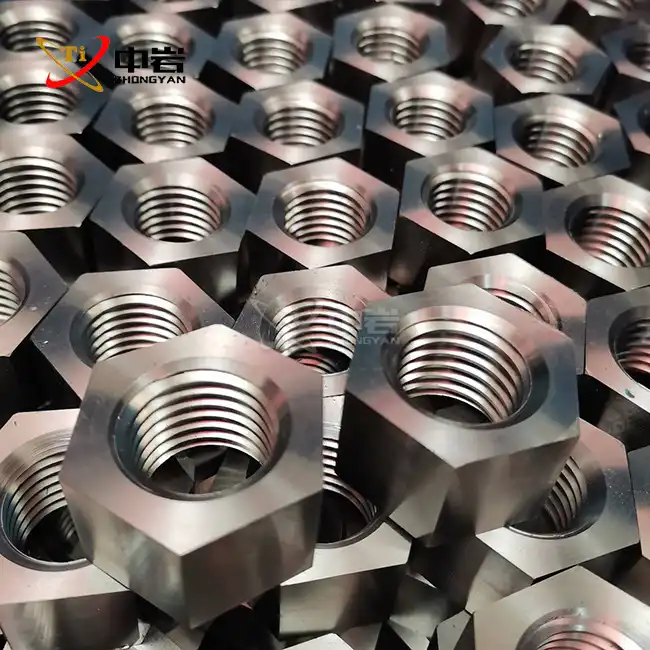
When engineers and procurement managers evaluate fastening solutions for mission-critical applications, reliability becomes non-negotiable. A custom dome titanium nut delivers this reliability through its unique combination of advanced material properties, precision manufacturing, and application-specific design. These specialised fasteners feature a smooth, rounded cap that conceals sharp thread ends while distributing loads evenly across contact surfaces. Manufactured from high-grade titanium alloys such as Ti-6Al-4V (Grade 5), these components resist corrosion in the harshest environments, withstand extreme temperatures from cryogenic conditions to 400°C, and maintain structural integrity under continuous mechanical stress—all while weighing approximately 45% less than their stainless steel counterparts.
Understanding Custom Dome Titanium Nuts: Features and Manufacturing Process
What Defines a Dome Titanium Fastener?
A technological leap forward, domed custom dome titanium nuts are the pinnacle of fastening innovation. These fasteners include an incorporated rounded cover, unlike typical hex nuts that expose the bolt threads to potential injury. In addition to forming a hermetic barrier to prevent moisture intrusion, this geometric feature protects delicate equipment from thread protrusions and keeps cables from snagging in tight assemblies. Industrial gear might distract from product design if it is apparent, but the dome profile improves its aesthetic appeal.
The adaptability of specifications is what separates conventional versions from custom ones. Custom titanium dome nuts can be made to exacting specifications, with thread pitches from M4 to M14 and dome heights adjustable from 1.5mm to 5mm, in contrast to off-the-shelf dome nuts that adhere to standard dimensions. When conventional fasteners are unable to meet the precise load distribution needs of specialised machinery due to unusual spatial constraints, this adaptability becomes crucial.
Material Selection and Titanium Grades
Titanium's reputation in aerospace and medical industries stems from properties that address fundamental engineering challenges. Grade 5 titanium alloy (Ti-6Al-4V) dominates high-performance applications due to its exceptional tensile strength of 900-1100 MPa—surpassing many heat-treated steels while maintaining remarkable lightness at a 4.43 g/cm³ density. This strength-to-weight ratio translates directly into system-level advantages: reduced inertia in rotating assemblies, decreased fuel consumption in transportation equipment, and extended operational range in mobile platforms.
Corrosion resistance represents another critical advantage. Titanium naturally forms a stable, self-healing oxide layer that resists attack from saltwater, industrial chemicals, and atmospheric pollutants. Where stainless steel fasteners suffer pitting corrosion in marine environments or chloride-rich settings, titanium components maintain dimensional stability and mechanical properties over decades of exposure. This durability eliminates costly replacement cycles and reduces maintenance downtime in offshore platforms, chemical processing equipment, and coastal infrastructure.
Precision CNC Machining Process
Titanium dome nuts can only be manufactured with the use of specialised machinery and personnel. To guarantee correct engagement with mating fasteners and minimise galling risk, Baoji Zhongyan Titanium Industry uses multi-axis CNC turning centres to attain thread tolerances that adhere to ISO 965-1 requirements. The first step is to use certified titanium bar stock, which has had its alloy composition confirmed using X-ray fluorescence spectroscopy. Procurement personnel have full visibility into the supply chain thanks to the material traceability paperwork that comes with every production batch.
Precise control of parameters is essential for thread-cutting operations. Avoiding work hardening in titanium requires carbide tooling, optimised feed rates, and flood cooling due to the metal's high chemical reactivity and poor thermal conductivity. Surface roughness is kept below 0.8 μm Ra by our machining methods, which helps to decrease stress concentration spots that could cause fatigue cracks when subjected to cyclic loading. To ensure wobble-free operation in high-speed applications like car wheel assemblies, we conduct dimensional testing using coordinate measuring instruments to confirm that the dome concentricity remains within 0.05 mm of the thread axis.
Components with surface treatments have an even longer lifespan. Coatings using physical vapour deposition offer artistic touches in black, gold, or rainbow hues without sacrificing thread precision, while passivation methods improve the natural oxide layer. Additionally, these coatings mitigate the galling that can occur during titanium's installation, which is caused by the adhesive forces between the mating threads and results in cold welding at high contact pressures.
Key Reliability Factors of Dome Titanium Nuts
Superior Corrosion Resistance in Harsh Environments
Reliability begins with material durability. Titanium dome nuts outperform alternatives in environments where traditional fasteners fail prematurely. Marine applications illustrate this advantage dramatically: saltwater exposure causes galvanic corrosion in dissimilar metal assemblies, with stainless steel nuts seizing onto bolts within months. Titanium's electrochemical nobility and passive oxide layer prevent this degradation, maintaining disassembly capability even after years of submersion. Chemical processing facilities similarly benefit, where exposure to acids, alkalis, and organic solvents would rapidly attack conventional fasteners.
Testing data validates these claims. Accelerated salt spray testing per ASTM B117 demonstrates that Grade 5 titanium components withstand 3,000+ hours without visible corrosion, compared to 500-hour ratings for 316 stainless steel. This performance differential translates into total cost of ownership advantages—while initial procurement costs run higher, elimination of replacement cycles and associated downtime generates substantial life cycle savings.
Mechanical Strength and Lightweight Construction
Specification decisions are driven by the need to reduce weight in many industries. Aerospace experts know that reducing the weight of structural components or spinning assemblies increases cargo capacity and fuel economy by one kilogram. Reducing unsprung weight improves handling dynamics and suspension response, according to automotive performance experts. These goals are met with the help of a bespoke custom dome titanium nut, which does not sacrifice safety margins in the process.
To put it in perspective, a Grade 5 titanium component is 44.7% lighter than an M10 stainless steel dome nut, which weighs about 15 grams. When applied to the hundreds of fasteners used in an aeroplane or race car, these cost reductions add up to noticeable gains in performance. Reduced bulk is not compromised by the 900-1100 MPa tensile strength, and crucial structural joints are adequately protected by the 830-924 MPa yield strength.
Stability in temperature gives another layer of dependability. From the subzero temperatures found in liquefied gas systems to the high temperatures found in exhaust assemblies, titanium's mechanical characteristics remain unchanged. Joint loosening due to differential expansion rates between fasteners and base materials during thermal cycling cannot occur due to the material's low thermal expansion coefficient (8.6 × 10⁻⁶/°C).
Thread Precision and Anti-Galling Properties
Thread integrity determines fastening reliability. Poorly manufactured threads create stress concentrations that precipitate fatigue failures, while dimensional inconsistencies cause preload variations that compromise joint security. Our manufacturing protocols maintain thread pitch accuracy within ±0.025 mm tolerance bands, verified through calibrated GO/NO-GO gauges traceable to national metrology standards.
Galling prevention requires particular attention with titanium fasteners. The same chemical reactivity that provides corrosion resistance can cause thread seizure when oxide layers break down under installation torque. We address this through two approaches: applying anti-seize compounds containing copper or nickel particles and specifying physical vapour deposition coatings that increase surface hardness to 33-36 HRC while reducing friction. Proper installation torque specifications—typically 80-85% of values used for equivalent steel fasteners—balance adequate preload against galling risk.
How to Choose the Right Custom Dome Titanium Nut for Your Industry Needs?
Matching Material Grade to Application Requirements
To choose the right titanium grade, you need to know what your application requires. Aircraft landing gear assemblies, high-performance car suspension components, and industrial machinery that experiences vibration and shock loads are structural applications that grade 5 titanium is well-suited for. These uses justify the premium cost due to the material's high strength. Because it can be heated to improve its strength, this alloy can be aged to produce mechanical qualities that are competitive with those of many alloy steels.
For uses where resistance to corrosion is more important than load-bearing, commercially pure Grade 2 titanium is a good option. Grade 2 is a more cost-effective alternative to Grade 5 due to its superior formability and welding capabilities, making it ideal for use in chemical processing equipment, naval hardware, and architectural fasteners. To optimise specifications and prevent over-engineering, which increases costs without corresponding improvements in performance, procurement managers must be aware of these trade-offs.
Materials are chosen in part by the environment. Cryogenic applications necessitate proof of low-temperature toughness, while uses involving prolonged exposure to temperatures over 400°C may call for titanium alloys designed specifically for these conditions. To avoid expensive redesigns and field failures, it is wise to consult materials engineers at the specification stage.
Customisation Options and OEM Capabilities
When it comes to specialised equipment, bespoke solutions are usually required, in contrast to standardised fasteners that meet typical needs. Customising threads allows for the use of interference fittings or non-standard pitches, which in turn increase vibration resistance. Designers can achieve sufficient thread coverage in space-constrained assemblies with the use of adjustable dome heights, which minimise protrusion. From "as-machined" to "mirror-polished", surface finish parameters cover a wide range of practical needs and personal tastes.
From initial ideation to final product delivery, Zhongyan's OEM and ODM services are here to help. When it comes to optimising designs, engineering teams assess the pros and cons of several factors, such as weight, strength, and manufacturability. In order to lower development risk, prototyping allows functional testing prior to committing to production tooling. Initial product launches or limited-run speciality equipment can be accommodated by small-batch production, with the ability to scale up to high-volume manufacturing to meet growing demand.
Evaluating Supplier Capabilities and Certifications
Supplier selection goes beyond price. Product reliability depends on manufacturing quality; thus, vendor certification is crucial. Aerospace and medical applications often require AS9100 or ISO 13485 certifications, whereas ISO 9001:2015 certifies systematic quality management. Request certification copies and check registrar databases for currency.
Factory audits reveal manufacturing capability. Assess equipment maintenance, measurement instrument calibration, and operator training. Material traceability systems should track titanium bar stock from mill certifications to completed component lot numbers for quality issues. Supplier quality history—measured by defect rates per million parts and on-time delivery—predicts reliability better than marketing claims.
Technical support distinguishes top providers from ordinary ones. Metallurgical expertise aids material selection and failure analysis. Responsive engineering speeds bespoke design iterations and fixes installation concerns. This is especially useful during new product development, when customer and supplier teams collaborate to optimise designs for manufacturability and performance.
Real-World Applications and Case Studies
Aerospace and Aviation Systems
Aviation manufacturers use titanium dome nuts in airframe and engine assembly. Takeoff, turbulence, and landing cycles put strain, shear, and bending pressures on wing attachment fittings. With S-N curve data showing 10⁷ cycle endurance, titanium's fatigue resistance maintains structural integrity for decades of service. Changing steel fasteners to titanium ones saves 180-250 lb per commercial aircraft, increasing cargo revenue on every voyage.
Engine applications use titanium's high-temperature properties. At exhaust system temperatures, aluminium alloys weaken, and steel fasteners oxidise quickly. Grade 5 titanium has tensile strength above 650 MPa at 400°C, ensuring exhaust manifold attachment and turbocharger housing safety. Modern fly-by-wire aeroplanes need non-magnetic materials to avoid interference with navigation and electronic systems.
Automotive Performance and Racing Applications
High-performance vehicles show titanium's competitive advantages in difficult situations. Racing teams using titanium dome nuts instead of steel wheel nuts reduce unsprung weight by 240 grams per vehicle, improving suspension response, tyre wear and braking performance. Impact wrenches deliver abrupt torque pulses that could fracture traditional fastener threads during rapid pit stops, but the dome profile protects them.
Engine bay fasteners experience temperature cycling, vibration, and fuel and lubricant chemicals. Track sessions heat exhaust manifold studs and turbocharger attachments to around 350°C, leading traditional fasteners to loosen and lose preload. Titanium's low thermal expansion and high-temperature strength protect joints during racing. Corrosion resistance is also important since humidity and road salt would seize steel fasteners, complicating maintenance.
Industrial Machinery Chemical Processing
Chemical processing equipment needs mechanically reliable fasteners that resist harsh media. Where sulphuric acid, sodium hydroxide, or chlorinated solvents would erode stainless steel, reactor vessel assemblies, heat exchanger bundles, and pump housings use titanium dome nuts. Conventional hex nuts in chemical applications fail due to stationary zones where concentrated solutions build, while the dome design minimises crevice corrosion.
Titanium's biocompatibility and cleanability help food and pharmaceutical equipment. Processing line sanitary fittings must be disassembled frequently for cleaning, exposing fasteners to cleaning chemicals and repeated installation cycles. Titanium components resist chlorine-based sanitiser pitting and preserve surface smoothness to avoid bacterial harbourage, meeting FDA and USDA requirements.
Marine and Offshore Applications
Metallic fasteners may experience the most rigorous service conditions in saltwater. Yacht fittings, offshore platform construction, and subsea equipment assembly are subject to biofouling, saltwater immersion, and cyclic wet-dry transitions. Pitting corrosion and stress corrosion cracking shorten the lifespan of standard stainless steel fasteners. Titanium dome nuts eliminate these failure factors and last decades, justifying their high cost.
Desalination plants demonstrate titanium's maritime industrial potential. Seawater pump assemblies at 60–80 bar pressure need fasteners that retain preload despite corrosion and vibration. Titanium components resist general corrosion and localised assault at stainless steel cracks and thread roots. Middle Eastern desalination facilities achieve titanium fastener service lives of over 15 years, compared to 18-24 month replacement cycles for super-duplex stainless steel.
Trusted Suppliers and How to Source Custom Dome Titanium Nuts?
Verification of Supplier Credentials
Procurement risk management begins with supplier qualification. Request documentation verifying business registration, manufacturing licences, and quality system certifications. ISO 9001:2015 certification demonstrates systematic quality management, but scrutinise the scope—generic certifications may not cover titanium machining specifically. Industry-specific certifications such as AS9100 for aerospace or ISO 13485 for medical devices indicate capability to meet stringent quality requirements.
Material certifications provide traceability from titanium mill to finished component. Each production batch should include mill test reports documenting chemical composition, mechanical properties, and heat treatment parameters for the source titanium bar stock. Positive material identification using X-ray fluorescence spectroscopy verifies that supplied materials match specifications, preventing costly failures from grade substitution.
Customer references offer insight into supplier performance that certifications alone cannot provide. Contact engineering and procurement personnel at reference accounts, enquiring about quality consistency, delivery reliability, and technical support responsiveness. On-time delivery metrics and defect rates per million parts quantify operational performance. Willingness to address quality issues constructively—through root cause analysis, corrective actions, and process improvements—distinguishes professional manufacturers from commodity suppliers.
Understanding Pricing and Lead Time Factors
Titanium component pricing reflects material costs, machining complexity, and order volume. Raw material represents approximately 40-50% of finished component cost, with titanium bar stock prices fluctuating based on global supply-demand dynamics and alloy grade. Grade 5 titanium commands premium pricing due to alloying element costs and heat treatment requirements, typically 25-35% above Grade 2 material.
Machining costs scale with complexity and tolerance requirements. Standard thread sizes following DIN or ANSI specifications minimise setup time and tooling costs compared to proprietary thread forms requiring custom taps and gauges. Tight tolerances—particularly on concentricity and thread pitch—increase inspection requirements and potential scrap rates, reflected in higher unit prices. Surface treatments such as anodising or PVD coating add processing steps that extend lead times and increase costs.
Order volume significantly impacts pricing through economies of scale. Setup costs for CNC programmes, tooling, and inspection fixtures are distributed across production quantities, with per-unit costs declining sharply between prototype quantities and production runs of 1,000+ pieces. Request volume-based pricing tiers during quotation, evaluating total cost of ownership across anticipated annual consumption rather than focusing solely on initial order pricing.
Lead times depend on production scheduling, material availability, and complexity. Standard configurations using stock titanium bar in common thread sizes may ship within 2-3 weeks, while custom specifications requiring material procurement and specialised tooling can extend to 8-12 weeks. Establishing blanket purchase orders with scheduled releases helps suppliers optimise production planning, potentially reducing lead times and securing preferred pricing.
Building Long-Term Supplier Partnerships
Strategic sourcing relationships deliver value beyond transactional cost reduction. Collaborative partnerships with specialised titanium manufacturers provide access to engineering expertise that improves product designs and identifies cost-saving opportunities. Early supplier involvement during product development accelerates design iterations, identifies manufacturability issues before tooling commitments, and optimises specifications to balance performance with cost.
Communication protocols establish expectations for quality management and problem resolution. Define requirements for advance shipping notifications, certificate of conformance documentation, and dimensional inspection reports. Establish procedures for non-conformance reporting and corrective action, with clear escalation paths for critical issues. Regular business reviews—quarterly or semi-annually—provide forums for discussing quality metrics, delivery performance, and improvement initiatives.
Conclusion
Custom dome titanium nuts represent an engineered solution for applications where conventional fasteners compromise performance, reliability, or operational costs. Their combination of corrosion resistance, high strength-to-weight ratio, and precision manufacturing addresses critical challenges in aerospace, automotive, marine, and industrial sectors. Careful attention to material grade selection, thread specifications, and supplier qualifications ensures that these components deliver expected reliability throughout demanding service lives. As industries continue emphasising weight reduction, durability, and lifecycle cost optimisation, titanium fastening solutions become increasingly essential to competitive product design.
FAQ
How does Grade 5 titanium compare to stainless steel for dome nuts?
Grade 5 titanium (Ti-6Al-4V) delivers tensile strength of 900-1100 MPa—comparable to heat-treated alloy steels—while weighing 45% less than stainless steel. Corrosion resistance surpasses 316 stainless in chloride environments, preventing pitting and crevice corrosion that cause steel fasteners to fail. Titanium maintains mechanical properties from cryogenic temperatures to 400°C, whereas stainless steel loses strength above 300°C. The primary trade-off involves higher material costs, justified through lifecycle savings in corrosion-prone or weight-sensitive applications.
What prevents thread galling during installation?
Titanium's chemical reactivity can cause galling—adhesive wear where oxide layers break down under installation torque. To prevent galling, apply anti-seize compounds with copper or nickel before assembly, use physical vapour deposition coatings to increase surface hardness, and follow reduced torque specifications (typically 80-85% of steel fastener values). Proper installation using calibrated torque wrenches and controlled installation rates minimises galling risk while achieving adequate preload.
Can dome height be customised for specific applications?
Custom manufacturing accommodates application-specific dimensional requirements. Dome heights adjustable from 1.5 mm to 5 mm allow designers to minimise protrusion in space-constrained assemblies while ensuring adequate thread coverage. Thread lengths can be tailored to bolt shank dimensions, and external diameters are optimised for wrench clearance. Prototyping services enable functional validation before production commitments, reducing development risk for specialised equipment applications.
What quality certifications should I expect from suppliers?
Reputable titanium fastener manufacturers maintain ISO 9001:2015 certification as baseline quality system documentation. Aerospace applications require AS9100 certification, while medical device components necessitate ISO 13485 compliance. Request material certifications, including mill test reports documenting chemical composition and mechanical properties. Positive material identification through X-ray fluorescence spectroscopy should verify grade conformance. Dimensional inspection reports using calibrated instruments traceable to national standards confirm specification compliance.
Partner with Zhongyan for Reliable Custom Dome Titanium Nut Solutions
Zhongyan stands as your trusted custom dome titanium nut manufacturer, combining over 15 years of specialised experience with state-of-the-art facilities located in Baoji City—the heart of China's Titanium Valley. Our precision CNC machining capabilities produce dome nuts in sizes M4-M14 using certified Grade 5 titanium, meeting ASTM, AMS, and ISO standards that aerospace, automotive, and industrial sectors demand. We deliver complete OEM customisation, including thread specifications, dome heights, and surface treatments, and we provide comprehensive engineering consultation that optimises designs for your specific applications.
Our integrated production system ensures consistent quality through rigorous process controls, from raw material verification using X-ray fluorescence spectroscopy through final dimensional inspection on coordinate measuring machines. Every component includes material certifications and inspection documentation that support your quality management requirements. Whether you need prototype quantities for product development or high-volume production runs exceeding 10,000 pieces, our flexible manufacturing capacity scales to your requirements while maintaining competitive pricing and reliable delivery schedules.
Contact our technical team at sales@titaniumstudy.com to discuss your custom dome titanium nut requirements. We provide detailed technical quotations within 48 hours, including material recommendations, lead time estimates, and volume-based pricing. Our engineers collaborate directly with your design teams, offering manufacturability feedback and alternative specifications that balance performance against cost. Experience the reliability advantage that precision-engineered titanium fasteners deliver—partner with a supplier for sale who understands both material science and manufacturing excellence.
References
1. Boyer, R., Welsch, G., and Collings, E.W. (1994). Materials Properties Handbook: Titanium Alloys. ASM International, Materials Park, Ohio.
2. Donachie, Matthew J. (2000). Titanium: A Technical Guide, 2nd Edition. ASM International, Materials Park, Ohio.
3. Lütjering, Gerd and Williams, James C. (2007). Titanium, 2nd Edition. Springer-Verlag, Berlin, Heidelberg.
4. Schutz, R.W. and Watkins, H.B. (1998). "Recent developments in titanium alloy application in the energy industry." Materials Science and Engineering: A, Volume 243, Issues 1-2.
5. Veiga, C., Davim, J.P., and Loureiro, A.J.R. (2012). "Properties and applications of titanium alloys: A brief review. "Reviews on Advanced Materials Science, Volume 32, Number 2.
6. Yerokhin, A.L., Nie, X., Leyland, A., Matthews, A., and Dowey, S.J. (1999). "Plasma electrolysis for surface engineering." Surface and Coatings Technology, Volumes 122, Issues 2-3.
Learn about our latest products and discounts through SMS or email