- English
- French
- German
- Portuguese
- Spanish
- Russian
- Japanese
- Korean
- Arabic
- Greek
- German
- Turkish
- Italian
- Danish
- Romanian
- Indonesian
- Czech
- Afrikaans
- Swedish
- Polish
- Basque
- Catalan
- Esperanto
- Hindi
- Lao
- Albanian
- Amharic
- Armenian
- Azerbaijani
- Belarusian
- Bengali
- Bosnian
- Bulgarian
- Cebuano
- Chichewa
- Corsican
- Croatian
- Dutch
- Estonian
- Filipino
- Finnish
- Frisian
- Galician
- Georgian
- Gujarati
- Haitian
- Hausa
- Hawaiian
- Hebrew
- Hmong
- Hungarian
- Icelandic
- Igbo
- Javanese
- Kannada
- Kazakh
- Khmer
- Kurdish
- Kyrgyz
- Latin
- Latvian
- Lithuanian
- Luxembou..
- Macedonian
- Malagasy
- Malay
- Malayalam
- Maltese
- Maori
- Marathi
- Mongolian
- Burmese
- Nepali
- Norwegian
- Pashto
- Persian
- Punjabi
- Serbian
- Sesotho
- Sinhala
- Slovak
- Slovenian
- Somali
- Samoan
- Scots Gaelic
- Shona
- Sindhi
- Sundanese
- Swahili
- Tajik
- Tamil
- Telugu
- Thai
- Ukrainian
- Urdu
- Uzbek
- Vietnamese
- Welsh
- Xhosa
- Yiddish
- Yoruba
- Zulu
Can GR5 Titanium Bars Be Customized for Complex Designs?
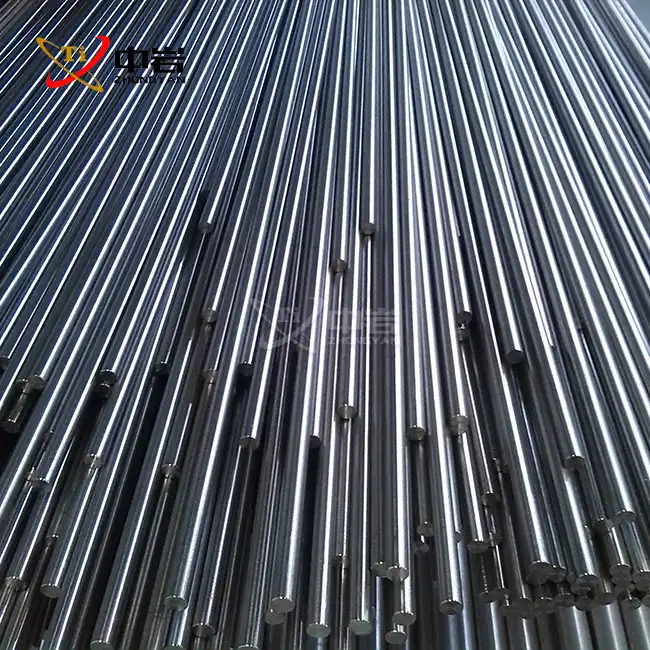
Without a doubt, gr5 titanium bars can be changed to fit very specific design needs. Manufacturers can exactly shape Ti-6Al-4V titanium alloy bars into complex shapes using advanced CNC machining, laser cutting, and heat treatment techniques. The material's high strength-to-weight ratio and resistance to rust are not affected. Customization goes beyond changing the size of something; it also includes changing the mechanical qualities, the finish on the outside, and making sure it meets strict military, medical, and industrial standards. Working with certified providers is good for engineers and purchasing managers because they mix technical know-how with strict quality control to make sure that custom parts are made to exact specs.
Understanding GR5 Titanium Bars: Properties and Customization Potential
Ti-6Al-4V titanium alloy, which is usually called gr5, is still the most popular type of titanium used in industry. The success of this alpha-beta metal comes from its balanced make-up, which includes high-purity titanium, about 6% aluminum, and 4% vanadium. The aluminum part keeps the alpha phase stable while lowering its mass. The vanadium part keeps the beta phase stable, which makes it possible for heat treatment to work. This specific chemistry gives it tensile strengths of over 900 MPa and yield strengths of over 850 MPa. This makes it much stronger than commercially pure titanium grades while still being very resistant to rust.
Material Composition and Mechanical Performance
The chemicals that make up gr5 titanium bars have a direct effect on how they can be customized. Our standard material meets the requirements of ASTM B348 and ISO 5832-2. It has between 5.5 and 6.75% aluminum and between 3.5 and 4.5% vanadium. The levels of iron, oxygen, and hydrogen in the material are controlled so that they are less than 0.40%, 0.20%, and 0.015%, respectively. These small chemical limits make sure that the metal will behave consistently when it is being machined or shaped. The final product has a density of 4.43 g/cm³, which is about 55% less dense than steel while still having the same tensile strength. With an elasticity value of about 114 GPa and an elongation greater than 10%, these bars give engineers expected shapeability while still having enough ductility for complex production.
Biocompatibility and Corrosion Resistance Advantages
In addition to being strong mechanically, gr5 titanium bars are biocompatible to the level required by ISO 10993. This makes them essential for making medical devices. The substance creates a strong oxide layer that is not easily damaged by body fluids, salty surroundings, or harsh industrial chemicals. This passive film heals itself right away when it gets scratched, protecting against rust. The modulus of the metal is very close to that of human bone, which makes it useful in medical uses like joint implants and dental abutments.
Temperature Stability and Design Flexibility
Due to its great thermal stability, Ti-6Al-4V can be customized for use in high-temperature situations. Continuous service temperatures up to 400°C don't affect the structural stability or mechanical features of these bars. Short-term excursions to 450°C are still fine for many designs. This ability to work at high temperatures opens up new uses for lightweight engine parts, exhaust systems, and heat exchangers that don't have to give up efficiency. This thermal resistance lets different heat treatment methods—such as annealing, solution treating, and aging—be used to fine-tune the mechanical qualities based on the design loads. Our normal 10mm diameter bars with a polished finish and a h9 tolerance are a great example of precision production. They are lightweight (about 2.5 kg per meter) and have a hardness of HRC 36, which is good for tough machining tasks.
Challenges in Customizing GR5 Titanium Bars for Complex Designs
For example, making gr5 titanium bars with complicated shapes is hard because of the way the material is naturally made. The very things that make this material desirable—its high strength, low heat conductivity, and chemical reactivity—also make it hard to machine and shape. When purchasing managers and engineers define custom parts, they can set realistic standards about lead times, tooling needs, and cost structures when they understand these problems.
Machining Difficulties and Tool Wear Considerations
Ti-6Al-4V doesn't carry heat well compared to aluminum (205 W/m·K vs. 7 W/m·K), so cutting heat stays where it's supposed to be at the interface between the tool and the workpiece instead of spreading out through chips. This increase of heat speeds up tool wear and can cause work hardening on the surface of the material, which forms a hard layer that damages the next cutting edge. It is important to use aggressive coolant tactics that fill the cutting zone along with carbide and ceramic tools that have optimized shapes. Feed rates and spindle speeds need to be carefully calibrated.
Comparing GR5 with Alternative Titanium Grades
When making decisions about what to buy, it helps to know how gr5 stacks up against other titanium metals. Commercially pure titanium Grade 2 is better at resisting rust and is easier to work with, but it only has a yield strength of 345 MPa, which is too low for structural uses. Grade 4, which is another type of CP titanium, makes it stronger to about 480 MPa, but it's still not strong enough for use in aircraft and medical products. It is basically an extra-low interstitial version of gr5 titanium bars. It lowers the oxygen level to make it stronger and less likely to wear, which is why it's chosen for critical implants even though it costs more.
Limitations of Traditional Fabrication Methods
Titanium has special properties that make it hard to work with in the usual ways. When you cut and bend metal by hand, you run the risk of adding surface flaws, cold working stresses, and measurement errors that weaken the component. The material tends to gall when it is shaped, which harms dies and tools. Also, it reacts chemically with oxygen in the air at 500°C, so it needs to be protected by an inert environment when it is being worked on. Because of these things, many old ways of making things can't be used anymore, which forces makers to use more advanced methods. Wire EDM cutting doesn't involve mechanical tool contact, so there are no worries about work hardening while complex shapes are being made. Laser cutting is precise and doesn't wear down the tools, but areas that get hot need to be carefully controlled.
Modern Techniques and Solutions for Customizing GR5 Titanium Bars
Modern production technologies have changed what can be done when Gr5 titanium bars are customized. Multi-axis CNC machining centers with strong construction and high-pressure coolant delivery systems can now make complicated shapes from solid bar stock with little help from an operator. Real-time tool wear adjustment and temperature growth correction are built into these systems. This keeps the accuracy of the dimensions even during long production runs. Manufacturers can do customization projects that would not have been possible ten years ago because they have access to more advanced tools and know-how about how to use them.
CNC Machining and Precision Turning Capabilities
Our CNC turning services take gr5 titanium bars with standard sizes and turn them into finished parts with tolerances as tight as h9 or even tighter when needed. To start, the right cutting settings must be chosen. These are usually slow surface speeds (50–80 m/min) and feed rates (0.1–0.2 mm/rev) to control the amount of heat produced while keeping the material removal rate acceptable. Titanium doesn't conduct heat well, so when the tool enters and leaves the workpiece, it can cause localized warming. This is especially important for interrupted cuts and complex shapes. High-pressure cutting fluid is delivered directly to the tool tip through a through-spindle.
Laser Cutting and Wire EDM for Intricate Profiles
With normal machining, it's not possible to make parts with internal features, deep holes, or thin walls. Laser cutting technology gets around these problems by focusing high-energy rays that melt material along predetermined routes. This makes kerf widths as small as 0.2mm. Because it doesn't touch anything, there are no mechanical pressures, and the choice of assist gas—usually argon or nitrogen for titanium—keeps the cut areas from oxidizing. Wire electrical discharge machining can be used with other techniques. It wears away material by using controlled spark discharges between a thin metal wire and the body.
Custom Heat Treatment for Tailored Properties
Heat treatment methods allow customization of more than just shape; they also allow improvement of mechanical performance. Our normal gr5 titanium bars come in an annealed state, which means they have been heated to 730°C, held for stress relief, and then cooled in a furnace. This gives them the right mix of strength and machinability for most uses. Solution treatment and aging (STA) processes can raise the tensile strength by 20 to 25 percent by letting small alpha particles settle out in the beta matrix in a controlled way. Annealing at lower temperatures, around 650°C, gets rid of leftover forces that built up during cold drawing without changing the strength levels too much. Each heat treatment cycle needs exact control of the gas, which is usually high-purity argon or a vacuum, to keep oxygen from absorbing and forming brittle surface scales.
Quality Assurance and Testing Protocols
Before they are shipped, customized parts are carefully checked to make sure they meet the requirements. Coordinate measuring tools (CMM) with micron-level accuracy are used for dimensional verification. The real measurements are compared to the design tolerances so that everything can be tracked back to its source. Non-destructive testing methods find problems inside things that can't be seen from the outside. Ultrasonic scanning finds holes or inclusions below the surface, and penetrant inspection finds cracks or holes that break through the surface. Mechanical tests on witness samples show that the heat treatment processes have achieved the desired qualities. Tensile tests show that the yield strength is above 850 MPa and the elongation meets the minimum 10% requirement. Material test certificates are given to each production lot, that shows the chemistry, mechanical qualities, and processing history. These certificates provide the paper trail needed to meet aircraft and medical regulatory requirements.
Selecting the Right GR5 Titanium Bar Supplier for Customization Needs
When buying customized titanium parts, the choice of supplier has a huge effect on the success of the job. In addition to offering reasonable prices, partnerships that work need to have a lot of technical knowledge, the ability to make things, and quality systems that are in line with the rules in your business. Engineers and procurement managers should use specific criteria to judge possible providers and make sure they will perform reliably throughout the whole supply relationship.
Certification and Standards Compliance
Genuine sellers of Gr5 titanium bars keep certifications that show they are committed to quality management systems. ISO9001:2015 approval means that the methods for reviewing designs, keeping an eye on production, and making improvements all the time are standardized. AS9100 certification is often held by aerospace providers. This adds industry-specific standards for things like tracking, preventing foreign object debris, and managing configurations. Medical device makers need to make sure that their factories follow ISO13485 standards for cleanliness and paperwork that meet pharmaceutical-grade standards.
OEM Capabilities and Design Support
When suppliers offer technical collaboration beyond basic manufacturing, customization projects gain a lot. Experienced OEM partners look over designs to make sure they can be manufactured. They find possible problems before production starts, like features that could make it hard to access tools, tolerances that are too tight, or material sizes that are easy to deform.
Production Capacity and Delivery Reliability
By checking a supplier's production skills ahead of time, you can avoid unpleasant shocks during key project stages. For makers with high-volume needs, having multiple machining centers, extra equipment, and a large staff is necessary to keep up with schedules, even when equipment breaks down or materials arrive late. Just-in-time delivery models need very good inventory management and logistics planning to make sure that parts come exactly when they're supposed to without having to keep expensive extra stock on hand. Lead time openness helps purchasing managers make accurate plans; realistic figures take into account things like getting the materials, how hard the work is, how long it takes to heat treat, how many times they need to be inspected, and how the package needs to be shipped.
Cost Structure and Value Considerations
The total value of the purchase should be taken into account when setting prices, not just unit costs. Customized gr5 titanium bars are usually priced based on the cost of the raw material (which is high for titanium), the time it takes to machine them, the cost of heat treatment, the time it takes to check them, and the supplier's profit margins. Making a promise to buy a lot of something can often lead to lower prices, since the cost of the tools is spread out over more items, and the setup time shrinks as a result. Value-added services like technical advice, help with designs, and quick customer service may be able to explain higher prices by cutting down on engineering hours and speeding up time-to-market. Long-term relationships often save money by teaching processes, finding the best ways to use tools, and keeping track of supplies in a way that cuts down on expedited charges. Suppliers who break down costs clearly and are ready to talk about value engineering possibilities are committed to building relationships that are good for both parties, not just doing business.
Applications and Benefits of Customized GR5 Titanium Bars in Complex Designs
Due to their versatility, Ti-6Al-4V alloy bars can be used in many different businesses where efficiency must not be hindered. Customization turns ordinary bar stock into mission-critical parts that have to work reliably in harsh environments, like inside jet engines, inside people, or in toxic underwater environments. Knowing the benefits that are special to an application helps engineers come up with the best ways to customize things and defend big investments.
Aerospace Component Manufacturing
Designers of airplanes and spaceships are always looking for ways to cut weight while keeping the structure strong and adding safety gaps. Customized Gr5 titanium bars are used to make landing gear parts, actuator housings, engine mounts, and structural fittings. Every kilogram saved increases the amount of fuel that can be used or the amount of cargo that can be carried.
Medical and Dental Implant Production
Both the mechanical qualities and biocompatibility of Gr5 titanium are used in biomedical applications. For example, hip stems, knee joint parts, and spine fixation devices are all made from gr5 titanium bars. These bars are strong enough to handle physiological loads, but they also have a modulus-reducing stress shielding that breaks down bone around harder metal implants.
Industrial Machinery and Chemical Processing
Chemical plants, remote platforms, and industrial processing equipment all have harsh working conditions that make personalized titanium parts possible. Titanium is more resistant to rust than stainless steel, which makes it a better choice for valve stems that are exposed to salty process fluids, pump shafts that are used in seawater, and heat exchanger tubes that deal with acidic media. The material stays strong in chloride conditions that normally cause stress corrosion cracking in austenitic stainless steel.
Performance Advantages Versus Alternative Materials
When you compare Gr5 titanium bars to other materials, you can see what makes it valuable. Even though aluminum alloys are cheaper and have a lower density, they are not strong enough for many structural uses, and they rust quickly in chemical or marine settings. Stainless steels are good at resisting rust in many situations, but they are almost twice as heavy as titanium for the same strength, which means they can't be used in designs where weight is important. Nickel superalloys can handle higher temperatures than titanium, but they are much more expensive and harder to make.
Conclusion
Customizing gr5 titanium bars for complicated designs is a mature technological skill that is backed by modern production methods and the knowledge of a specific provider. The material is essential in aircraft, medicine, and industry, where performance needs go beyond what regular materials can provide because it has exceptional mechanical qualities, is biocompatible, and doesn't rust. There are still problems with how easy it is to machine and how complicated the processing is, but new CNC machines, EDM technology, and customized heat treatment methods make it possible to precisely make complex shapes that meet strict standards. Customization projects that go well depend on choosing sources that have the right certifications, technical skills, and ways of working together that make sure production strategies match design goals. Customized Ti-6Al-4V parts pay for themselves over time by providing better performance, longer service life, and competitive benefits in tough uses.
FAQ
What tolerances are achievable when machining GR5 titanium bars?
Today's CNC machines can make titanium parts with tolerances as low as h9 or even lower, based on the type of feature and the size. Our normal 10mm diameter bars always have a h9 tolerance, but when needed, precise grinding can get them to a h7 or h6 tolerance. Standard deviations for drilled holes are around 0.05 mm, and controlled cutting parameters allow for surface treatments as fine as Ra 0.8µm.
How does heat treatment affect customized component properties?
For the majority of machining tasks, annealed Gr5 titanium bars offer a mix of strength and flexibility. The tensile strength goes up by about 20–25% and reaches levels above 1100 MPa after solution treatment and age (STA), but the stretch goes down at the same rate. When mill annealing is done at lower temperatures, grinding stresses are relieved without changing the mechanical features much. For each heat treatment method, a neutral atmosphere is needed to keep the surface from oxidizing, which would make the alpha case layers weak.
What cost differences exist between standard and customized titanium bars?
Because of economies of scale in production and easy access to stock, standard bar stock in common sizes costs a lot less than special shapes. The costs of customization include machining time, special tools, heat treatment processes, testing needs, and technical advice. By spreading out setup costs over bigger orders, volume agreements lower the cost per unit. When compared to simple diameter reductions or length cuts, complex shapes with tight specs command higher prices.
Partner with Zhongyan for Premium GR5 Titanium Bar Solutions
Zhongyan Titanium Industry delivers comprehensive customization capabilities for Ti-6Al-4V bars meeting the needs of the most demanding military, medical, and industrial uses. Advanced CNC machining, laser cutting, and heat treatment tools, along with ISO9001:2015-certified quality systems, are used at our Baoji factory to make sure that every part meets the standards. We keep a large stock of gr5 titanium bars with sizes ranging from 6mm to 300mm and lengths up to 6000mm that can be processed right away. As a customized Gr5 titanium bars manufacturer, our engineering team works with the project team from the beginning to the end, suggesting ways to improve the design that make it easier to make while also cutting costs and lead times. Get in touch with our technical experts at sales@titaniumstudy.com to talk about your unique needs and get accurate quotes backed by full material certifications and technical documents.
References
1. Boyer, R., Welsch, G., & Collings, E.W. (1994). Materials Properties Handbook: Titanium Alloys. ASM International, Materials Park, Ohio.
2. Donachie, M.J. (2000). Titanium: A Technical Guide, 2nd Edition. ASM International, Materials Park, Ohio.
3. Lütjering, G., & Williams, J.C. (2007). Titanium, 2nd Edition. Springer-Verlag, Berlin Heidelberg.
4. Peters, M., Kumpfert, J., Ward, C.H., & Leyens, C. (2003). "Titanium Alloys for Aerospace Applications." Advanced Engineering Materials, Vol. 5, No. 6, pp. 419-427.
5. ASTM International. (2020). ASTM B348-20: Standard Specification for Titanium and Titanium Alloy Bars and Billets. West Conshohocken, Pennsylvania.
6. Rack, H.J., & Qazi, J.I. (2006). "Titanium Alloys for Biomedical Applications." Materials Science and Engineering C, Vol. 26, Issues 8, pp. 1269-1277.
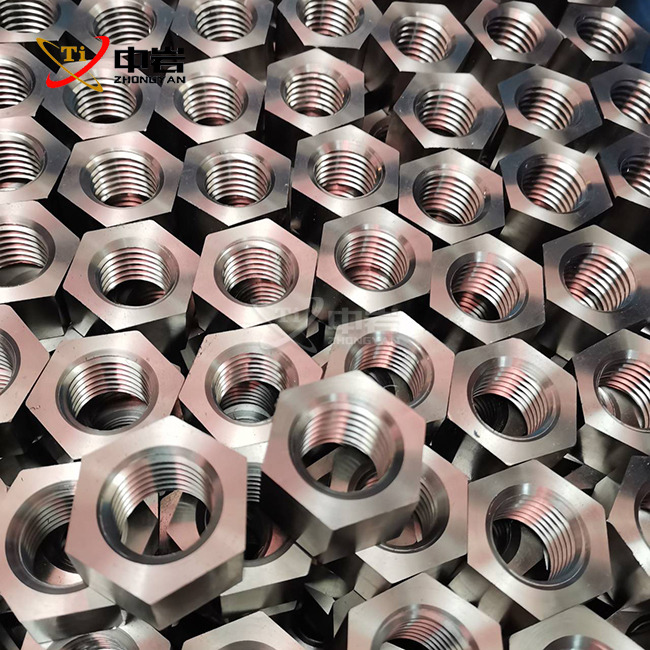
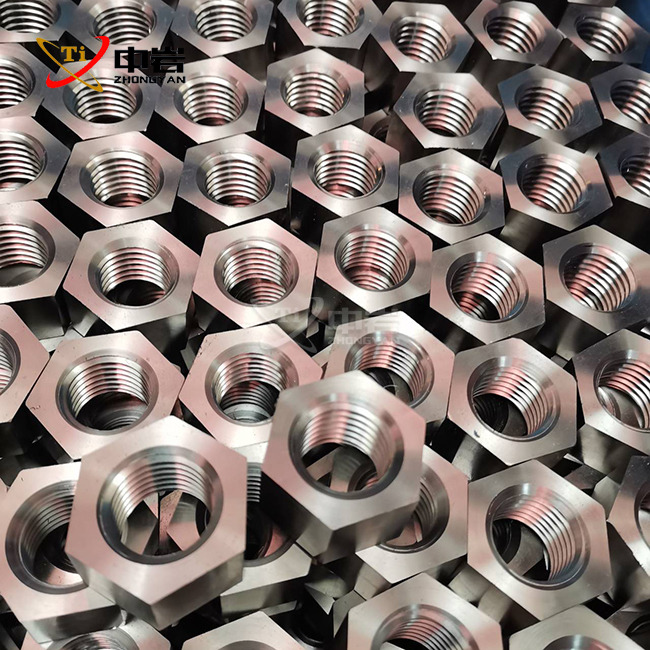
Learn about our latest products and discounts through SMS or email