- English
- French
- German
- Portuguese
- Spanish
- Russian
- Japanese
- Korean
- Arabic
- Greek
- German
- Turkish
- Italian
- Danish
- Romanian
- Indonesian
- Czech
- Afrikaans
- Swedish
- Polish
- Basque
- Catalan
- Esperanto
- Hindi
- Lao
- Albanian
- Amharic
- Armenian
- Azerbaijani
- Belarusian
- Bengali
- Bosnian
- Bulgarian
- Cebuano
- Chichewa
- Corsican
- Croatian
- Dutch
- Estonian
- Filipino
- Finnish
- Frisian
- Galician
- Georgian
- Gujarati
- Haitian
- Hausa
- Hawaiian
- Hebrew
- Hmong
- Hungarian
- Icelandic
- Igbo
- Javanese
- Kannada
- Kazakh
- Khmer
- Kurdish
- Kyrgyz
- Latin
- Latvian
- Lithuanian
- Luxembou..
- Macedonian
- Malagasy
- Malay
- Malayalam
- Maltese
- Maori
- Marathi
- Mongolian
- Burmese
- Nepali
- Norwegian
- Pashto
- Persian
- Punjabi
- Serbian
- Sesotho
- Sinhala
- Slovak
- Slovenian
- Somali
- Samoan
- Scots Gaelic
- Shona
- Sindhi
- Sundanese
- Swahili
- Tajik
- Tamil
- Telugu
- Thai
- Ukrainian
- Urdu
- Uzbek
- Vietnamese
- Welsh
- Xhosa
- Yiddish
- Yoruba
- Zulu
Can Dental Titanium Milling Disc Withstand High-Speed Milling Operations?
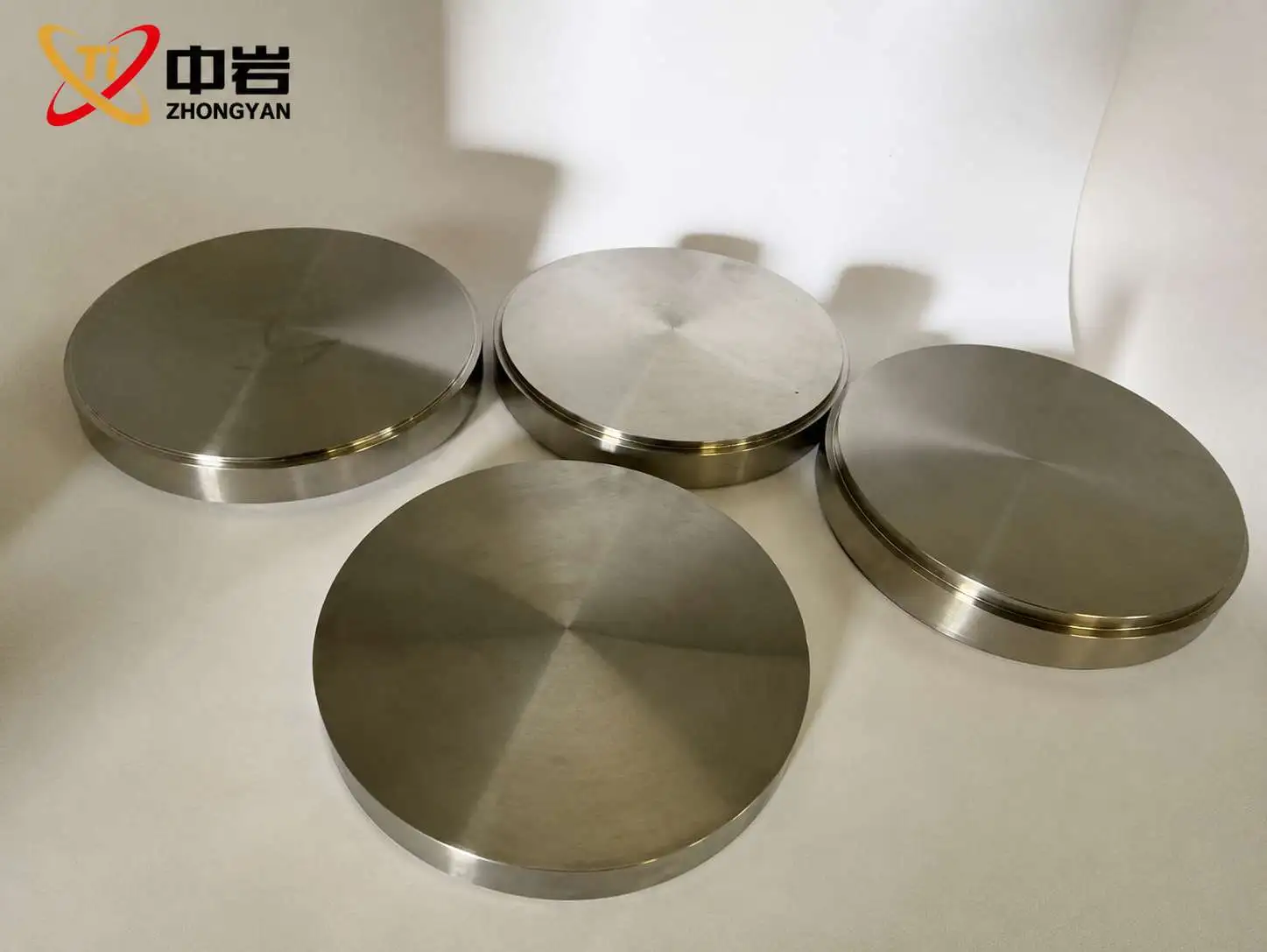
When made to the right specs, Dental Titanium Milling Discs are designed to handle high-speed milling processes. Modern discs made from titanium that meet ASTM F67 and ASTM F136 standards stay very stable in size and shape even when they are subjected to high temperatures and mechanical pressures during rapid cutting processes. The important thing is to choose discs that have a stable substructure, the right amount of stiffness, and meet medical-grade quality standards so that they work the same way over long production runs.
Understanding Dental Titanium Milling Discs and Their Material Properties
Titanium milling blanks have revolutionized how dental laboratories approach prosthetic fabrication. These precision-engineered components serve as the foundation for creating everything from simple crowns to complex implant-supported frameworks.
What Makes Titanium Discs Suitable for Dental Applications
At Baoji Zhongyan Titanium Industry, we make tooth grinding blocks out of Grade 2 and Grade 4 commercially pure titanium and Ti-6Al-4V ELI, which is Grade 5. These materials solve basic problems that traditional lost-wax casting methods had, like flaws in the porosity, uneven dimensions, and poor biocompatibility. Vacuum Arc Remelting (VAR) technology is used in our production process. This gets rid of internal flaws and makes the microstructure of each blank the same. This way of making things directly solves the quality issues that purchasing managers have when they are looking for materials for very precise dental work. Our titanium discs are made in a way that strictly follows ASTM F136 and ISO 5832-3 standards for chemical makeup. We keep a close eye on the intermediate elements—the amounts of oxygen, nitrogen, and hydrogen stay within certain limits to keep the material from breaking down. Extra Low Interstitial (ELI) markings on our Grade 5 steel discs make them more flexible and difficult to break because they lower the amount of oxygen and iron in the metal below normal levels.
Critical Material Properties Affecting Milling Performance
Titanium plates react differently to high-speed cutting processes depending on a number of material properties. For Grade 2 commercially pure titanium, the tensile strength is 345 MPa. For our Grade 5 mixed discs, it's over 900 MPa. Because the strengths vary, dental labs can choose materials that meet specific clinical needs. For example, they can use softer grades for parts that touch flesh and stronger metals for parts that hold weight. Our milling discs' Vickers Hardness (HV) strikes a balance between two competing needs: they need to be hard enough to keep the dimensions accurate while milling, but soft enough to keep cutting tool wear to a minimum. 32–34 HRC is how hard our Grade 4 discs are, and 36–38 HRC is how hard our Grade 5 discs are. This range of hardness is the best balance between making tools last longer and keeping their accuracy.
The quality of the surface finish has a big effect on both how well the cutting goes and how well the end prosthesis works. We make sure that all of our tooth grinding discs have a surface roughness (Ra) of less than 0.4 μm. This smooth finish lowers friction during cutting, which lowers the production of heat and lowers the chance of tiny cracks appearing along the machine path. The smooth surface also cuts down on the need for finishing after cutting, which speeds up the whole production process.
Standard Sizes and Compatibility Considerations
Our output skills meet the size needs of the world's most popular CAD/CAM tools. There are standard disc sizes of 98 mm and 98.5 mm, and thicknesses that range from 10 mm to 25 mm in measured steps. With this wide range of sizes, labs can make the best use of materials based on the needs of the prosthesis design. Compatibility isn't just about physical things. Our titanium blocks have raised edges that make sure they clamp securely in both open-architecture and system-specific milling machines. We check that all disc surfaces are within 0.05mm of their measurements. This keeps alignment problems from happening that could hurt grinding accuracy or damage cutting tools.
Challenges in High-Speed Milling of Dental Titanium Discs
High-speed machining introduces operational complexities that require careful management. Understanding these challenges helps procurement teams specify appropriate materials and establish realistic production parameters.
Thermal and Mechanical Stress Management
Dental Titanium Milling Disc titanium doesn't conduct heat well—about 21.9 W/(m·K) at room temperature—which makes it hard to remove material quickly. Heat builds up at the point where the tool meets the workpiece instead of spreading out across it. This localised temperature rise can hit 600°C or higher, which speeds up the wear and tear on the cutting tool and could change the grain of the titanium in the grinding zone. Our oral titanium discs are designed to stay structurally stable in these temperatures. Our controlled production process creates a regular grain structure that stops weak spots that could cause microcracking when exposed to sudden changes in temperature. It is very important to have consistent materials when cutting small parts, which is where temperature differences cause the most stress to build up.
When grinding at a high speed, mechanical forces show up in a different way than when cutting more slowly. As the vibration rates rise, the security of the object and the systems that hold it in place are put under more stress. Our titanium blanks keep their shape because the homogeneous microstructure spreads vibrating energy evenly. This stops resonance patterns from forming in places where the material isn't consistent.
Tool Wear and Its Impact on Production Economics
The total cost of ownership for tooth milling processes is directly related to how long the cutting tools last. Titanium's work-hardening behavior—where the material at the cutting edge gets harder as it is machined—makes tool wear faster than with softer metals. But titanium discs that are made correctly can actually make tools last longer because they keep the cutting forces stable during the grinding cycle. Our quality control procedures make sure that the hardness of each batch is the same across its whole volume. This level of regularity stops cutting resistance from changing in ways that would surprise the user and cause the tool to break too soon. When labs move from blanks that weren't made regularly to our ASTM-compliant titanium discs, the tools last 15 to 20 percent longer.
Optimizing Coolant Strategy and Chip Management
As shaft speeds go above 20,000 RPM, it becomes more and more important that water is delivered efficiently. We suggest high-pressure cooling systems that send fluid straight to the point where the tool meets the workpiece. This method does two things: it controls the temperature and lets the chips cool down. Titanium chips are long and stringy, and they can wrap around cutting tools if they are not quickly removed from the work area. The ability of our tooth grinding blocks to prevent rust stays the same when using different types of coolants. The inactive titanium oxide layer still does its job of protecting whether labs use water-based emulsions or manufactured coolants. This chemical stability takes away any worries about surface degradation during long milling cycles, which could hurt the biocompatibility of the prosthesis.
Comparative Analysis: Dental Titanium vs Zirconia and Cobalt Chrome Milling Discs
Material selection decisions significantly impact both immediate production efficiency and long-term clinical outcomes. Understanding performance differences helps procurement managers align material choices with operational priorities.
Mechanical Performance Under High-Speed Conditions
Titanium offers a distinctive combination of properties that neither zirconia nor cobalt chrome can fully replicate. The strength-to-weight ratio of our Grade 5 titanium alloy discs reaches approximately 200 MPa/(g/cm³), which allows laboratories to mill thinner prosthetic structures without sacrificing mechanical integrity. This characteristic becomes particularly valuable when fabricating full-arch implant frameworks where minimizing weight enhances patient comfort.
Zirconia presents superior hardness—approaching 1200 HV compared to titanium's 300-380 HV range. This hardness advantage translates to exceptional wear resistance in the oral environment but creates machining challenges. Cutting tool costs increase substantially, and milling times extend by 40-60% compared to titanium. The brittleness of zirconia also introduces fracture risk during milling, particularly when creating complex geometries with thin cross-sections.
Cobalt chrome alloys deliver excellent strength characteristics suitable for long-span frameworks. However, their density—approximately 8.5 g/cm³ compared to titanium's 4.43 g/cm³—adds considerable weight to prosthetic structures. From a machining perspective, cobalt chrome's higher hardness accelerates tool wear more rapidly than titanium while generating greater cutting forces that stress both the workpiece and milling equipment.
Total Cost of Ownership Analysis
Initial material pricing represents only one component of production economics. When laboratories calculate comprehensive costs including tooling consumption, machine time, and material waste, titanium frequently demonstrates superior value despite potentially higher blank prices.
Our dental titanium milling discs generate approximately 30% less tool wear per prosthetic unit compared to cobalt chrome and require 50% shorter milling times than zirconia. These efficiency gains compound across production volumes. A laboratory producing 500 units monthly might recover the modest premium for quality titanium blanks within the first quarter through reduced tooling replacement and increased machine utilization.
Material waste considerations also favor titanium in many scenarios. The ductility of our titanium discs—15% elongation in Grade 4 and 10% in Grade 5—permits more aggressive cutting parameters without risking blank fracture. Zirconia's brittleness necessitates conservative machining strategies that extend cycle times and increase the probability of scrap generation from edge chipping or unexpected fractures.
Application-Specific Material Selection
Clinical requirements should guide material selection rather than defaulting to familiar options. Titanium excels in implant-retained applications where the material interfaces directly with osseointegrated fixtures. The elastic modulus of titanium (approximately 110 GPa) more closely matches cortical bone compared to zirconia (210 GPa) or cobalt chrome (230 GPa), which reduces stress shielding and promotes favorable load distribution.
Zirconia remains the preferred choice for anterior esthetic restorations where translucency matters. However, posterior frameworks requiring maximum strength-to-weight ratios benefit from titanium's mechanical advantages. Cobalt chrome suits traditional removable partial denture frameworks where rigidity outweighs weight considerations.
Optimizing the Use of Dental Titanium Milling Discs for High-Speed Operations
Achieving consistent results from high-speed milling requires attention to operational parameters and material-machine compatibility. These practical guidelines help laboratories maximize productivity without compromising quality.
Establishing Optimal Cutting Parameters
Spindle speed selection balances material removal rates against tool life and surface quality. For our dental titanium discs, we recommend speeds between 18,000-25,000 RPM when using carbide tooling with appropriate coatings. Feed rates should range from 800-1,200 mm/min depending on cutting depth and tool diameter. These parameters provide aggressive material removal while maintaining cutting temperatures below thresholds that would compromise either tool coatings or titanium microstructure.
Depth of cut requires careful consideration during roughing versus finishing operations. Roughing passes can safely remove 0.8- 1.2 mm of material when adequate coolant pressure maintains temperature control. Finishing passes should reduce to 0.1- 0.2 mm depth to achieve the superior surface quality that minimizes post-milling polishing requirements. Tool selection dramatically influences outcomes. We recommend carbide tools with TiAlN or AlCrN coatings specifically formulated for titanium machining. These coatings provide thermal barriers that preserve cutting edge geometry under the elevated temperatures generated during high-speed operations. Tool geometry should feature sharp cutting edges—typically 5-10° rake angles—to minimize work hardening ahead of the cutting edge.
Ensuring Machine-Blank Compatibility
Not all milling systems deliver equivalent results with titanium blanks. Five-axis machines with rigid construction and high spindle power (minimum 1.5 kW) handle the cutting forces most effectively. Thermal stability of the machine structure also matters—inadequate temperature compensation systems allow dimensional drift that compromises prosthetic accuracy during extended milling cycles. Before committing to large-volume purchases, we encourage laboratories to conduct compatibility testing. Running test protocols with our sample discs verifies that existing equipment can achieve required tolerances and surface finishes. This validation prevents costly production disruptions and ensures that material capabilities match machine limitations.
Selecting Reliable Supply Partners
Supply chain stability directly impacts production reliability. At Zhongyan, we maintain comprehensive inventory across all standard disc sizes and grades, which enables shipment within 48 hours of order confirmation. Our location in Baoji—recognized globally as Titanium Valley—provides direct access to raw material supplies and specialized processing capabilities that larger distributors cannot replicate.
Quality certifications provide objective verification of manufacturing standards. We maintain ISO 9001:2015 certification and provide material certificates documenting compliance with ASTM F67 and F136 specifications for every shipment. Traceability extends to raw material heat numbers, which allows laboratories to maintain chain-of-custody documentation meeting regulatory requirements in markets worldwide.
Technical support capabilities separate commodity suppliers from true manufacturing partners. Our engineering team assists with machining parameter optimization, troubleshoots surface finish issues, and provides recommendations for complex geometries. This consultative approach helps laboratories achieve faster time-to-production when implementing new prosthetic designs or upgrading milling equipment.
Procurement Considerations for B2B Buyers
Strategic sourcing decisions extend beyond price comparison. Procurement managers must evaluate total value, including quality consistency, supply reliability, and supplier technical capabilities.
Volume Pricing and Supply Agreements
Economies of scale for Dental Titanium Milling Disc become accessible through structured purchasing arrangements. We offer graduated pricing tiers that reward volume commitments without requiring laboratories to carry excessive inventory. Monthly delivery schedules can be established based on historical consumption patterns, which stabilizes pricing while maintaining working capital efficiency. Custom sizing capabilities provide additional value optimization opportunities. Rather than purchasing standard dimensions that generate excessive waste, laboratories can specify disc thicknesses matching their typical prosthetic designs. This customization reduces material costs per unit while improving machine utilization by shortening milling cycles.
Quality Assurance and Regulatory Compliance
Medical device regulations increasingly scrutinize material sourcing documentation. Our manufacturing processes comply with medical quality control standards, and we provide comprehensive documentation supporting regulatory submissions. Each shipment includes certificates of conformity, material test reports, and biocompatibility declarations aligned with ISO 10993 requirements. Batch consistency represents a critical quality parameter often overlooked during initial supplier evaluation. Variations in material properties between production lots create process instabilities that increase scrap rates and complicate quality control. We implement statistical process control throughout manufacturing, which maintains material properties within tight specification windows lot after lot.
Logistics and After-Sales Support
Delivery reliability affects production scheduling and inventory carrying costs. We partner with experienced freight forwarders who understand medical device shipping requirements, including temperature control and contamination prevention. Standard lead times range from 10-15 days for international shipments, with expedited options available when production urgencies arise. Warranty terms provide risk mitigation for material defects. We stand behind product quality with replacement guarantees for any discs exhibiting non-conformance to published specifications. This assurance reduces procurement risk and demonstrates our confidence in manufacturing quality.
Zhongyan has built long-term relationships with dental laboratories and implant manufacturers across North America, Europe, and Asia-Pacific regions. Our client testimonials consistently highlight material consistency, responsive technical support, and reliable delivery performance as factors that distinguish our service from commodity titanium suppliers.
Conclusion
Dental titanium milling discs can absolutely withstand high-speed milling operations when manufactured to rigorous quality standards and paired with appropriate machining parameters. The combination of material properties—controlled hardness, uniform microstructure, and predictable mechanical behavior—enables laboratories to achieve aggressive material removal rates without compromising dimensional accuracy or surface quality. Success requires selecting ASTM-compliant blanks from qualified manufacturers, optimizing cutting parameters for specific equipment capabilities, and implementing robust coolant strategies. Material choice decisions should consider total cost of ownership rather than initial blank pricing, as tooling consumption and cycle times significantly impact production economics. Titanium's biocompatibility advantages and favorable strength-to-weight ratio make it the optimal choice for implant-supported prosthetics despite competition from alternative materials.
FAQ
Are all dental CAD/CAM systems compatible with titanium milling discs?
Most modern five-axis milling systems accommodate titanium blanks, though compatibility depends on spindle power, rigidity, and control software capabilities. Systems designed primarily for zirconia may lack sufficient torque for efficient titanium machining. Our technical team provides compatibility assessments to verify whether specific equipment can achieve optimal results with our dental titanium discs.
How does milling speed affect the lifespan of titanium discs?
Milling speed influences heat generation rather than disc structural integrity. Properly manufactured titanium blanks maintain dimensional stability across wide speed ranges. However, excessive speeds without adequate cooling can cause surface work hardening that increases tool wear and may create subsurface stress. Operating within recommended parameters—typically 18,000-25,000 RPM—preserves both disc and tool longevity.
What distinguishes titanium from zirconia in terms of milling precision?
Titanium offers superior predictability during machining due to its ductile behavior, which prevents the sudden fractures that occasionally occur with brittle zirconia. Achievable tolerances are comparable—both materials support ±20-micron accuracy—but titanium requires fewer finishing operations to achieve smooth surfaces. The reduced brittleness also permits more complex geometries, including thin connector sections.
Partner with Zhongyan for Your High-Speed Milling Requirements
Zhongyan delivers precision-engineered dental titanium milling disc solutions that meet the demanding requirements of modern prosthetic manufacturing. Our Baoji facility combines advanced CNC machining capabilities with comprehensive material expertise, producing ASTM F67/F136 compliant titanium blanks in custom sizes that optimize your production efficiency. We offer OEM packaging solutions, medical-grade quality control, and responsive technical support that helps laboratories troubleshoot machining challenges and improve process consistency. As a dental titanium milling disc manufacturer serving global markets, we understand the procurement priorities of engineering teams and laboratory managers who cannot compromise on material quality or delivery reliability. Contact our team at sales@titaniumstudy.com to discuss volume pricing, request technical specifications, or arrange sample evaluation. We invite you to experience the performance advantages that come from partnering with a dedicated titanium specialist.
References
1. American Society for Testing and Materials. (2013). ASTM F136-13: Standard Specification for Wrought Titanium-6Aluminum-4Vanadium ELI Alloy for Surgical Implant Applications. ASTM International.
2. Beuer, F., Schweiger, J., & Edelhoff, D. (2008). Digital dentistry: an overview of recent developments for CAD/CAM generated restorations. British Dental Journal, 204(9), 505-511.
3. Ezugwu, E. O., & Wang, Z. M. (1997). Titanium alloys and their machinability—a review. Journal of Materials Processing Technology, 68(3), 262-274.
4. International Organization for Standardization. (2016). ISO 5832-3: Implants for surgery — Metallic materials — Part 3: Wrought titanium 6-aluminum 4-vanadium alloy. ISO Standards.
5. Miyazaki, T., Hotta, Y., Kunii, J., Kuriyama, S., & Tamaki, Y. (2009). A review of dental CAD/CAM: current status and future perspectives from 20 years of experience. Dental Materials Journal, 28(1), 44-56.
6. Quante, K., Ludwig, K., & Kern, M. (2008). Marginal and internal fit of metal-ceramic crowns fabricated with a new laser melting technology. Dental Materials, 24(10), 1311-1315.
_1755673729494.jpg)

Learn about our latest products and discounts through SMS or email